Sphoeroides marmoratus
A reliable find around Tenerife and Gran Canaria, this small mottled puffer sits on sand and rock from 20 to 28C, year-round.
Safety warning
Its skin and internal organs contain tetrodotoxin, a potent toxin, so the risk to divers is from handling or eating it rather than from a bite. Admire it in place and avoid touching or provoking it into inflating, which stresses the fish for no good reason.
Handle with care
Toxic if eatenGeneral first-aid guidance, not a substitute for professional medical care. In an emergency, call your local emergency number.
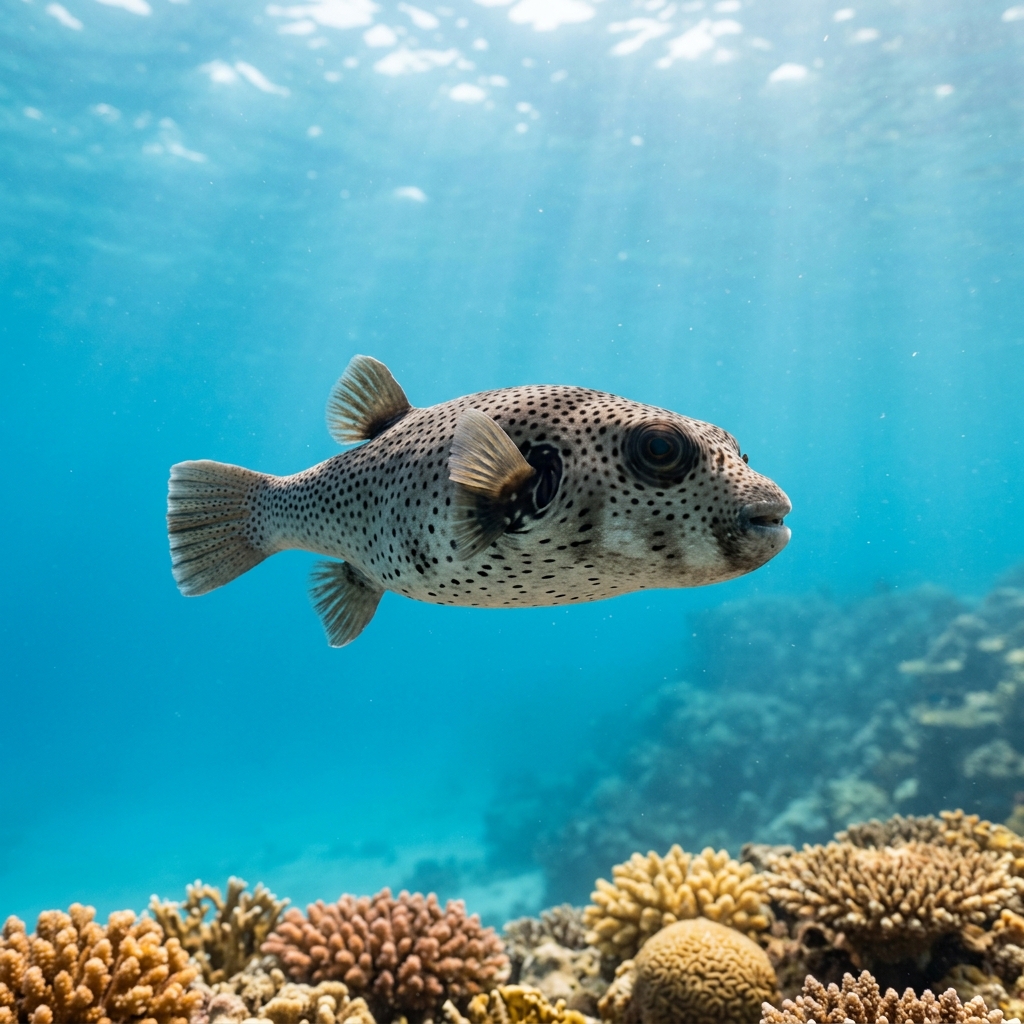
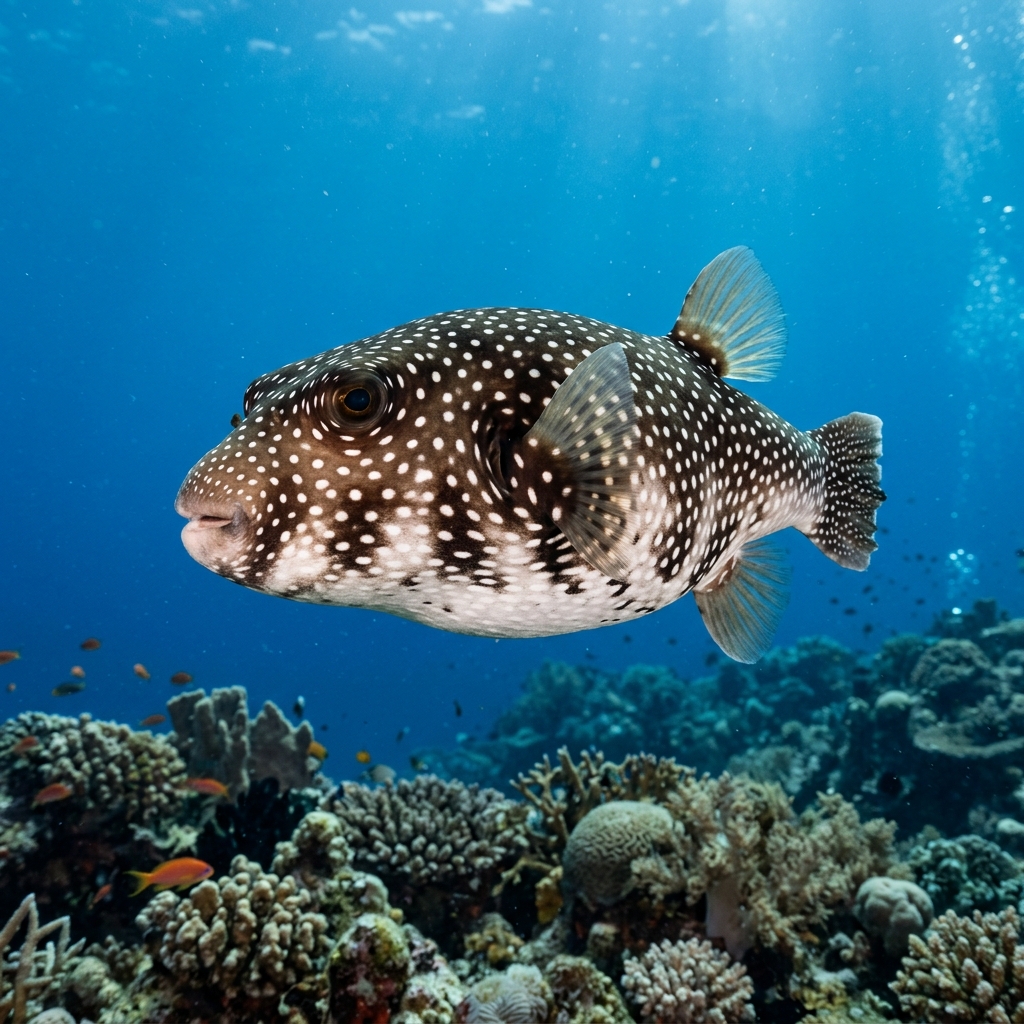
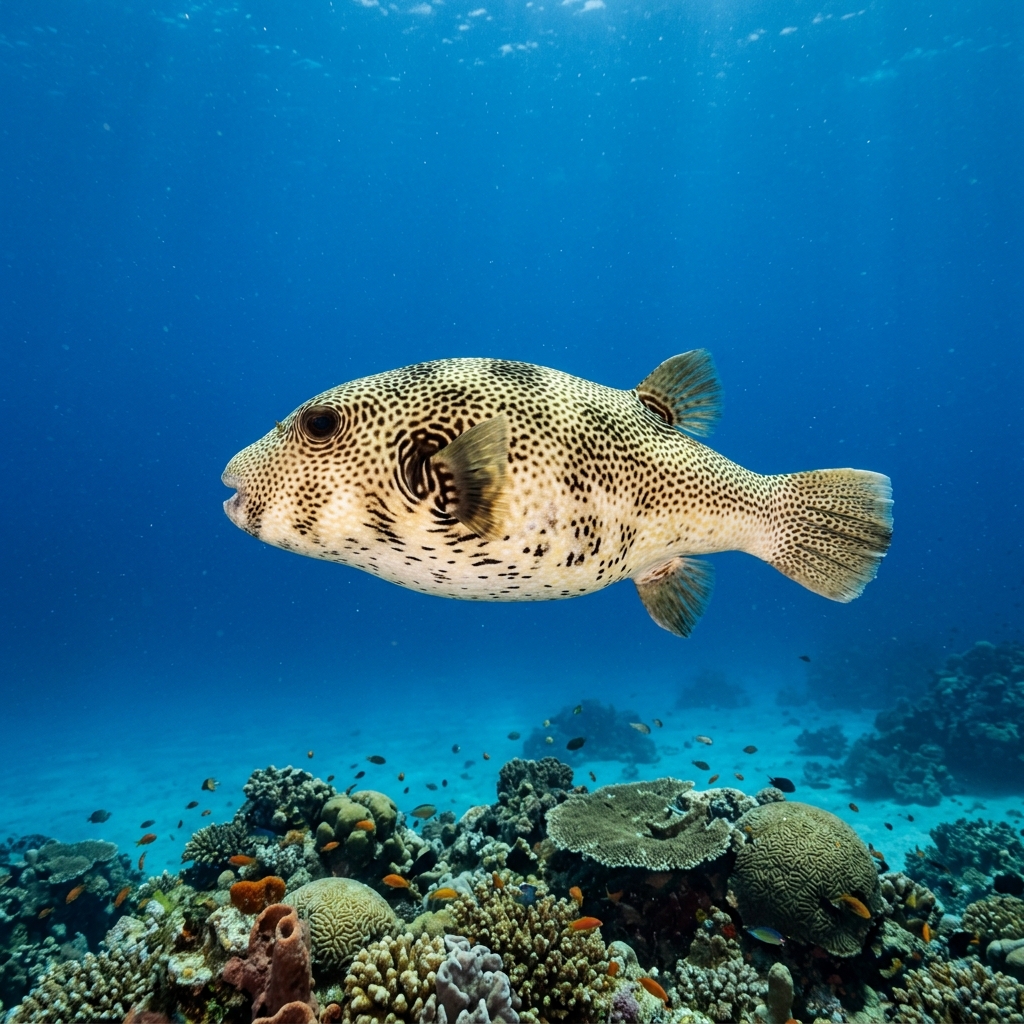
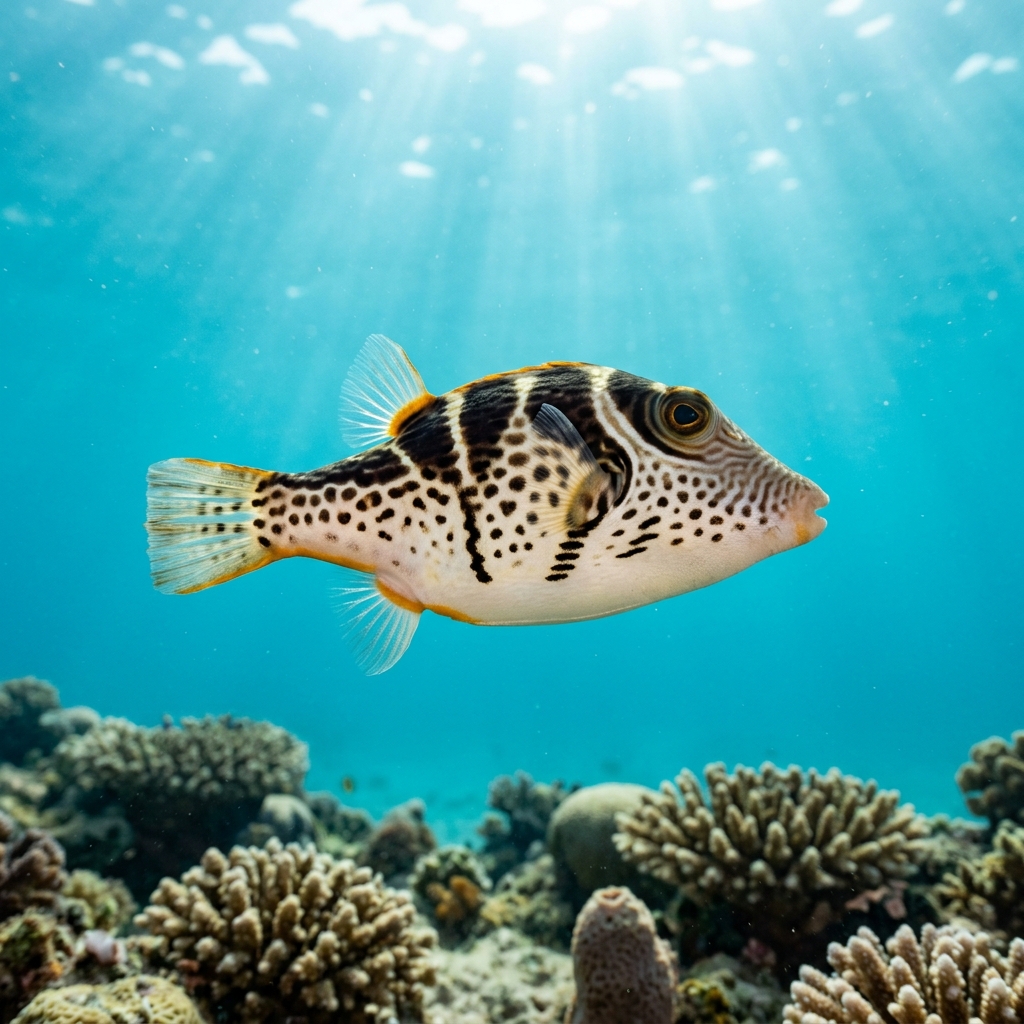
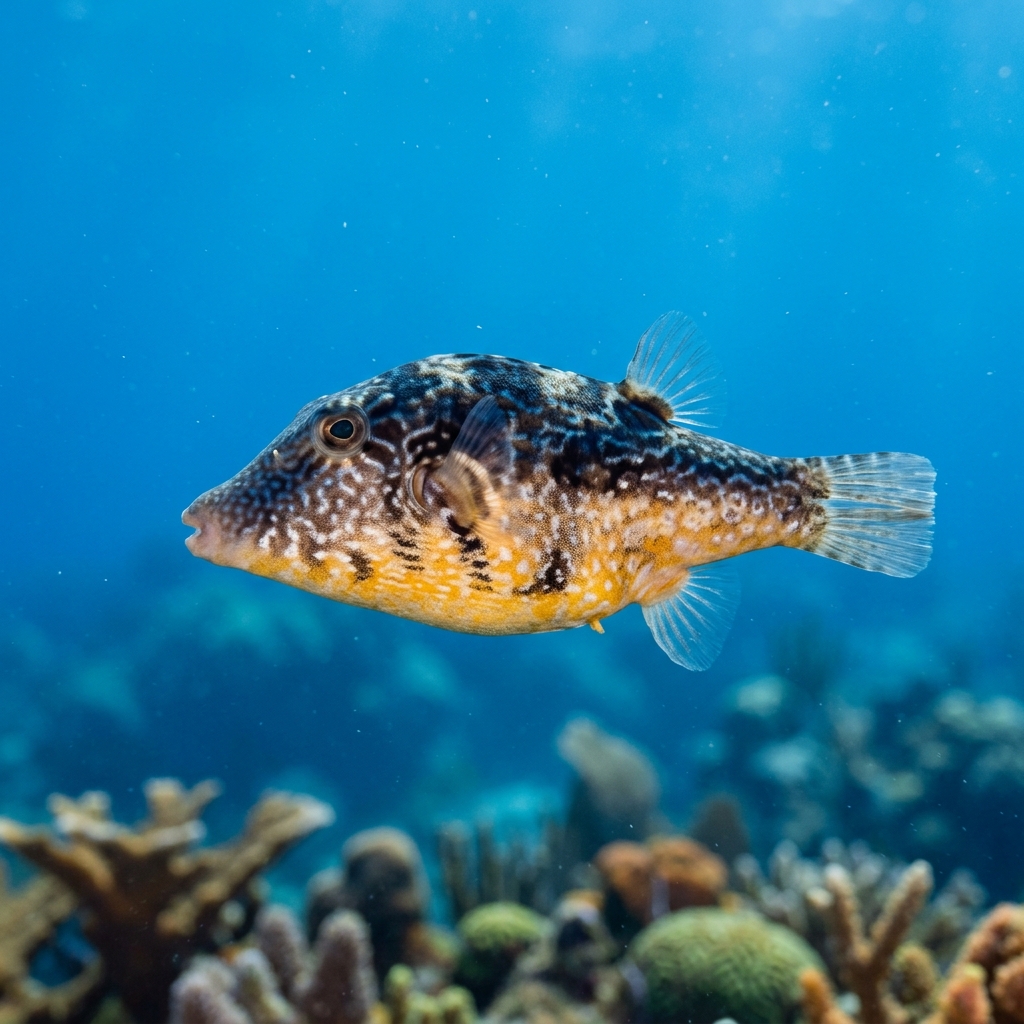
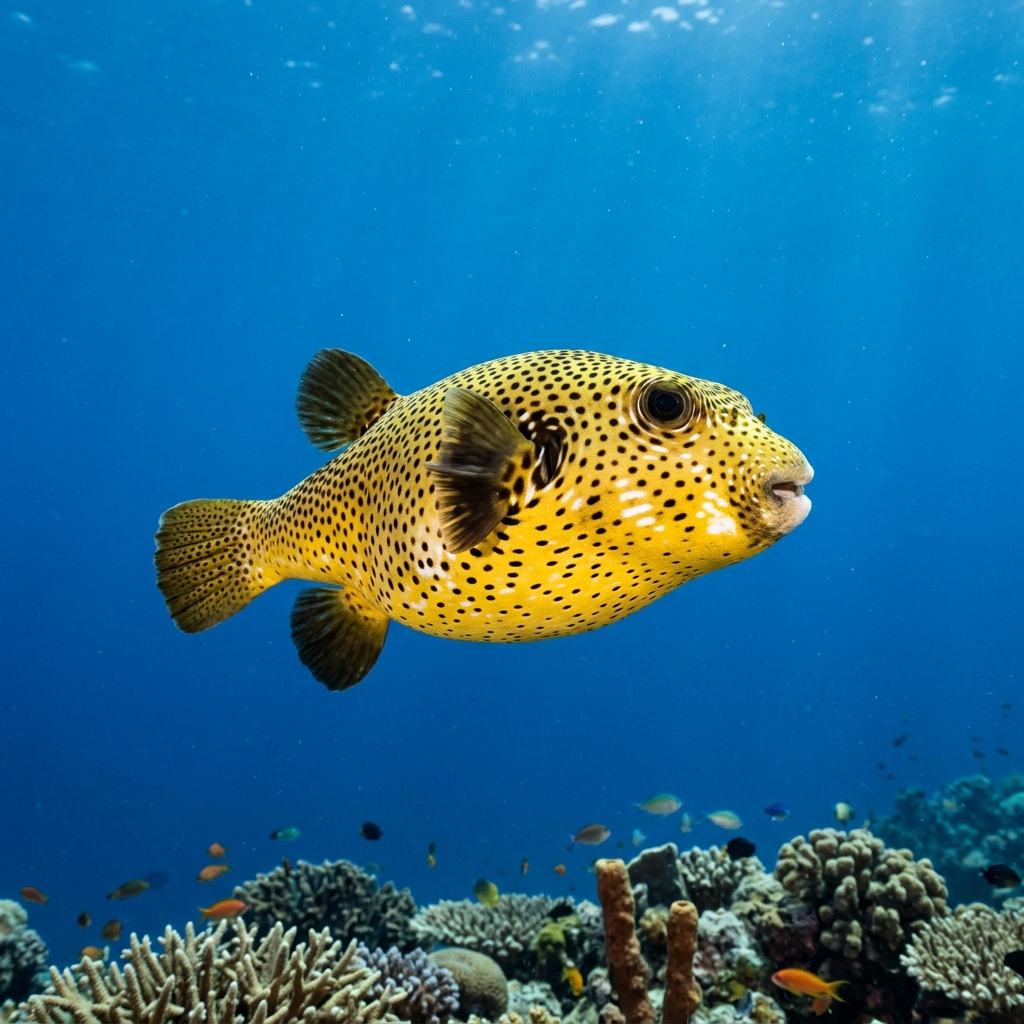
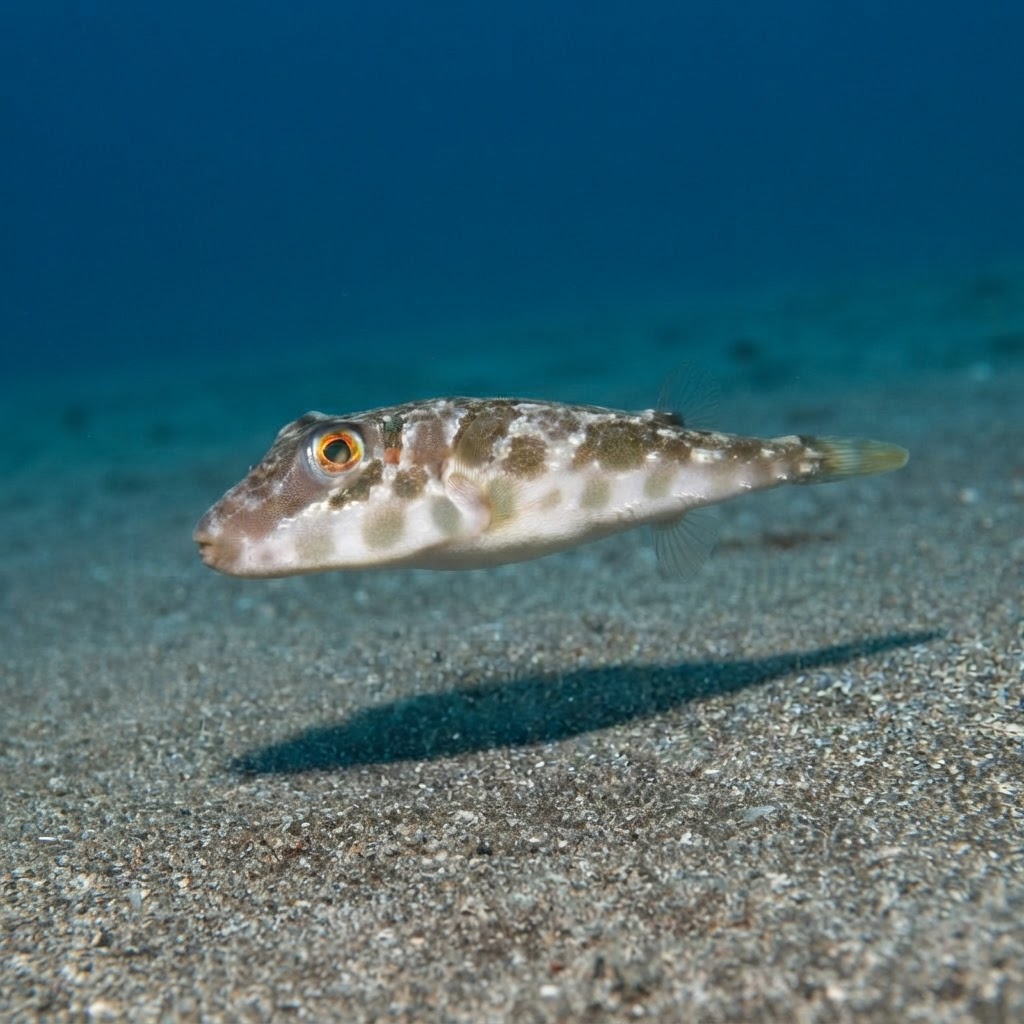
A small, rounded puffer around 14 cm, mottled in brown, grey and cream tones that blend well against sand and volcanic rubble. The body is stout with a blunt head, small fins set well back, and a pale belly that contrasts with the darker, blotchy back. No dramatic fin extensions or bright colour patches, so divers key on the mottled camouflage pattern and the compact, egg-shaped body.
Look for it resting on sand, rubble or low rocky ledges rather than swimming in open water, often close to the substrate where its mottled pattern breaks up its outline. It tends to hold still or move off slowly when a diver approaches, relying on camouflage more than speed, and is most often spotted on the bottom stretches of a dive rather than mid-water.
Like other puffers, it can inflate its body by gulping water when threatened, a defence that makes it hard for most predators to swallow.
Sightings are logged year-round with no strong seasonal pattern, which fits its comfort range of 20 to 28C across these subtropical and warm-temperate sites. Plan around your destination's general dive season rather than chasing a specific month for this species.
This one is most reliably logged in the Canary Islands, especially around Tenerife, Gran Canaria and Lanzarote, with Fuerteventura, El Hierro and La Palma also producing regular sightings. Outside the Canaries it turns up on dives in Cape Verde, the Azores (particularly around Sao Miguel and Santa Maria), Madeira, Senegal and mainland Portugal.
Mapping where Guinean Puffer is logged…
It is most commonly logged around the Canary Islands, particularly Tenerife, Gran Canaria and Lanzarote, and also turns up in Cape Verde, the Azores, Madeira, Senegal and Portugal.
Sightings happen year-round with no clear seasonal peak, since it tolerates a broad temperature range from 20 to 28C common across these island dive sites.
They carry tetrodotoxin in their skin and organs, which is dangerous if handled or ingested, but they pose no active threat to divers who simply observe from a short distance.
Look for a small, rounded puffer about 14 cm long with a mottled brown, grey and cream pattern, a blunt head and a stout body, usually resting on sand or rock rather than swimming in open water.
They typically reach around 14 cm in length, making them one of the smaller pufferfish species divers encounter on Atlantic island reefs.
Its main defence is inflating its body with water to look too large to swallow, backed up by toxins in its skin that make it unpleasant or dangerous for predators to eat.
Site and sighting data is aggregated from diver logs, iNaturalist and GBIF. For taxonomy and conservation status:
Valentini Pufferfish
2,830 sites