Scarus hoefleri
Look for Guinean Parrotfish over Cape Verde's reefs, most reliably around São Vicente and Sal, in water around 26 to 28C year-round.
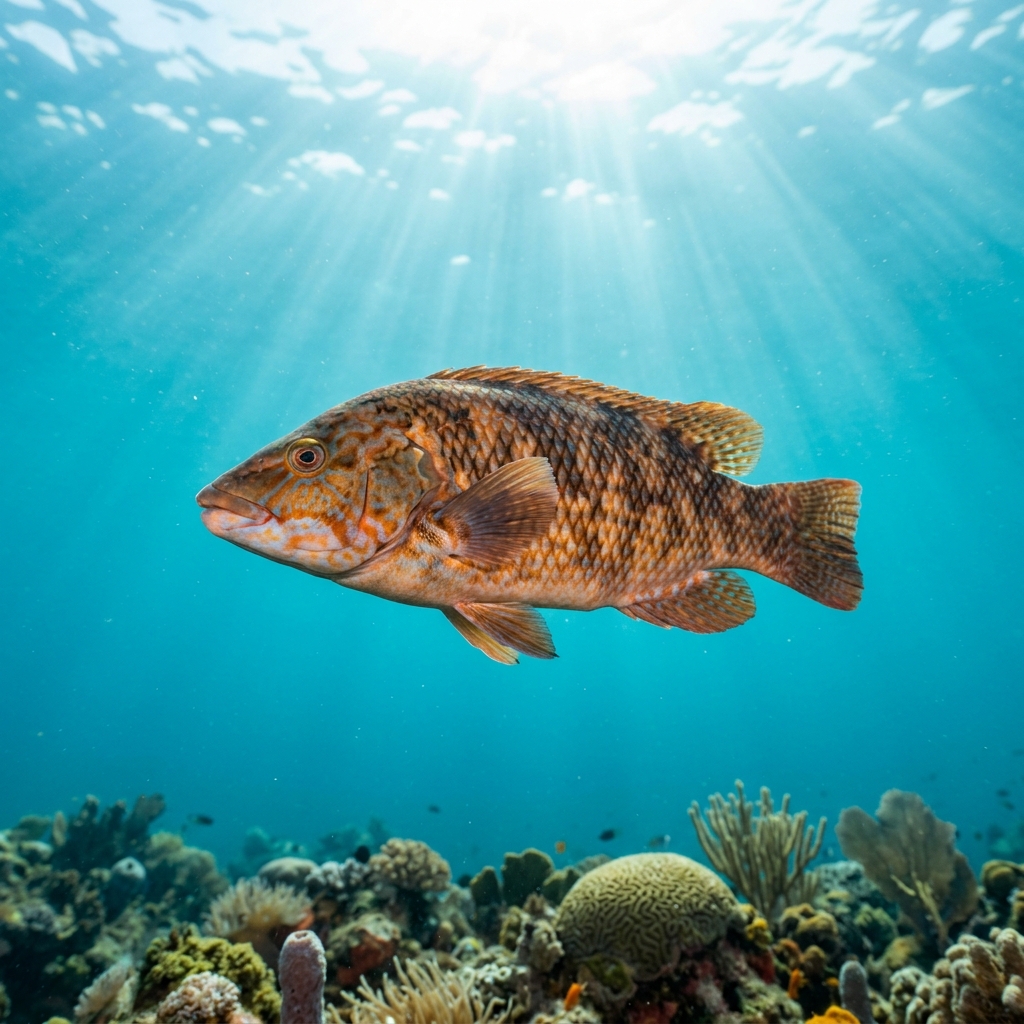
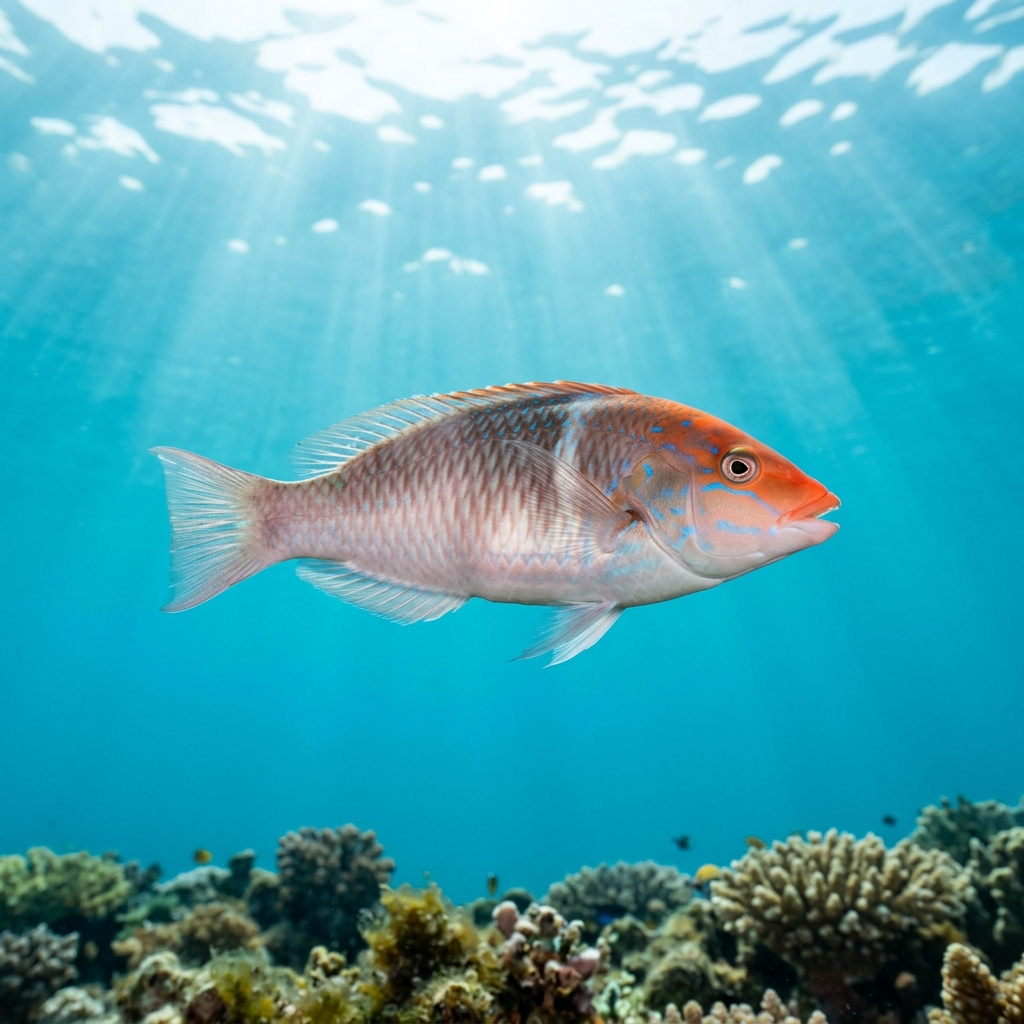
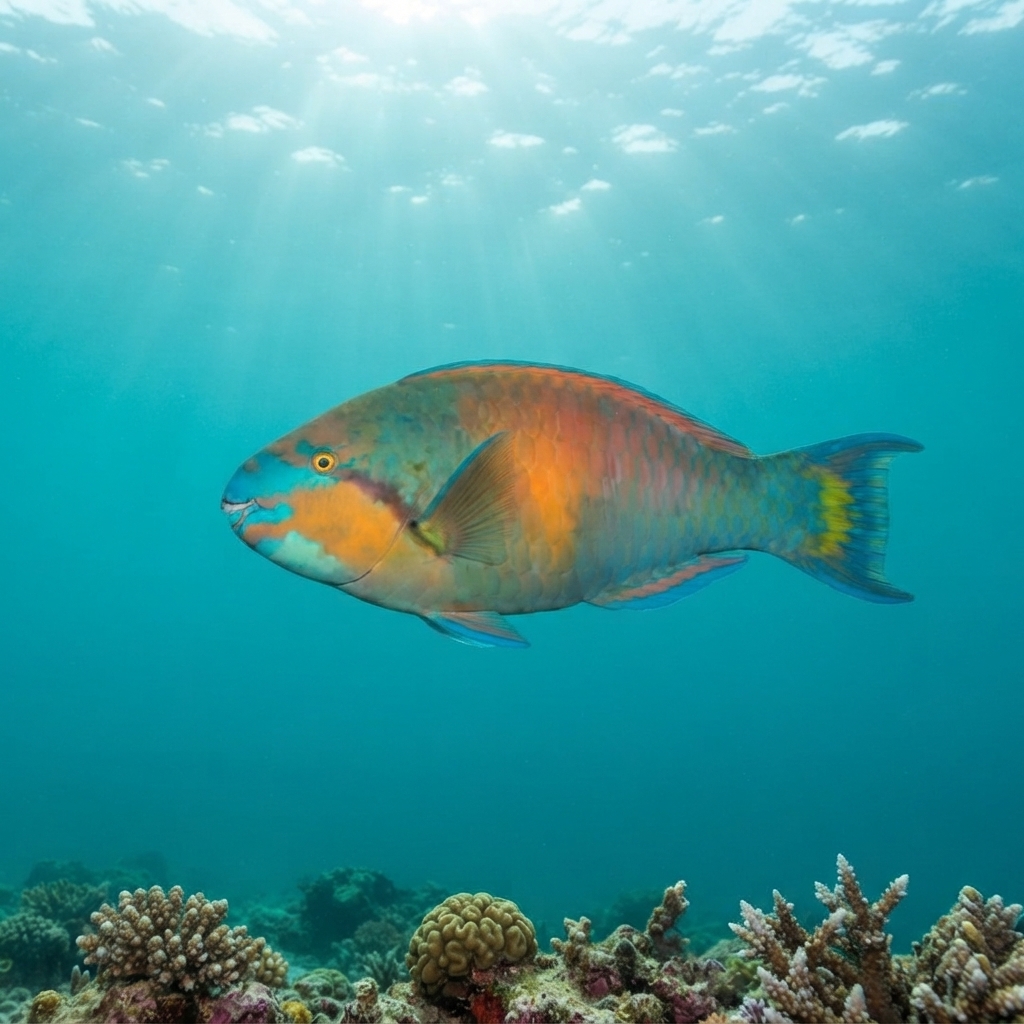
A heavy-bodied parrotfish reaching around 46 cm, with the fused, beak-like teeth typical of the group used for scraping algae off rock and reef. Adults show the blocky head and muted greenish to bluish tones common to Scarus species, with colour patches that can shift with mood and light. Look for it grazing low over rocky reef structure rather than hovering in open water, which helps separate it from the open-water wrasses it gets lumped in with.
Divers most often find it working over rocky reef ground, browsing algae with steady, unhurried bites rather than darting about. It tends to keep its distance from divers without bolting, more wary than curious, and is logged as an uncommon find at most sites, so patience over a few dives at the same spot pays off. Look for it low on the reef rather than in midwater, often solo or in loose company with other grazers.
Like other parrotfish, its fused beak-like teeth let it rasp algae straight off rock and dead coral, and the grazing pressure from fish like this helps keep reef surfaces clear for new coral growth.
Sightings show no clear season, and with water sitting between 25.5 and 28C year-round, Cape Verde's reefs stay within its comfort range in every month divers have logged it. Plan around conditions and visibility rather than chasing a particular season for this species.
This one is very much a Cape Verde fish, most commonly logged around São Vicente and Sal, with further sightings on Santiago. Just across the water, Dakar in Senegal also turns up regular records, making it the mainland alternative if you are not island-hopping.
Mapping where Guinean Parrotfish is logged…
Cape Verde is the strongest bet, particularly around São Vicente and Sal, with more sightings on Santiago. Senegal's Dakar region is the other confirmed spot, giving a mainland option alongside the islands.
There is no strong season on record, and water temperatures stay in a comfortable 25.5 to 28C band year-round in Cape Verde, so it is a fair target on any visit rather than a seasonal special.
Look for a stocky, heavy-bodied fish around 46 cm with a fused beak-like mouth and muted green-blue tones, grazing low over rocky or reef substrate rather than swimming in open water.
They typically reach around 46 cm, putting them among the larger reef grazers you will encounter on Cape Verde's rocky reefs.
No, they are not considered dangerous to divers. They are grazers focused on algae and rock, and simply keep a cautious distance if approached.
They graze algae off rock and reef surfaces using a fused, beak-like set of teeth, a feeding style shared across the parrotfish group that also helps keep reef surfaces clear for coral growth.
Site and sighting data is aggregated from diver logs, iNaturalist and GBIF. For taxonomy and conservation status:
Bird Wrasse
3,632 sites