Parapristipoma humile
Uncommon but findable off São Vicente and Sal, Cape Verde, this grunt schools over reef in warm 21-27C water year-round.
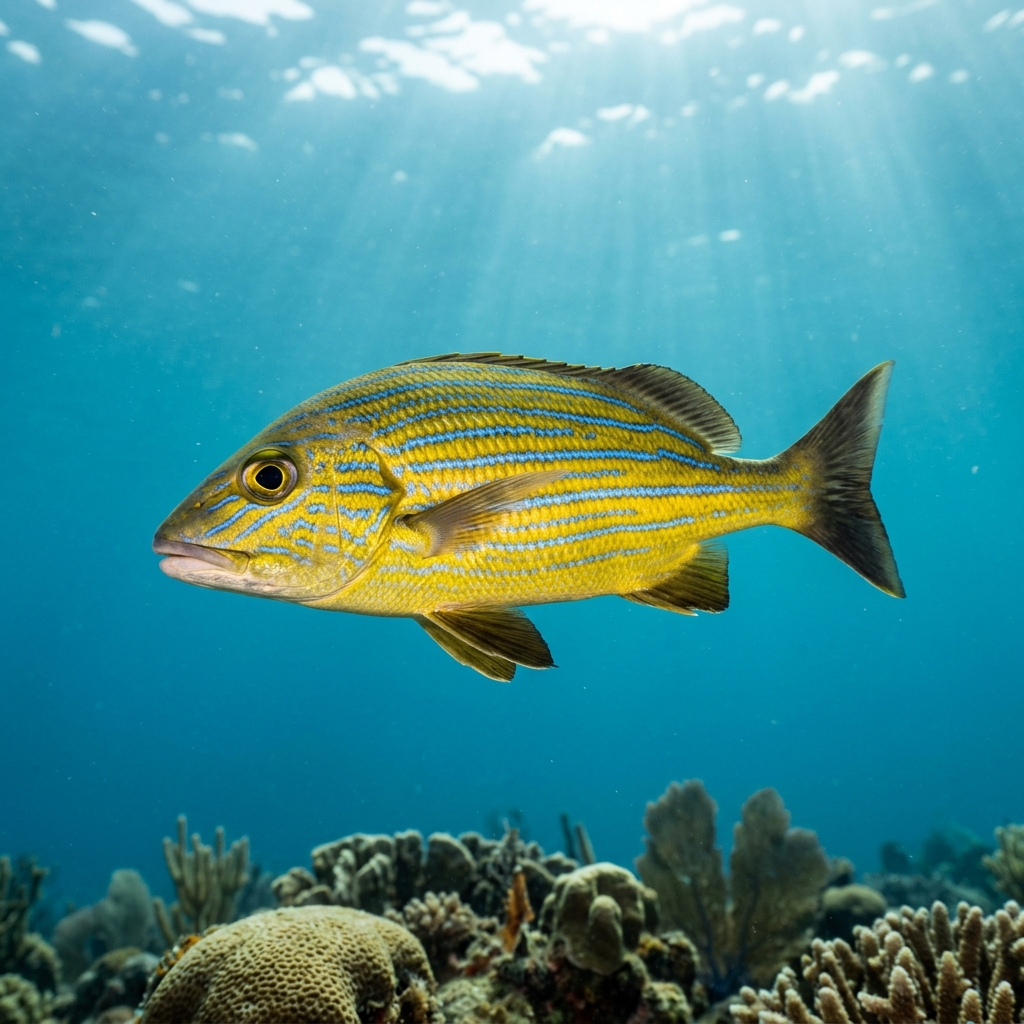
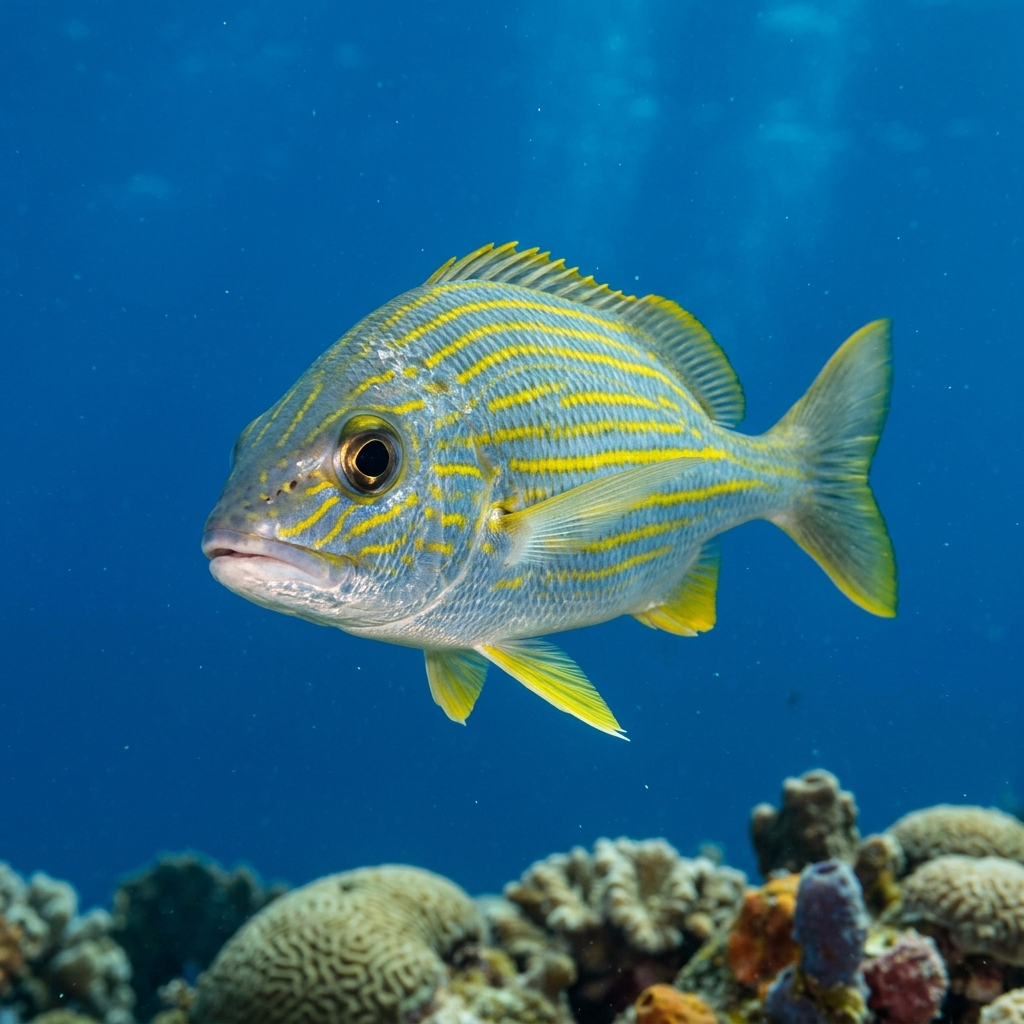
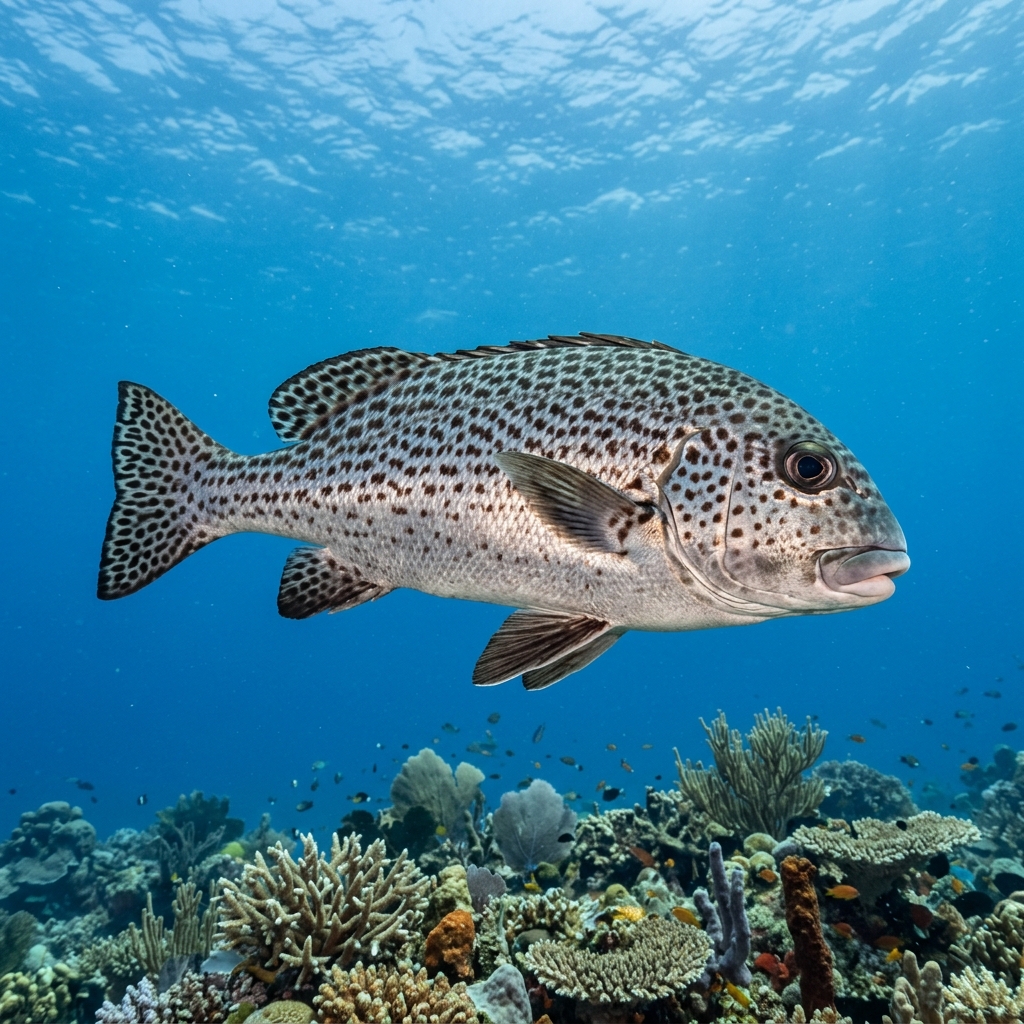
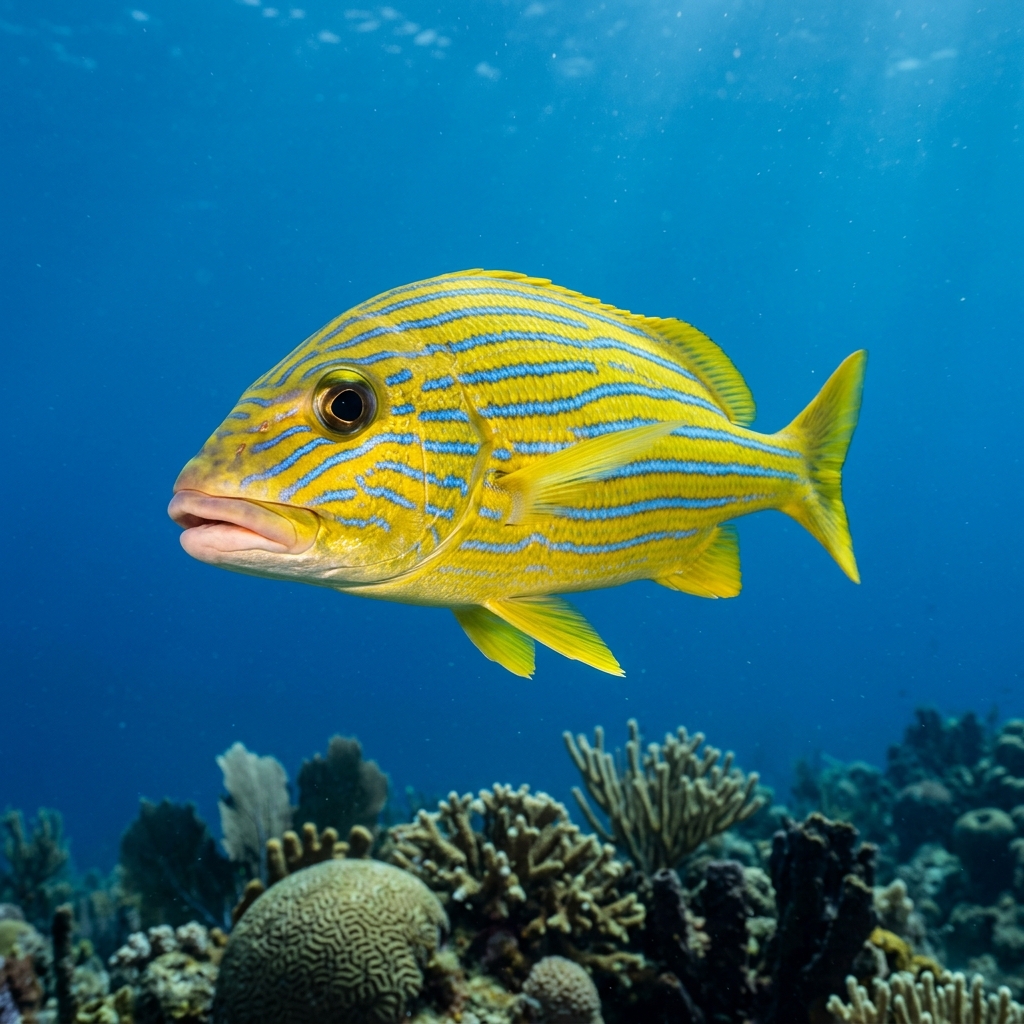
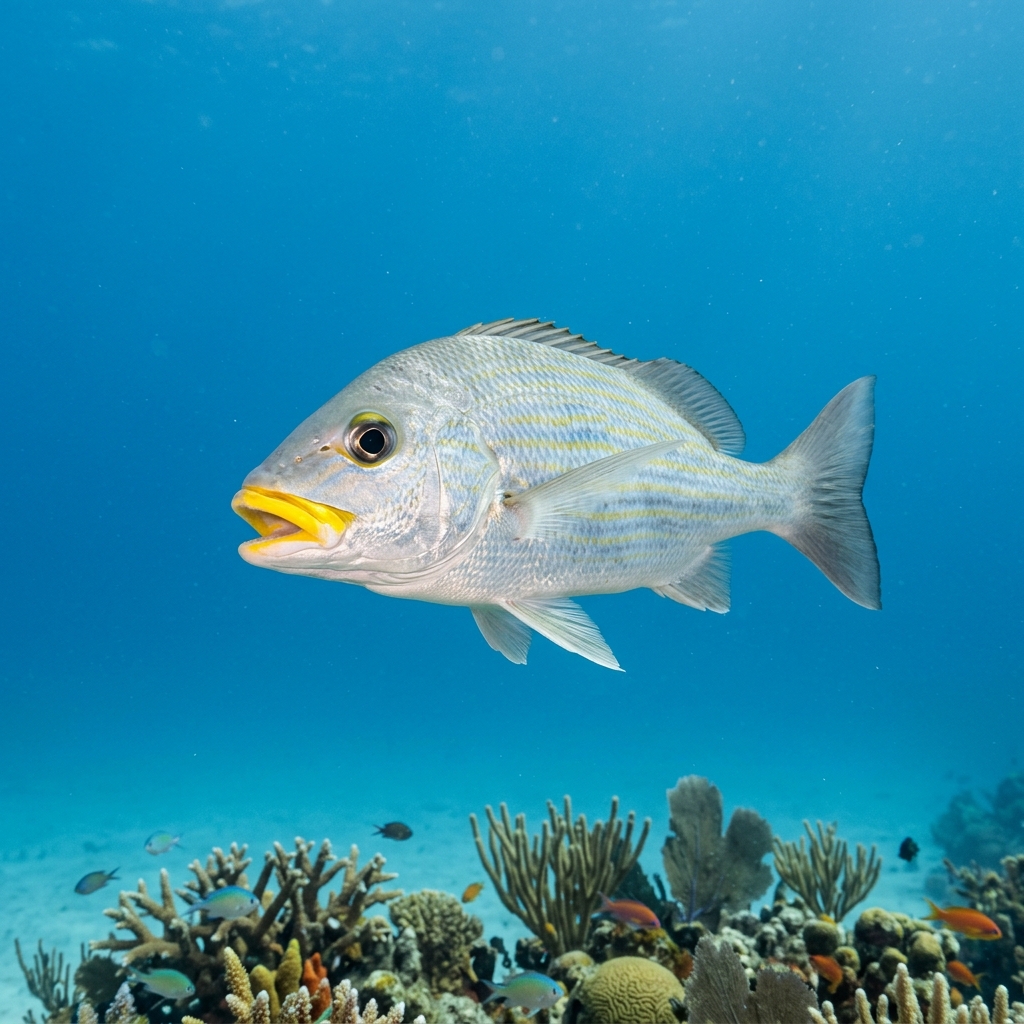
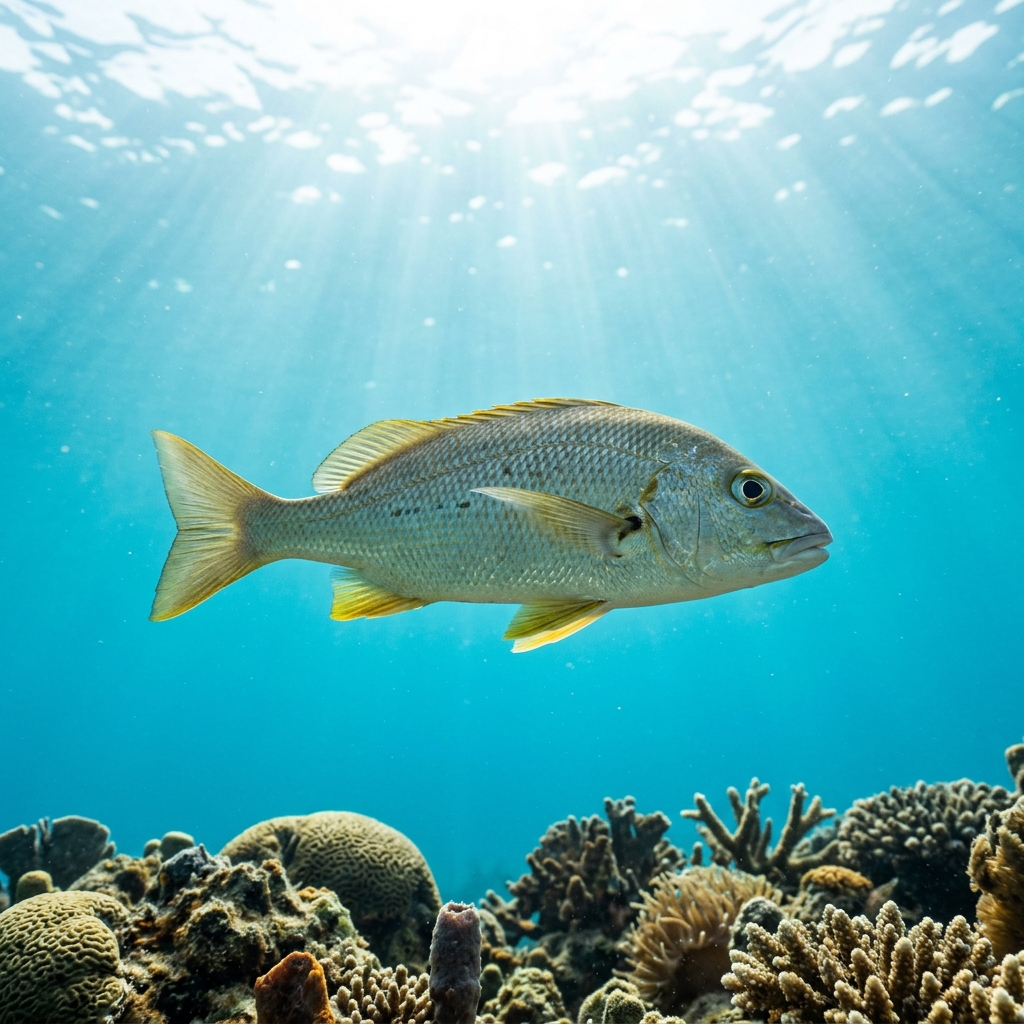
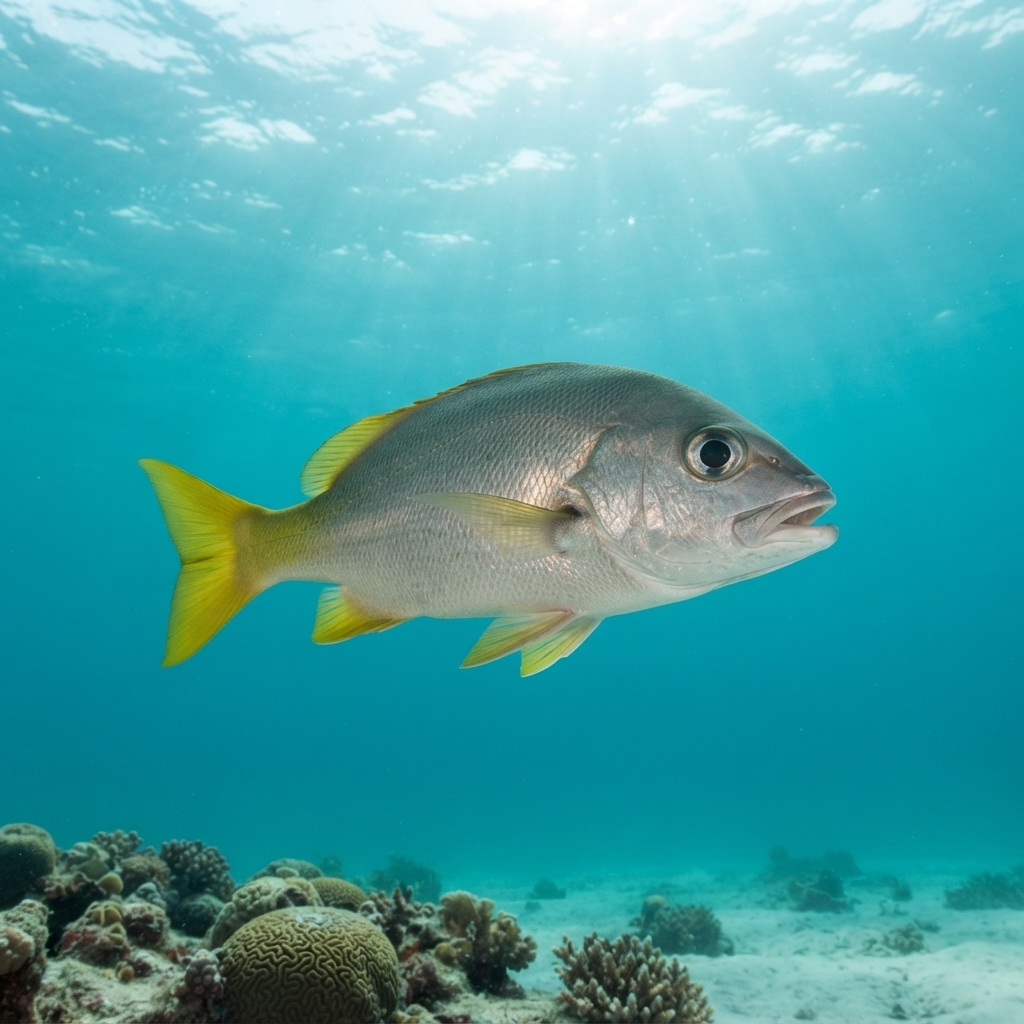
A compact, silvery-grey grunt reaching around 27 cm, with a fairly deep, oval body typical of the haemulidae family. Look for faint horizontal striping along the flanks and a slightly downturned mouth, the feature that gives grunts their name when they grind their teeth. It usually sits close to reef structure rather than out in open water, making it easier to pick out against rock than sand.
Divers typically find it hovering in loose groups near rocky reef and ledges rather than cruising open water, sticking fairly close to structure through the dive. It is not especially flighty but tends to hold a bit of distance rather than approach, so a slow, low approach gives the best look. Most sightings come from the mid-water zone around reef edges rather than deep sand flats.
The grunting sound that gives this family its common name comes from teeth grinding in the throat, amplified by the swim bladder, and can sometimes be felt as much as heard underwater.
No clear season shows up in the sighting data, and with a comfortable range of 21.3 to 27.3C year-round, there is no obvious cold snap pushing it away. Plan your Cape Verde trip around weather and visibility rather than trying to time a season for this fish.
This one is a Cape Verde speciality, logged most reliably around São Vicente and Sal, with a smaller but steady presence off Santiago. Outside Cape Verde it has not turned up in diver records, so if you want to tick this species, the eastern Atlantic islands are the place to look.
Mapping where Guinean Grunt is logged…
Cape Verde is the reliable spot, with sightings concentrated around São Vicente, Sal, and Santiago. It has not been logged with any consistency outside these islands.
There is no strong seasonal pattern in the data, and the species tolerates a wide temperature range of roughly 21 to 27C, so it is a realistic year-round sighting in Cape Verde.
Look for a silvery-grey, deep-bodied fish around 27 cm with faint stripes and a downturned mouth, usually hovering near rocky reef rather than open sand.
They typically reach about 27 cm, a modest, easy-to-overlook size that keeps them close to reef cover rather than out in the open.
Grunts, including this species, produce a grinding or grunting sound by rubbing their pharyngeal teeth together, which the swim bladder amplifies into an audible noise.
Site and sighting data is aggregated from diver logs, iNaturalist and GBIF. For taxonomy and conservation status:
Bluestriped Grunt
1,908 sites