Gymnothorax porphyreus
Uncommon but reliable off North Island, New Zealand and Pucusana, Peru, in cool water from 16.7 to 25.5 C, year-round.
Safety warning
Marked as dangerous to divers, which for a moray of this size means a defensive bite if cornered, prodded, or hand-fed rather than any unprovoked attack. Keep hands out of crevices you have not checked, do not attempt to touch or feed it, and give it room to retreat if it is holding a hole.
If you're bitten
BiteGeneral first-aid guidance, not a substitute for professional medical care. In an emergency, call your local emergency number.
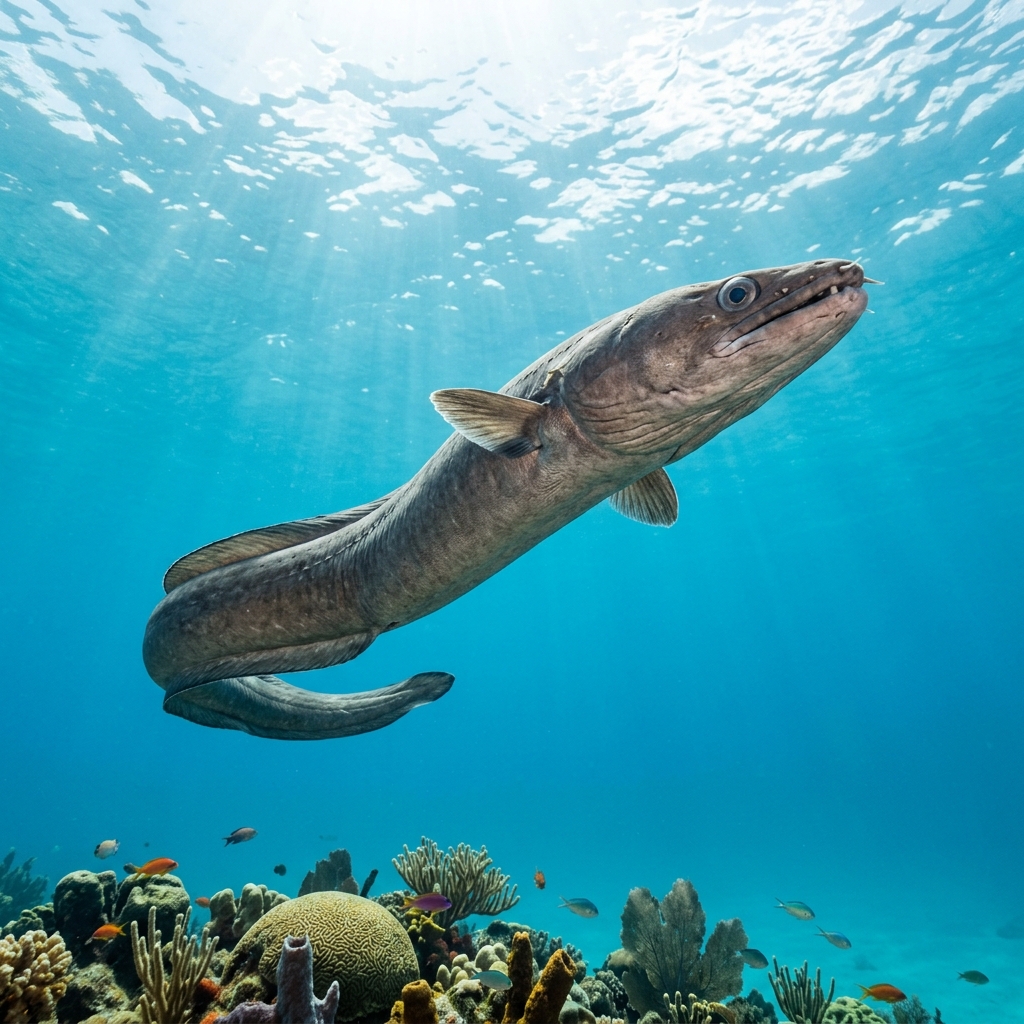
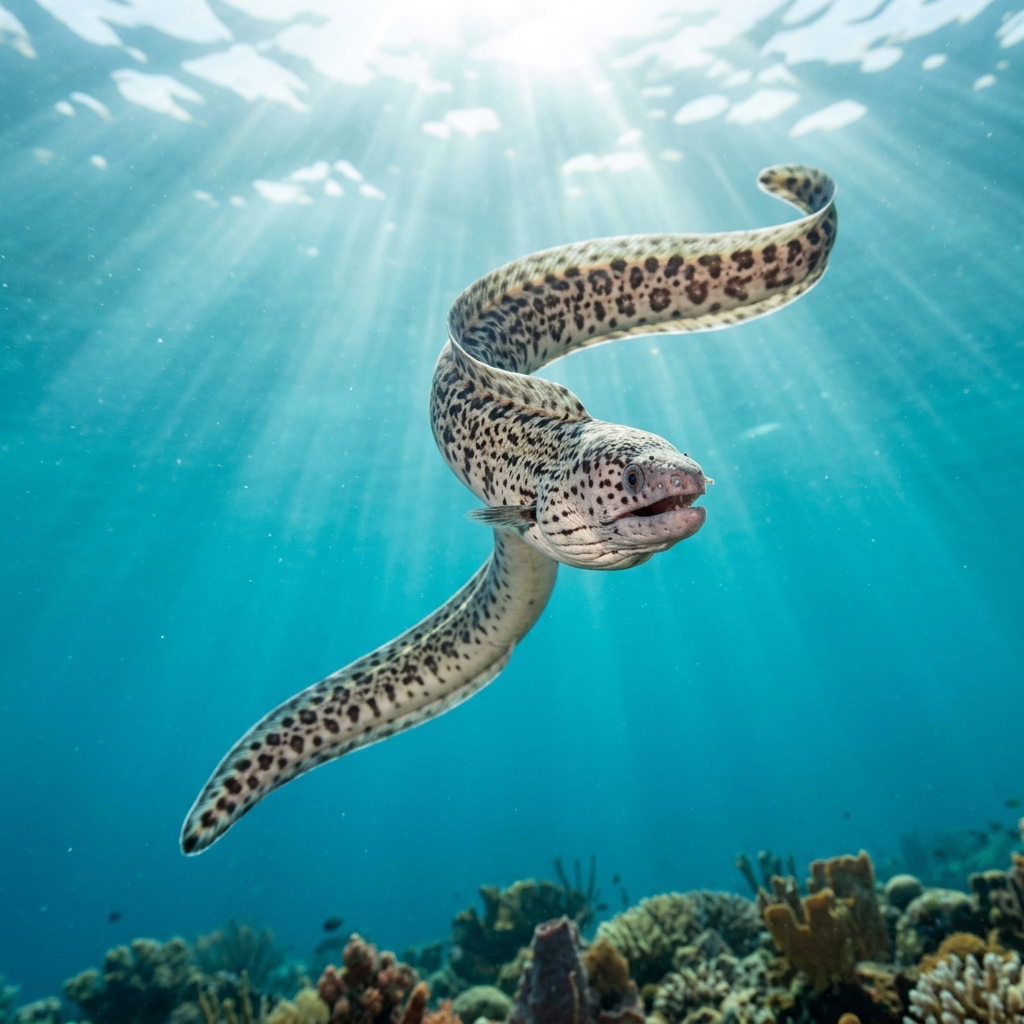
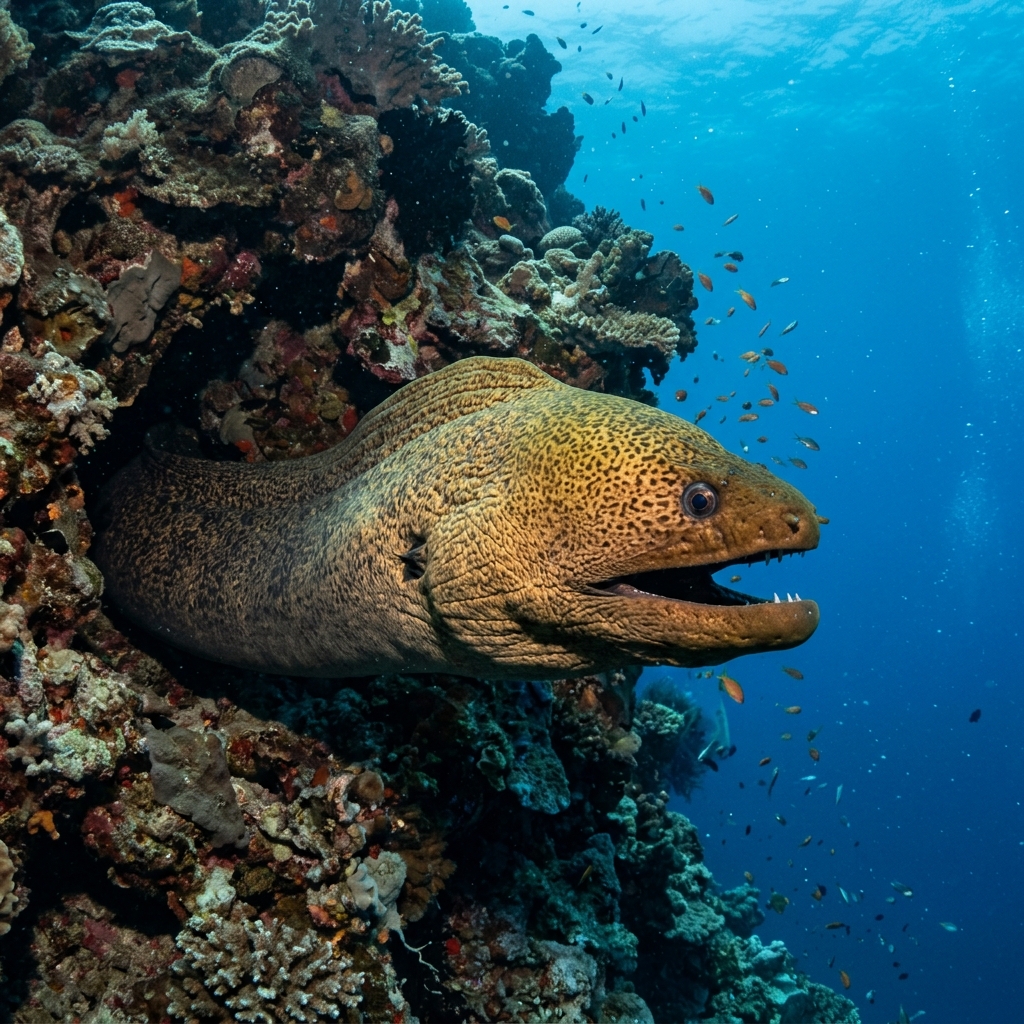
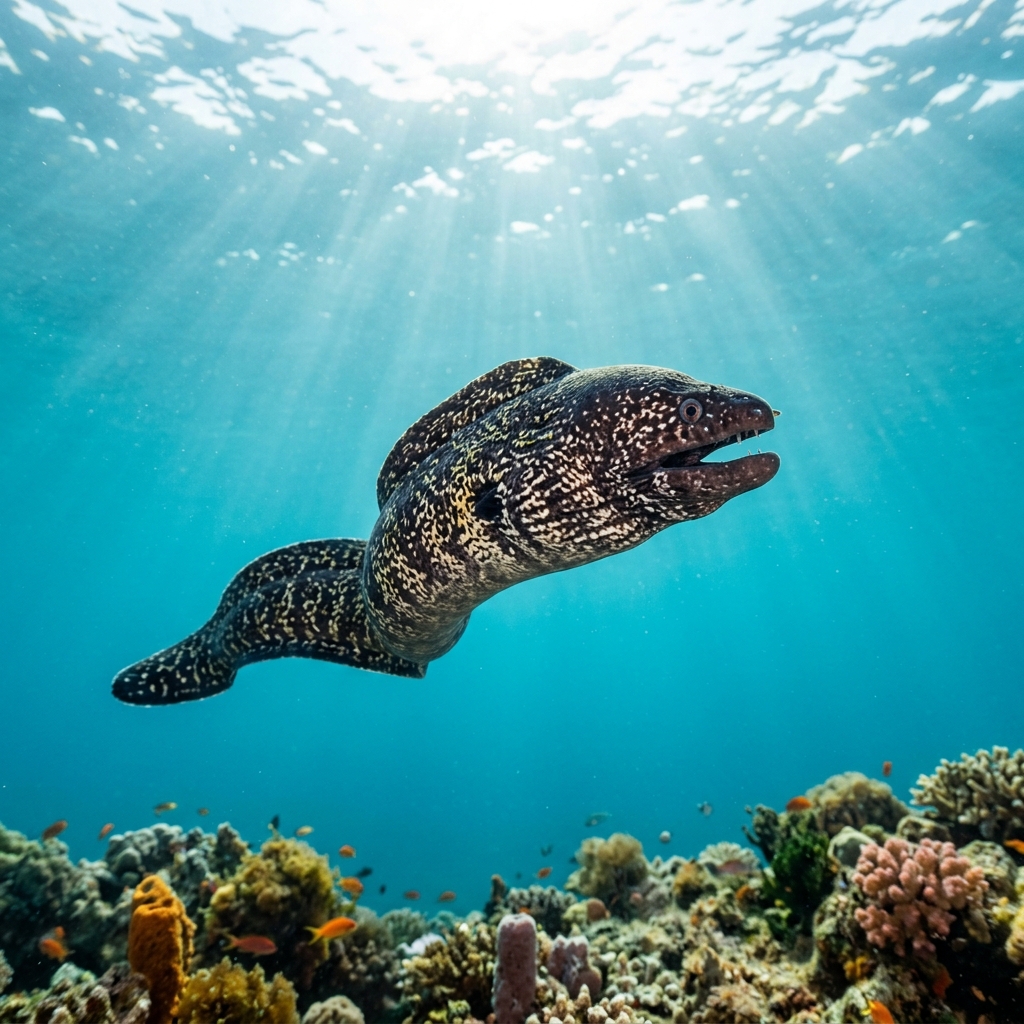
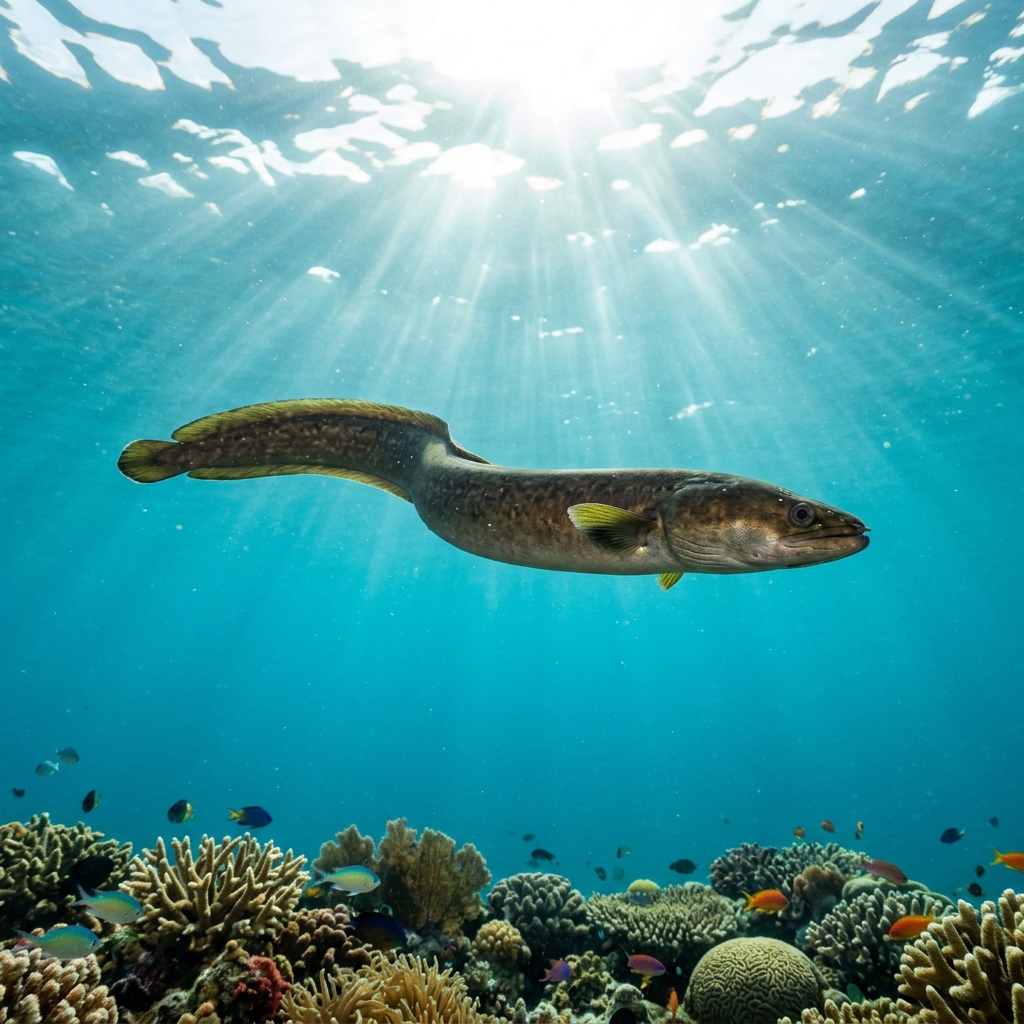
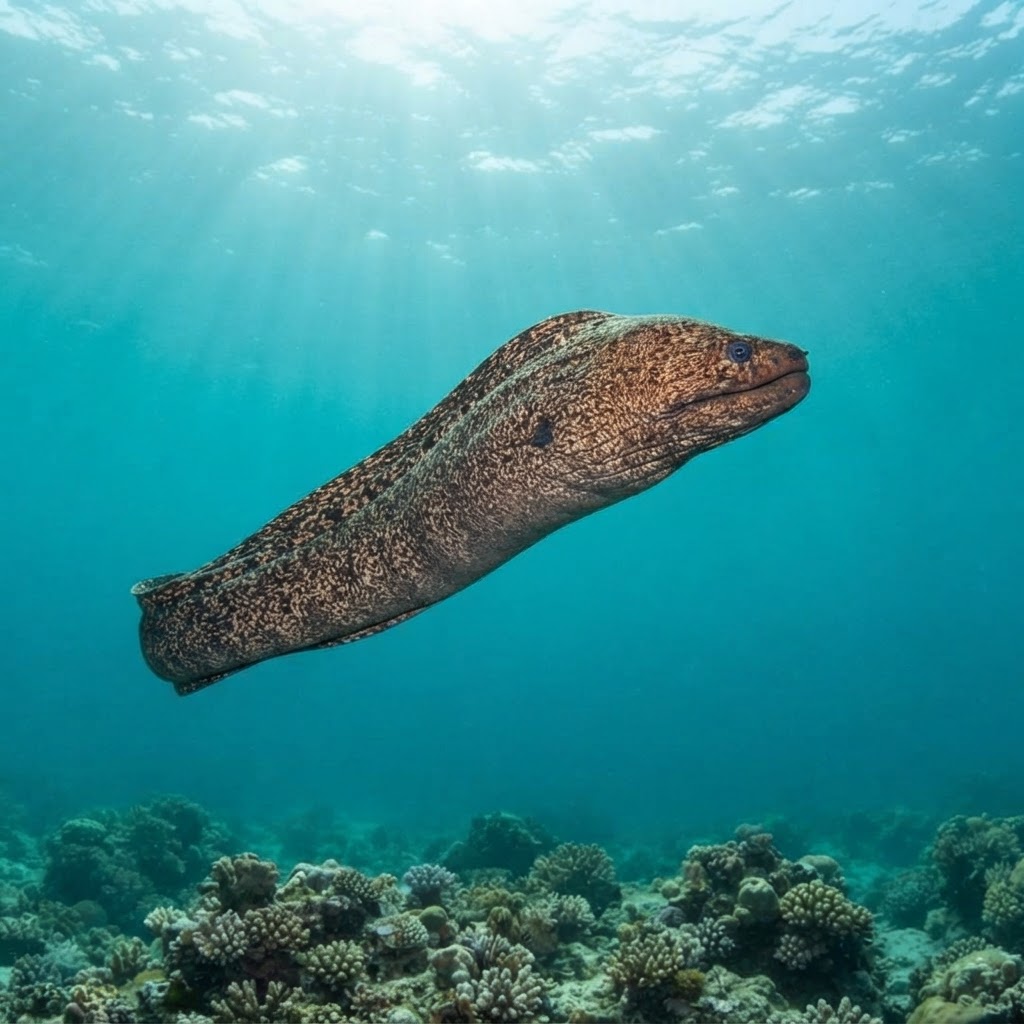
Grows to around 72 cm, with a stocky, muscular body coloured in mottled purple-brown to grey tones that blend into rocky reef backgrounds. Like other morays, it has no pectoral fins and a long dorsal fin running most of the body length, and you will usually spot only the head and forebody poking from a crevice, mouth opening and closing as it breathes. The plain, mottled colouring without bold bars, spots, or a ribbon-like tail is the main thing that separates it from flashier moray species.
Typically seen wedged into a crevice or hole in rocky reef with just its head and part of its body showing, watching divers rather than bolting. It is not a species that swims openly on the reef top, so most encounters are close-range and stationary. Divers report it as uncommon to rare at most sites, so a sighting usually means a slow, careful look into likely holes rather than a chance pass in open water.
Like other moray eels it relies on a strong sense of smell and a second set of jaws in the throat (pharyngeal jaws) to grip and pull prey back into its mouth, a feeding trick unique among fish.
Sightings are spread across the year with no detected season, which fits its wide observed temperature range of 16.7 to 25.5 C. Plan around local dive conditions and visibility rather than chasing a particular month.
Most consistently logged around North Island, New Zealand, where it turns up at cool-water rocky reef sites, with a second strong population at Pucusana, Peru. Outside these two regions it has not been well documented, so these are the reliable bets for a planned sighting.
Mapping where Griffin's Moray is logged…
The most reliable regions are North Island, New Zealand and Pucusana, Peru, both rocky reef areas where divers log it regularly, though usually as an uncommon or rare find rather than a guaranteed sighting.
There is no clear season in the data, so sightings happen year-round. It has been recorded across a wide temperature range of 16.7 to 25.5 C, meaning water temperature is not a limiting factor for spotting it.
They can bite if provoked, cornered, or hand-fed, which is true of most moray species. Left alone in their crevice and not touched, they pose little risk to divers who keep a respectful distance.
Look for a stocky moray around 70 cm long with mottled purple-brown to grey colouring and no bold pattern, usually with just its head showing from a rocky crevice. The plain mottled look is the key clue, since it lacks the stripes, spots, or bright colours of many reef morays.
They typically reach around 72 cm in length, making them a mid-sized moray rather than one of the larger reef species.
Like all moray eels, it uses a second set of jaws inside its throat to drag prey down after the first bite, a feeding mechanism found only in morays among fish.
Site and sighting data is aggregated from diver logs, iNaturalist and GBIF. For taxonomy and conservation status:
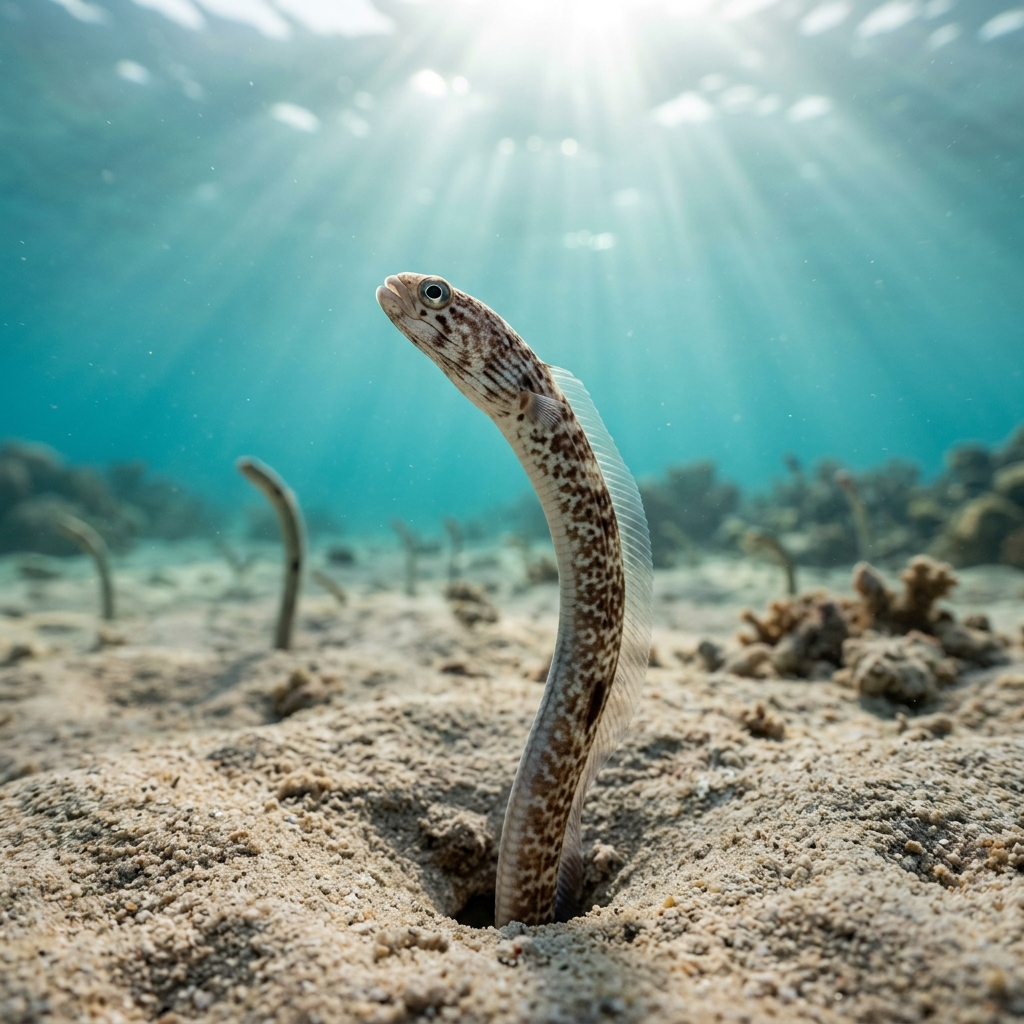
Garden Eel
2,448 sites