Symphodus cinereus
Small, drab and easy to miss: find Grey Wrasse in Murcia, the French Riviera and Kvarner in mild 16-21°C water year-round.
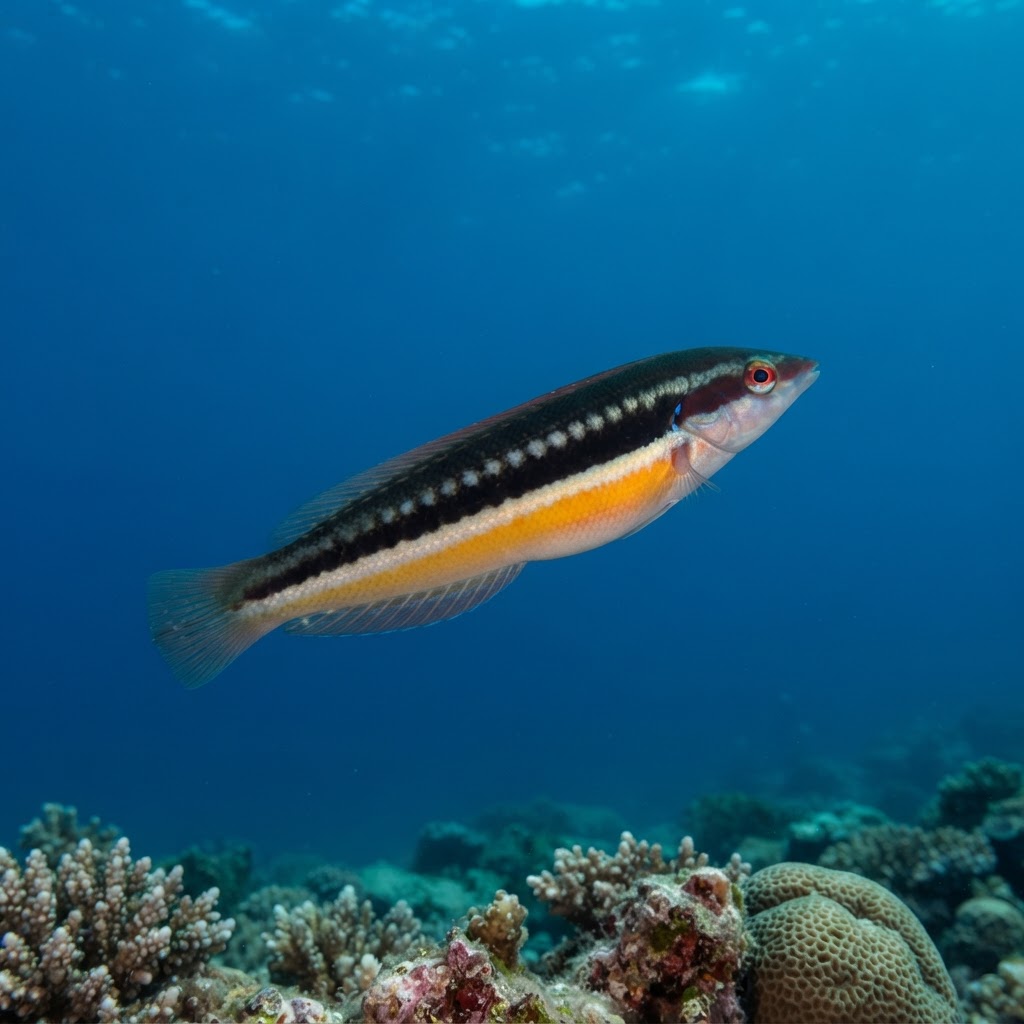
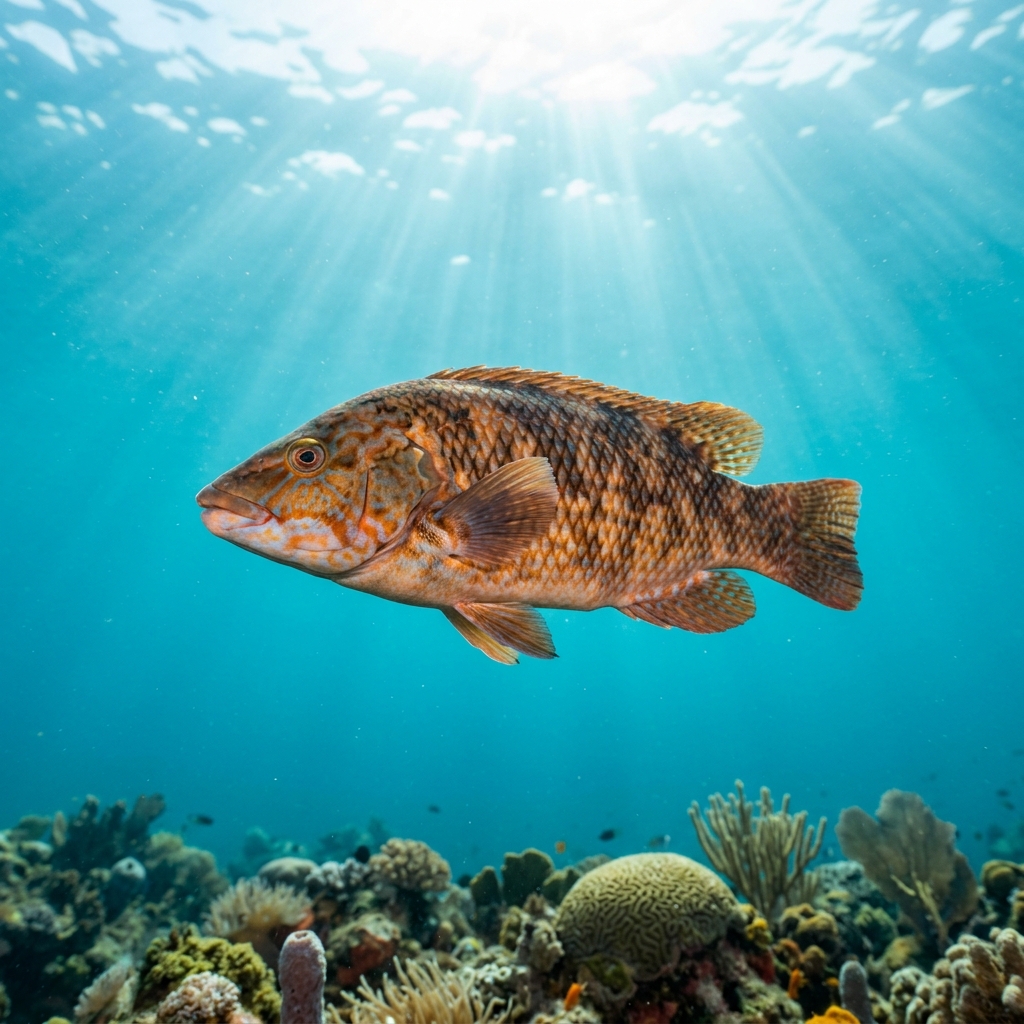
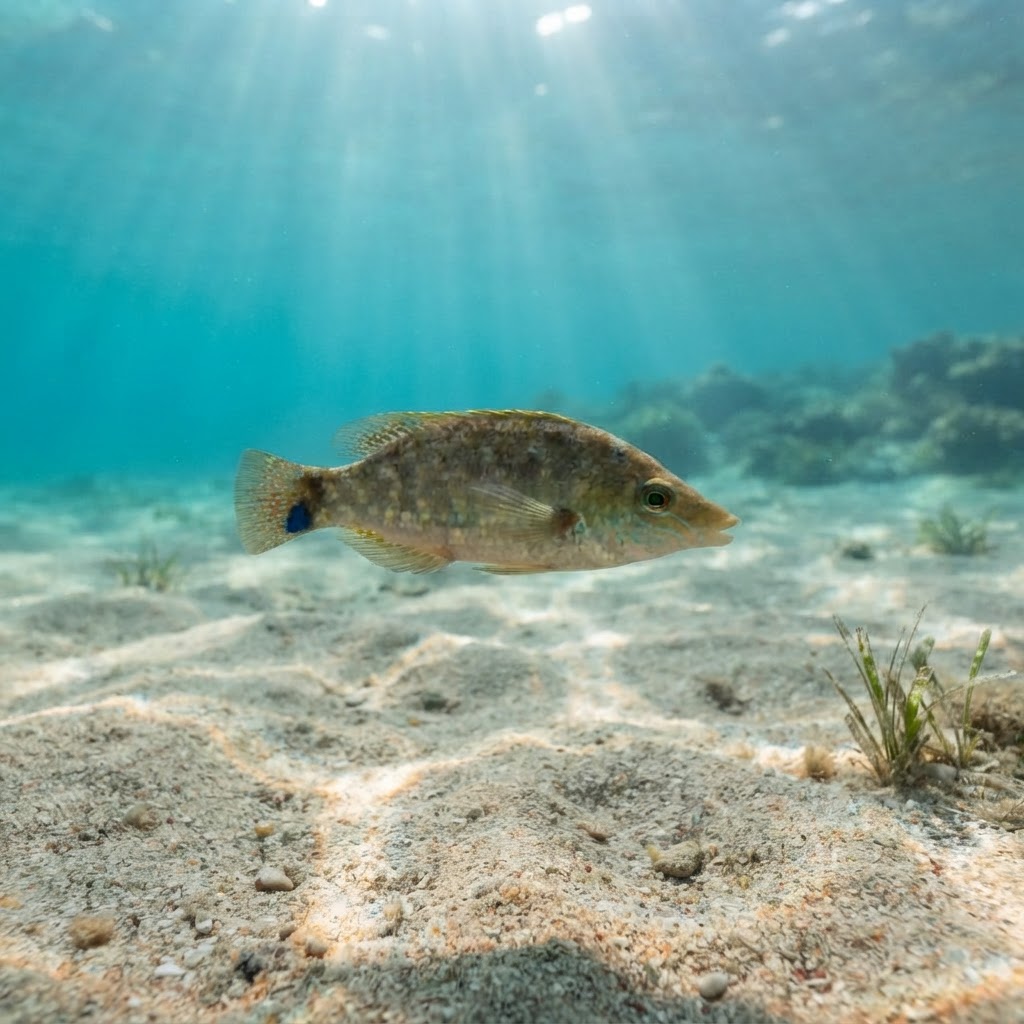
A small, slender wrasse at around 11cm, coloured in muted grey to olive-brown with a mottled or speckled pattern that breaks up its outline against sand and weed. It lacks the bold stripes or bright patches many reef wrasses show, which is itself a clue: if it looks plain and forgettable, it is probably this one. Look for a slightly pointed snout and the typical wrasse swimming style, a fluttering motion driven mostly by the pectoral fins rather than the tail.
Divers typically find it hovering low over sand, seagrass or rocky patches close to the bottom, staying near cover rather than out in open water. It is not a fish that seeks divers out, most logs describe it as uncommon to rare at any given site, so a slow look through weedy or rubble-strewn ground gives the best chance. Like most small wrasses it tends to dart for cover rather than hold still when approached closely.
It is one of the smaller demersal wrasses in the Mediterranean, and its plain, mottled colouring is a camouflage strategy for a fish that spends most of its time picking small invertebrates off the seabed rather than out in the open.
Sighting data shows no strong seasonal pattern, so treat it as a year-round find. Observed water temperatures range from 16.2 to 21.3 C, consistent with cooler-water Mediterranean diving in spring and autumn as much as summer.
Reef neighbours a diver could mistake it for. Use the identification notes above to tell them apart.
Most commonly logged in Spain and France, with the French Riviera and Provence and Murcia standing out as the strongest regions, followed by Catalonia and Valencia. Croatia is also reliable, particularly Kvarner and Istria, with further sightings logged in Italy's Liguria and Campania coasts, Slovenia and Portugal.
Mapping where Grey Wrasse is logged…
It turns up across the Mediterranean, with the strongest sightings in France's Riviera and Provence coast and Spain's Murcia region. Croatia's Kvarner and Istria regions, Catalonia, Valencia, and parts of Italy and Slovenia also log it regularly.
There is no clear seasonal pattern in the sighting data, so it is considered a year-round species. It has been observed in water from about 16 to 21 C, which fits typical Mediterranean spring-through-autumn diving conditions.
Look for a small wrasse, about 11cm, with a plain grey to olive mottled body and no bold stripes or bright colours. It hovers low over sand or weedy bottom and darts for cover when approached, rather than swimming boldly in open water.
They stay small, typically reaching around 11cm as adults, making them one of the more modestly sized wrasses divers encounter in the Mediterranean.
No, they pose no threat to divers. They are small, carnivorous bottom-feeders that keep their distance and show no aggressive or territorial behaviour towards people.
Site and sighting data is aggregated from diver logs, iNaturalist and GBIF. For taxonomy and conservation status:
Bird Wrasses
3,632 sites