Pleurobranchaea maculata
A soft-bodied, toxic sea slug logged from Puerto Madryn to New Zealand's North Island in water from 13 to 25C. Here's how to spot one.
Safety warning
Don't handle it. Its tissue contains tetrodotoxin, a nerve toxin that can cause serious poisoning if ingested and may irritate skin or eyes if you touch your face after contact, so leave it undisturbed and photograph it instead.
Handle with care
Toxic if handledGeneral first-aid guidance, not a substitute for professional medical care. In an emergency, call your local emergency number.
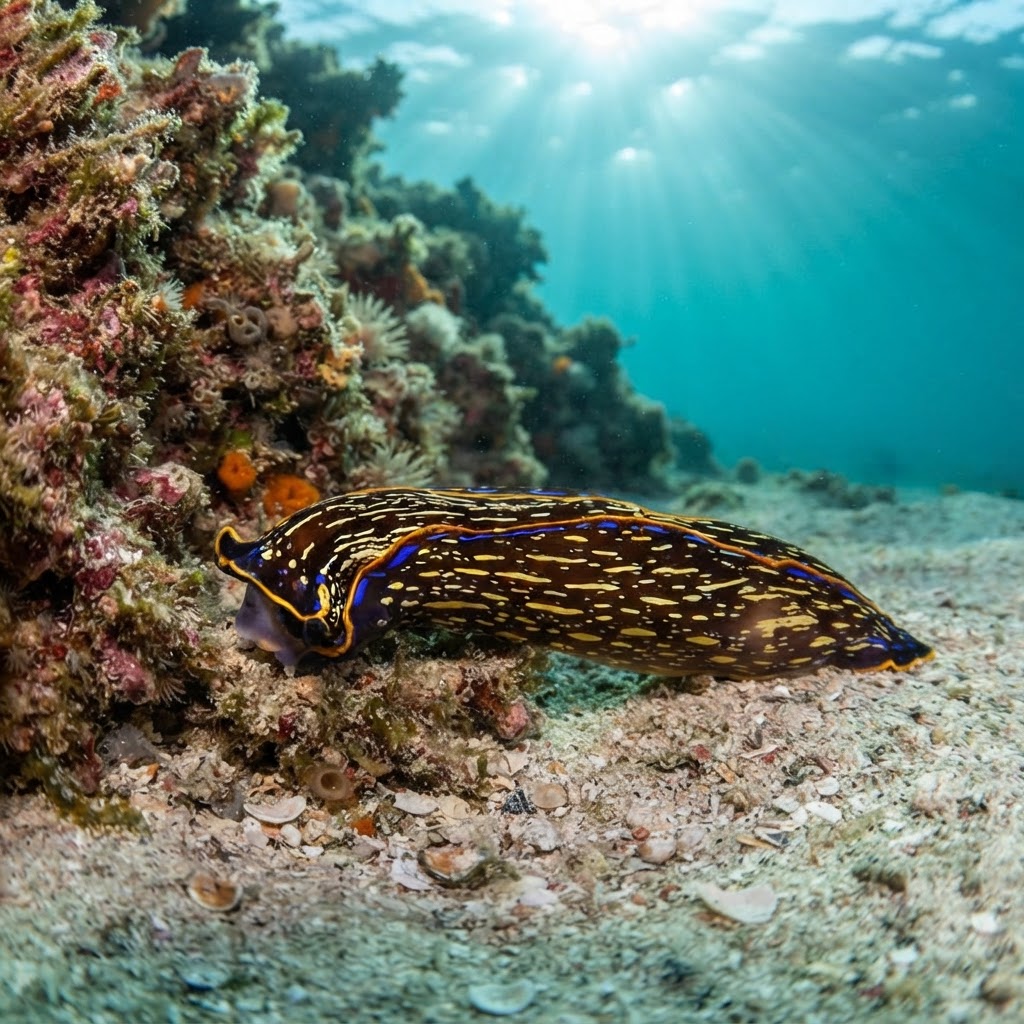
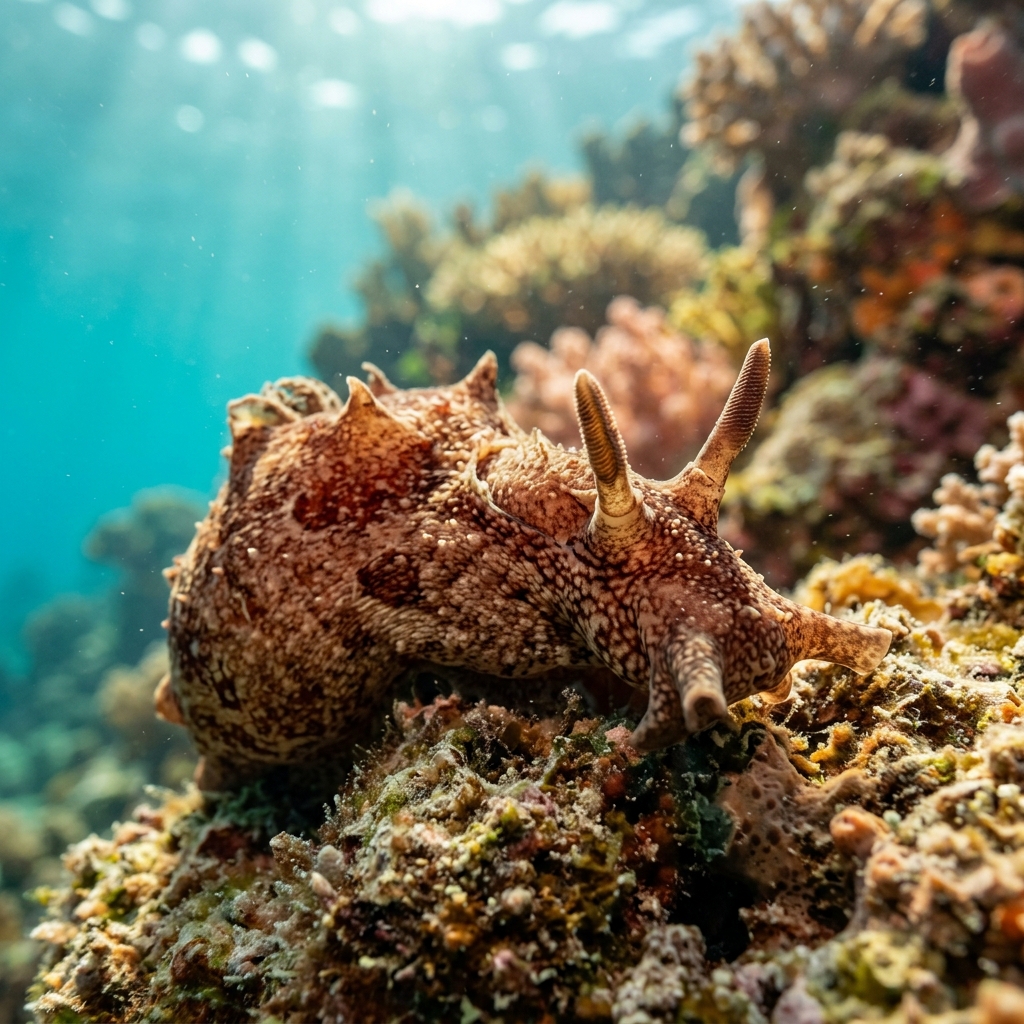
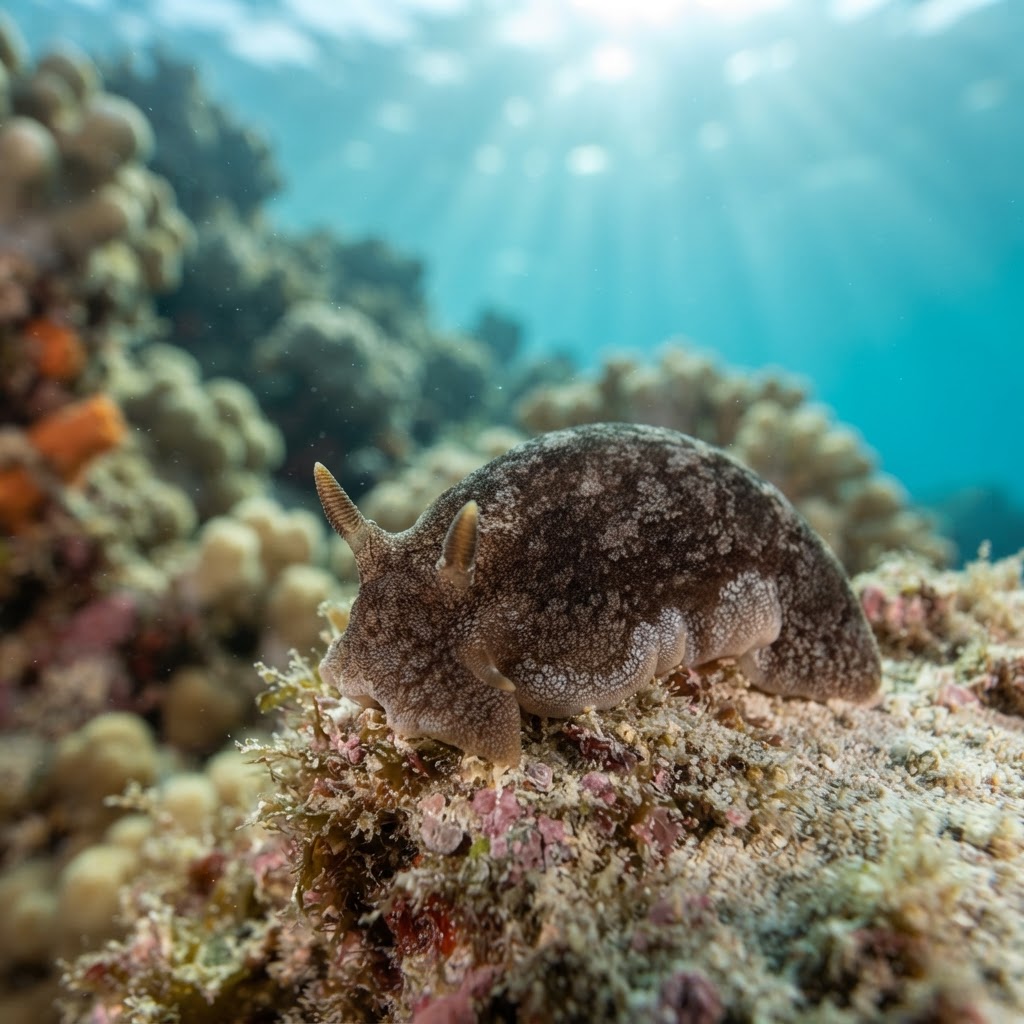
Look for a flattened, fleshy, oval body around 7 cm long, mottled grey-brown and often blending into sand or silt. It lacks a visible shell and has a broad head veil (oral veil) at the front used to sense prey ahead of it, plus gills tucked under the right side of its body rather than on top. There's no dramatic colour pattern here, so divers key on the slug-like flattened profile and drab camouflage rather than any bright markings.
Divers most often find it moving slowly across sand, silt or low reef structure, using its head veil to feel out food ahead of it rather than relying on sight. It's an active scavenger and predator that will take carrion and other slugs, and it shows little reaction to a diver's presence beyond continuing its slow crawl. Most logs describe single animals rather than groups, and it's typically found low on the substrate rather than up in the water column.
It's an opportunistic predator that will eat almost anything it can overpower or scavenge, including other sea slugs and small invertebrates, and its tissues carry a potent toxin (tetrodotoxin) that has been linked to dog deaths on New Zealand beaches when washed-up animals were eaten.
There's no clear seasonal pattern in the sightings, so treat it as a year-round find. Its recorded temperature range of roughly 13 to 25C covers cooler temperate conditions through to warmer months, which lines up with sightings spread across the calendar.
Reef neighbours a diver could mistake it for. Use the identification notes above to tell them apart.
Puerto Madryn in Argentina is the strongest single region for this one, with steady logs from local divers. It also turns up reliably around Victoria and Queensland in Australia, and on New Zealand's North Island, making all three countries solid bets if you're specifically hunting for it.
Mapping where Grey Side-grilled Slug is logged…
It's most reliably reported around Puerto Madryn in Argentina, plus Victoria and Queensland in Australia and the North Island of New Zealand. Sightings are spread across all three countries rather than concentrated in one hotspot.
There's no strong season in the data, so it can turn up any month. It's been logged in water from about 13C up to nearly 25C, so both cooler and warmer dive seasons work.
They're not aggressive, but they carry tetrodotoxin, the same nerve toxin found in pufferfish. Look, don't touch, and never let one near your mouth or an open cut.
Check for a flattened, shell-less body around 7 cm long in mottled grey-brown tones, with a broad flap-like veil at the front of the head. It moves slowly over sand or silt rather than swimming.
They typically reach around 7 cm in length, making them a modest-sized find best spotted by scanning sandy or silty patches closely.
It's toxic enough that stranded animals in New Zealand have caused fatal poisonings in dogs that ate them off the beach, thanks to the tetrodotoxin in their tissue.
Site and sighting data is aggregated from diver logs, iNaturalist and GBIF. For taxonomy and conservation status:
Light-spotted Aegires
3,168 sites