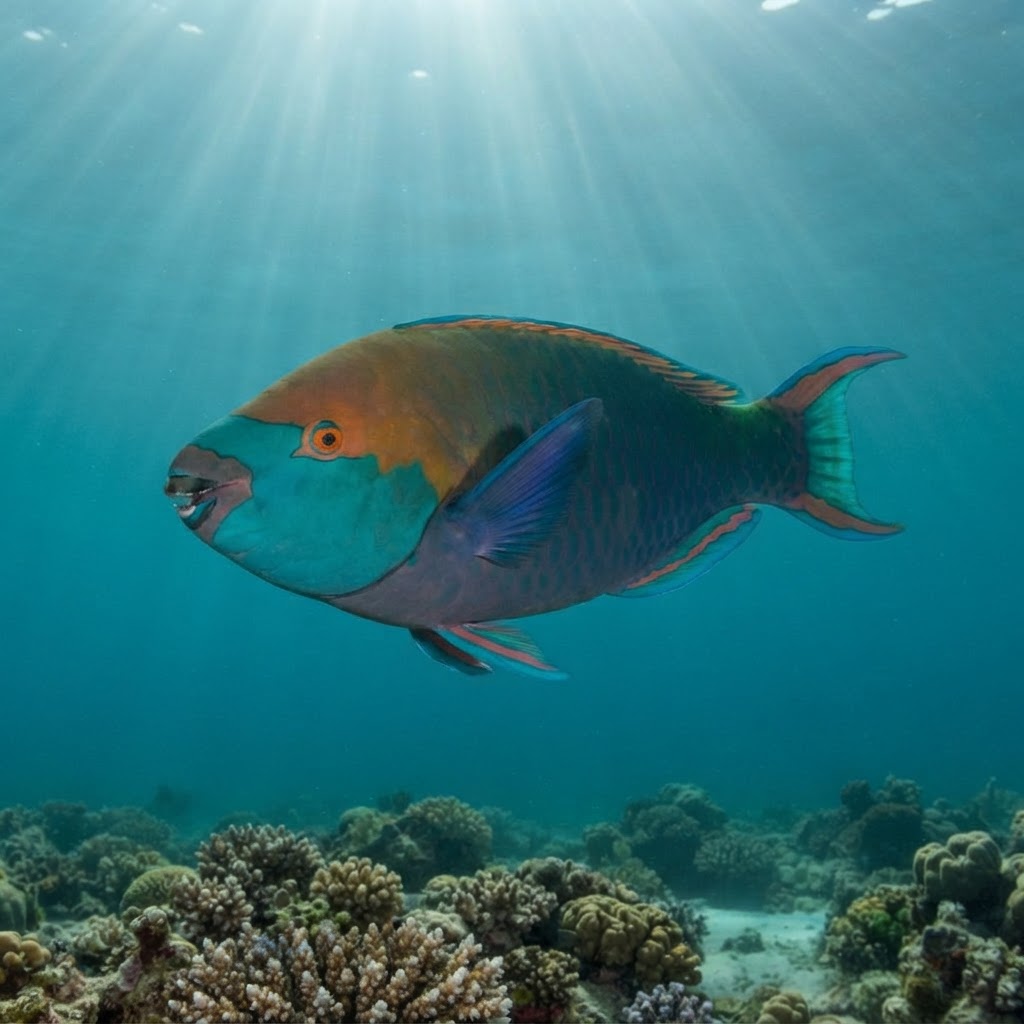
Scarus prasiognathos
Uncommon but steady on reefs in Malaysia, Thailand and the Maldives at 26-29C, year-round with no strong season.
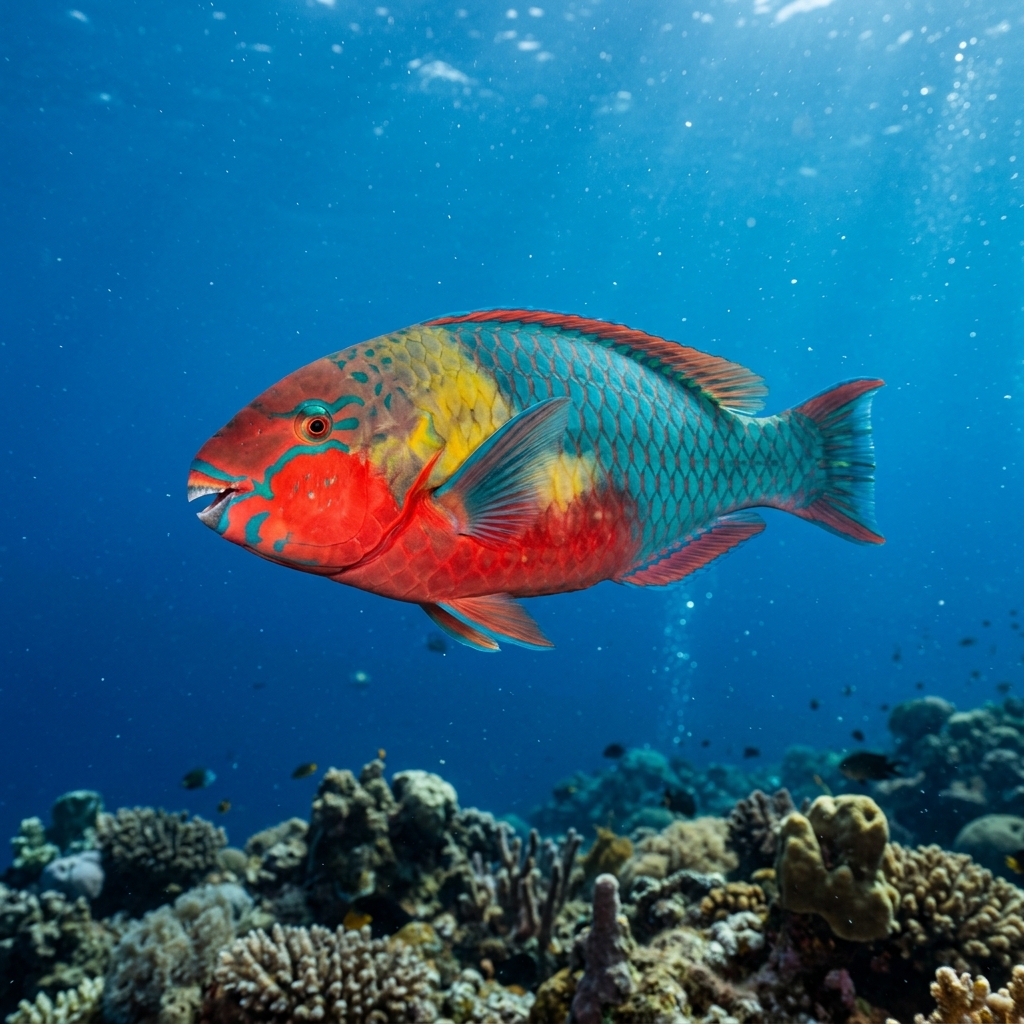
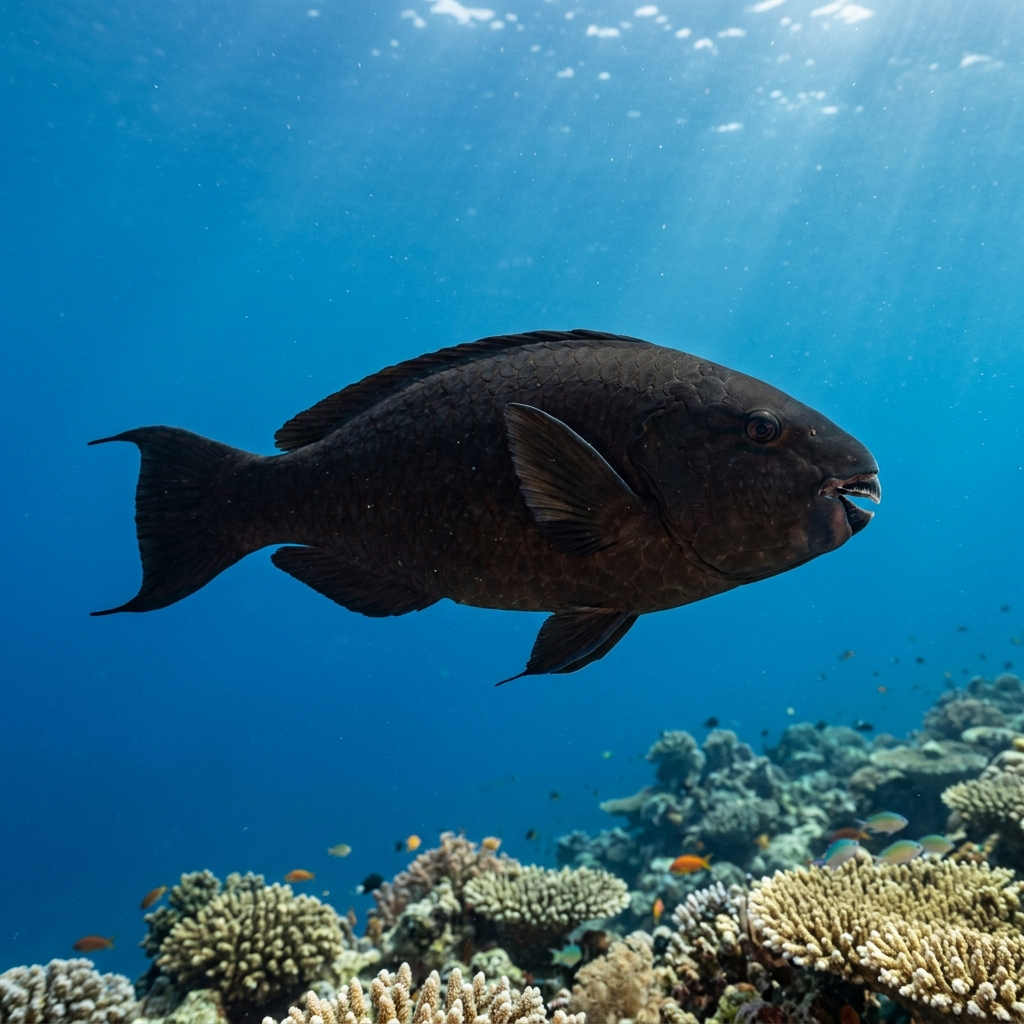
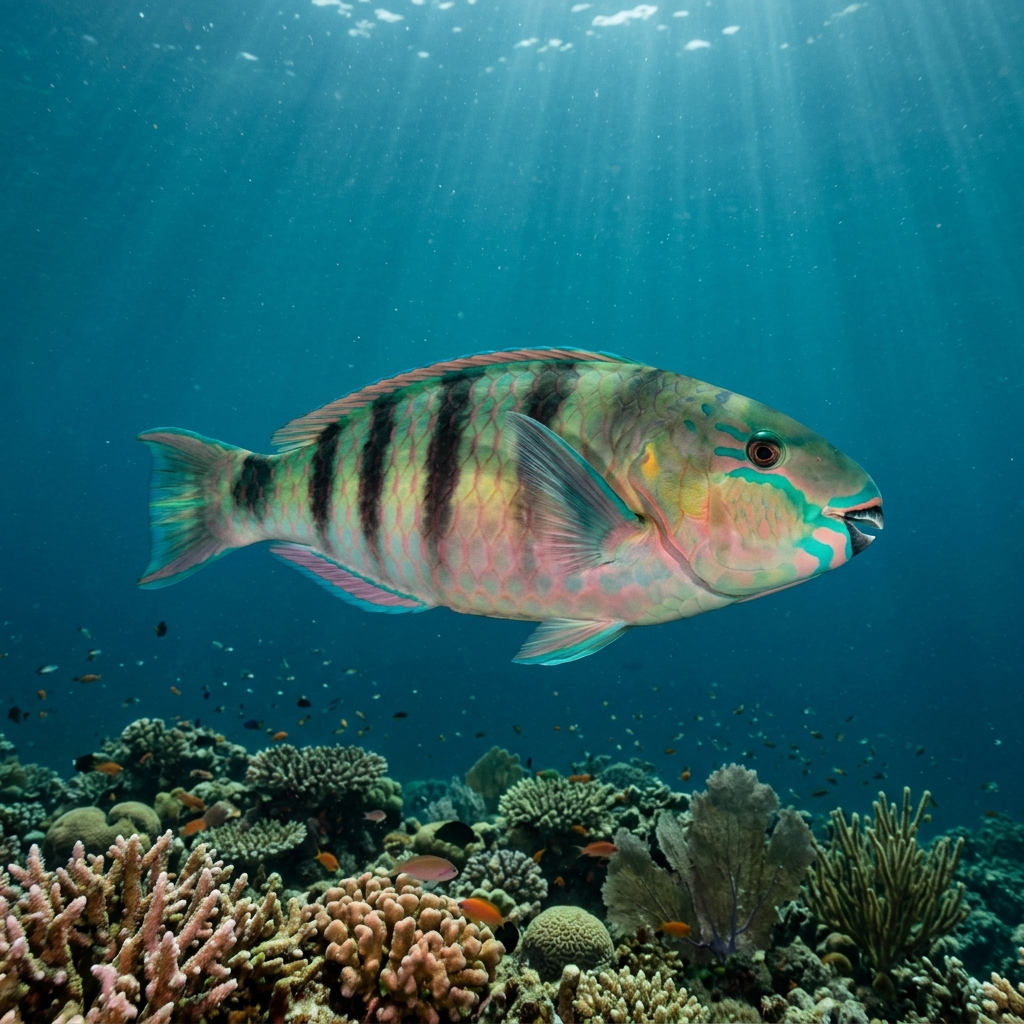
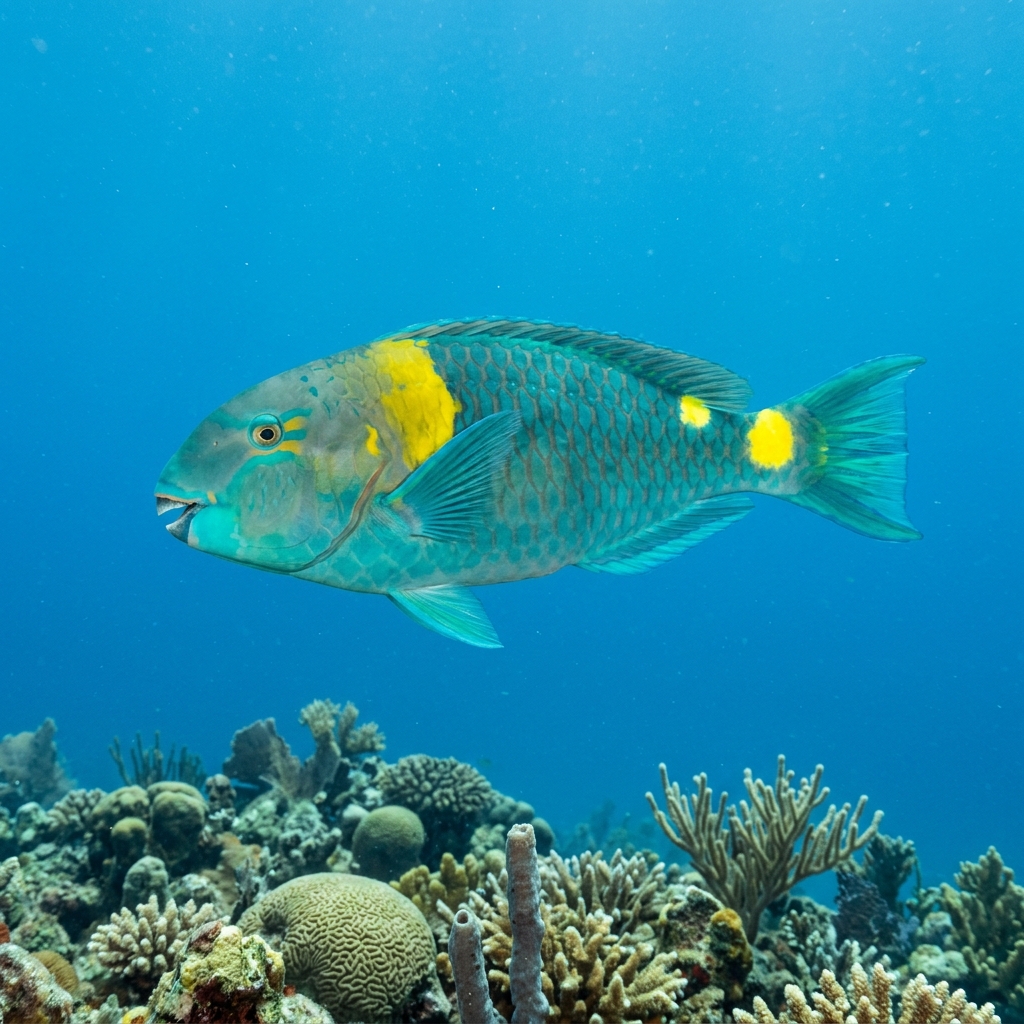
A large, chunky parrotfish reaching around 49 cm, with a blue-green body and the namesake bright green patch across the throat and chin. The beak-like fused teeth and thick lips are easy to spot as it works over reef rock, and adults show a more solid, deeper green-blue tone than the mottled, browner juveniles. It swims in open water over the reef flat rather than hiding in crevices, which makes its size and colour easy to judge at a glance.
Usually seen alone or in loose company grazing algae off dead coral and rock, working the reef surface with steady bites from its parrot-like beak. It tends to hold its ground rather than bolt when divers approach, giving a decent window for a close look before it moves off to the next patch of reef. Most sightings are on the reef flat and upper slope, from just below the surface down to around 25 metres.
Like other parrotfish, it grinds up the reef rock and dead coral it grazes, passing the leftover coral sand back out as fine sediment, one of the reef's main sand-producers.
No clear seasonal pattern shows up in the sightings, and with a comfortable range of 26.1 to 29.3C it's present on these tropical reefs all year, so any month you're diving Malaysia, Thailand or the Maldives is a fair shot.
Most reliably logged in Peninsular Malaysia's East Coast sites, Thailand's Phuket, Koh Lipe, Khao Lak, Koh Phi Phi and Koh Tao, and across the Maldives' Central and Northern Atolls. Smaller but real populations turn up in Australia, India, Sri Lanka and Palau, so it's a fixture of Indo-Pacific reef diving well beyond those three strongholds.
Mapping where Greenthroat Parrotfish is logged…
Best odds are on reefs in Peninsular Malaysia's East Coast, Thailand around Phuket, Koh Lipe, Khao Lak and Koh Tao, and the Maldives' Central and Northern Atolls. It also shows up on reefs in Australia, India, Sri Lanka and Palau.
There's no strong season in the sightings, and the water it favours, roughly 26 to 29C, holds steady year-round across its range, so it's a reliable find on any visit.
Look for a large, solid blue-green parrotfish with a bright green throat patch and a thick, beak-like mouth. It grazes openly over reef rock rather than sheltering, so its size and colour are usually easy to confirm.
They reach around 49 cm, making them one of the larger reef parrotfish you'll come across on a typical dive.
They graze algae and dead coral rock with a fused, beak-like set of teeth, then excrete the ground-up coral as fine sand, making them a steady contributor to reef sand production.
Site and sighting data is aggregated from diver logs, iNaturalist and GBIF. For taxonomy and conservation status:
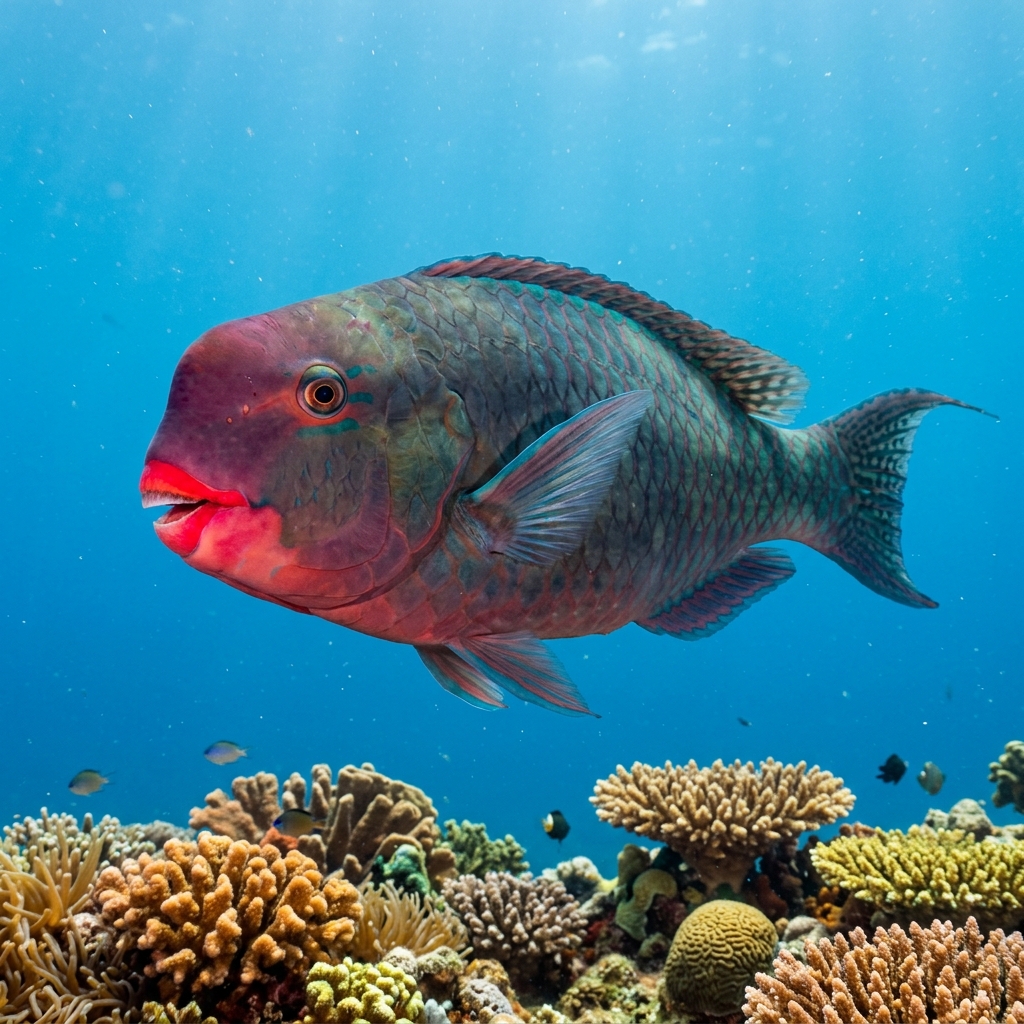
Redlip Parrotfish
2,789 sites