Sparisoma atomarium
Small reef parrotfish logged around Cayman Brac and Grand Cayman, comfortable in 22.6-27.6C waters year-round.
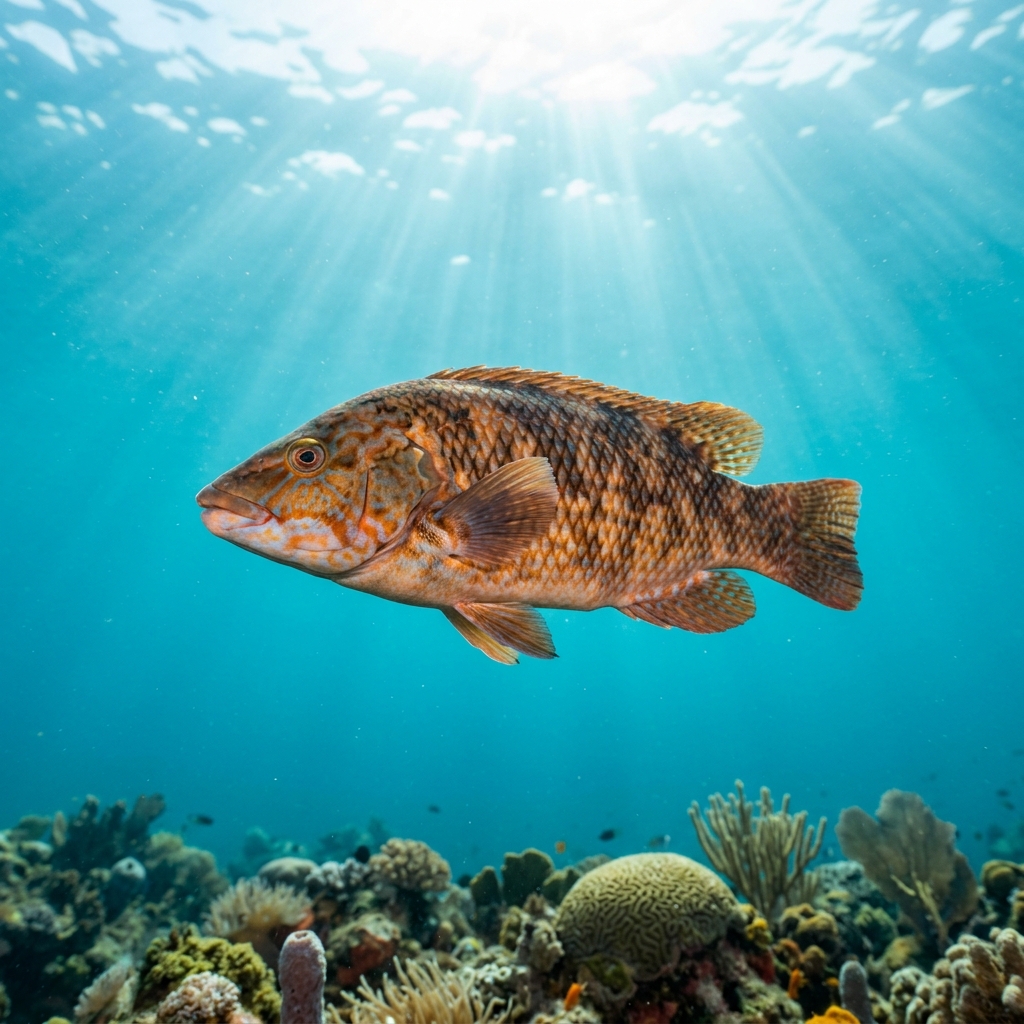
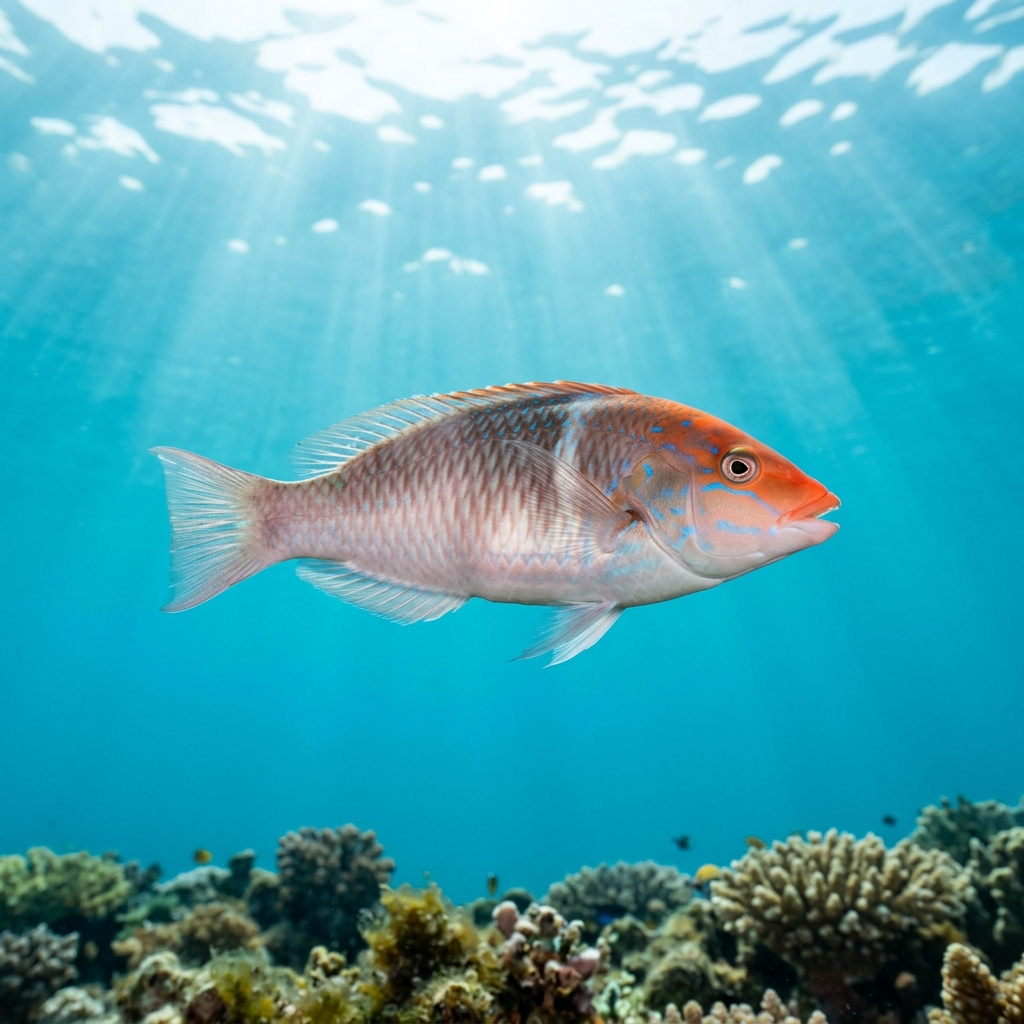
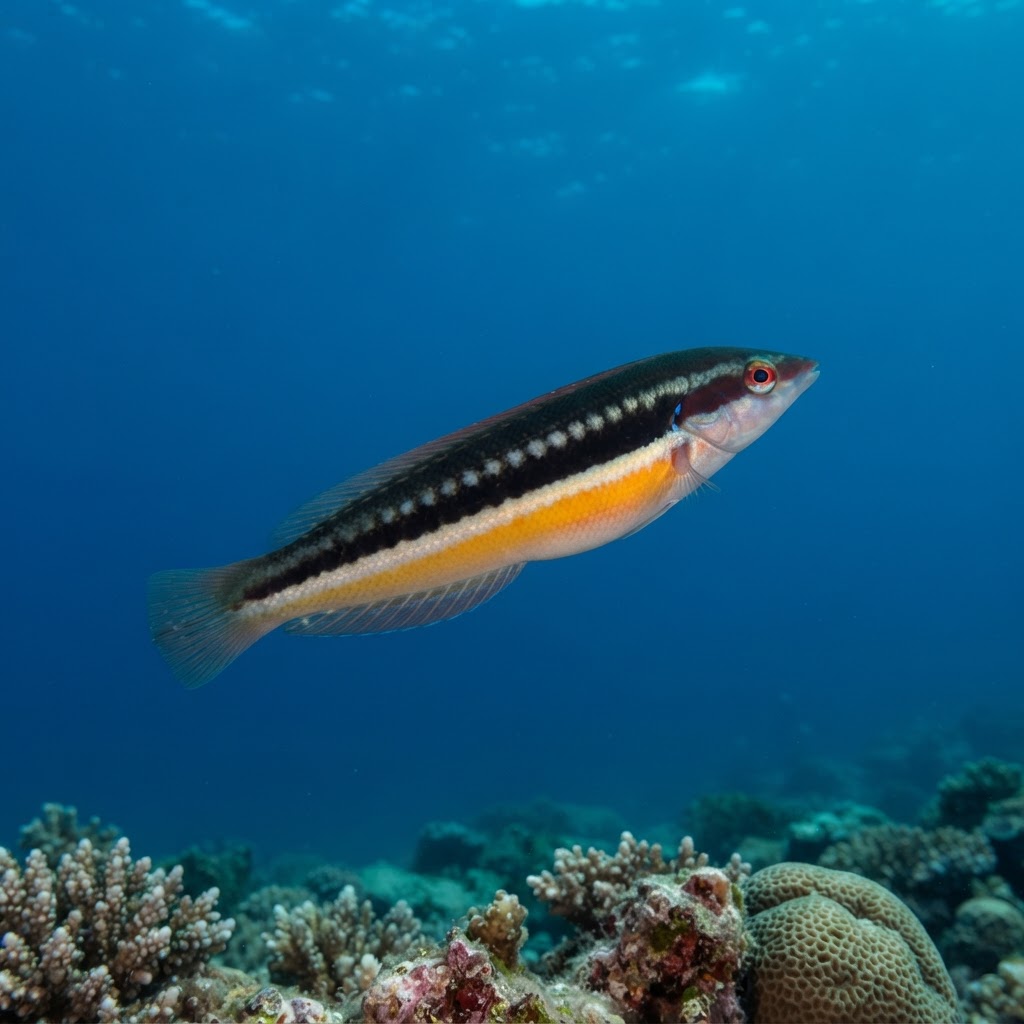
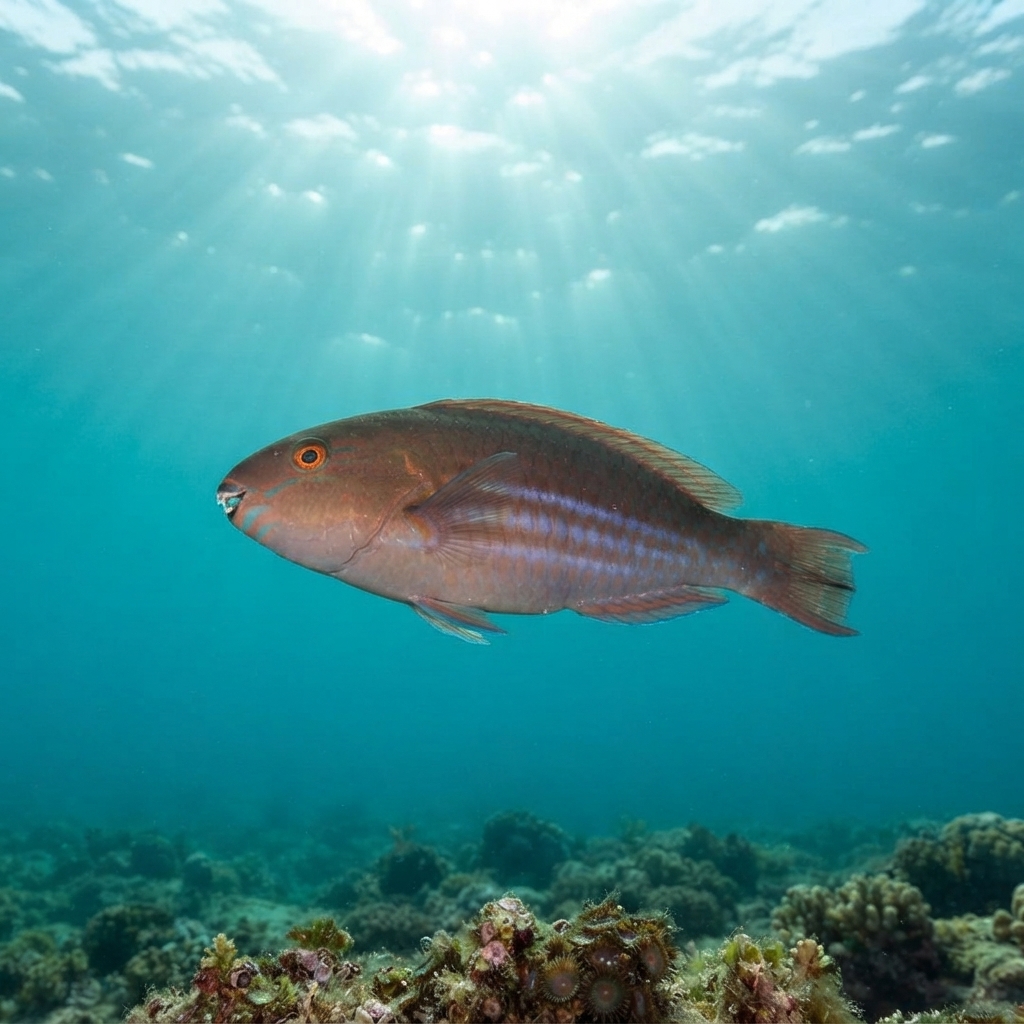
A small, chunky parrotfish topping out around 18 cm, easy to overlook against rubble and reef rock. Look for a mottled reddish-brown to olive body with scattered pale green or whitish blotches rather than bold stripes, and the fused, beak-like teeth typical of parrotfishes. It has none of the elongated body shape or heavy facial features of the large wrasses divers sometimes lump it in with, so its small size alone is often the first tell.
Divers typically spot it picking around low reef structure and rubble patches, grazing algae off rock and dead coral in short, unhurried bursts. It tends to stay close to cover and is logged as uncommon to rare even at its best sites, so it rarely draws attention the way larger, more colourful parrotfish do. Expect brief, low-key encounters rather than a fish that lingers for a photo.
Like other parrotfish, it grazes algae off rock and reef substrate with fused beak-like teeth, a small but steady contribution to keeping reef surfaces clear for coral growth.
Sighting data shows no clear seasonal pattern, and its 22.6 to 27.6C temperature niche sits within the normal year-round range for Caribbean reefs, so any time of year works. Divers log it consistently rather than in a particular season.
Most reliably logged in the Cayman Islands, especially around Cayman Brac and Grand Cayman, with a secondary population around Anse Cochon in Saint Lucia. Outside these two countries it has little recorded presence, so Caribbean reef trips to the Caymans give the best odds.
Mapping where Greenblotch Parrotfish is logged…
Best odds are in the Cayman Islands, particularly Cayman Brac and Grand Cayman, with additional sightings around Anse Cochon in Saint Lucia. It has minimal recorded presence outside these two countries.
No strong season shows up in sighting data, and its preferred water temperature of 22.6 to 27.6C is typical for the Caribbean year-round, so it can turn up on any dive regardless of month.
Look for a small, roughly 18 cm parrotfish with a mottled reddish-brown to olive body scattered with pale green blotches, usually hovering close to rubble or reef rock rather than out in open water.
They stay small for a parrotfish, typically reaching around 18 cm in length, which makes them easy to miss against a busy reef background.
Even at its best sites in the Cayman Islands it is logged as uncommon to rare, so spotting one is a matter of careful looking rather than a guaranteed sighting.
Site and sighting data is aggregated from diver logs, iNaturalist and GBIF. For taxonomy and conservation status:
Bird Wrasse
3,632 sites