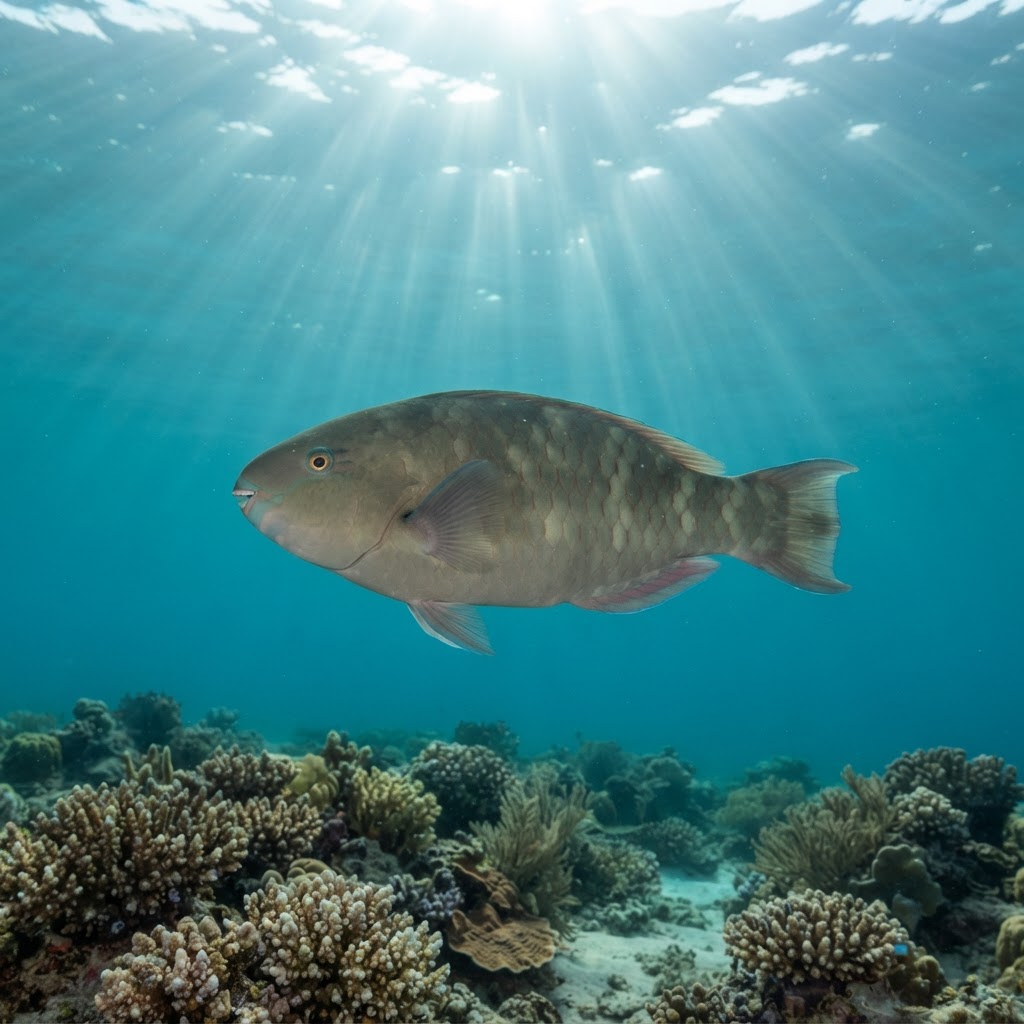
Scarus quoyi
Common on reefs across Peninsular Malaysia and Phuket, this parrotfish thrives in 26-29C water year-round.
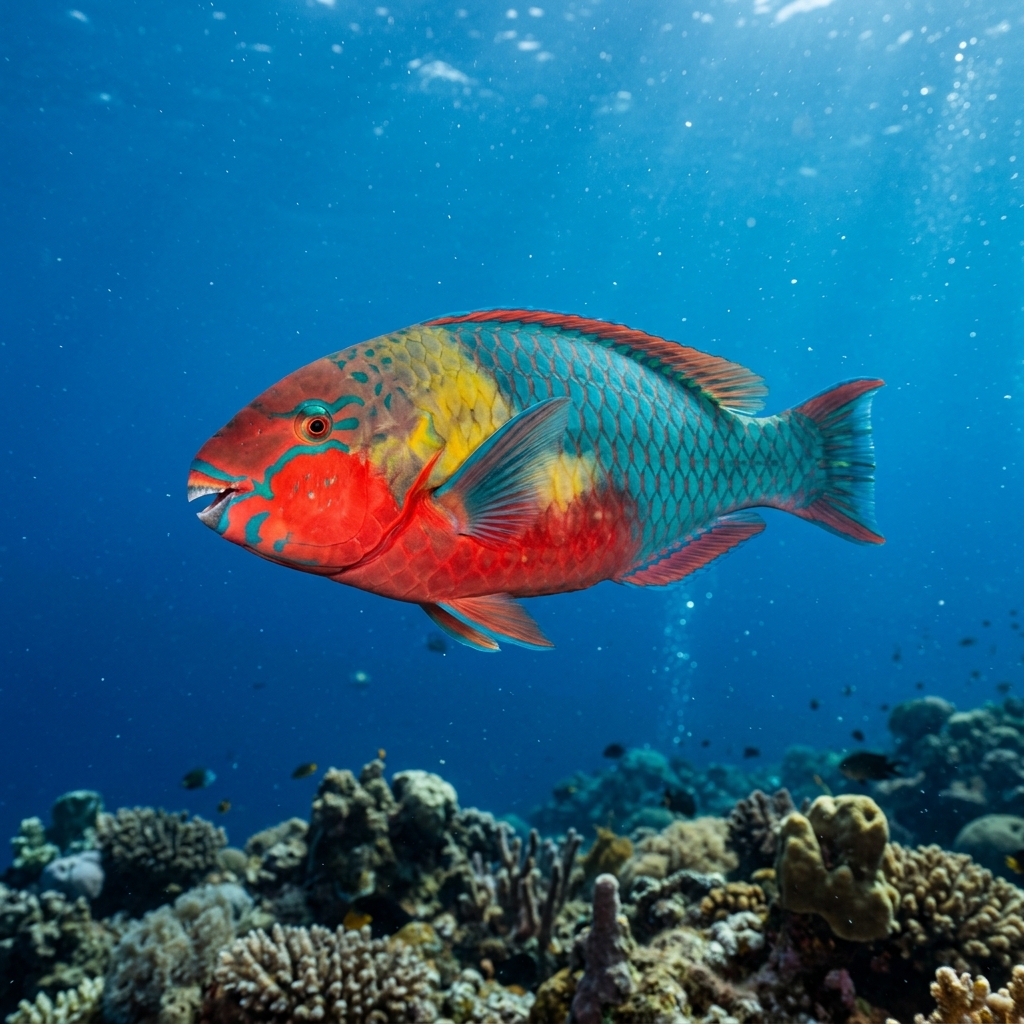
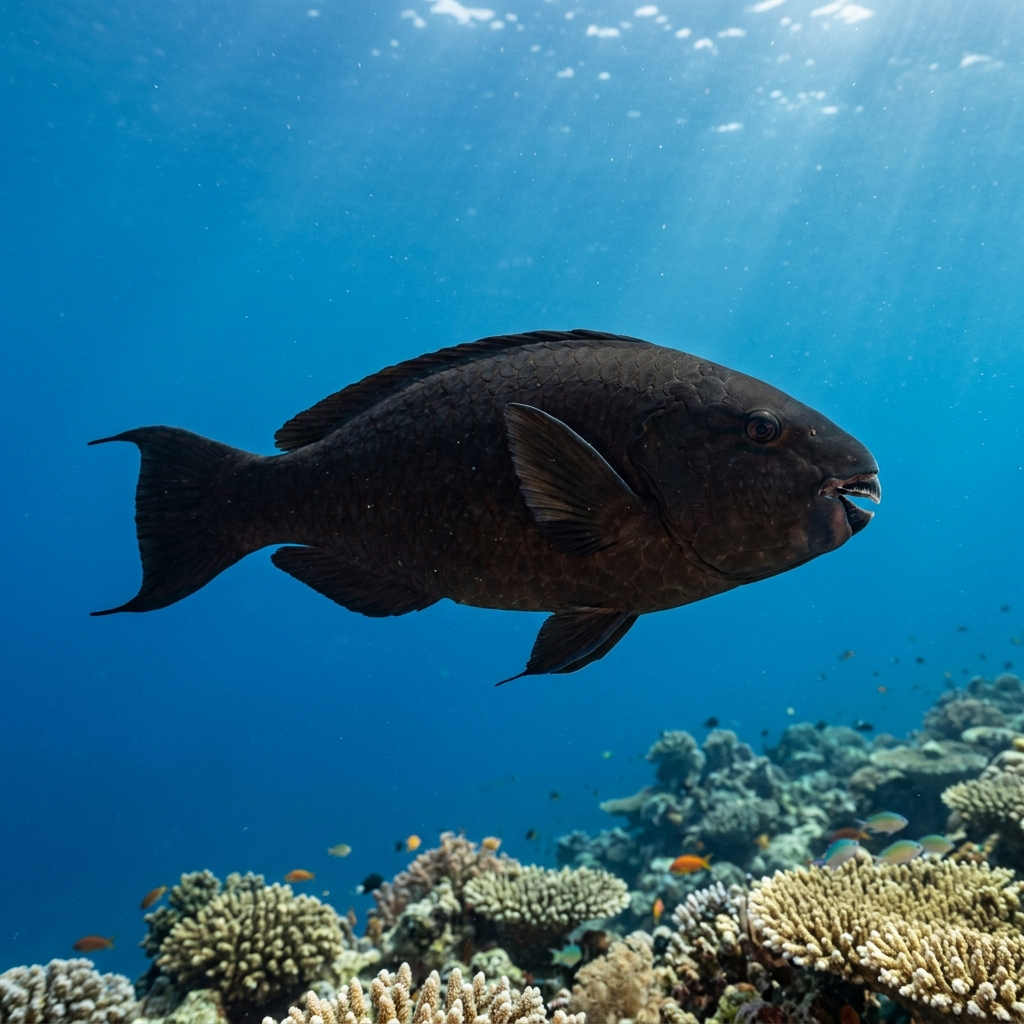
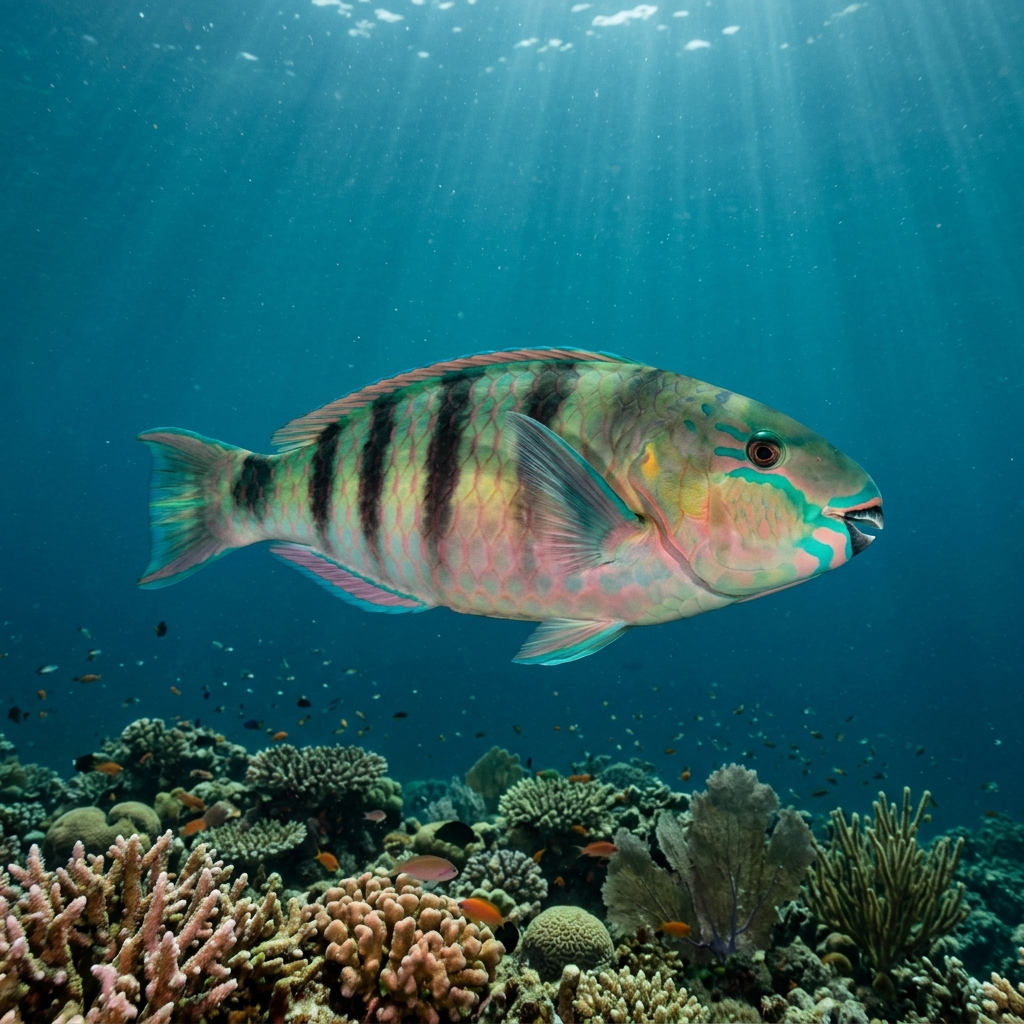
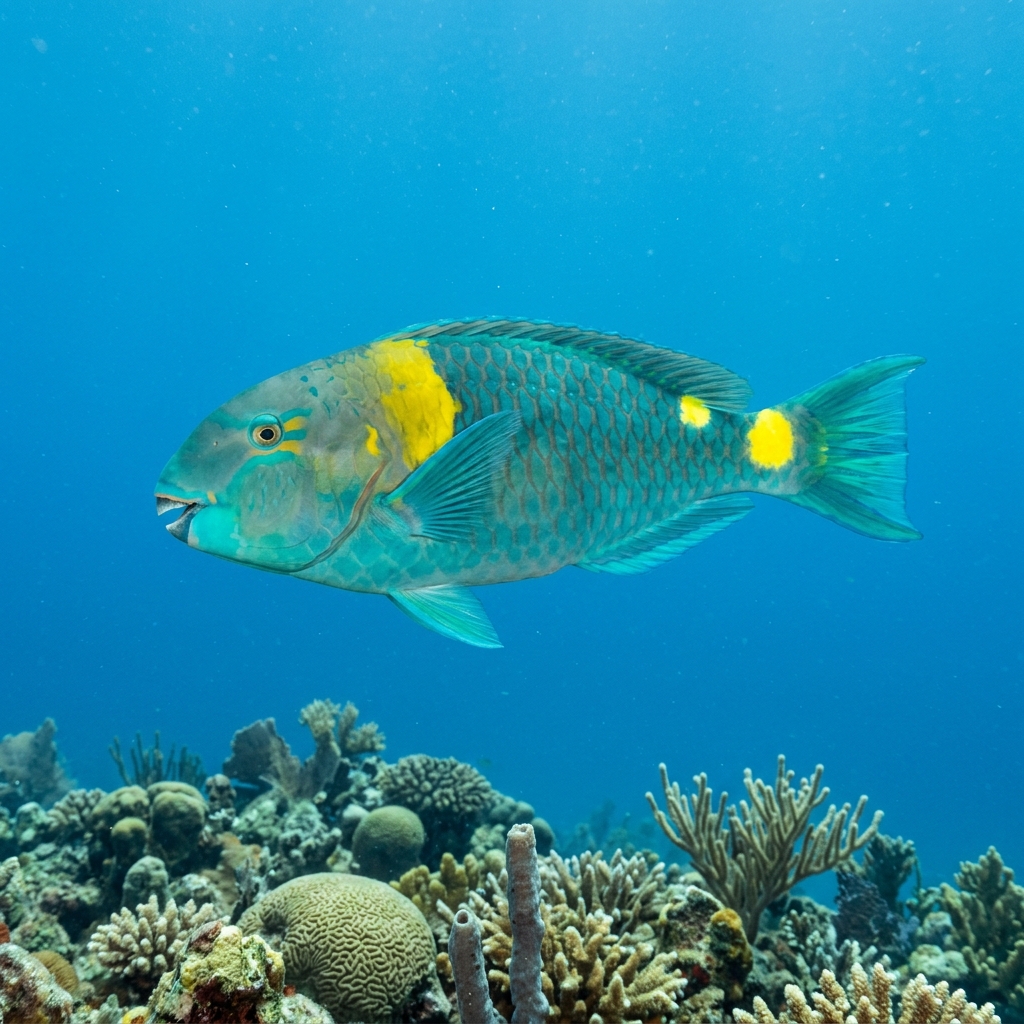
Look for a stocky, beak-mouthed reef fish around 28 cm long, with a body scattered in patches of green and blue over a paler base colour, giving it the blotchy look the name refers to. Like most parrotfish it swims with a distinctive rowing motion of its pectoral fins rather than a full-body swish, and its fused, parrot-like teeth are usually visible as it works over coral or rock. It stays close to the reef structure rather than cruising open water, which helps separate it from open-water wrasses.
Divers typically find it grazing over coral rubble and rock surfaces during the day, scraping algae with its beak in short, unhurried bouts. It tends to hold its position on the reef rather than bolt when divers approach, though it will keep a comfortable distance and drift off if pressed. Most sightings come from shallow reef flats and slopes in the 2 to 18 m range, so it is a fish you will often notice early in a dive rather than deep on a wall.
Like other parrotfish, it grazes algae off coral and rock with its fused beak-like teeth, which helps keep reef surfaces clear for new coral growth to settle.
There is no clear seasonal pattern in the sightings, and given its comfort range of roughly 26 to 29C, that tracks: these are warm, stable tropical reefs where it can be found year-round rather than during a particular window.
This is a reliable sighting across Peninsular Malaysia's East Coast and Sabah, with strong numbers also logged in Phuket, Koh Phi Phi and Koh Lipe in Thailand. It turns up regularly in the Philippines too, particularly the Visayas and Palawan, and shows up in smaller numbers on reefs in Sulawesi, Indonesia.
Mapping where Greenblotch Parrotfish is logged…
It is most reliably seen on reefs in Peninsular Malaysia's East Coast and Sabah, plus Phuket, Koh Phi Phi and Koh Lipe in Thailand. Good numbers also turn up in the Philippines, especially the Visayas and Palawan.
There is no strong seasonal signal in the sightings, and it favours warm, stable water around 26 to 29C, so it is present on tropical reefs throughout the year.
Look for a stocky reef fish around 28 cm with green and blue blotches over a paler body and a fused, beak-like mouth used for grazing coral surfaces. It moves with a rowing pectoral-fin stroke and stays close to reef structure rather than swimming in open water.
They typically reach about 28 cm in length, a medium-sized reef fish that is easy to spot against coral without being especially large.
No, they pose no danger to divers. They are herbivorous grazers that go about feeding on algae and generally hold steady if you approach calmly.
It grazes algae from coral and rock surfaces with its fused beak-like teeth, a feeding habit shared across parrotfish that helps keep reef surfaces open for new coral to grow.
Site and sighting data is aggregated from diver logs, iNaturalist and GBIF. For taxonomy and conservation status:
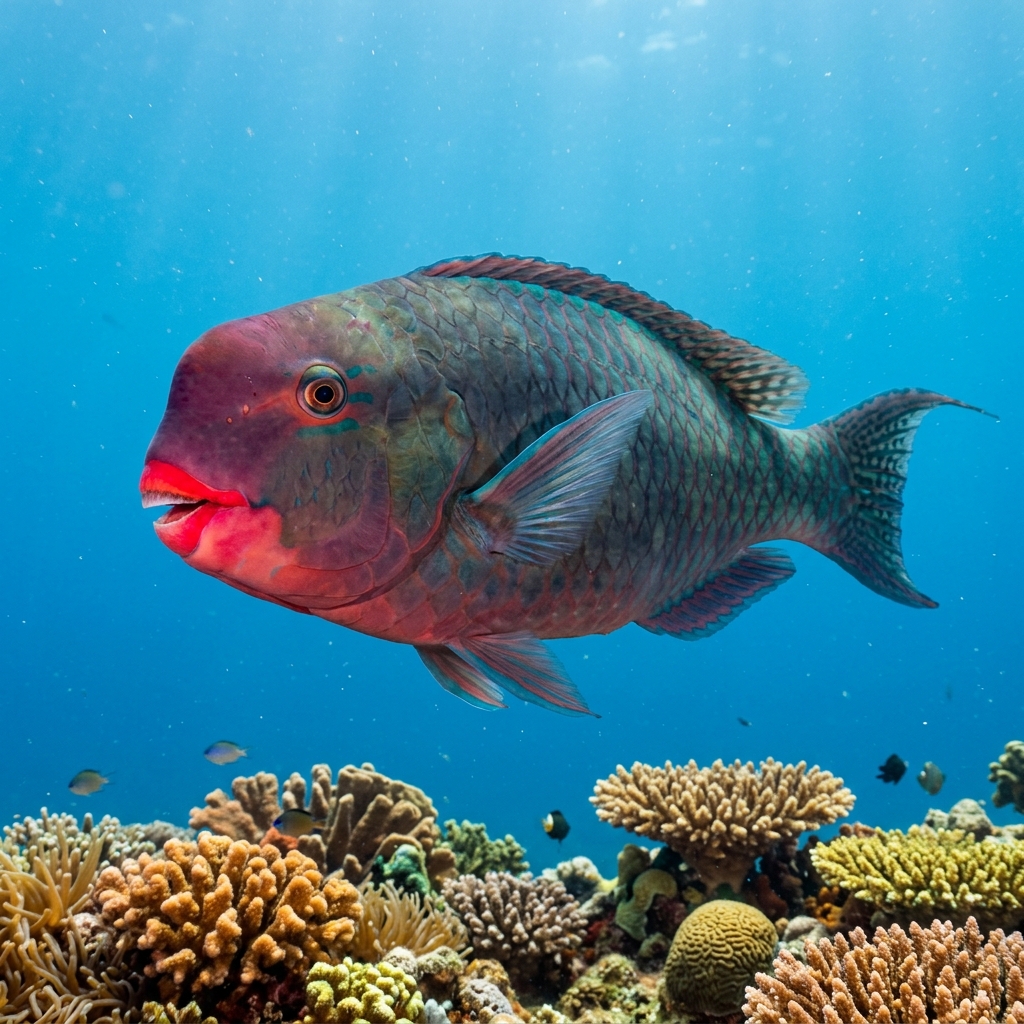
Redlip Parrotfish
2,789 sites