Trachinus draco
Buried in sand off Tenerife and Istria, the greater weever hides a venomous sting. Here's how to spot it and where it's logged year-round.
Safety warning
Venomous spines on the first dorsal fin and gill covers can cause a sharp, sometimes intensely painful sting if touched or stepped on. Keep hands and fins off sandy bottoms where it might be buried, avoid picking up anything half-covered in sand, and if stung, get out of the water and seek first aid since the pain can be severe even though stings are rarely serious.
If you're stung
Venomous spinesGeneral first-aid guidance, not a substitute for professional medical care. In an emergency, call your local emergency number.
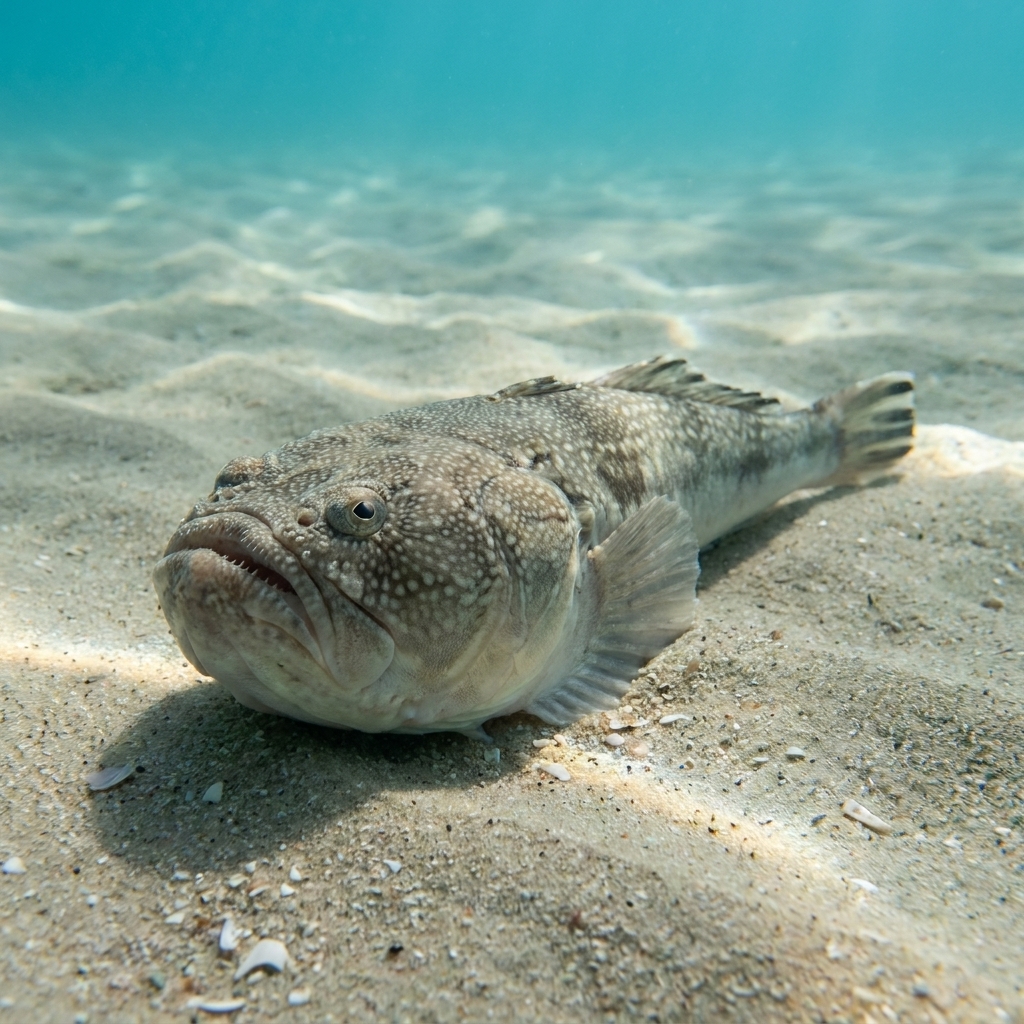
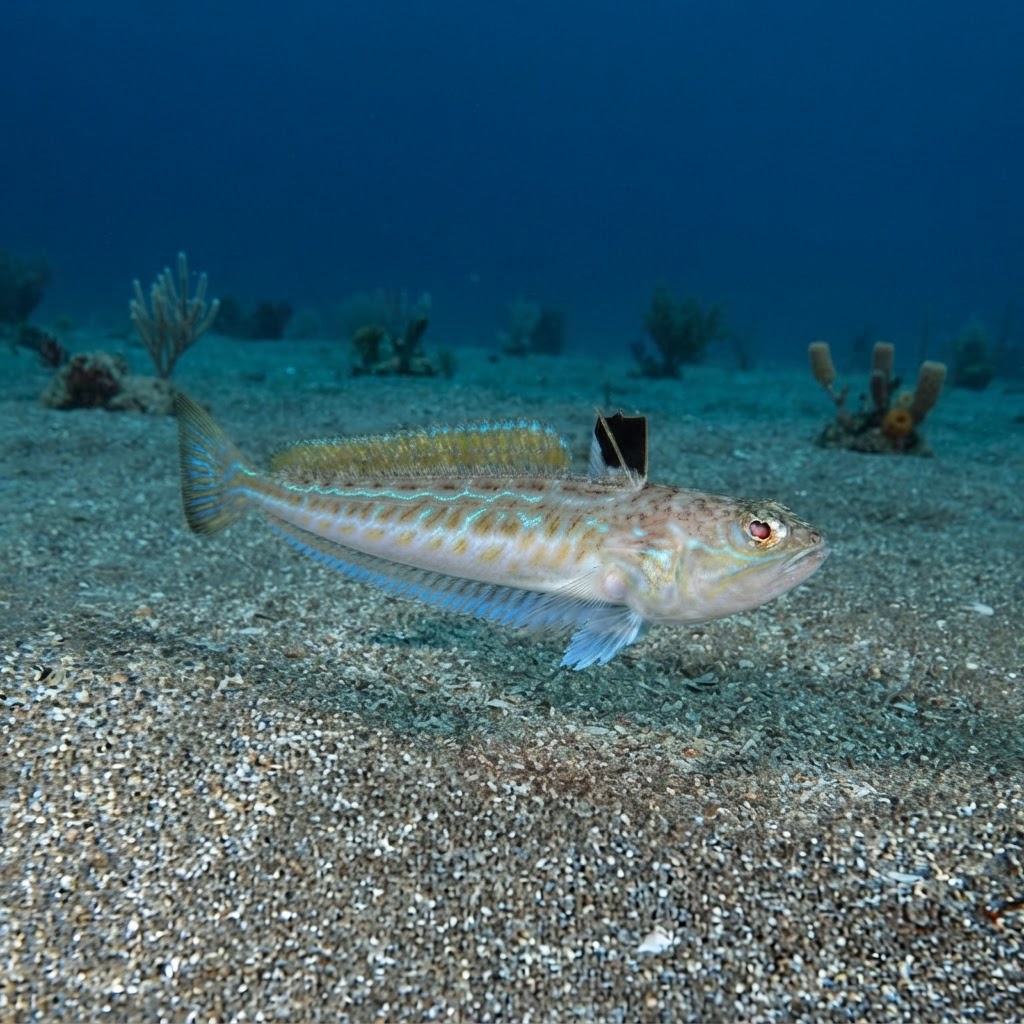
Slim, brownish-yellow body with dark blotches, usually seen with most of it buried in sand and only the eyes and the tall, dark-spotted first dorsal fin showing. That raised dorsal fin is the giveaway: it stays visible even when the rest of the fish is hidden, and it's also where the venomous spines sit. Growing to around 37 cm, it has an upward-angled mouth typical of a fish that ambushes prey from below.
Expect to see it lying still, mostly buried in sand or fine sediment with just its eyes and dorsal fin exposed, waiting for small fish or invertebrates to pass close by. It's not a fish that swims out to greet divers; most sightings come from careful eyes scanning flat, open bottoms rather than reef structure. Logged as rare to uncommon at most sites, so finding one usually takes a slow, deliberate look at sandy patches rather than a quick reef swim-by.
That prominent first dorsal fin isn't just for display: its spines, along with the one on each gill cover, deliver venom, making this one of the few fish in European waters that can hurt an unwary hand or bare foot.
Sighting records don't show a clear seasonal pattern, and with a comfortable range of roughly 9 to 19 C it can be encountered year-round across its Mediterranean and eastern Atlantic range.
Most reliably logged around the Canary Islands, especially Tenerife, Gran Canaria and Lanzarote, with strong numbers also out of Istria in Croatia and along Spain's Andalusian coast. It also turns up regularly in France (French Riviera & Provence), Italy (Tuscany) and Portugal's Algarve, usually on sandy or mixed seabeds rather than reef.
Mapping where Greater Weever is logged…
The Canary Islands, particularly Tenerife, Gran Canaria and Lanzarote, produce the most sightings, alongside Istria in Croatia and Andalusia in Spain. It's also logged in France, Italy and Portugal's Algarve on sandy seabeds.
There's no strong seasonal pattern in sighting data, and its wide temperature tolerance of roughly 9 to 19 C means it can be found on sandy bottoms in any month.
Yes. The dorsal and gill-cover spines carry venom that causes a sharp, painful sting if touched, though it's not aggressive and stings only happen when it's disturbed or stepped on. Watch where you place hands and fins on sandy seabeds.
Look for a slender, mottled brown fish mostly buried in sand, with only its eyes and a tall, dark-marked first dorsal fin showing above the surface. That raised fin is the clearest ID clue and also marks where the venomous spines are.
They typically reach around 37 cm in length, making them a modest-sized but easy-to-miss resident of sandy seabeds.
It hunts by lying almost completely buried in sand, ambushing prey that swims within reach, while its raised dorsal fin doubles as a venomous defence spine, an unusual combination of camouflage and weaponry for a European coastal fish.
Site and sighting data is aggregated from diver logs, iNaturalist and GBIF. For taxonomy and conservation status:
Soldierfish
3,612 sites