Montastraea cavernosa
Spot Greater Star Coral across Caribbean reefs from the Yucatán to Roatán. Present year-round in 22-29 °C water, with polyps best seen after dark.
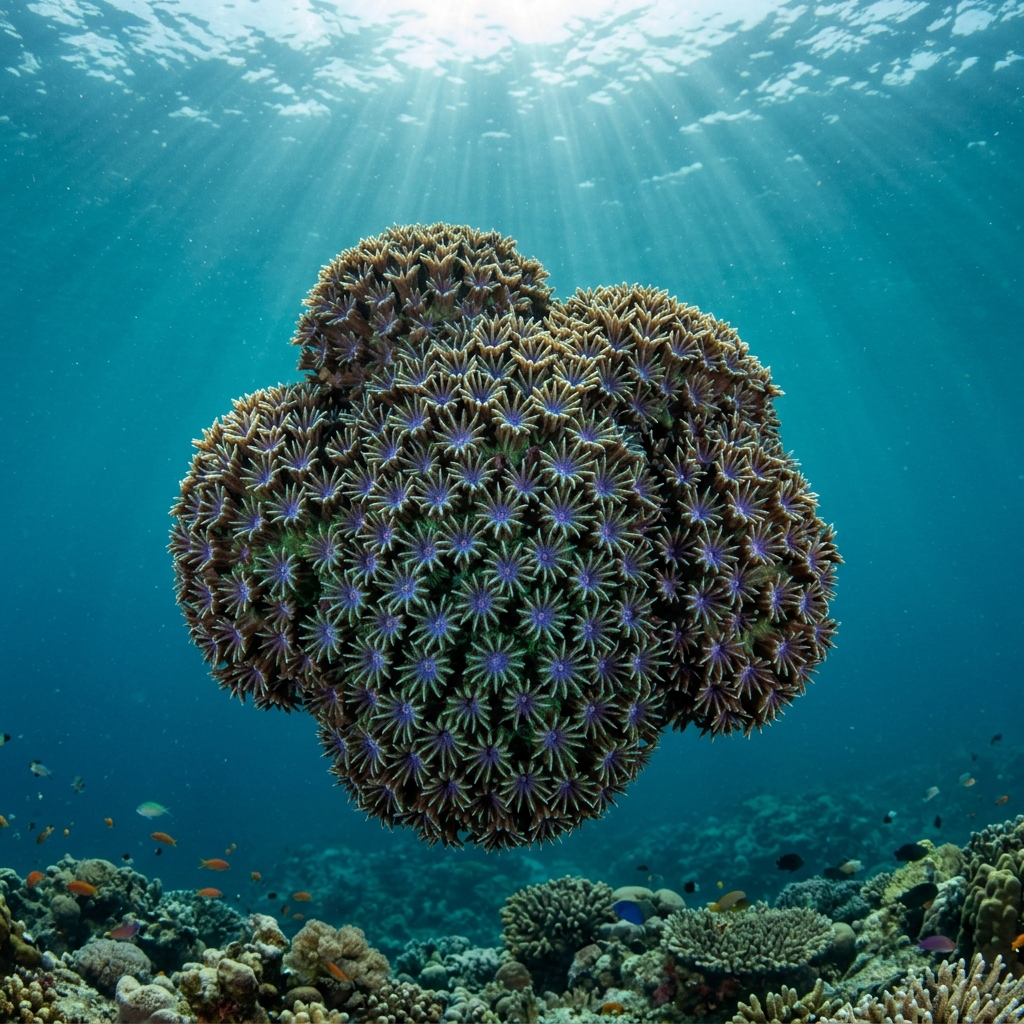
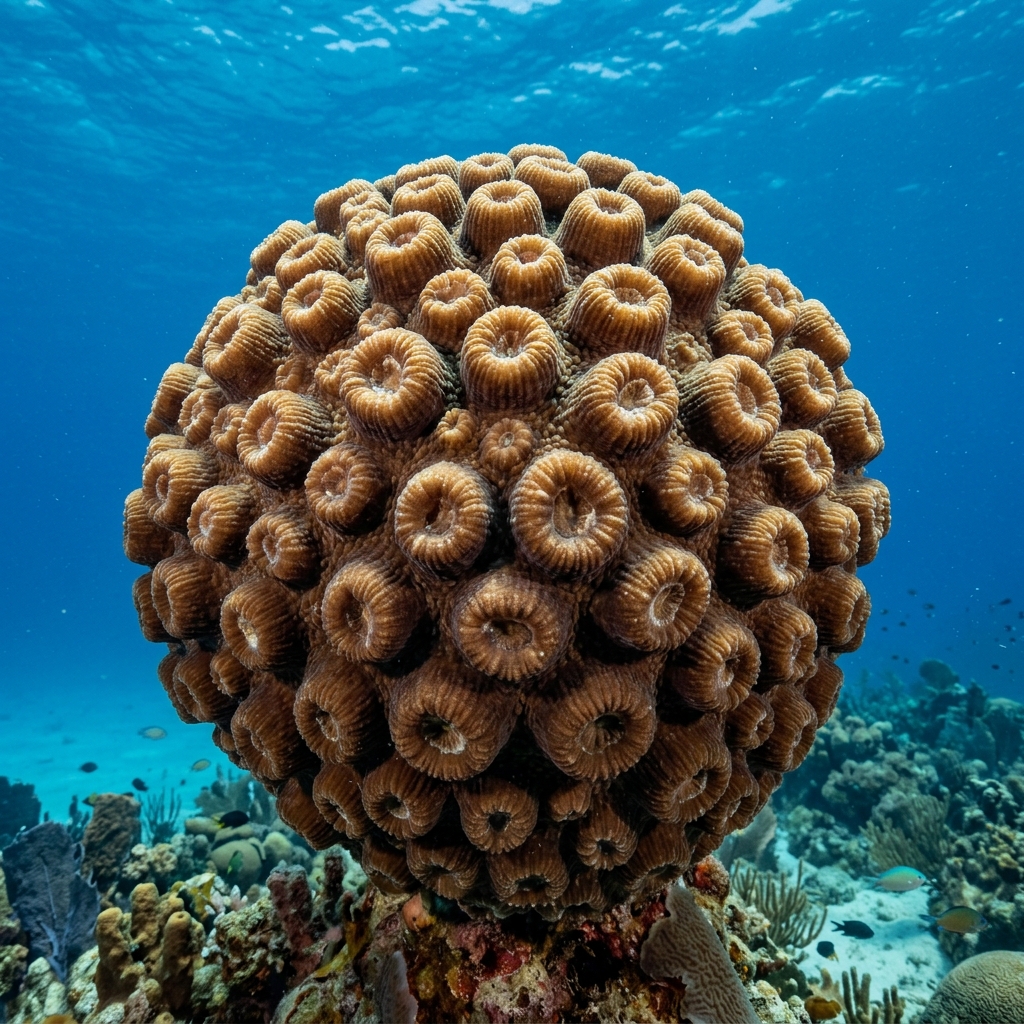
Look for large, dome-shaped or mounding colonies encrusted with neat rows of circular pits, each pit is a polyp corallite (the individual cup-shaped cavity housing a single coral polyp). Colouration typically runs through grey, olive-green, or tan, often with subtle fluorescent green patches under certain light. Up close, each corallite is clearly defined with a raised wall and a star-like pattern of ridges radiating inward, which is the easiest underwater field mark. Colonies can sprawl to an impressive width, making them one of the more imposing mounding corals on a Caribbean reef.
Being a sessile (attached, non-moving) organism, greater star coral simply sits on the reef and grows, what changes is its appearance depending on when you look. During the day, polyps retract and the colony shows its stony skeleton clearly. At night, polyps extend their tentacles to feed on zooplankton, giving the surface a fuzzy, almost velvety texture and a noticeably different look. It reacts to nothing you do as a diver, though physical contact or silted water will cause polyps to withdraw.
Greater star coral is one of the few Caribbean reef-building corals documented to broadcast-spawn in synchronised mass events tied to the lunar cycle, typically a few nights after the full moon in late summer, releasing bundles of eggs and sperm simultaneously into the water column.
Present year-round wherever water temperatures hold in the 22-29 °C range, which describes essentially all Caribbean reef systems across every season. There is no concentrated season; plan your dive any time.
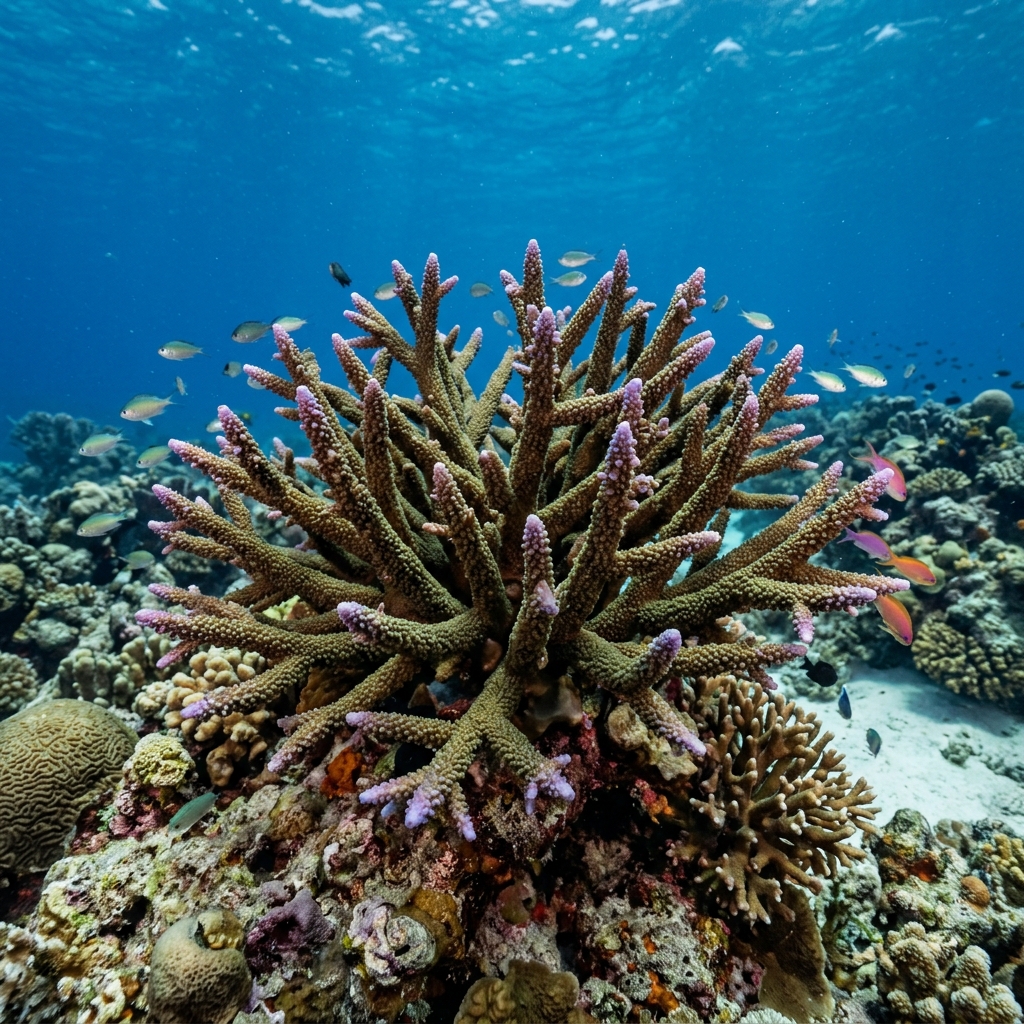
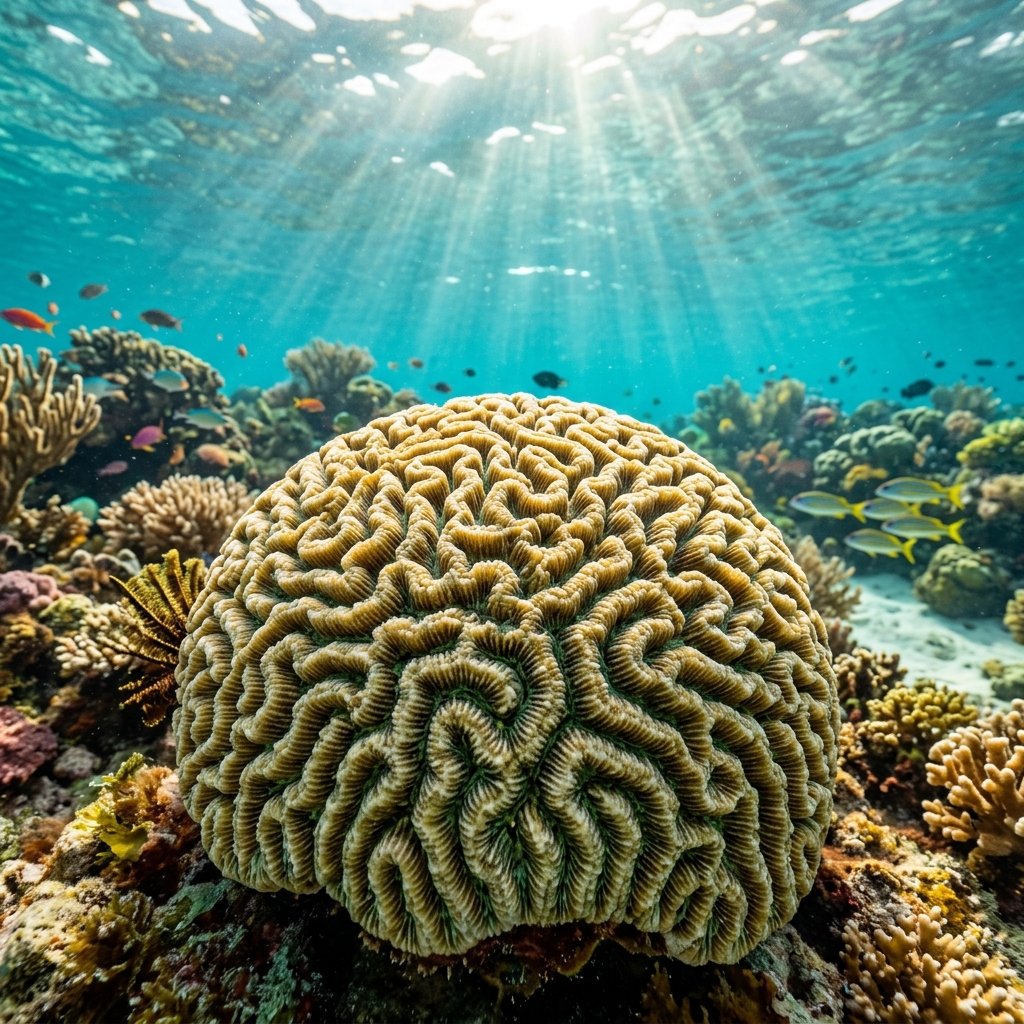
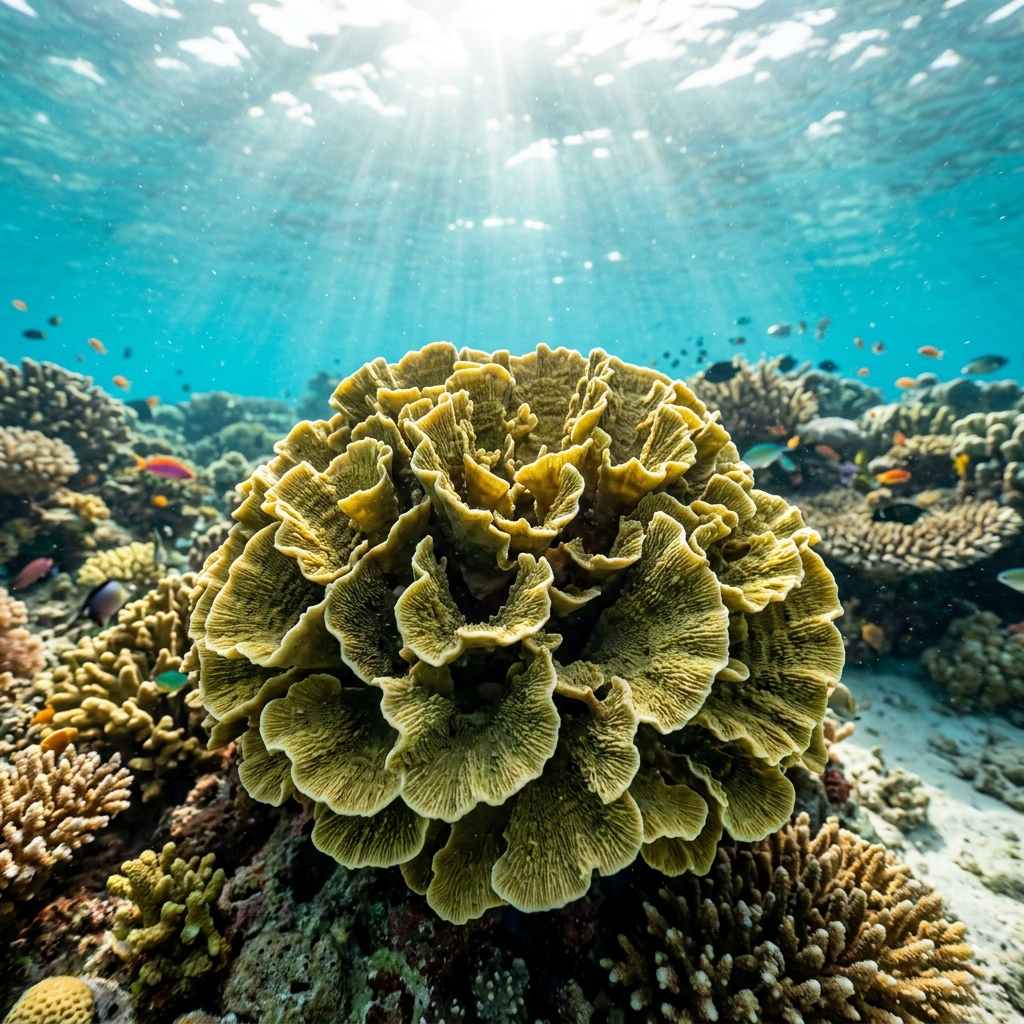
Reef neighbours a diver could mistake it for. Use the identification notes above to tell them apart.
Greater star coral is most consistently logged across the wider Caribbean and western Atlantic, with the strongest presence in Mexico's Yucatán Peninsula, Florida and the US southeast, Roatán in Honduras, Grand Cayman, and the Caribbean coast of Colombia. Bonaire and the Bahamas also have solid records. Brazil's northeast coast rounds out the Atlantic distribution.
Mapping where Greater Star Coral is logged…
It is most reliably found across Caribbean reef systems, particularly around Mexico's Yucatán Peninsula, Florida, Roatán in Honduras, Grand Cayman, the Caribbean coast of Colombia, and Bonaire. It also appears along Brazil's northeast Atlantic coast.
Any time of year works, it is present year-round on tropical reefs within its 22-29 °C temperature range. Night dives offer a different visual experience, as polyps extend their feeding tentacles after dark.
Look for a large dome or mound covered in neat circular pits, each with a star-like ridge pattern radiating inward from the centre. Colour is usually grey, olive, or tan. Brain corals can look similar but have continuous winding ridges rather than isolated round corallites.
Colonies are slow-growing but can become very large over decades, with some mounds reaching well over a metre across and nearly as tall. Depth range extends from very shallow water down to over 100 metres, though most recreational diver sightings occur in the upper portion of that range.
It participates in mass broadcast spawning events triggered by the lunar cycle, typically occurring nights after the late-summer full moon. Colonies release bundles of eggs and sperm into open water simultaneously, where fertilisation takes place before larvae settle and begin new colonies.
Site and sighting data is aggregated from diver logs, iNaturalist and GBIF. For taxonomy and conservation status:
Plate Coral
2,991 sites