Hyas araneus
Spot Great Spider Crab on cold-water dives in Bohuslän, Quebec and Scotland, often camouflaged with algae on the seabed year-round.
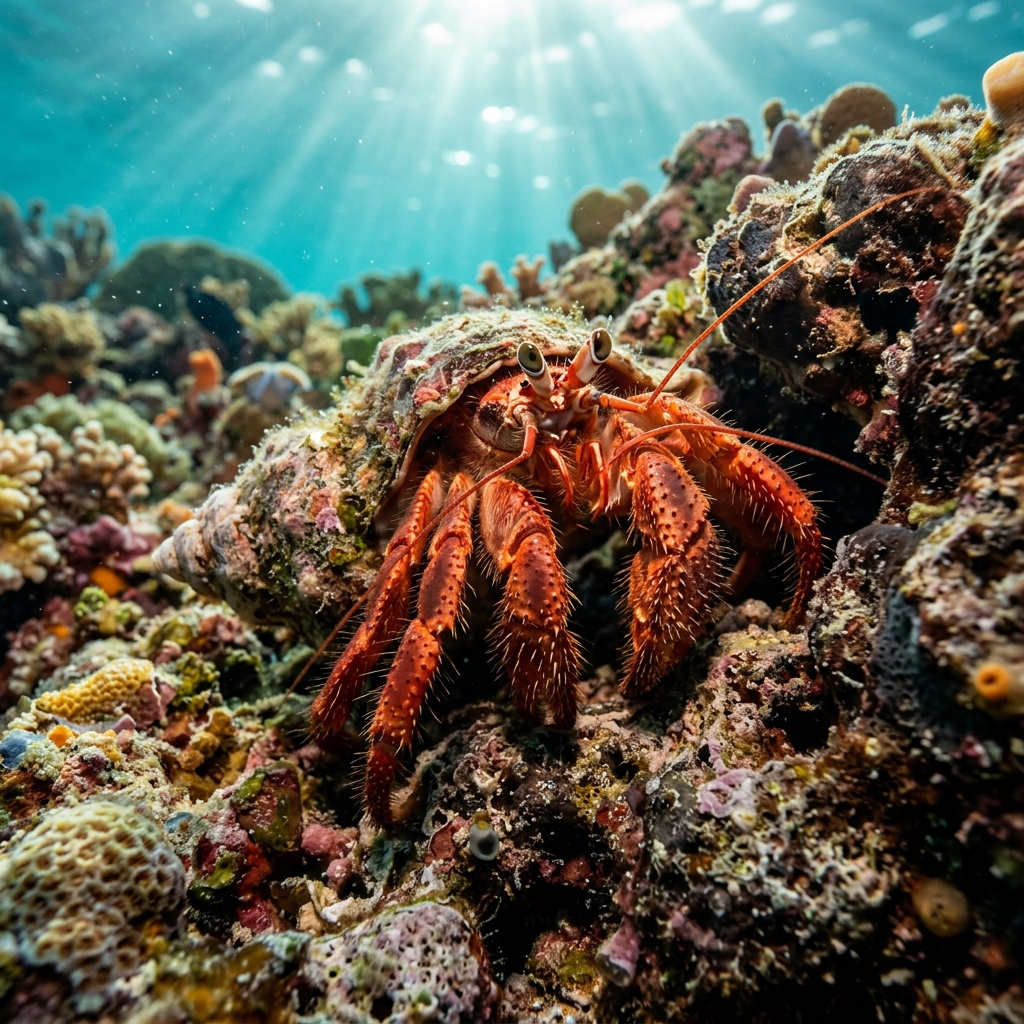
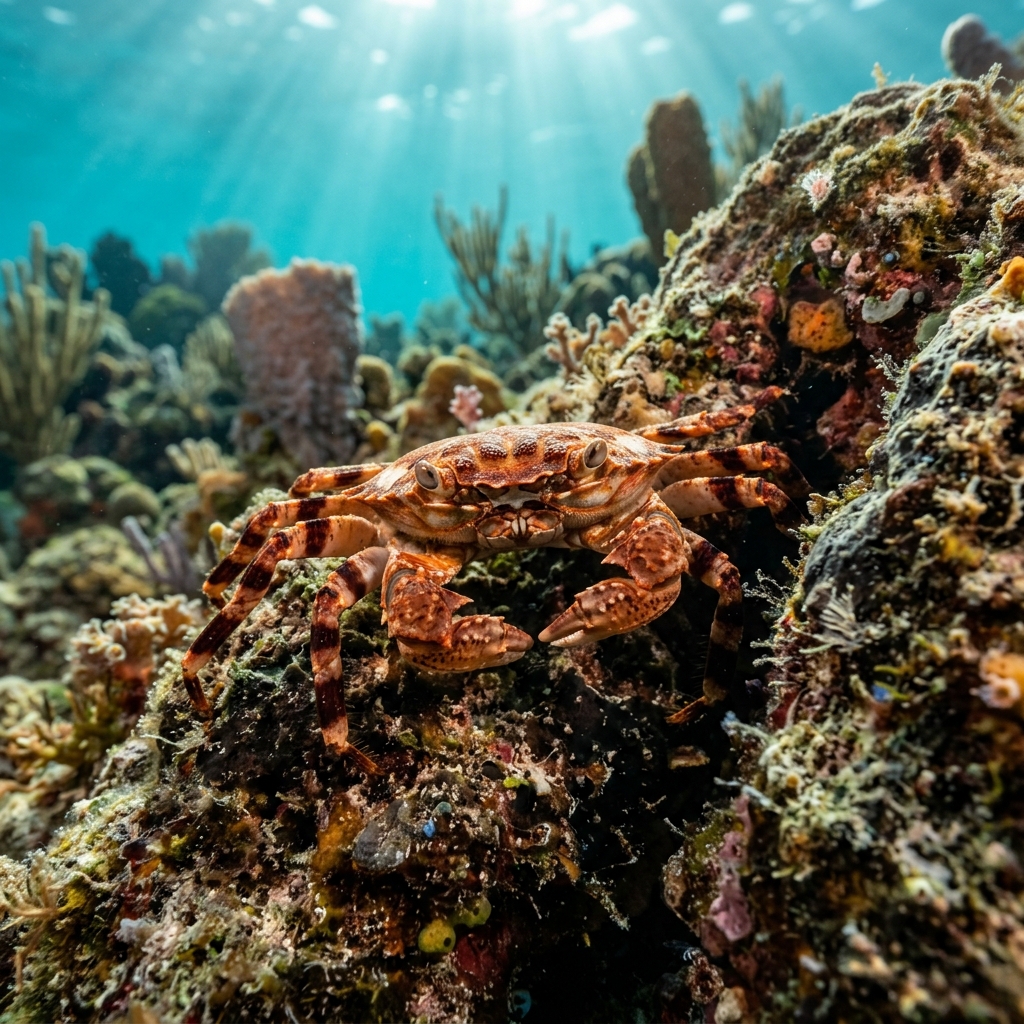
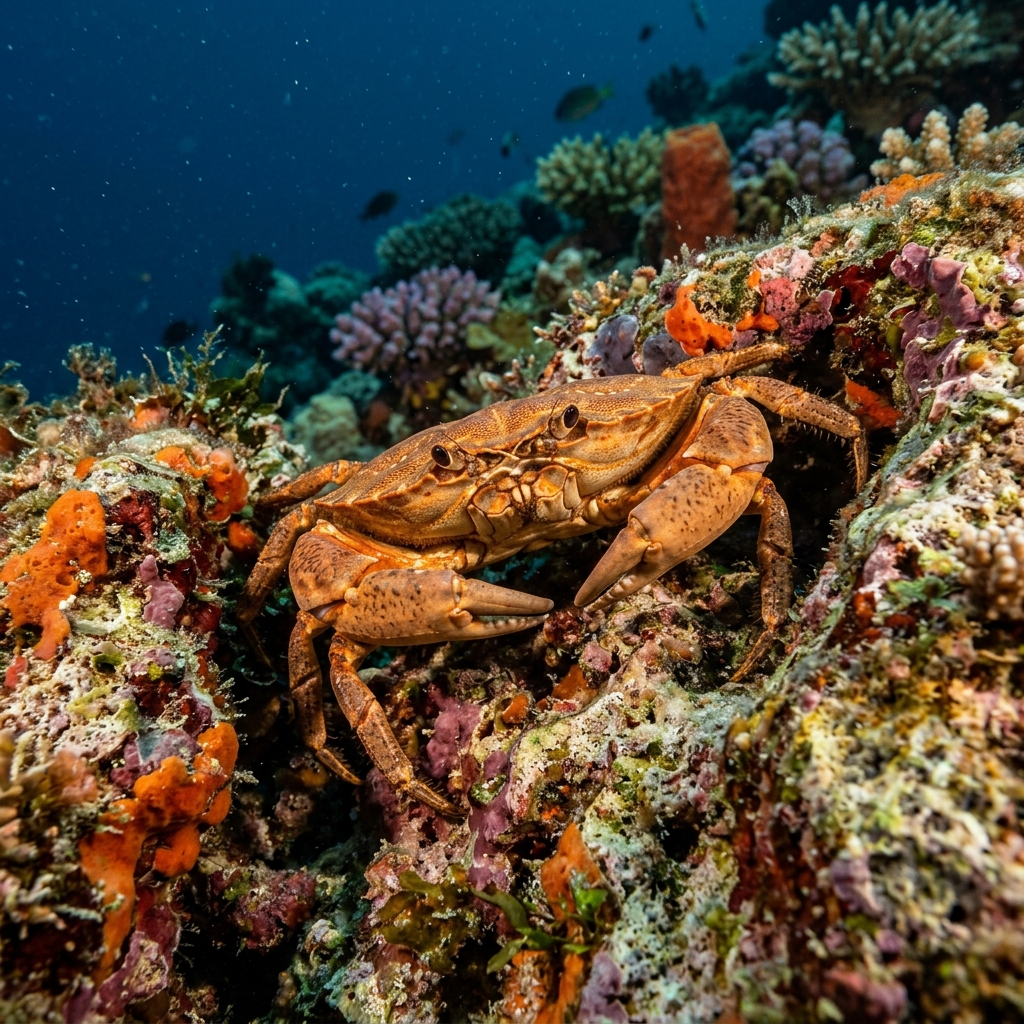
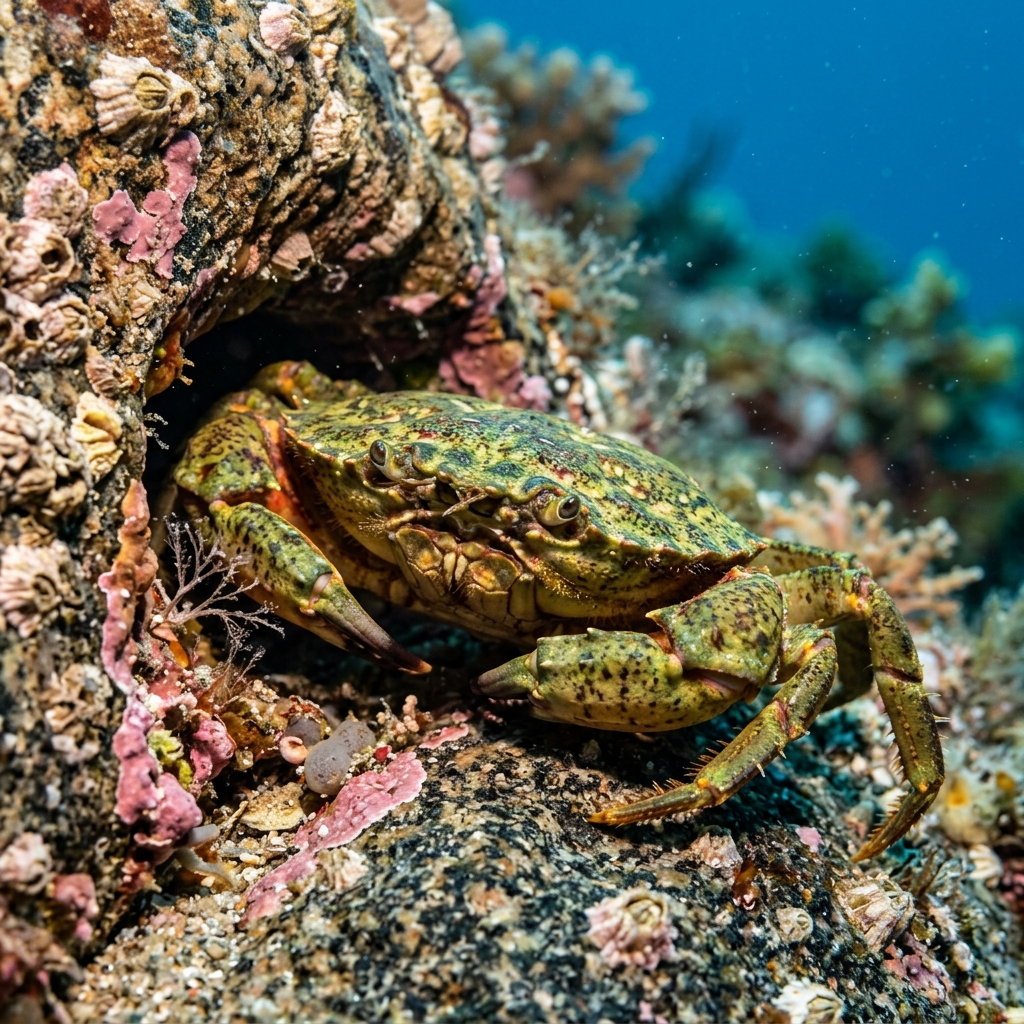
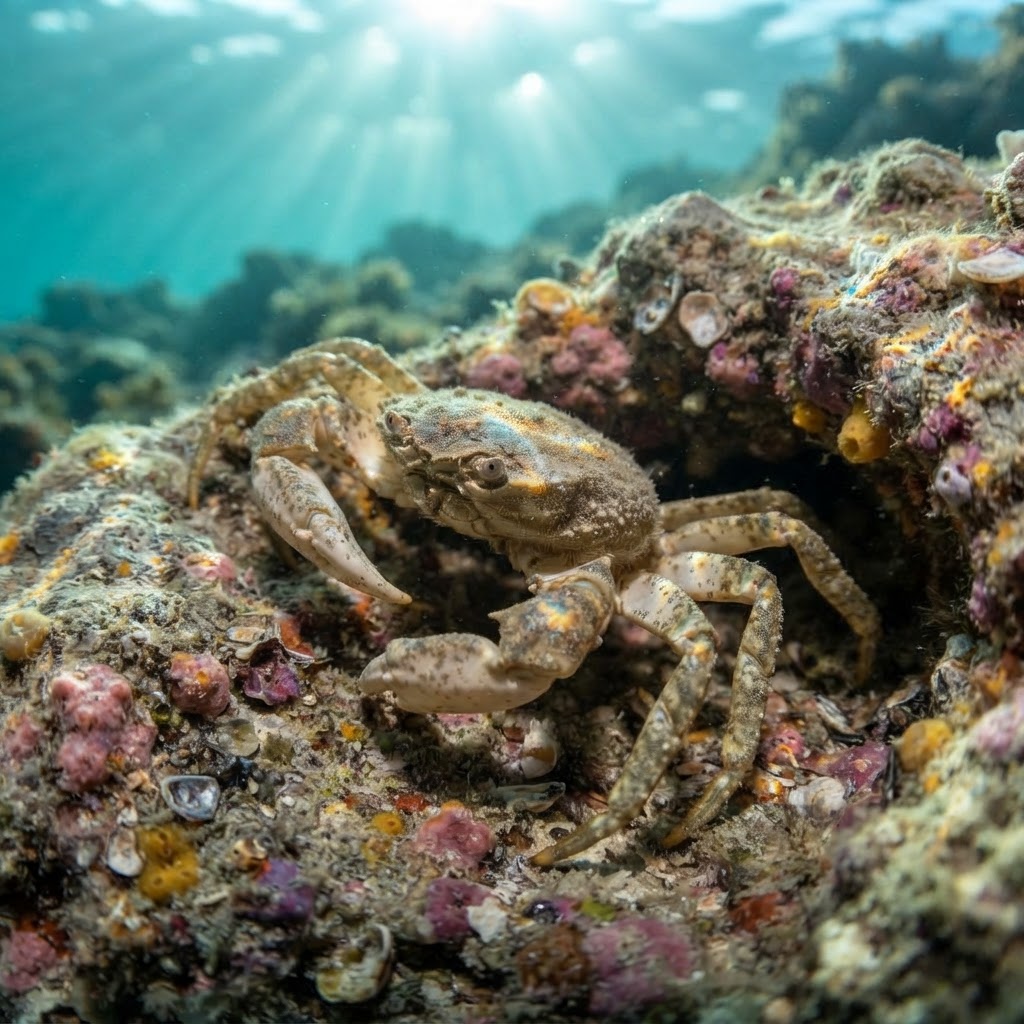
Look for a rounded, pear-shaped shell covered in small spines and often disguised under a felt of algae and debris, making it easy to mistake for a lump of rubble at first glance. Legs are long and spindly relative to the body, and the shell narrows toward a pointed front between the eyes. Size in the water is modest, usually fitting in one hand's span, and colour blends into greys, browns and greens depending on what's growing on its back.
Divers typically find it sitting still on rock, gravel or mixed seabed, often half-hidden under a coat of algae or sediment it has actively decorated itself with. It doesn't scuttle off when approached, relying on its disguise rather than speed, so a slow scan of the bottom is usually how you spot one rather than the crab spotting you first.
It decorates its own shell with bits of algae, sponge and debris, an active camouflage habit shared by several spider crab relatives, which is why a still one can look like part of the seabed until it moves a leg.
No clear seasonal pattern shows up in sightings, and given its comfort range of roughly 3 to 12 C, it's a year-round find on the cold-water sites where it lives. Just don't expect it every dive: most logs mark it uncommon to rare, with common sightings at only a handful of sites.
Most reliably found in Quebec, Canada, and Bohuslän, Sweden, with a solid presence around Scotland in the UK and the Northeast United States. Smaller numbers turn up in Nova Scotia, Nordland in Norway, and Schleswig-Holstein, Germany, so it's a cold-water species worth checking for on any north Atlantic dive.
Mapping where Great Spider Crab is logged…
Best logged in Quebec, Canada, and Bohuslän, Sweden, with reliable sightings around Scotland and the Northeast United States too. It's a cold-water Atlantic species, so look for it on rocky or mixed seabed rather than tropical reef.
Sightings don't show a strong season, and it tolerates a wide cold-water range of about 3 to 12 C, so it's present year-round wherever it's found. There's no need to time a trip around it specifically.
Check for a rounded, spiny shell often hidden under a layer of algae or debris, long thin legs, and a pointed front between the eyes. It sits still on the seabed rather than swimming or bolting, which makes a close look easy once you spot it.
Exact size data isn't confirmed here, but in the water they read as a modest, fist-to-hand-sized crab, easily overlooked against rock and gravel.
It actively decorates its own shell with algae, sponge fragments and other debris as camouflage, a trick shared with several spider crab relatives. A stationary one can be almost invisible against the seabed until it shifts a leg.
Site and sighting data is aggregated from diver logs, iNaturalist and GBIF. For taxonomy and conservation status:
European Green Crab
2,469 sites