Naso caesius
An uncommon reef fish logged across the Tuamotu Islands in warm 25-29C water year-round, best spotted by its grey body and blunt snout.
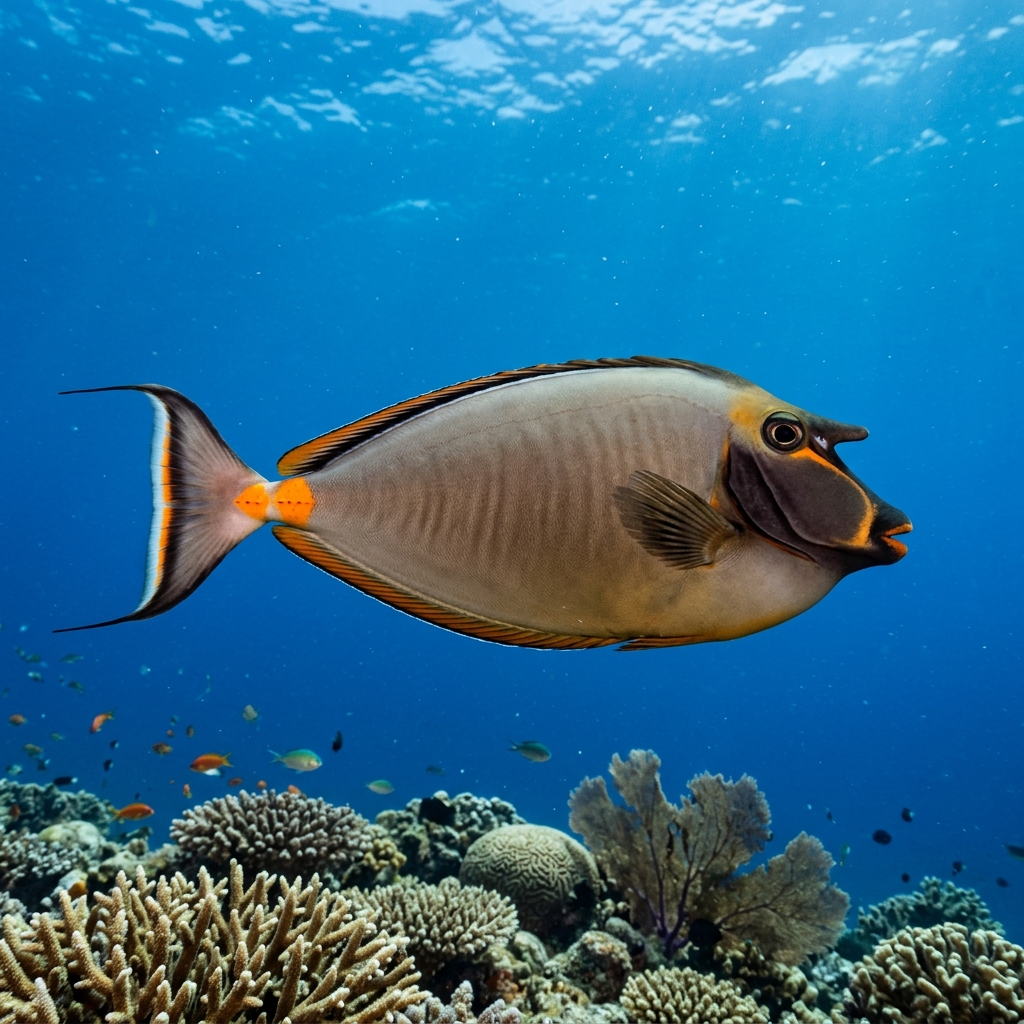
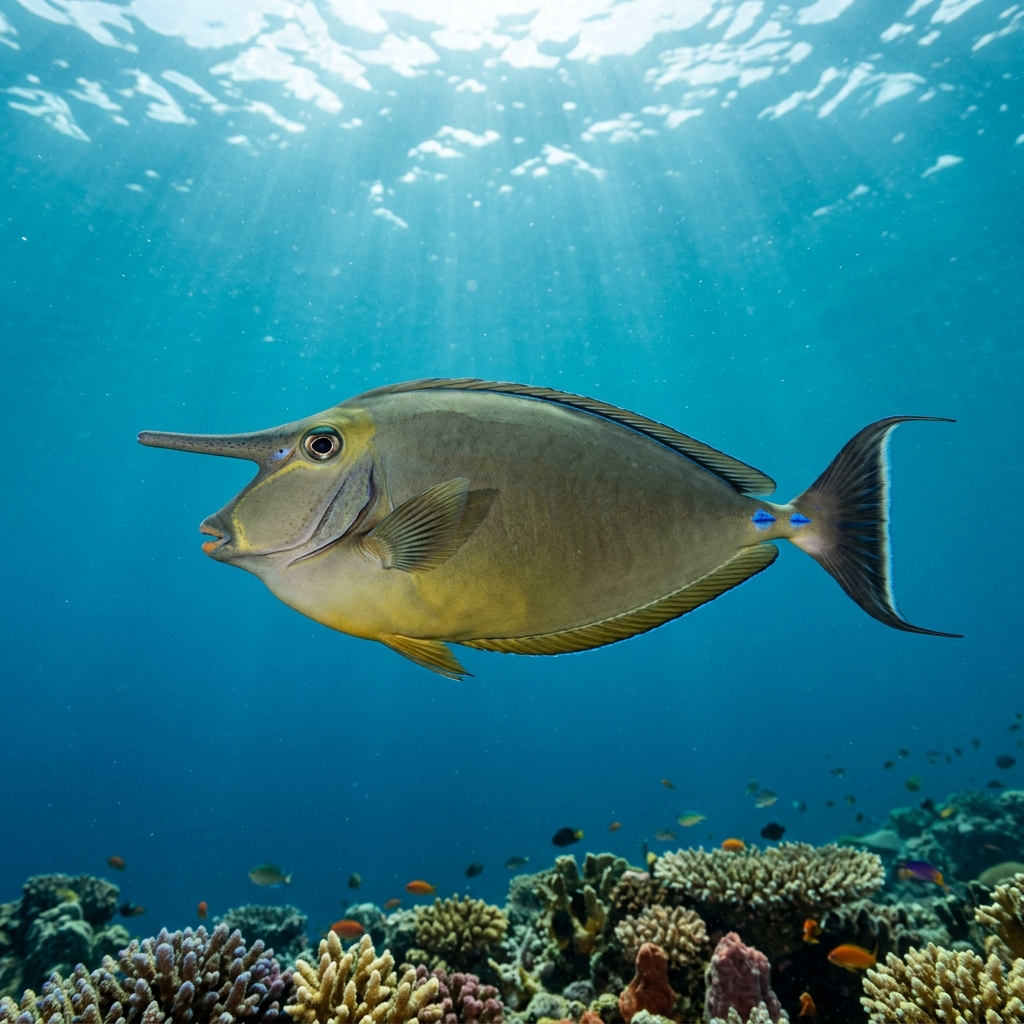
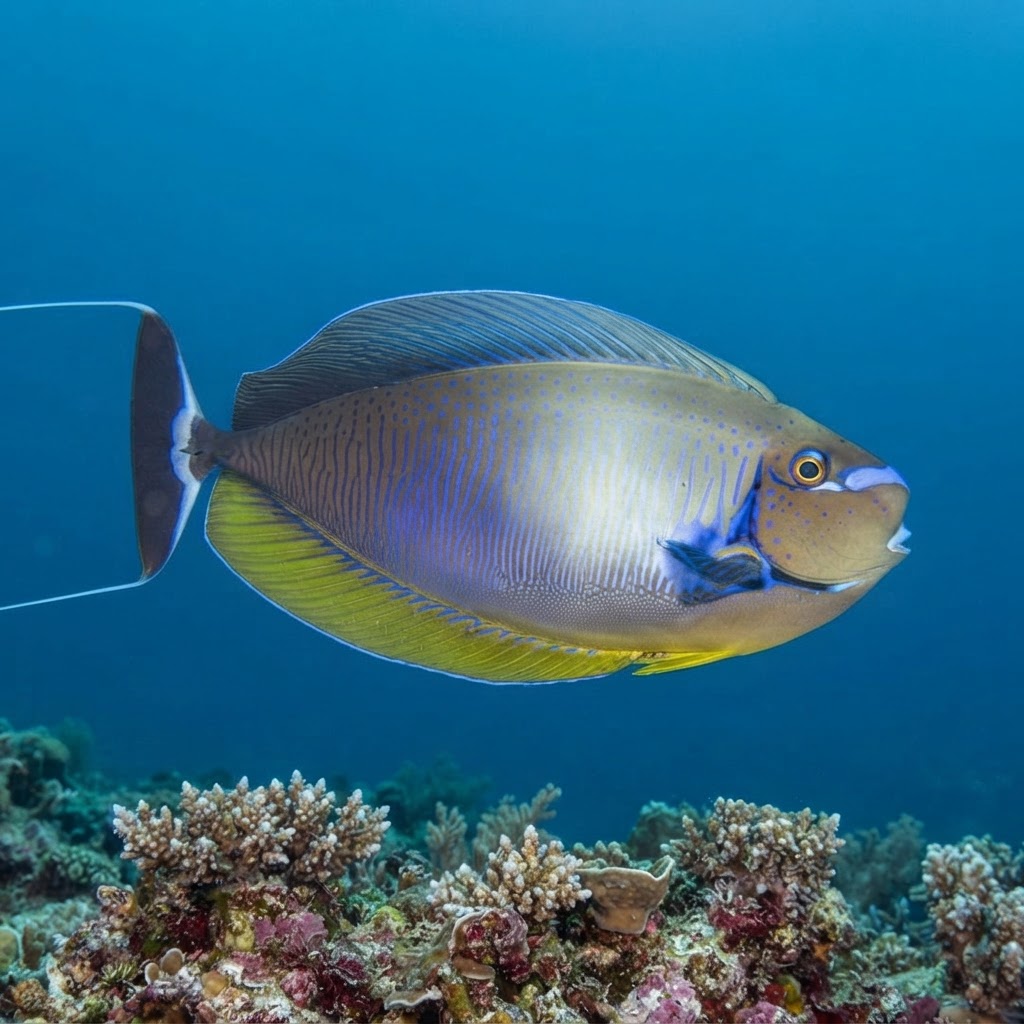
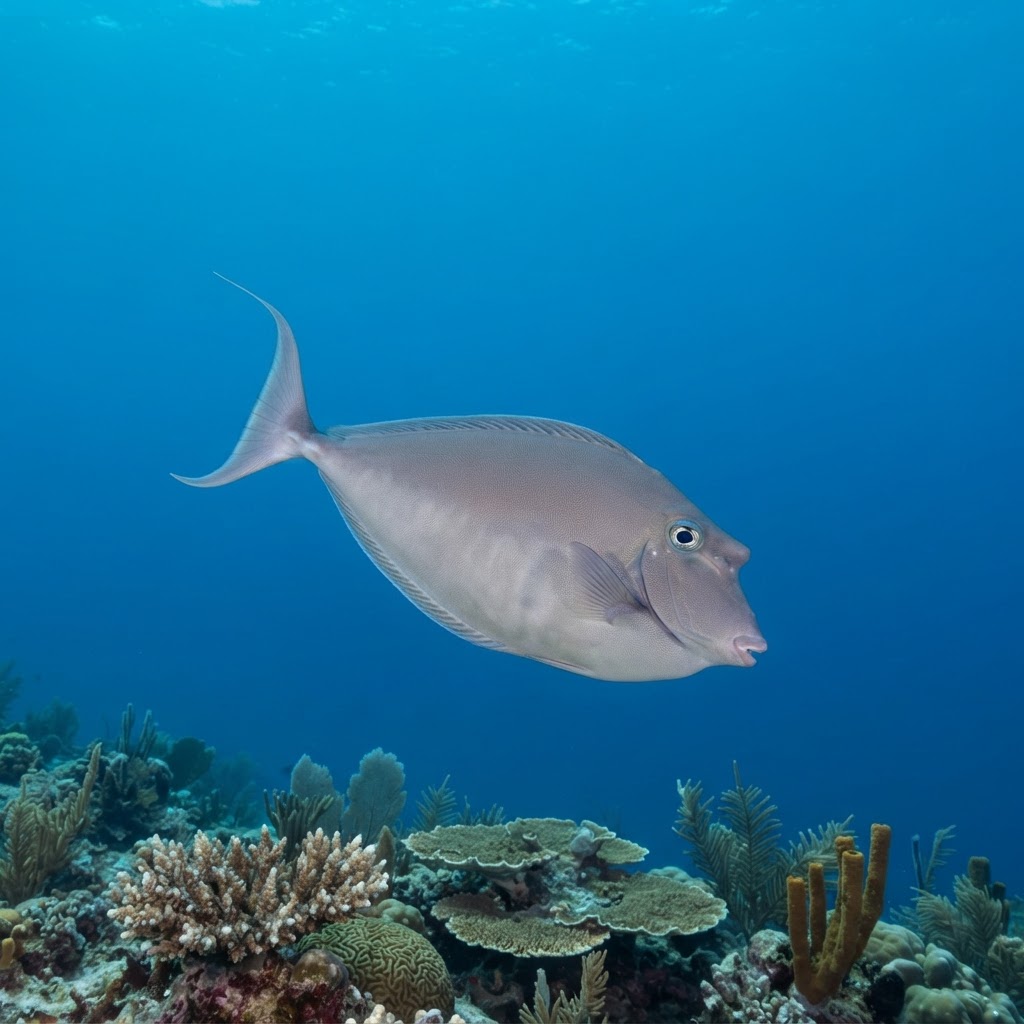
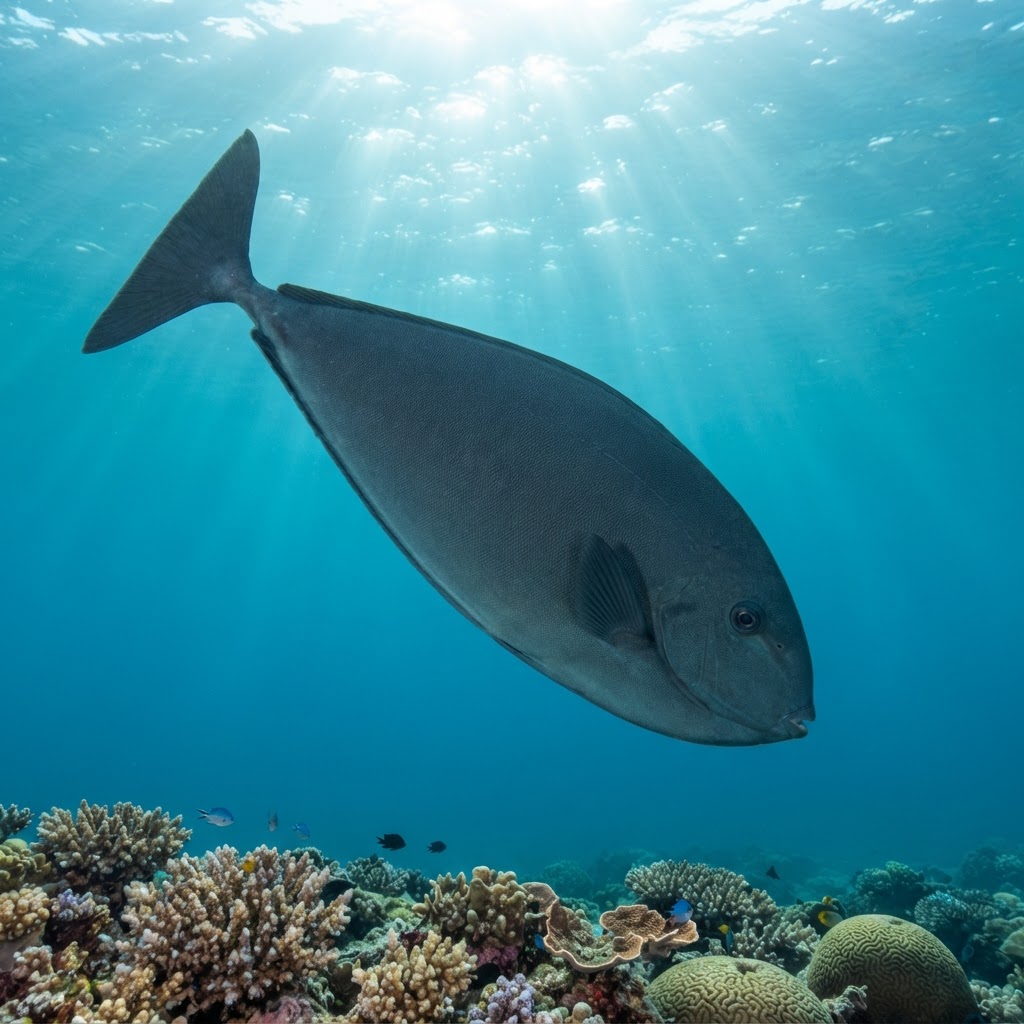
A stocky, deep-bodied surgeonfish with an overall grey to blue-grey wash and a blunt, sloping snout that gives the genus its unicornfish name, though this species lacks a pronounced horn. Look for the pale caudal fin against the darker body and a small spine near the base of the tail, a trait shared by the whole surgeonfish family. At around 32 cm it sits mid-sized among reef surgeonfish, usually seen singly or in loose small groups rather than tight schools.
Divers typically spot it cruising over reef slopes and drop-offs, grazing on algae along with other surgeonfish rather than sticking close to shelter. It tends to keep a cautious distance from divers, drifting off rather than approaching, and is more often noticed as a single fish or loose pair than in a big school. Like other Naso species it is most active during daylight hours over open reef terrain.
As a member of the surgeonfish family it carries a sharp, scalpel-like spine folded into a groove near the base of its tail, used defensively rather than offensively against other fish.
Sightings show no clear seasonal pattern, and the observed water temperature range of roughly 24.7 to 28.8C spans the whole year on these tropical reefs, so it turns up any month. Plan around good conditions in the Tuamotu Islands rather than chasing a specific season.
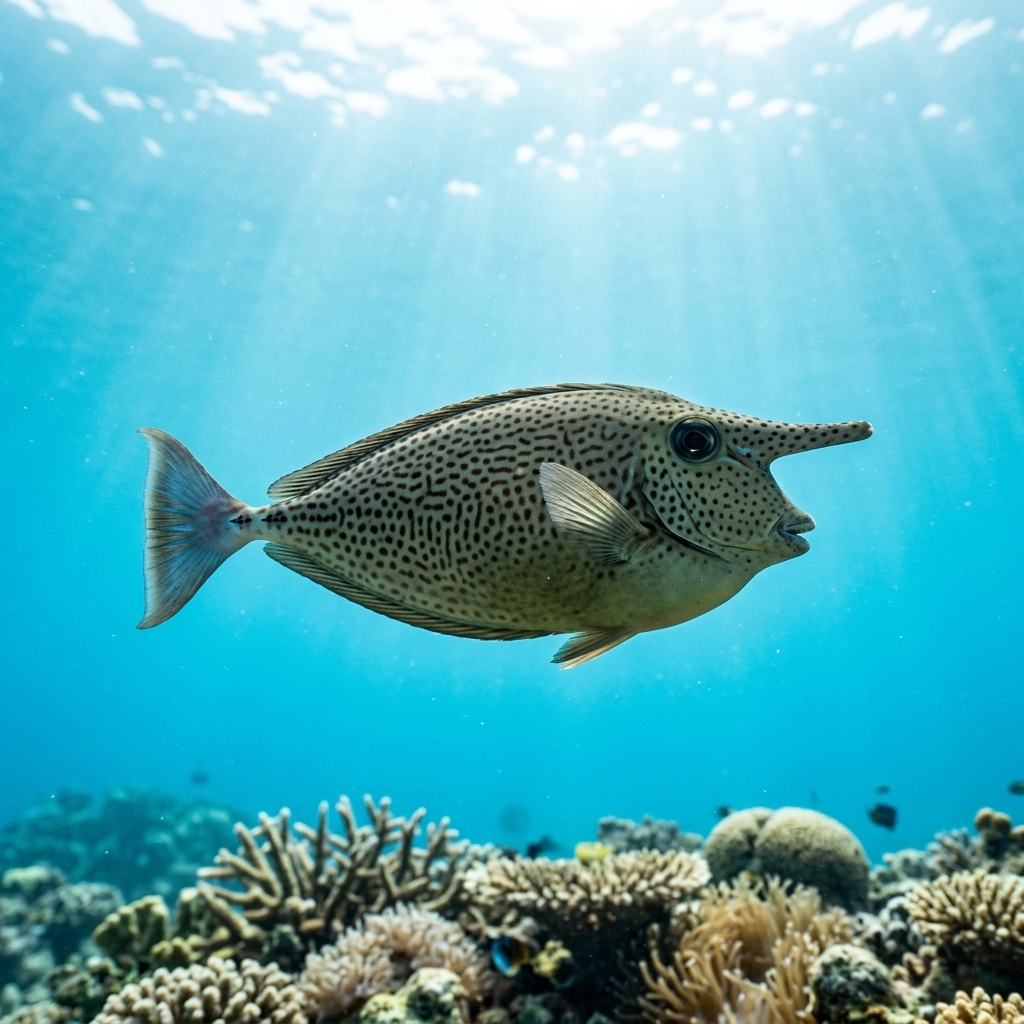
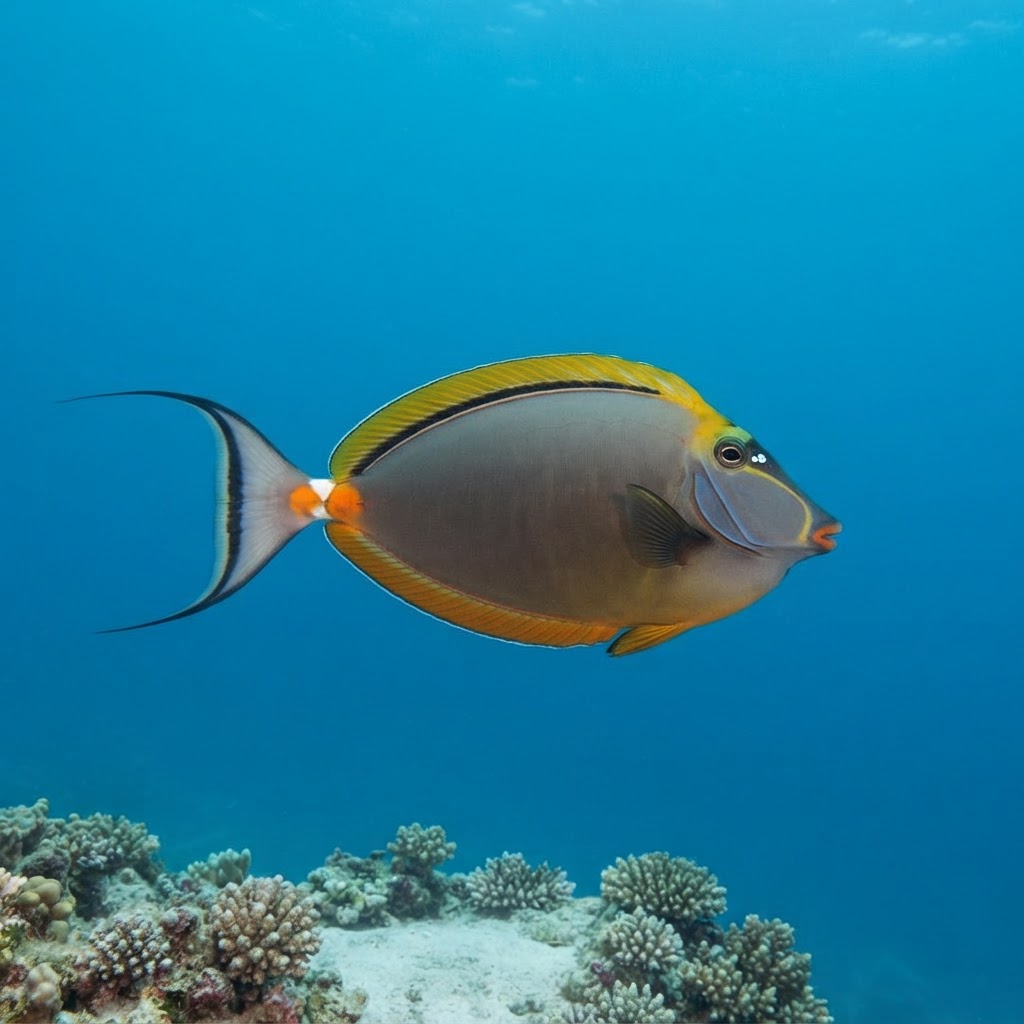
Reef neighbours a diver could mistake it for. Use the identification notes above to tell them apart.
Every logged sighting so far comes from French Polynesia, with the Tuamotu Islands standing out as the region where divers most reliably run into it. Outside that area there is not yet enough data to point to other reliable locations, so Tuamotu atoll dives are currently the surest bet.
Mapping where Gray Unicornfish is logged…
Confirmed sightings are concentrated in French Polynesia, particularly around the Tuamotu Islands, which is currently the most reliable place to find this species.
There is no strong seasonal pattern in the data, and the species tolerates a warm 24.7 to 28.8C range, so it is present on Tuamotu reefs throughout the year.
Look for a stocky grey-blue body around 32 cm long, a blunt sloping snout, and a pale tail fin contrasting with the darker body. It is usually seen alone or in small loose groups over open reef rather than schooling tightly.
They typically reach around 32 cm in length, putting them in the mid-size range for reef surgeonfish.
No, they are not considered dangerous to divers. Like other surgeonfish they carry a sharp tail spine used for defence against other fish, not for threatening divers, so there is no real risk from normal reef diving behaviour.
Site and sighting data is aggregated from diver logs, iNaturalist and GBIF. For taxonomy and conservation status:
Orangespine Unicornfish
961 sites