Grammistes sexlineatus
Spot the Goldenstriped Soapfish in Sharm el Sheikh, Mauritius and beyond. Know its bold stripes, sneaky habits, and the best months to look.
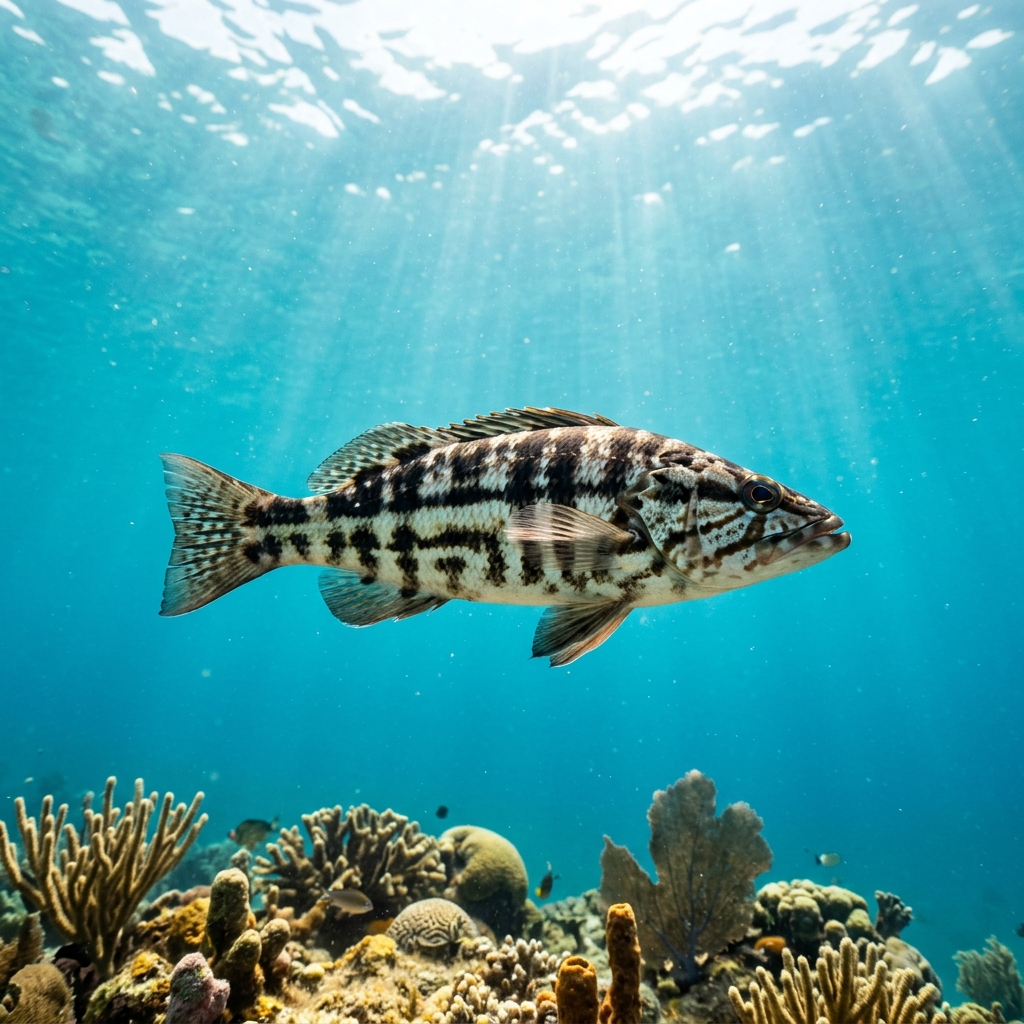
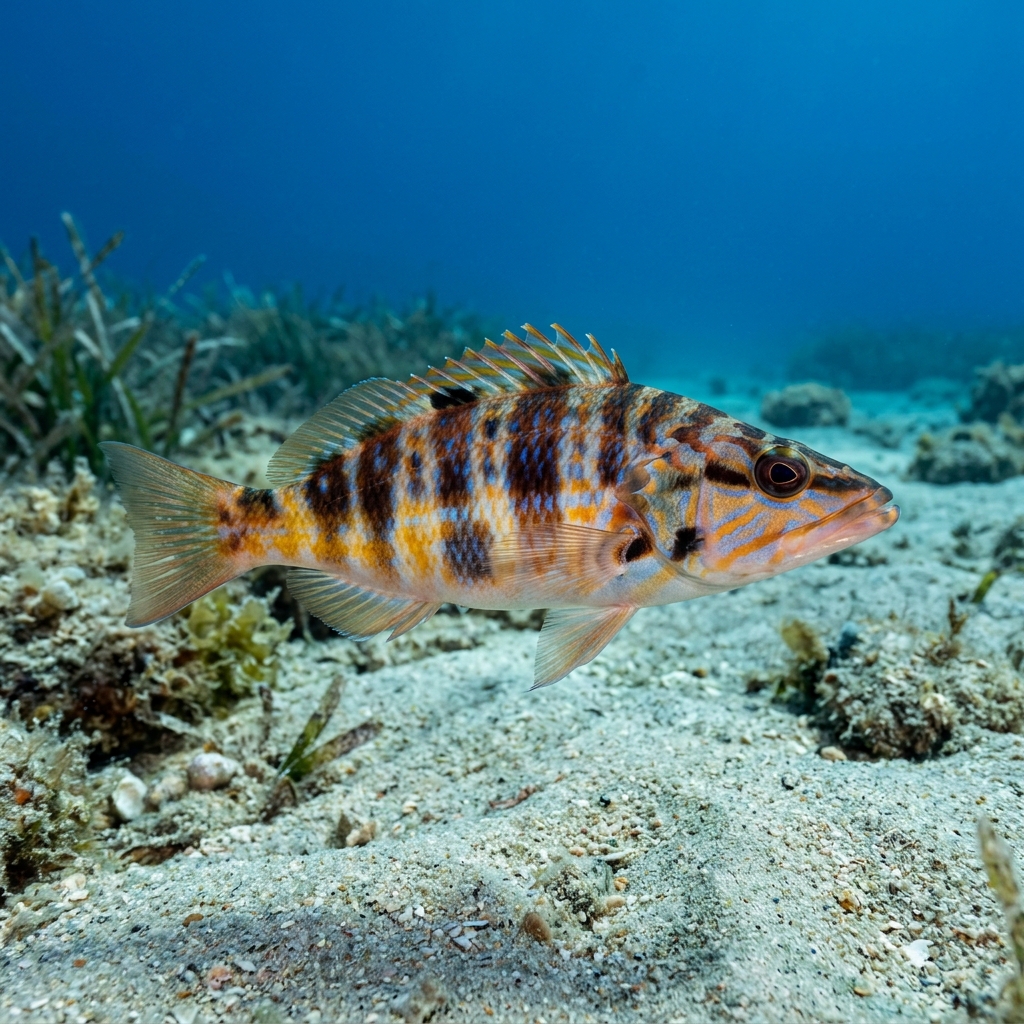
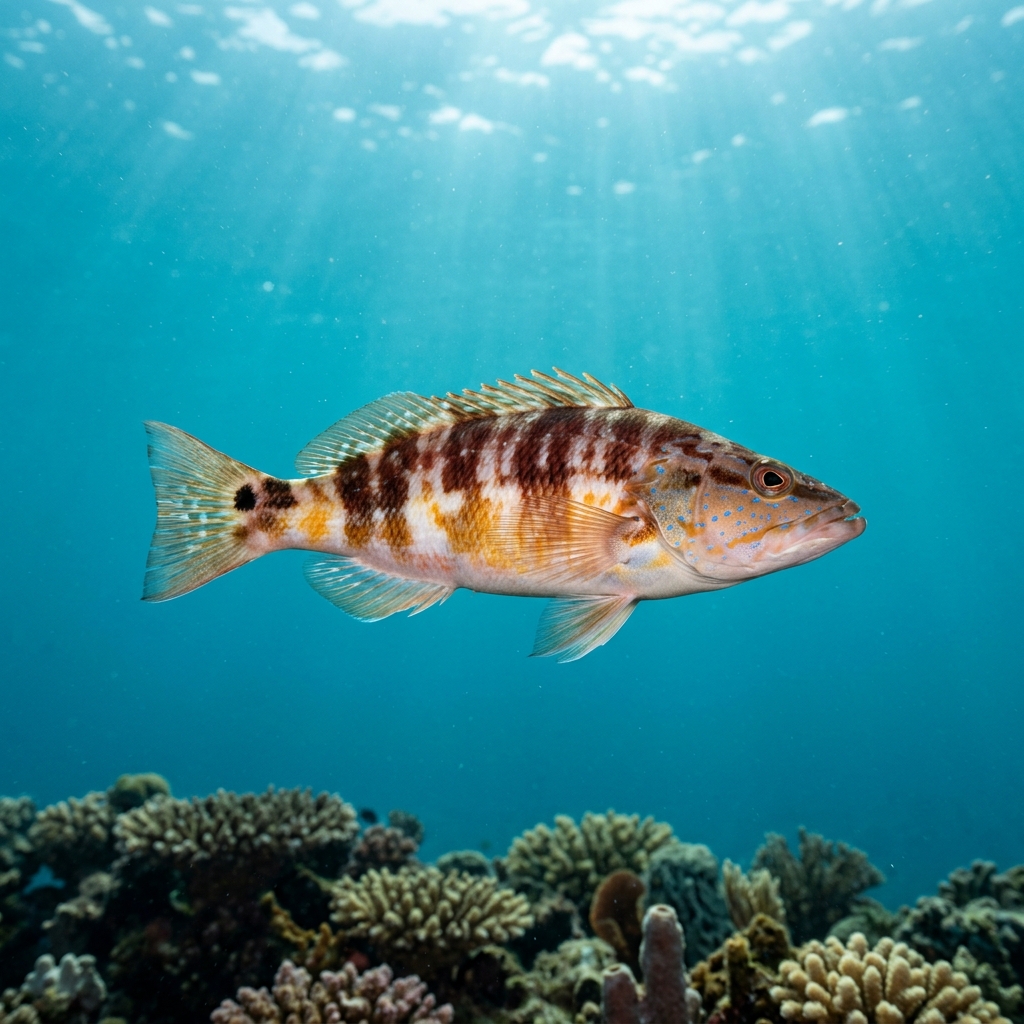
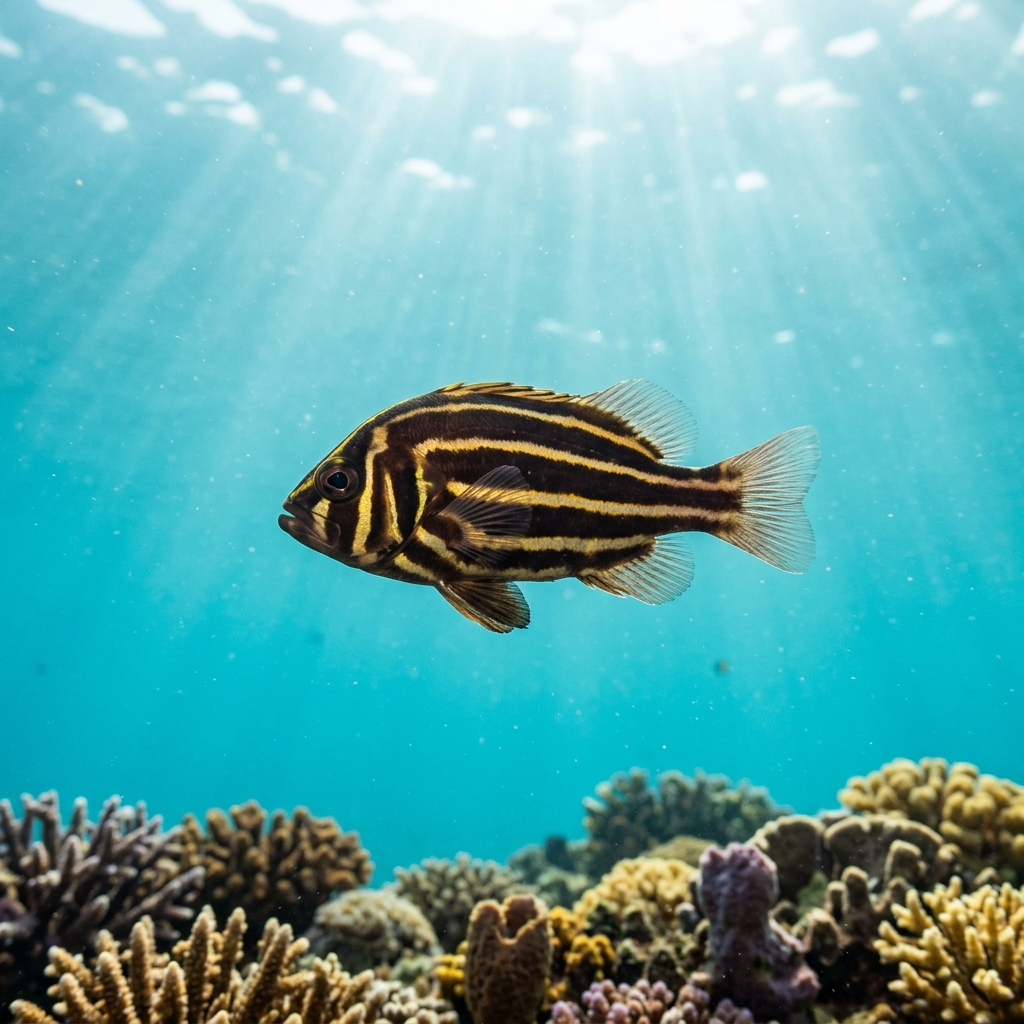
Bold yellow or cream horizontal stripes running the full length of a deep-bodied, dark brown or blackish fish are the quickest underwater markers. The stripes typically number five or six and stay sharp and contrasting at depth, making this one of the easier reef fish to name even at a glance. It tends to hover low near the reef, often tucked under overhangs or in crevices, which can make a full-length view tricky. Juveniles show the same striped pattern but are noticeably smaller and often bolder in colour.
You will almost always find one sheltering close to the reef structure, wedged under a ledge or hovering at the entrance to a crevice rather than swimming in open water. It tends to hold its position when approached and does not bolt immediately, which gives patient divers a good look, though it will retreat deeper into cover if you push too close. Mostly seen during the day, likely resting between short forays to ambush small fish and crustaceans near the substrate.
The soapfish family gets its name from a remarkable defence: when stressed, the skin releases grammistin, a bitter, toxic mucus that lathers like soap in the water and deters predators. This means handling one is a bad idea for the fish, even if it poses no real risk to a diver watching from a distance.
In the northern Red Sea, sightings concentrate from July through January, so late summer into early winter is the window to target. The species is comfortable across the 22 to 29 °C range seen at its logged sites, meaning tropical Indian Ocean destinations such as Mauritius can host it year-round.
Most sightings come from the northern Red Sea, with Sharm el Sheikh and Safaga in Egypt accounting for the largest concentration of records, followed by Dahab and Eilat in Israel and Aqaba in Jordan. Outside the Red Sea, North Mauritius and Saint-Gilles-les-Bains in Réunion are the strongest sites in the Indian Ocean, with additional records from Indonesia, Mozambique, and Niue rounding out the spread.
Mapping where Goldenstriped Soapfish is logged…
The Red Sea is your best bet, with Sharm el Sheikh, Safaga, and Dahab in Egypt and Aqaba in Jordan leading the records. Mauritius and Réunion are strong Indian Ocean options, and there are also confirmed sightings in Indonesia and Mozambique.
In the northern Red Sea, sightings peak from July through January. In warmer tropical locations like Mauritius, where water temperatures stay within the species' preferred range year-round, you have a reasonable chance on any dive.
Look for a stocky, dark-bodied fish with five or six vivid yellow or cream stripes running cleanly from head to tail. It typically sits low on the reef near ledges or crevices rather than swimming in the open. The stripe pattern is consistent from juvenile to adult and is unlike most other reef fish in the same habitat.
No, they pose no danger to divers. They are shy and will retreat if approached too closely. Their skin produces a toxic, soap-like mucus as a defence against predators, but this is not a risk for anyone simply observing them in the water.
It belongs to the soapfish family, which can secrete grammistin, a potent skin toxin that lathers visibly in seawater when the fish is stressed or handled. The bitter mucus deters most predators and is why these fish are rarely bothered despite being relatively slow and conspicuous.
Site and sighting data is aggregated from diver logs, iNaturalist and GBIF. For taxonomy and conservation status:
Blacktip Grouper
2,726 sites