Saurida gracilis
Mottled and motionless on the sand, look for this lizardfish across South Sinai's reefs in 24-29 C water, any month of the year.
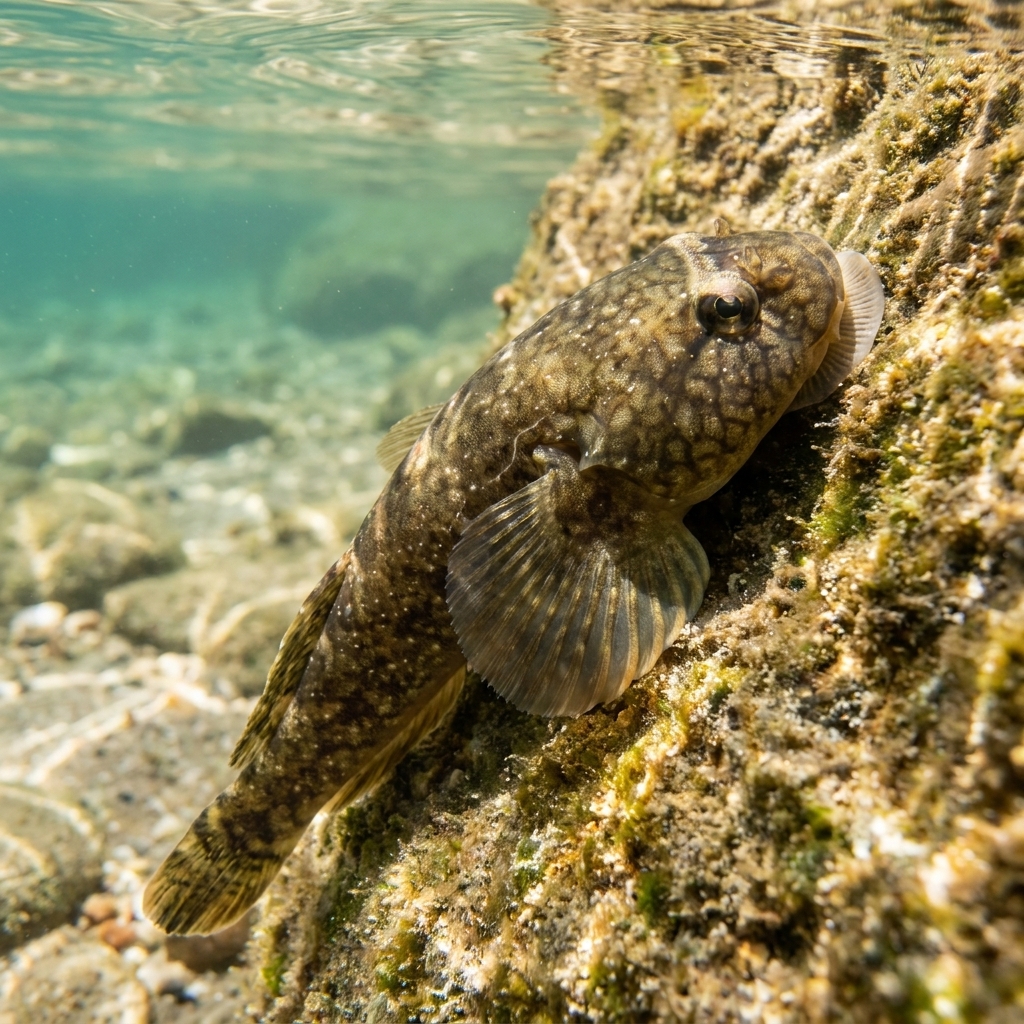
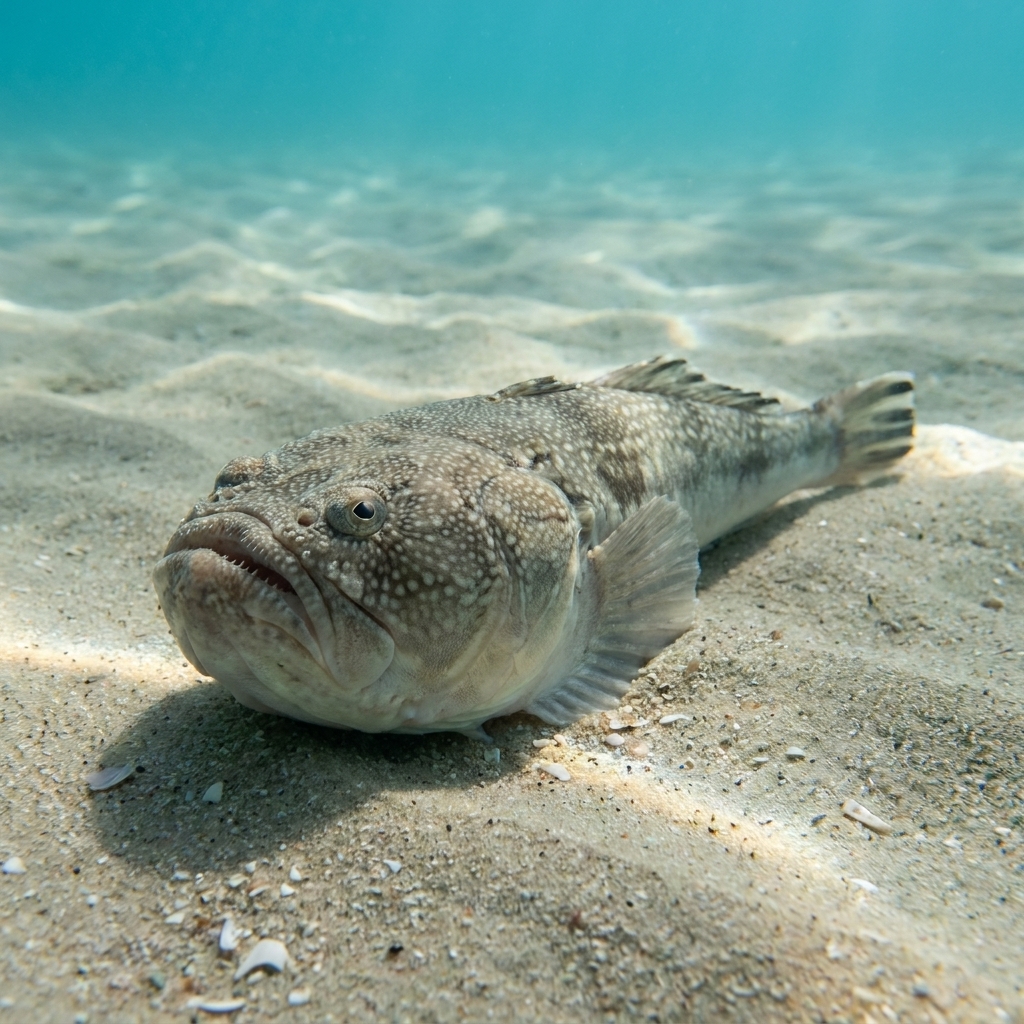
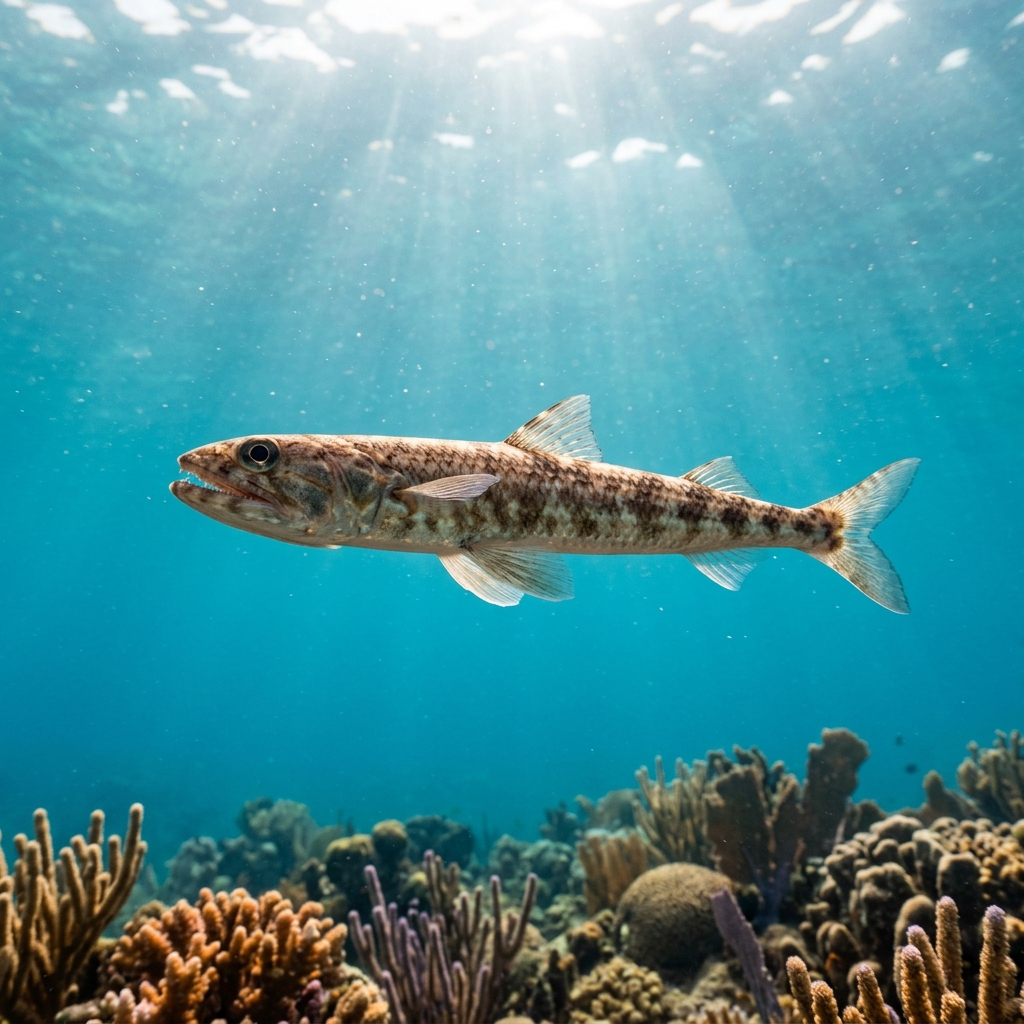
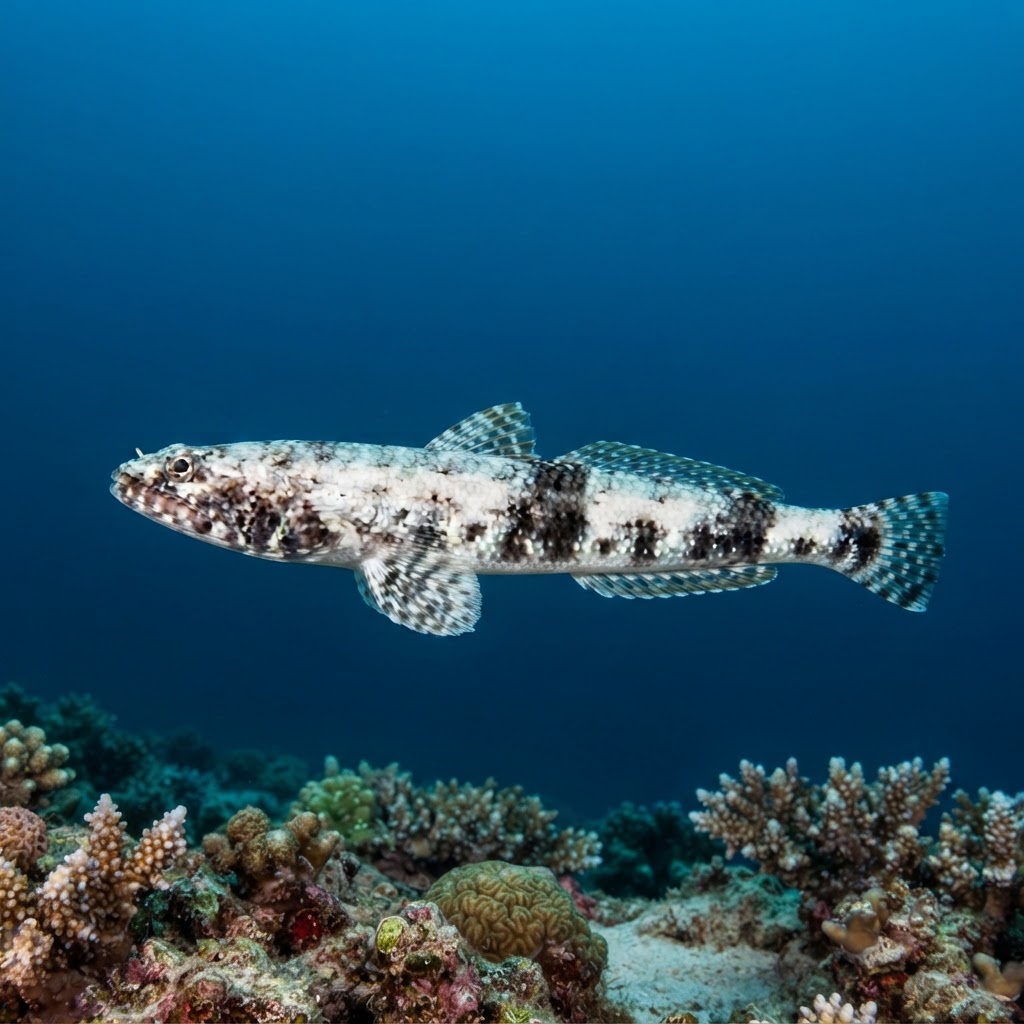
Slender, torpedo-shaped body around 22 cm long, propped up on its lower fins as it rests directly on sand or rubble patches. Mottled brown, tan and cream blotching runs along the flanks, breaking up its outline against the reef floor. A pointed, reptilian-looking snout and upward-tilted eyes give it the lizard-like face that names the whole family. It rarely swims in open water, so the giveaway is spotting one lying dead still where you'd expect bare seabed rather than coral.
Spends most of its time motionless on sand or rubble, propped on its pelvic fins and blending into the substrate while it waits for small fish to wander within striking range. It's an ambush predator, not a swimmer, so divers usually find it by scanning open sandy patches near reef edges rather than the reef structure itself. It tolerates a close approach reasonably well before darting off in a short, fast burst if pressed, then settling again a short distance away.
That lizard-like face isn't just for looks: lizardfish have a mouth full of small, needle-fine teeth built for gripping fast-moving prey in a single lunge rather than chewing, making the strike itself the main event rather than a chase.
No clear seasonal pattern shows up in sightings, and it's comfortable in water from 24 to 29 C, so it's a year-round find on the reefs where it occurs rather than a species tied to a particular month.
Most reliably logged across Egypt, especially South Sinai, the Red Sea Riviera and Marsa Alam and the Deep South, where sandy patches between reef structures give it plenty of resting spots. Smaller but still real populations turn up in Eilat in Israel and around Fiji's Mamanuca Islands, with occasional sightings in Reunion, Vietnam and Indonesia. Wherever you dive it, treat it as an uncommon but findable species rather than a guaranteed tick.
Mapping where Gracile Lizardfish is logged…
Egypt is the strongest bet, particularly South Sinai, the Red Sea Riviera and Marsa Alam and the Deep South, all with regular records. Smaller numbers are also logged in Eilat, Israel, and around Fiji's Mamanuca Islands.
There's no strong season in the sighting data, and it sits comfortably in 24 to 29 C water, so it's present on tropical and subtropical reefs throughout the year.
Look for a slender, mottled brown and cream fish about 22 cm long lying motionless on sand or rubble, propped up on its lower fins with a pointed, lizard-like snout. It's usually resting rather than swimming, which is the main clue to spotting one.
They typically reach around 22 cm in length, a slim, torpedo-shaped body suited to lying flat and unnoticed on the seabed.
No, they pose no threat to divers and will simply dart away a short distance if approached too closely.
Rather than chasing prey, they lie still on the sand and rely on a sudden lunge with a mouth of fine, needle-like teeth to grab small fish that pass too close.
Site and sighting data is aggregated from diver logs, iNaturalist and GBIF. For taxonomy and conservation status:
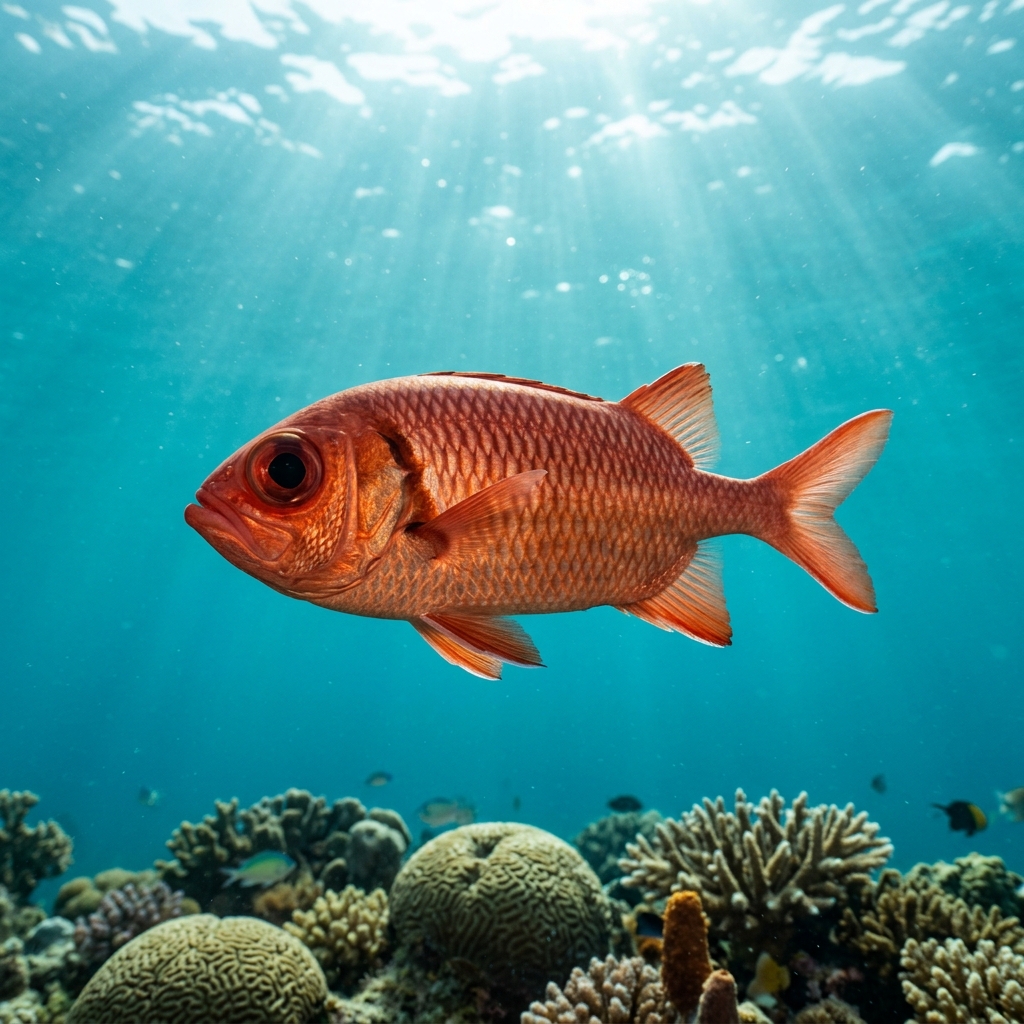
Soldierfish
3,612 sites