Roboastra gracilis
A tiny nudibranch most reliably spotted in Sabah's shallows, 1-5m deep in warm 26-32C water year-round.
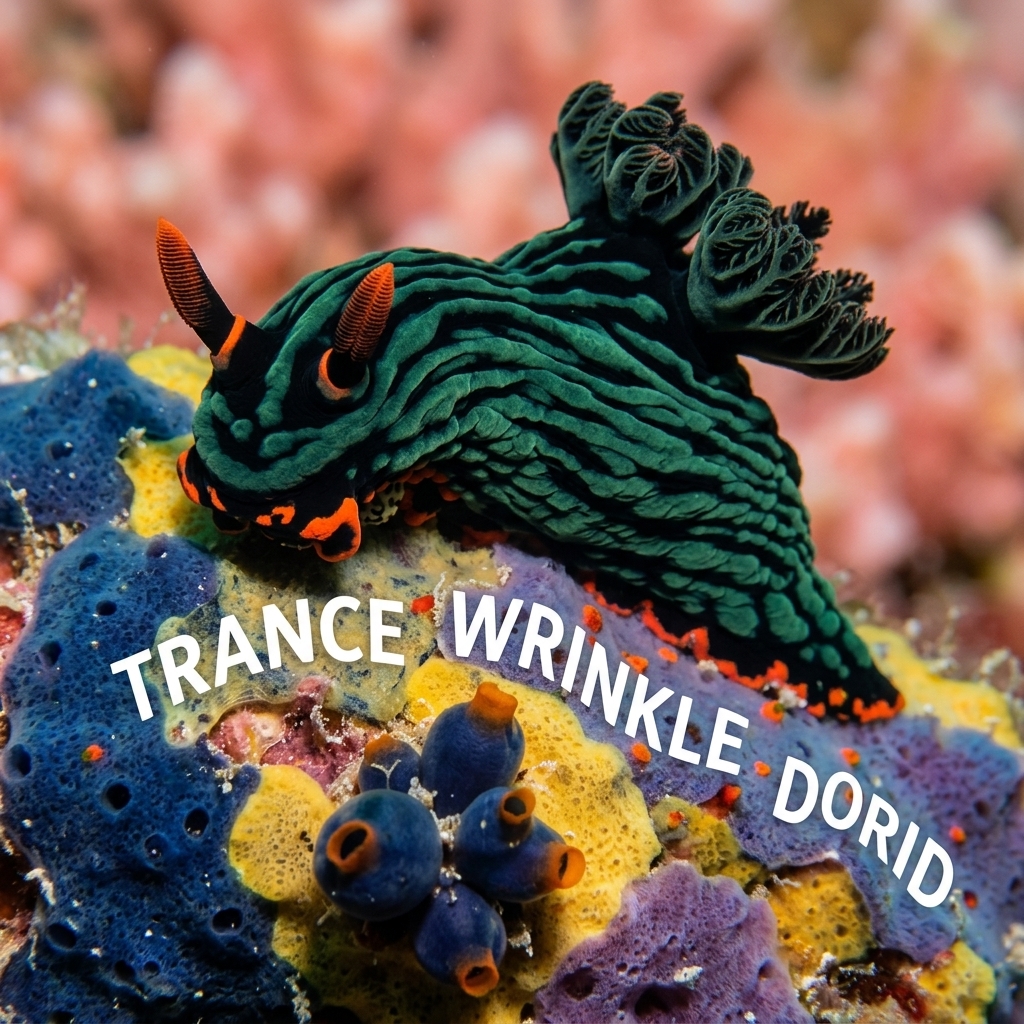
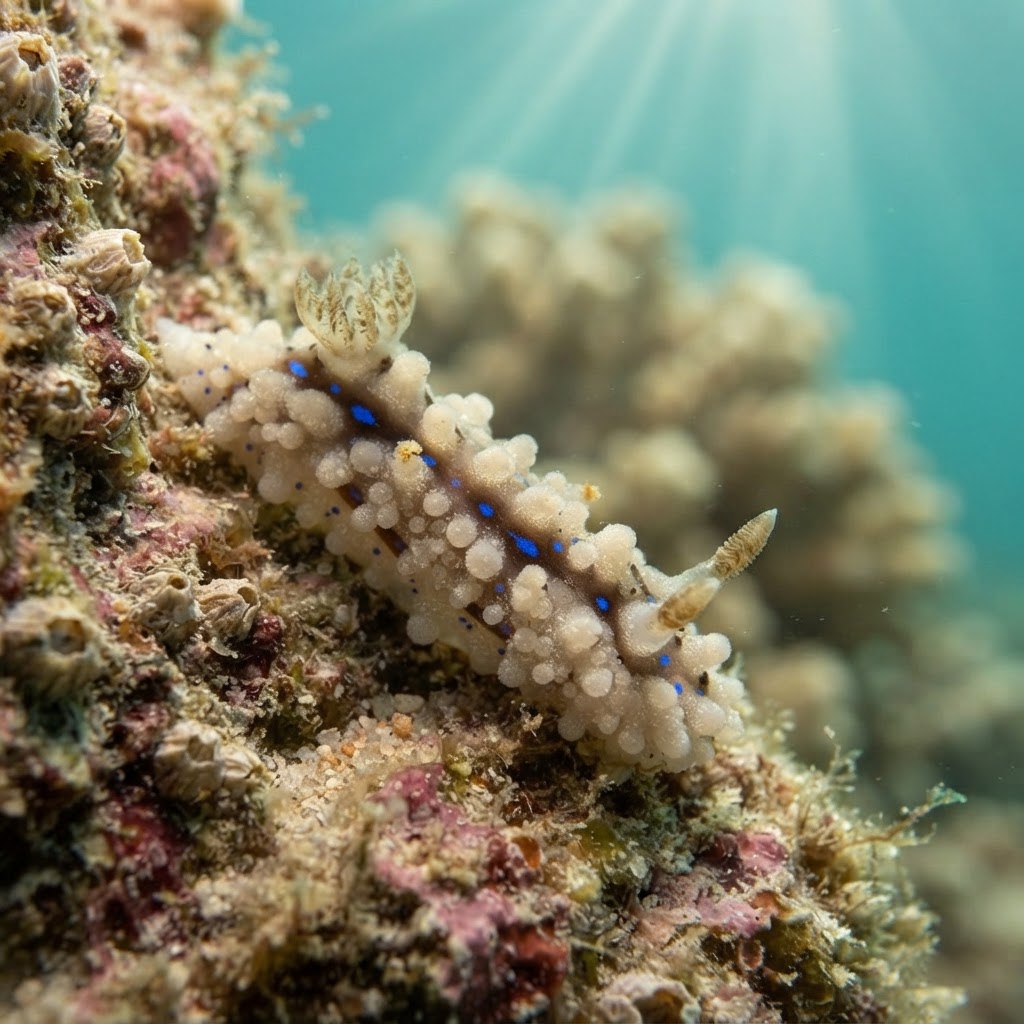
At just 2cm long, this nudibranch is easy to swim past unless you know to check shallow rubble and coral debris closely. Look for a slender, elongated body with a wrinkled or ruffled mantle edge running along its length, giving it a slightly frilly silhouette compared to the smoother-bodied dorids nearby. Colouration tends toward muted tones that blend into the reef, so the texture of the mantle margin is often the better cue than colour alone.
This is a slow, deliberate crawler, typically found grazing on shallow reef rubble and hard substrate rather than out in open water. It shows little to no reaction to divers, going about its slow feeding pace regardless of a torch or camera hovering nearby, which makes it a reasonably cooperative macro subject once you've spotted it. Most sightings come from shallow water in the 1 to 5 metre range, so it's as much a snorkelling find as a dive one.
Like other dorid nudibranchs, it likely feeds on sponges, using specialised radula (a rasping feeding organ) to scrape and consume its prey, which also shapes the toxins it can sequester for its own defence.
No clear seasonal pattern shows up in the sightings, and the water temperature range it's found in, roughly 26 to 32C, holds steady on these tropical reefs all year, so any month works for a dedicated look.
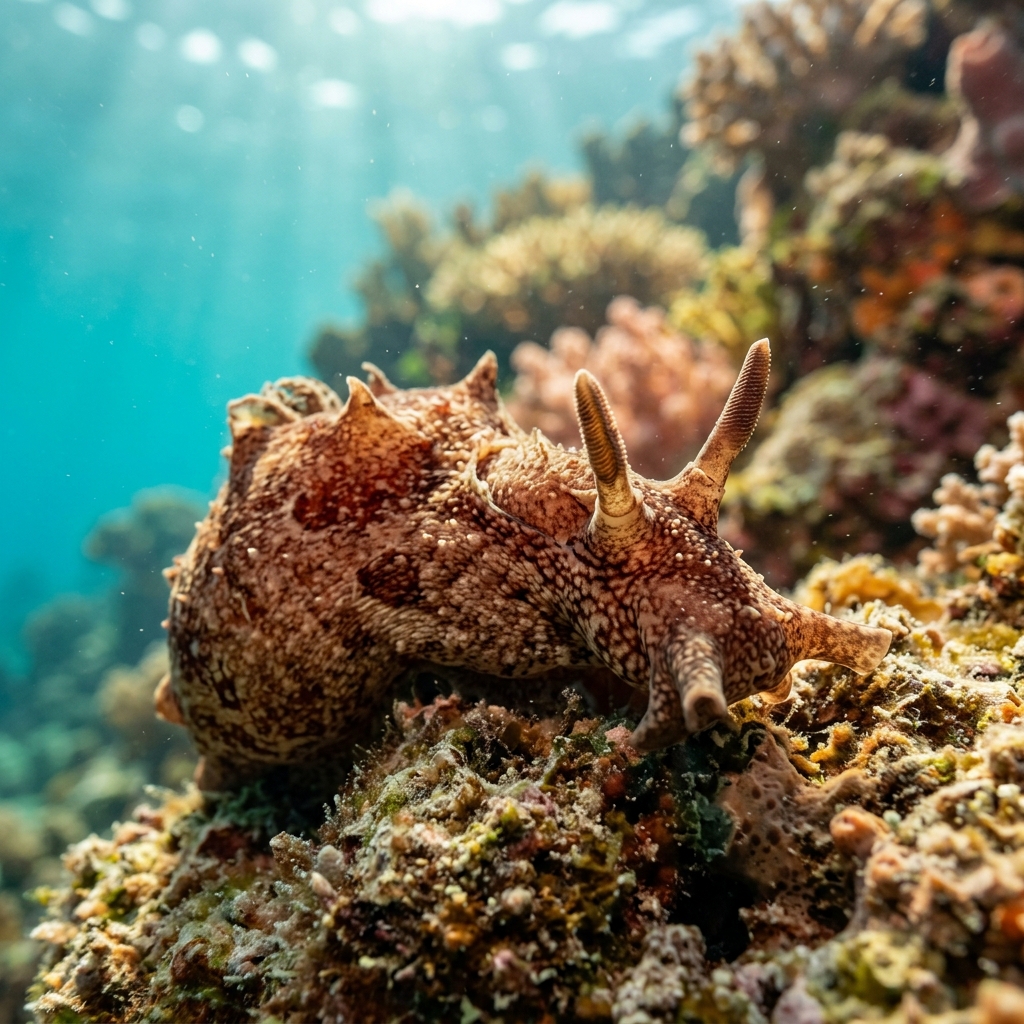
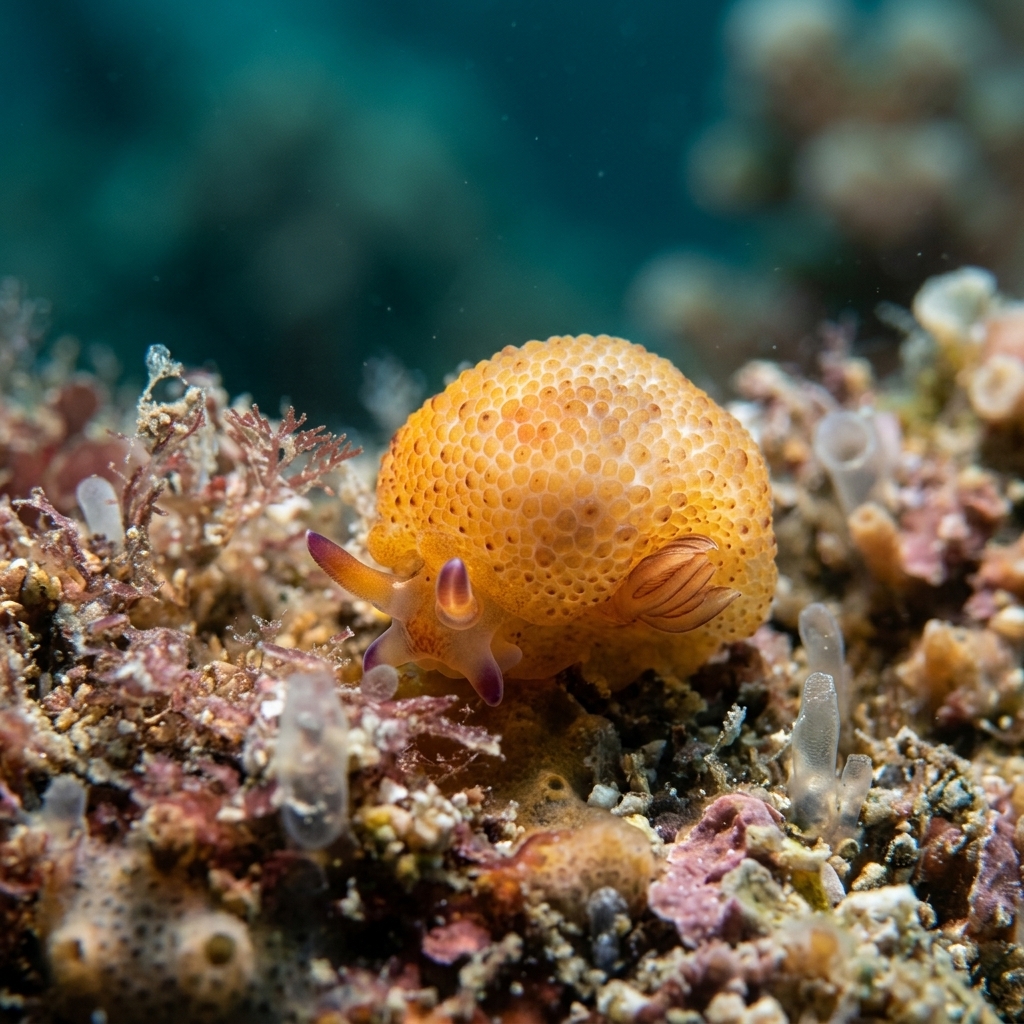
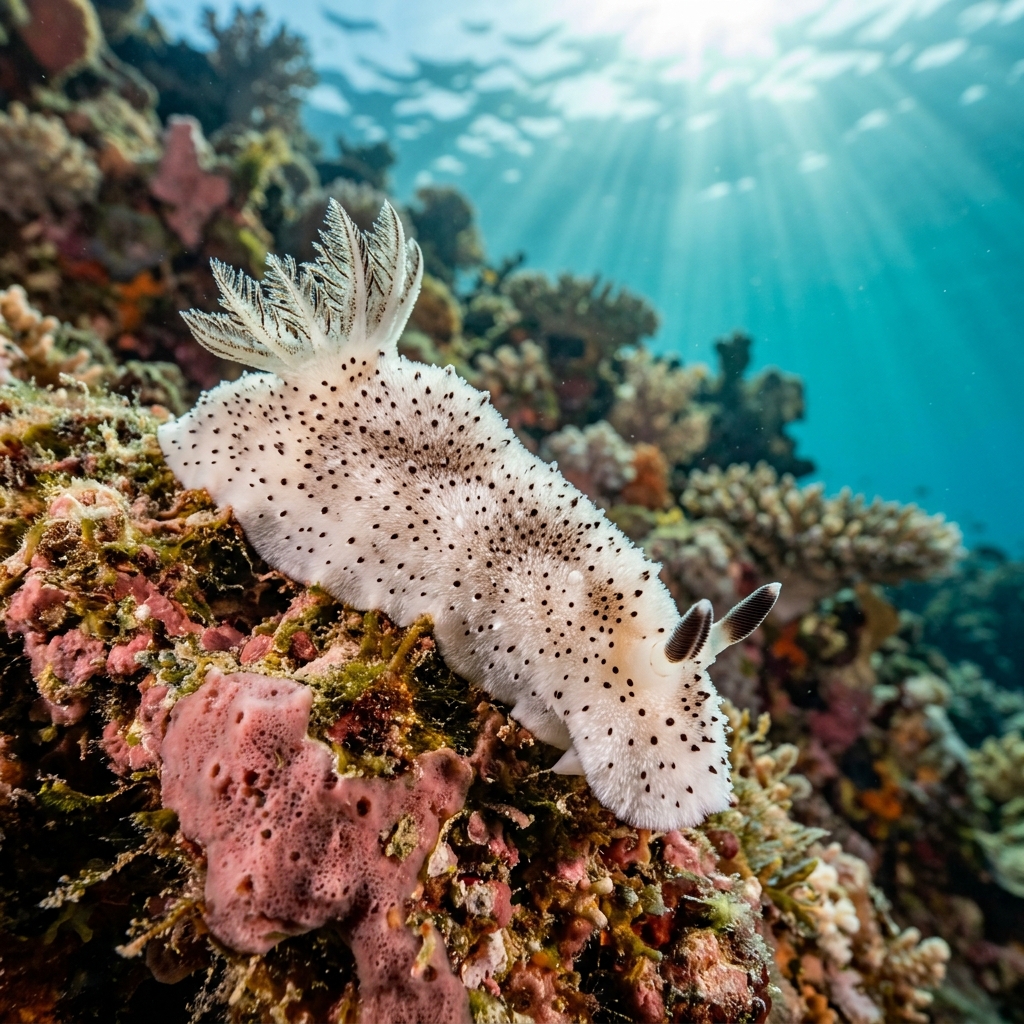
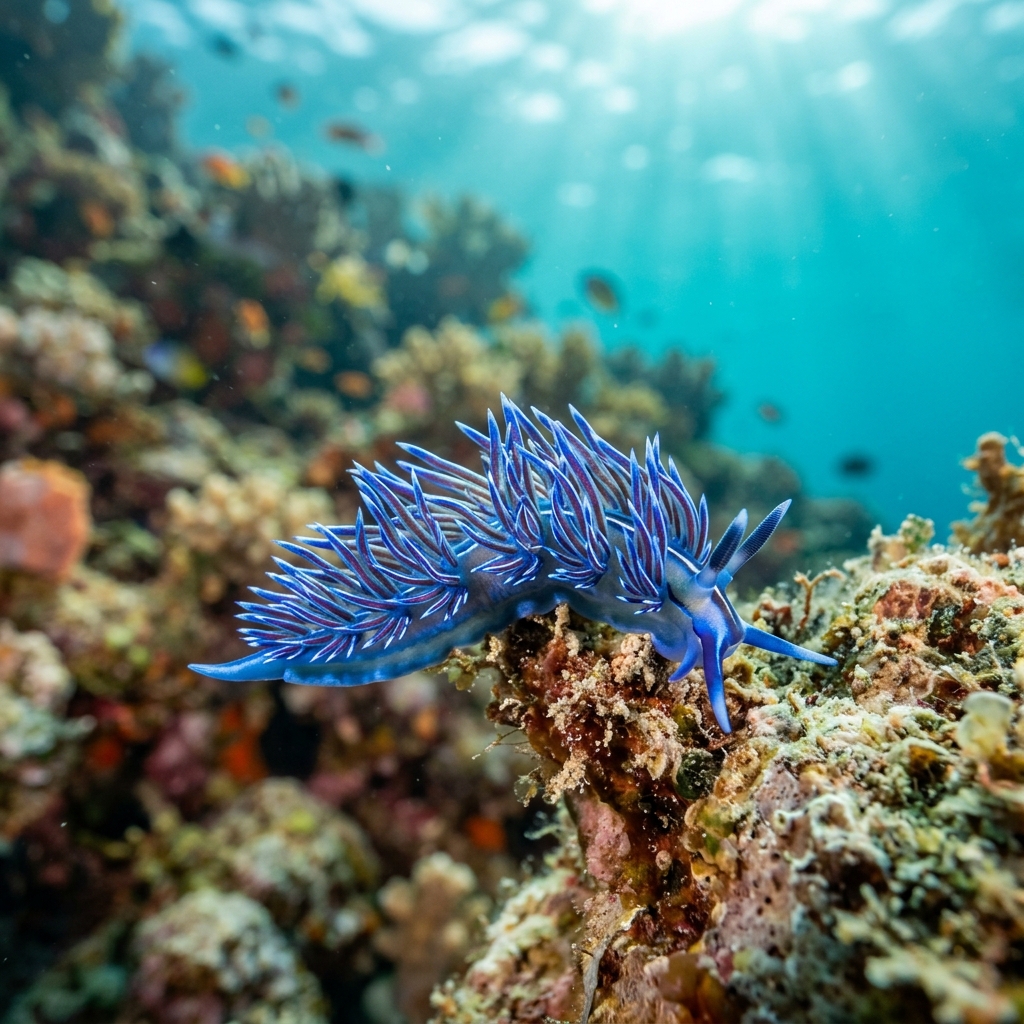
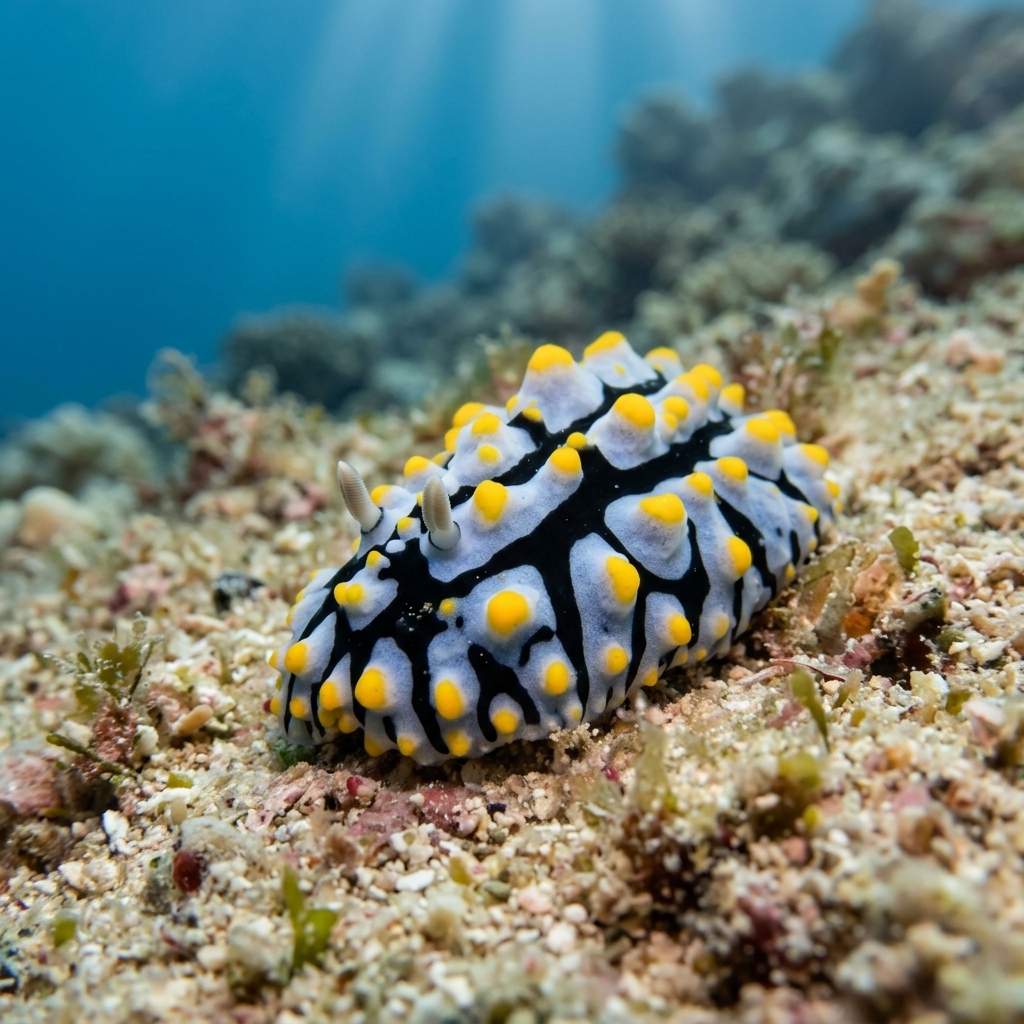
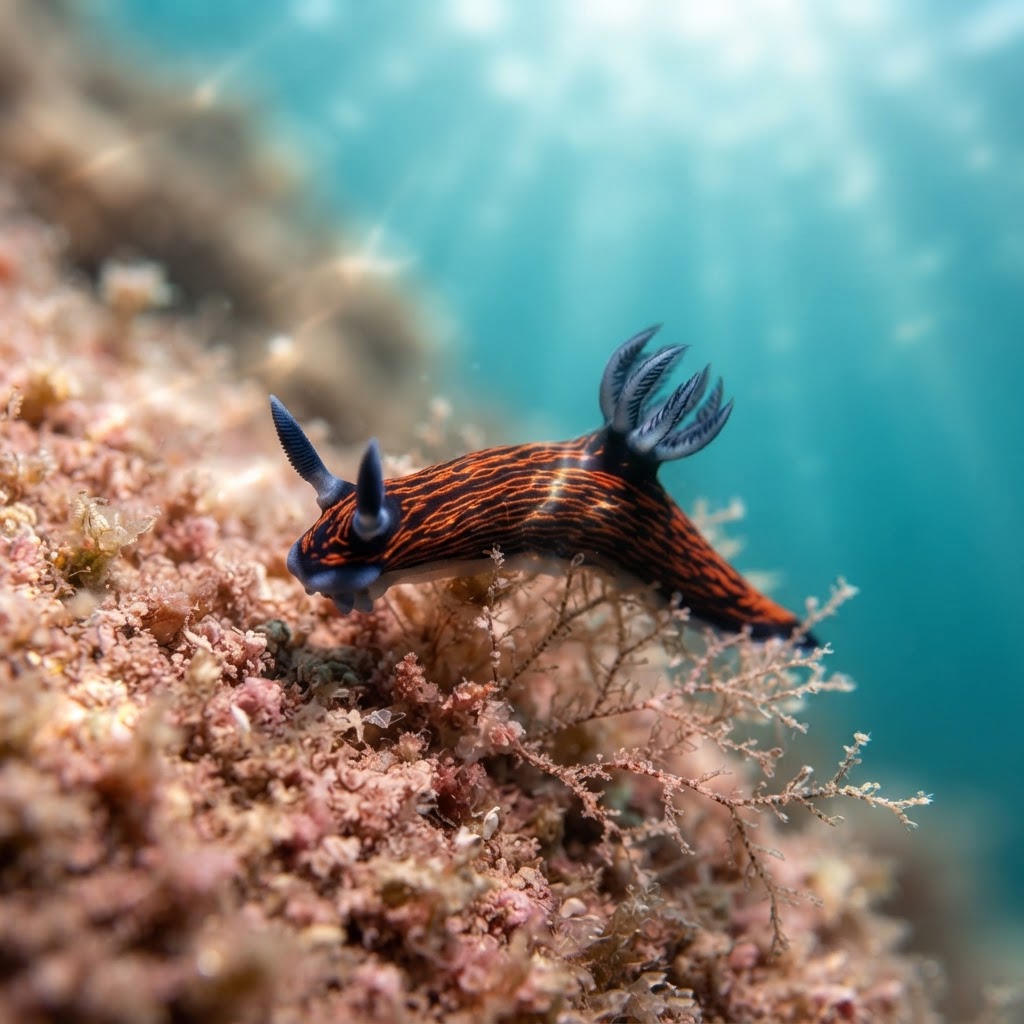
Reef neighbours a diver could mistake it for. Use the identification notes above to tell them apart.
Sabah in Malaysia is by far the strongest area for this species, with Peninsular Malaysia's East Coast also a reliable region to check. Outside Malaysia it turns up on dives around Saipan in the Northern Mariana Islands, across the Visayas in the Philippines, and in smaller numbers in Milne Bay, Papua New Guinea and Xiaoliuqiu, Taiwan.
Mapping where Graceful Wrinkle Dorid is logged…
Sabah, Malaysia is the most consistent place to find it, with Peninsular Malaysia's East Coast also worth checking. It also appears around Saipan, across the Visayas in the Philippines, and in smaller numbers in Milne Bay and Taiwan.
There's no strong seasonal signal in the sightings, and it's found across a warm 26 to 32C range year-round, so it can be looked for on any month's dive in these regions.
Check shallow rubble and coral debris for a small, 2cm slug with an elongated body and a wrinkled or ruffled mantle margin. It's easy to overlook given its size, so a slow, close scan of the substrate is the best approach.
It's a small species, typically around 2cm in length, so it takes a careful eye or a guide's pointer to spot on the reef.
As a dorid nudibranch, it most likely grazes on sponges using a rasping feeding structure, a diet that also influences the chemical defences it carries in its tissue.
Site and sighting data is aggregated from diver logs, iNaturalist and GBIF. For taxonomy and conservation status:
Light-spotted Aegires
3,168 sites