Metacarcinus gracilis
Find graceful rock crabs on cold reefs in British Columbia and the Pacific Northwest, spotted year-round in 9 to 19C water.
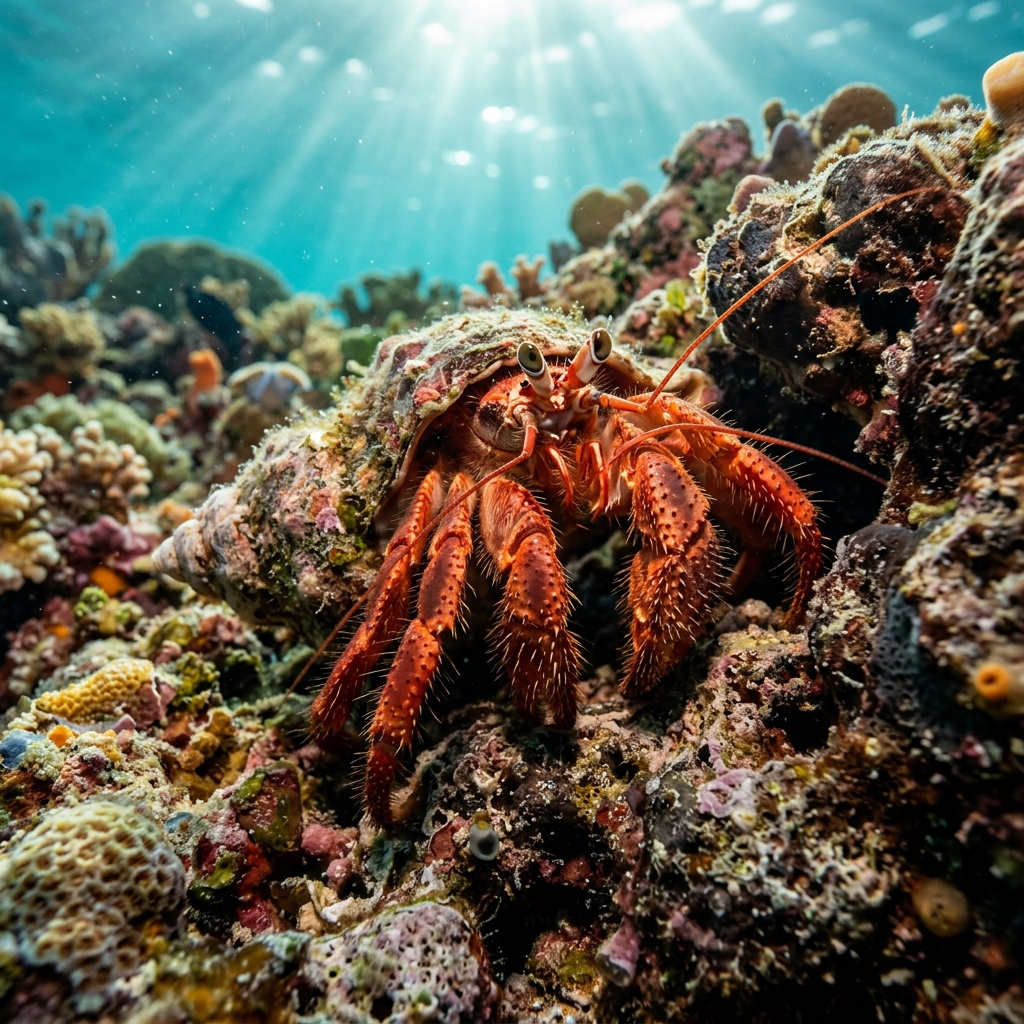
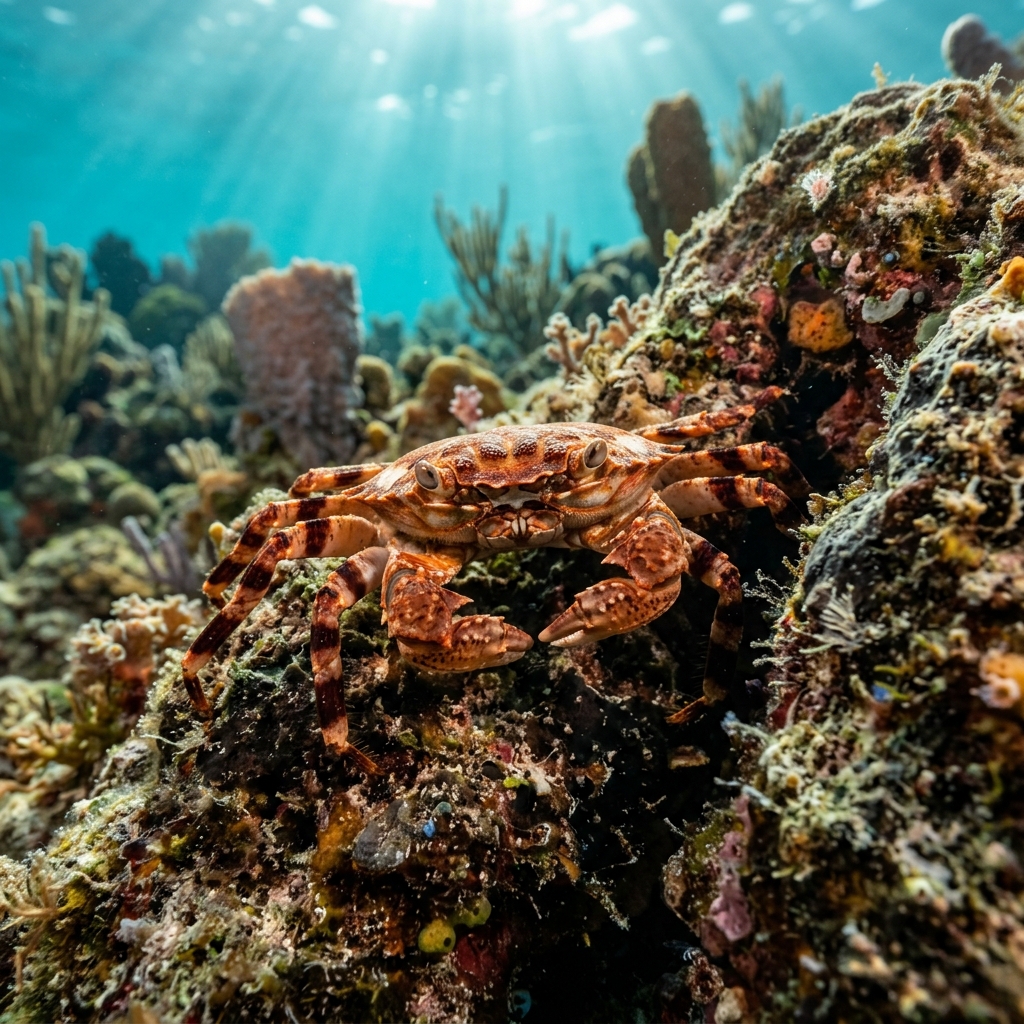
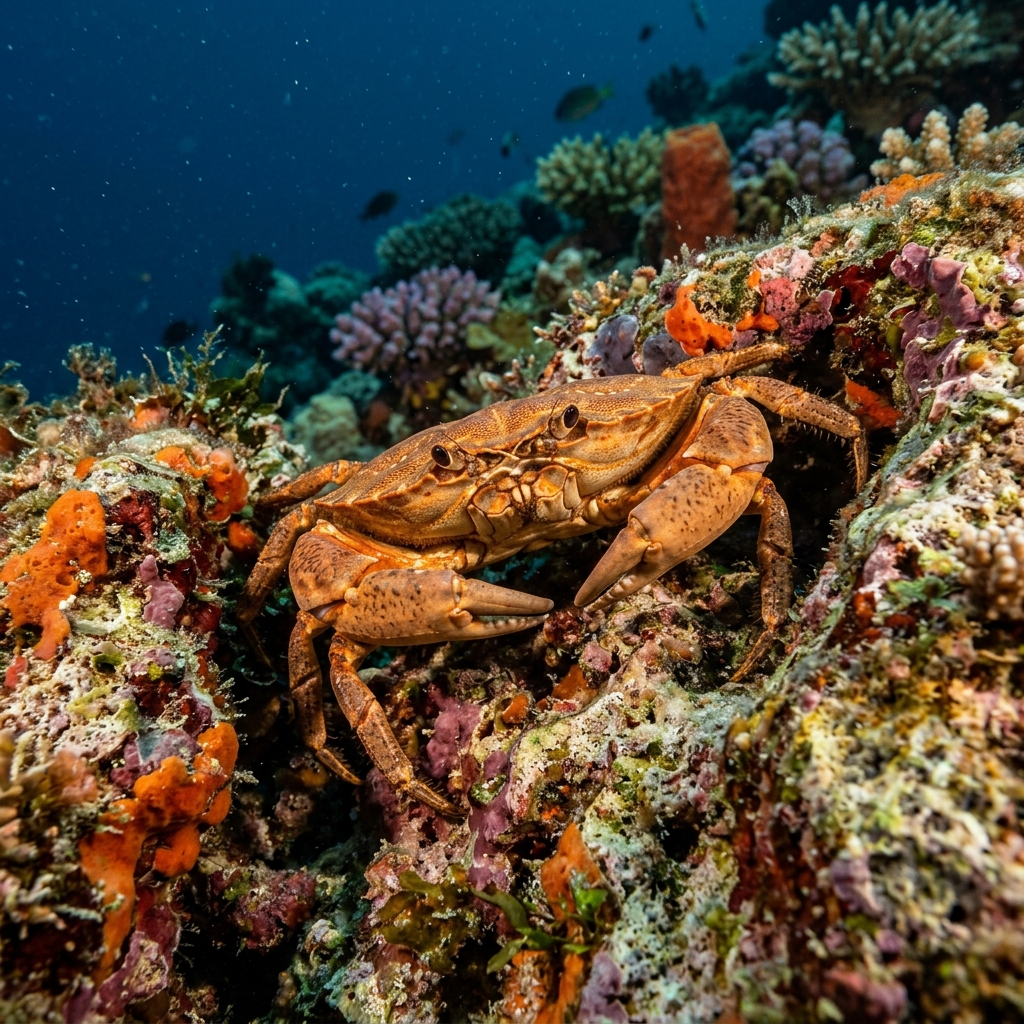
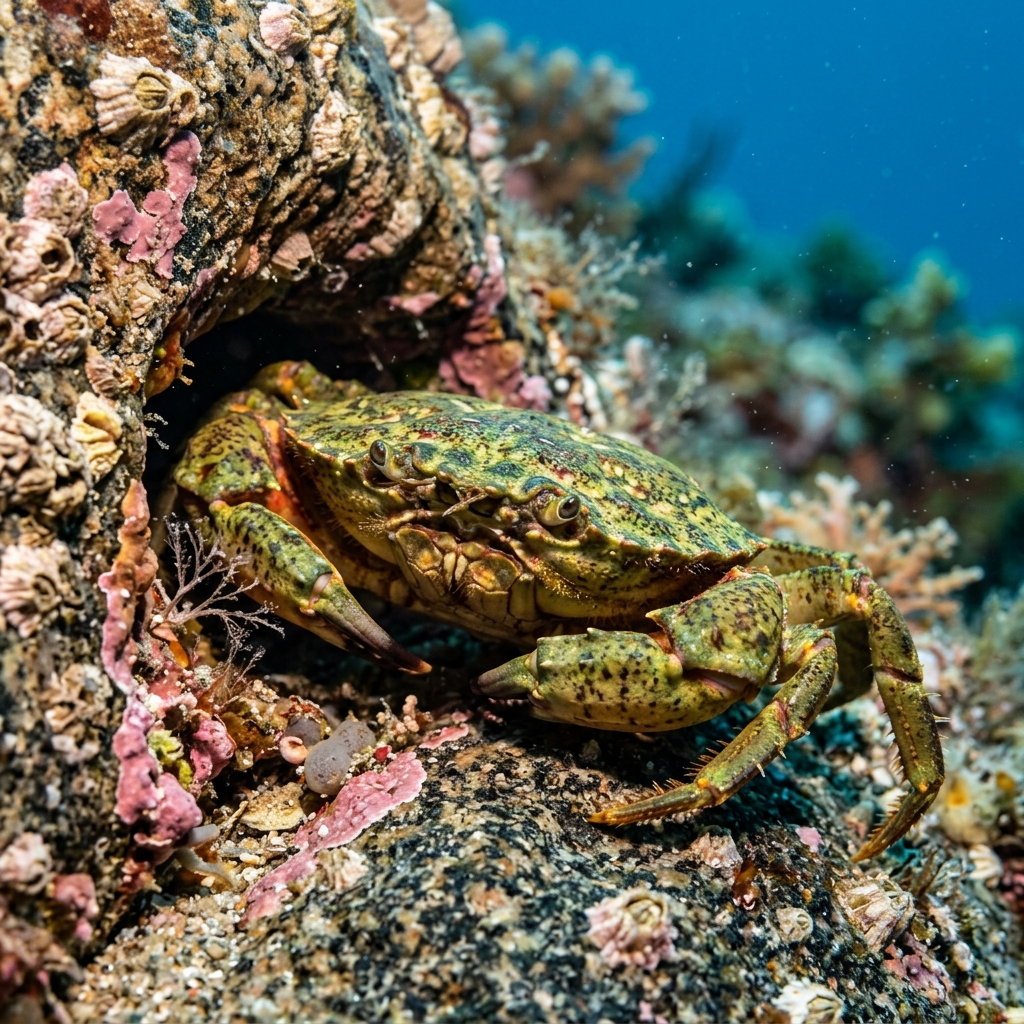
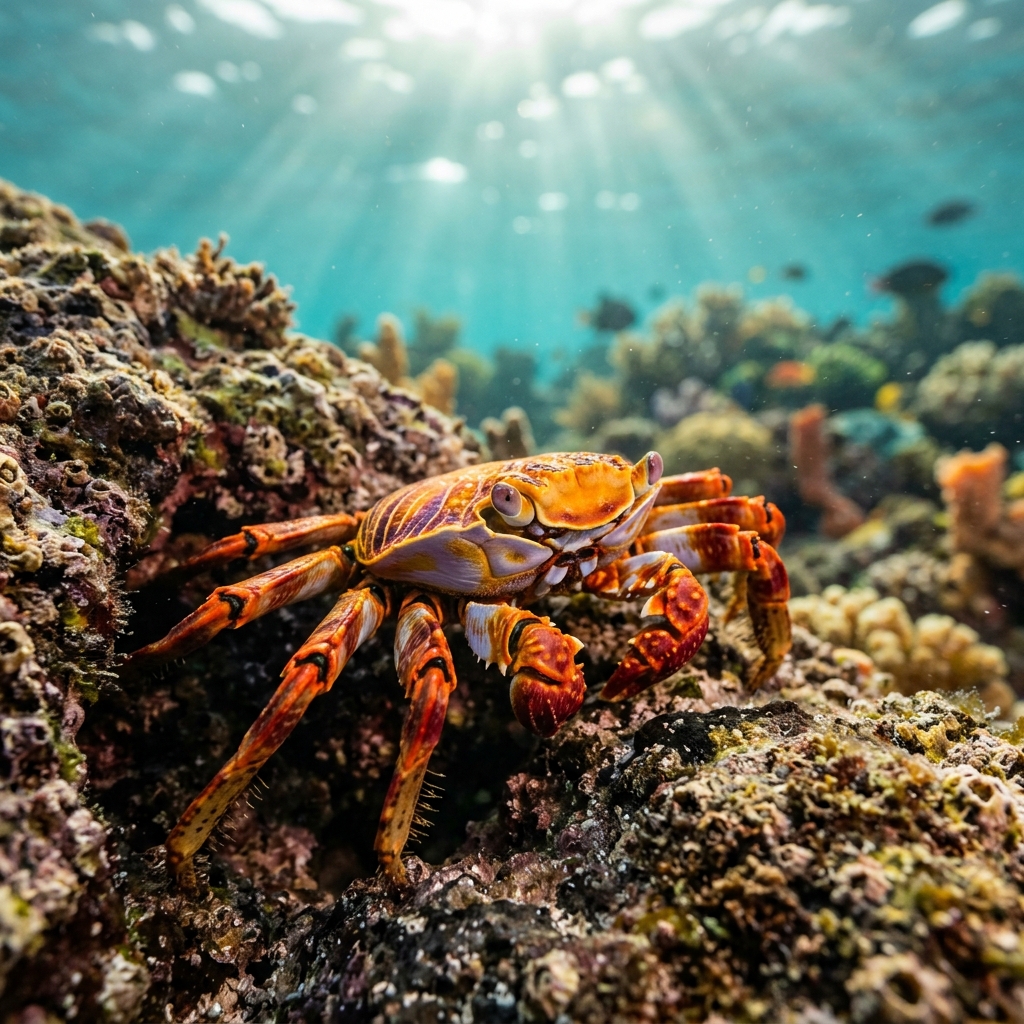
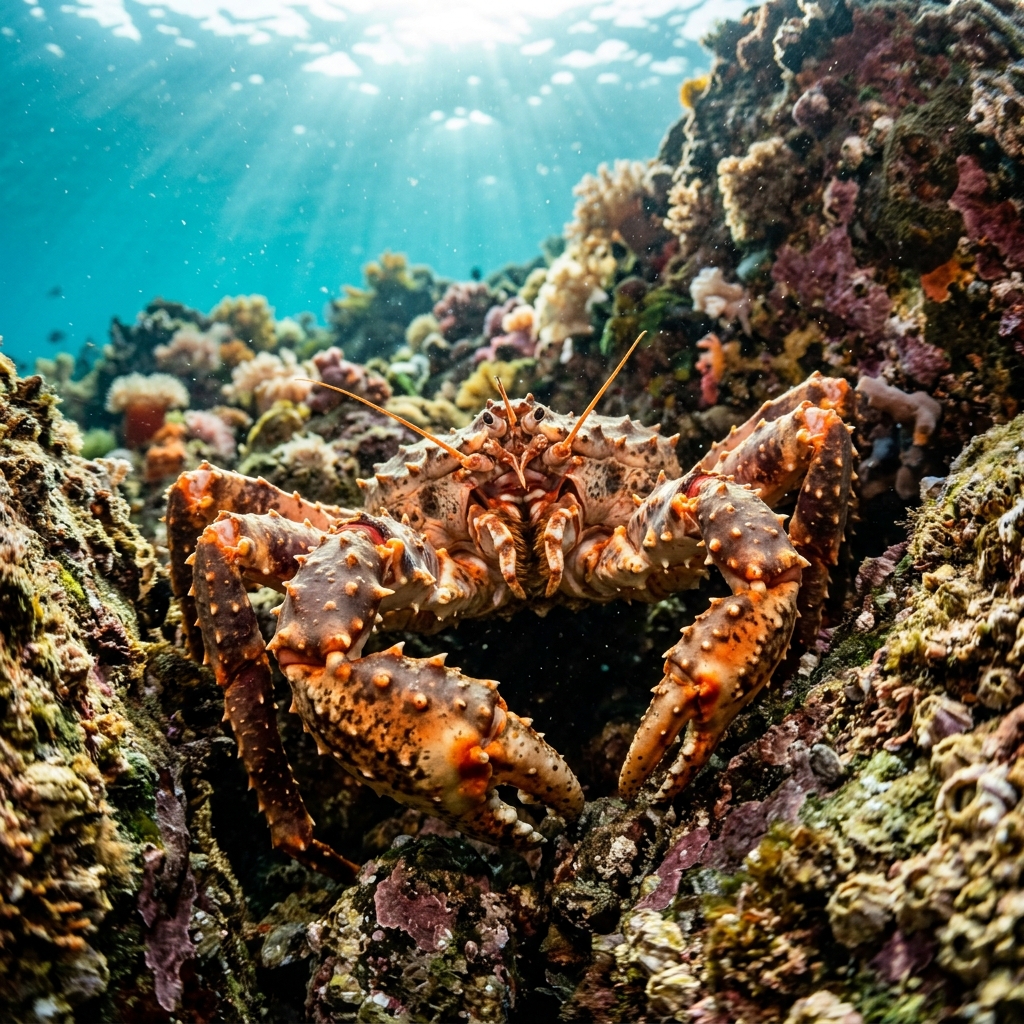
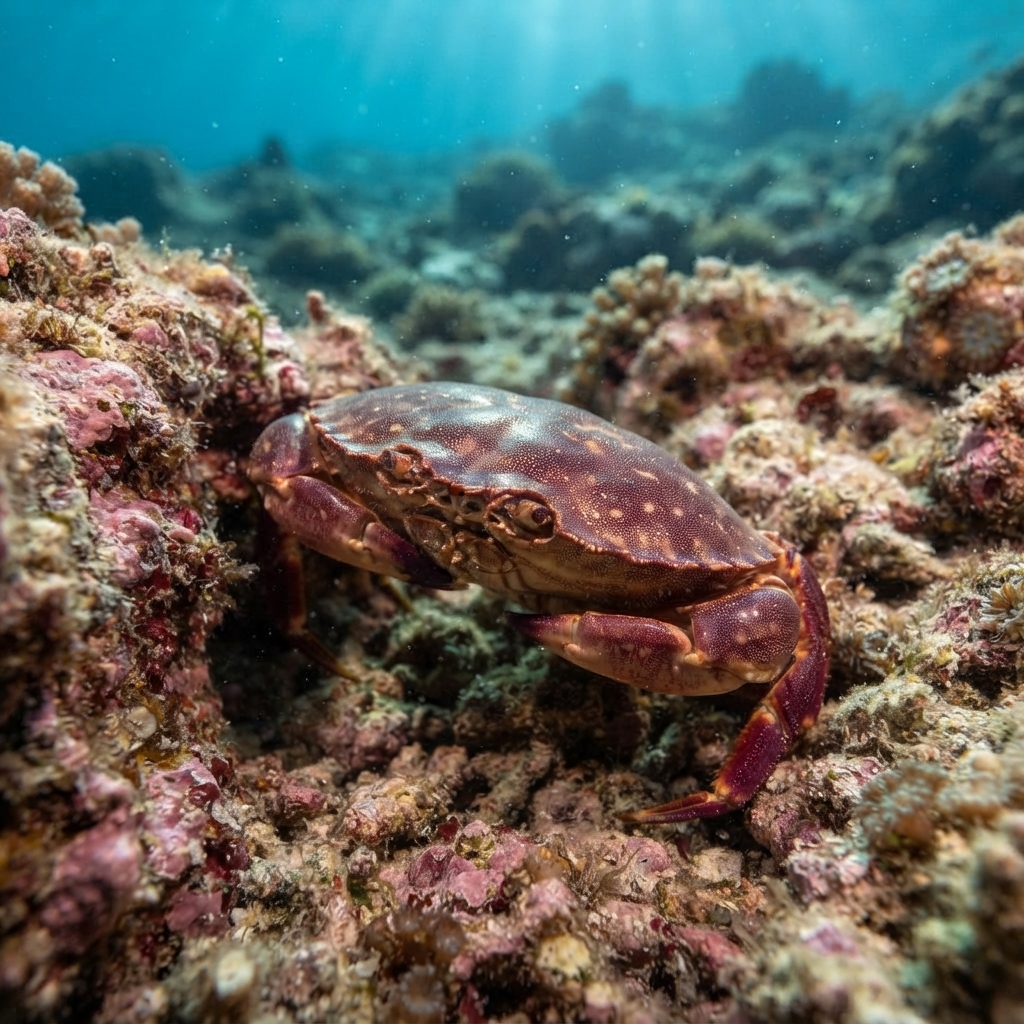
Look for a fan-shaped shell with a mottled reddish-brown to purplish colour that blends into rocky bottoms. The shell edge carries a row of short, evenly spaced teeth, and the claws are pale underneath with darker tips. Most individuals sit low and flat against rock or gravel, relying on their colour to disappear rather than moving off quickly.
Divers typically find these crabs tucked against rock walls or wedged into crevices during the day, staying still enough that they're easy to swim past unnoticed. They don't scuttle off in a panic when a light passes over them, more often just holding position or shuffling a short distance under cover. Most reports describe single individuals rather than groups, so a sighting is usually a solo, close-up find rather than a busy scene.
Like other cancer crabs, it periodically sheds its entire shell to grow, leaving behind an intact, empty exoskeleton that divers sometimes mistake for a dead crab on the seafloor.
Sightings don't show a clear seasonal pattern, and the species tolerates a wide temperature range from about 9 to 19C, so divers log it across the year in British Columbia and the Pacific Northwest.
Most reliably logged in British Columbia, Canada, which accounts for the large majority of sightings, with the Pacific Northwest of the United States a secondary stronghold and occasional finds further south in California. This is a cold-water Pacific species, so look for it on rocky, current-swept sites rather than tropical reefs.
Mapping where Graceful Rock Crab is logged…
British Columbia in Canada is by far the most consistent place to find them, with additional sightings across the Pacific Northwest of the United States and occasionally California. They favour rocky, cold-water sites rather than tropical reef systems.
There's no strong seasonal pattern in the sightings, so they're considered a year-round find in British Columbia and the Pacific Northwest, showing up across a temperature range of roughly 9 to 19C.
Check for a fan-shaped, mottled reddish-brown shell with small teeth along the front edge, usually sitting flat against rock rather than swimming or climbing. The pale claws with darker tips are a useful close-up check.
No, they pose no danger to divers. They're not aggressive and typically hold still or retreat slightly into cover rather than react defensively to a diver's approach.
Exact size data isn't well documented for this species, but like related rock crabs in the cancer family, they're a modest-sized crab easily fitting within a diver's hand span across the shell.
They moult their entire shell to grow, and the leftover exoskeleton often looks like a whole dead crab lying on the seabed, which catches out a lot of divers on first sight.
Site and sighting data is aggregated from diver logs, iNaturalist and GBIF. For taxonomy and conservation status:
European Green Crab
2,469 sites