Pugettia gracilis
Spot this small spider crab clinging to kelp fronds in British Columbia's cold water, 7.7 to 13.7C, most sites report it year-round.
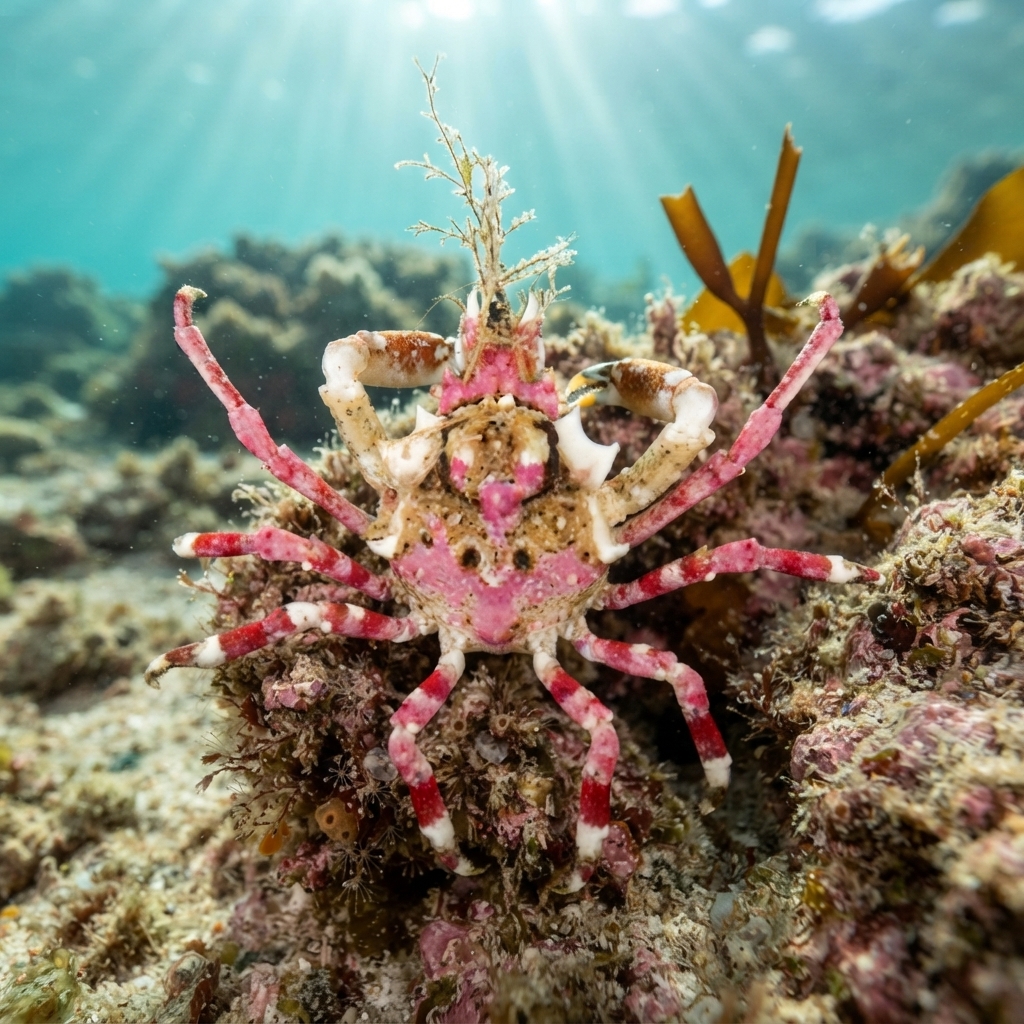
A small, triangular-shelled crab with long, spindly walking legs and a carapace that ranges from reddish-brown to olive, often mottled to match the kelp or algae it sits on. The body rarely exceeds a few centimetres across, and the shell narrows to a pointed rostrum (the forward-facing snout-like tip) between the eyes. Look for it gripping kelp blades or holdfasts rather than crawling on open rock, moving slowly and staying low against the frond.
Divers typically find it holding still on a kelp blade or tucked against a holdfast, relying on its dull colouring and slow movements to blend in rather than fleeing. It is usually logged as uncommon or rare at any given site, so patient scanning of kelp fronds pays off more than searching open rock or sand. It shows little reaction to divers and will often stay put for a photo if you approach slowly.
Like many spider crabs in the family Epialtidae, it decorates or camouflages itself against its background rather than fighting off predators, which is why it can be so easy to miss on a kelp-covered reef.
Sightings are spread across the year with no clear seasonal peak in the data, consistent with a species that tolerates a fairly narrow cold-water band of 7.7 to 13.7C year-round in the Pacific Northwest. Dive whenever conditions and visibility suit you rather than chasing a specific month.
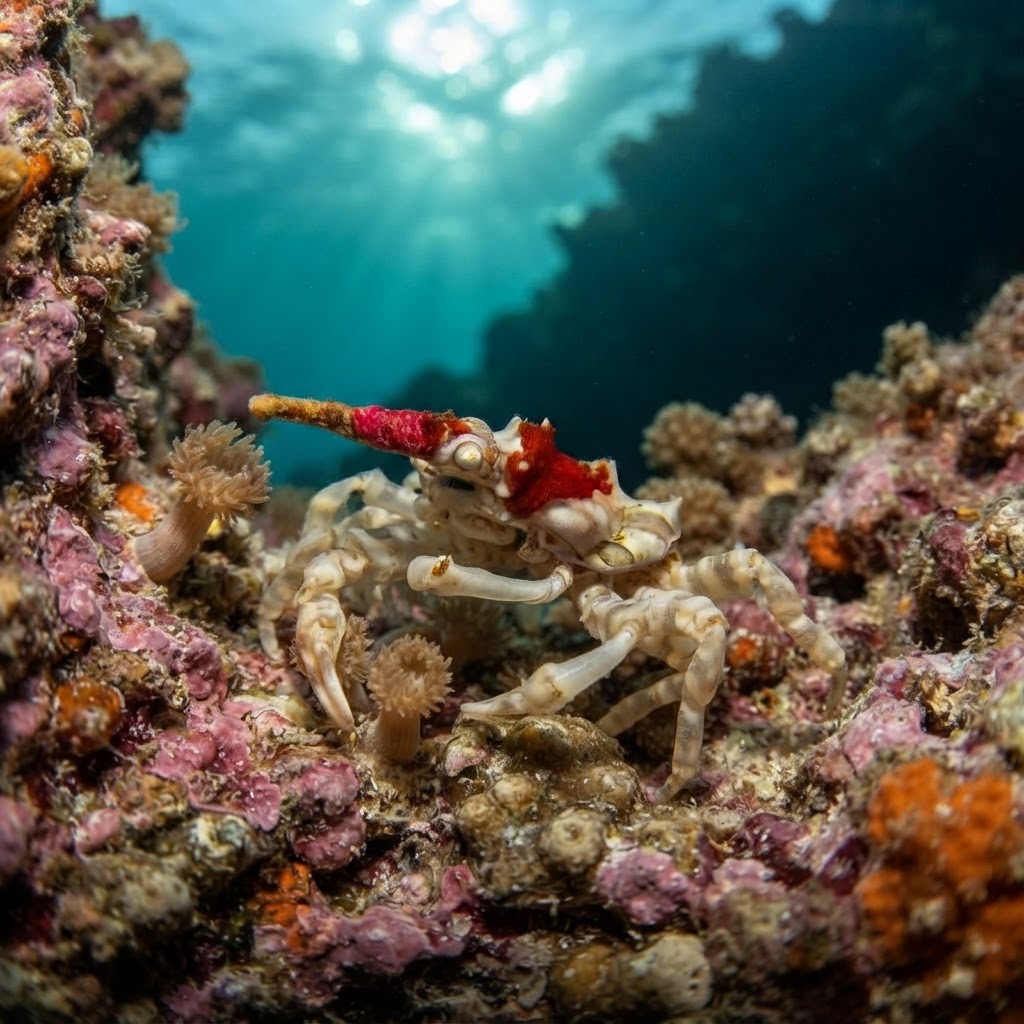
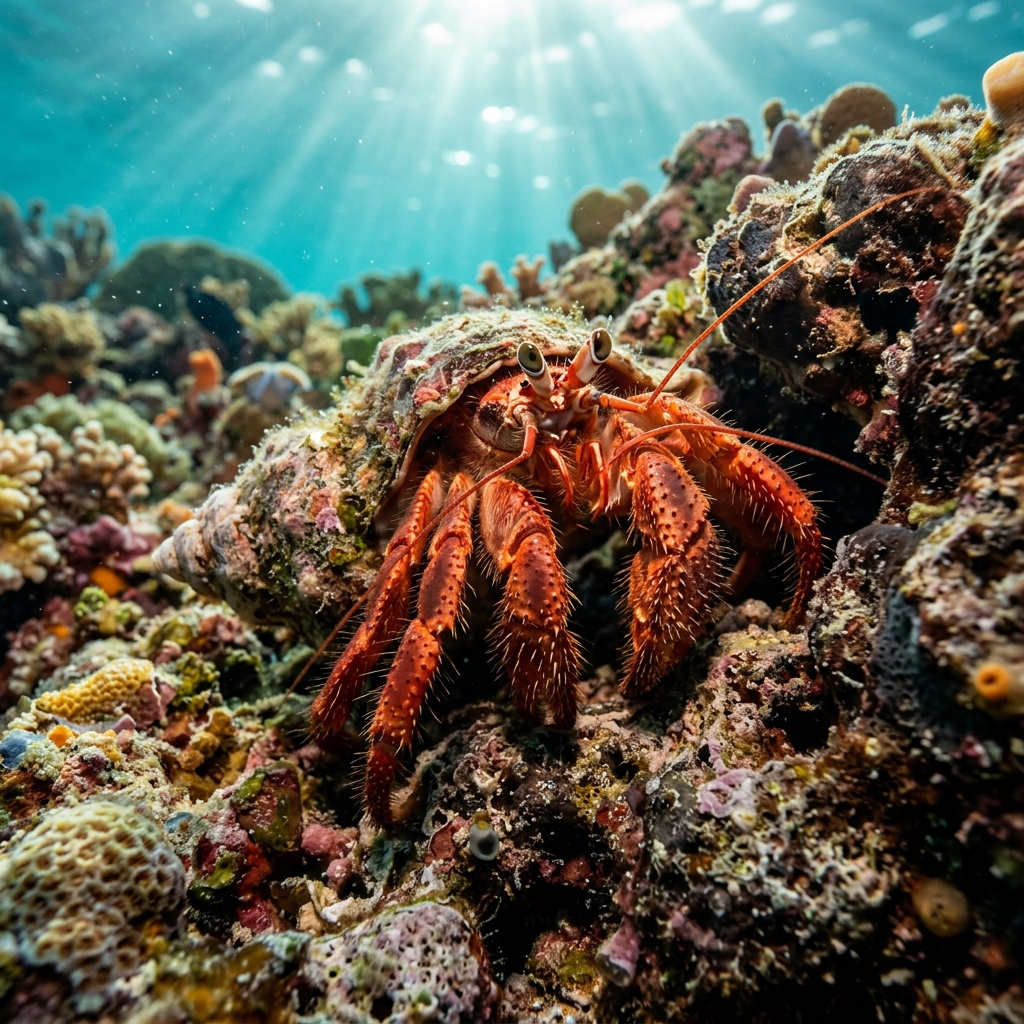
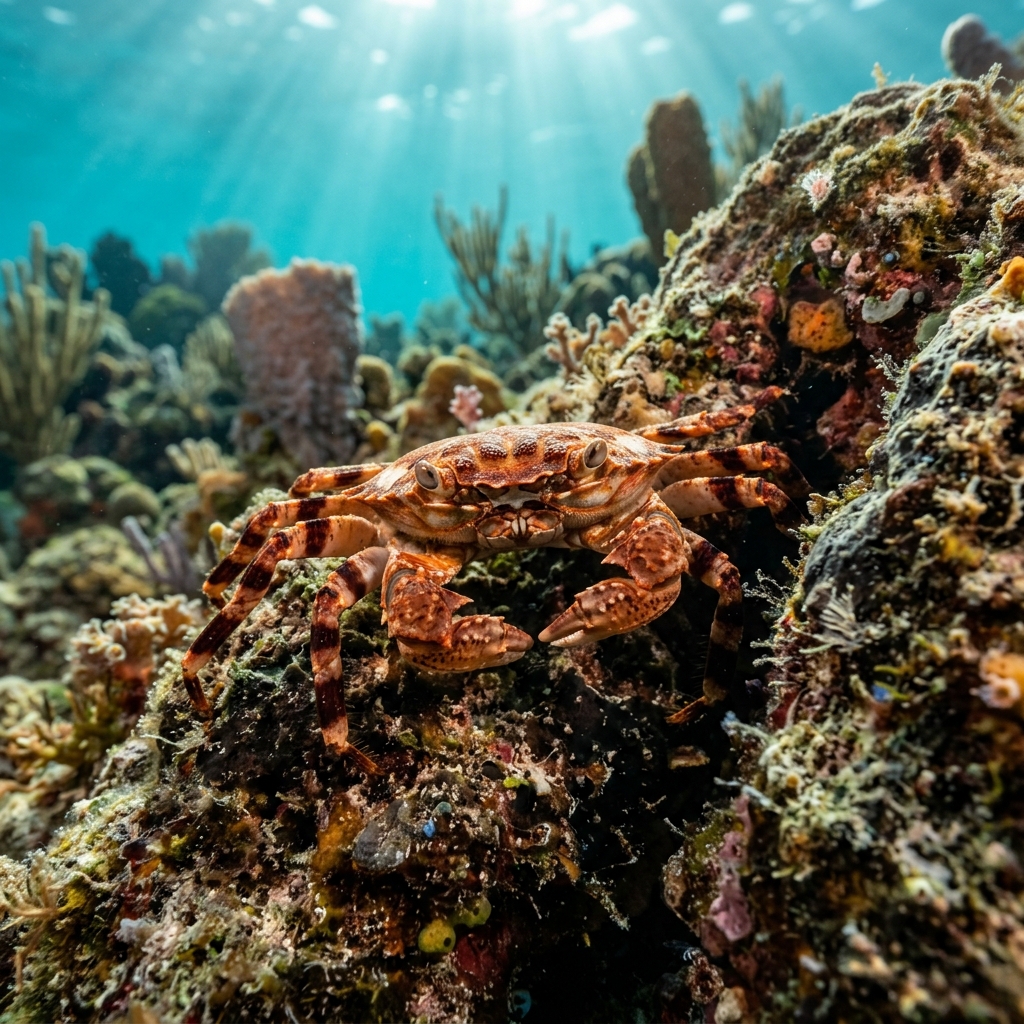
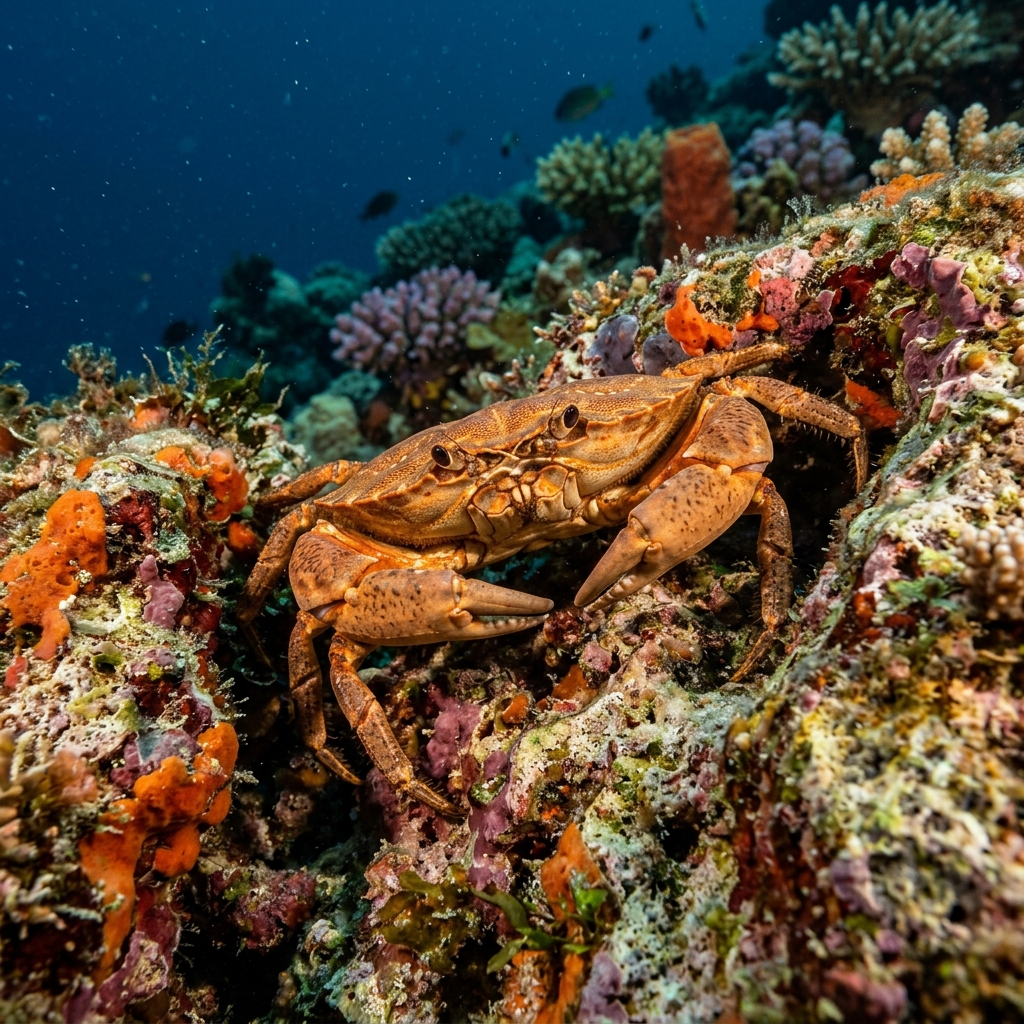
Reef neighbours a diver could mistake it for. Use the identification notes above to tell them apart.
Most reliably logged in British Columbia, Canada, which accounts for the majority of sightings, followed by the Pacific Northwest of the United States and a smaller number of sites in Alaska. This is a cold-water Pacific coast species, so look for it on kelp-forested rocky reefs rather than tropical sites.
Mapping where Graceful Kelp Crab is logged…
British Columbia in Canada is the strongest region, with the Pacific Northwest coast of the United States, including Alaska, also producing regular sightings. It is a cold-water kelp forest species, not found on tropical reefs.
There is no strong seasonal pattern in the sightings, so it can turn up any month. It lives in consistently cold water, roughly 7.7 to 13.7C, so dive timing depends more on visibility and conditions than season.
Look for a small, triangular shell in reddish-brown or olive tones with long thin legs, usually gripping a kelp blade or holdfast rather than sitting on open rock. Its slow movements and camouflaged colouring make it easy to overlook among kelp.
It stays small, with a carapace only a few centimetres across, making it one of the more easily missed crabs on a kelp reef.
No, it poses no danger to divers. It has no venom or aggressive behaviour and will typically sit still if approached slowly.
It relies on camouflage against kelp fronds and holdfasts rather than speed or defence to avoid predators, a common strategy among spider crabs in its family.
Site and sighting data is aggregated from diver logs, iNaturalist and GBIF. For taxonomy and conservation status:
European Green Crab
2,469 sites