Purpuradusta gracilis
A small, uncommon cowry most reliably logged on Queensland reefs in water between 19 and 25C. Here's how to find one.
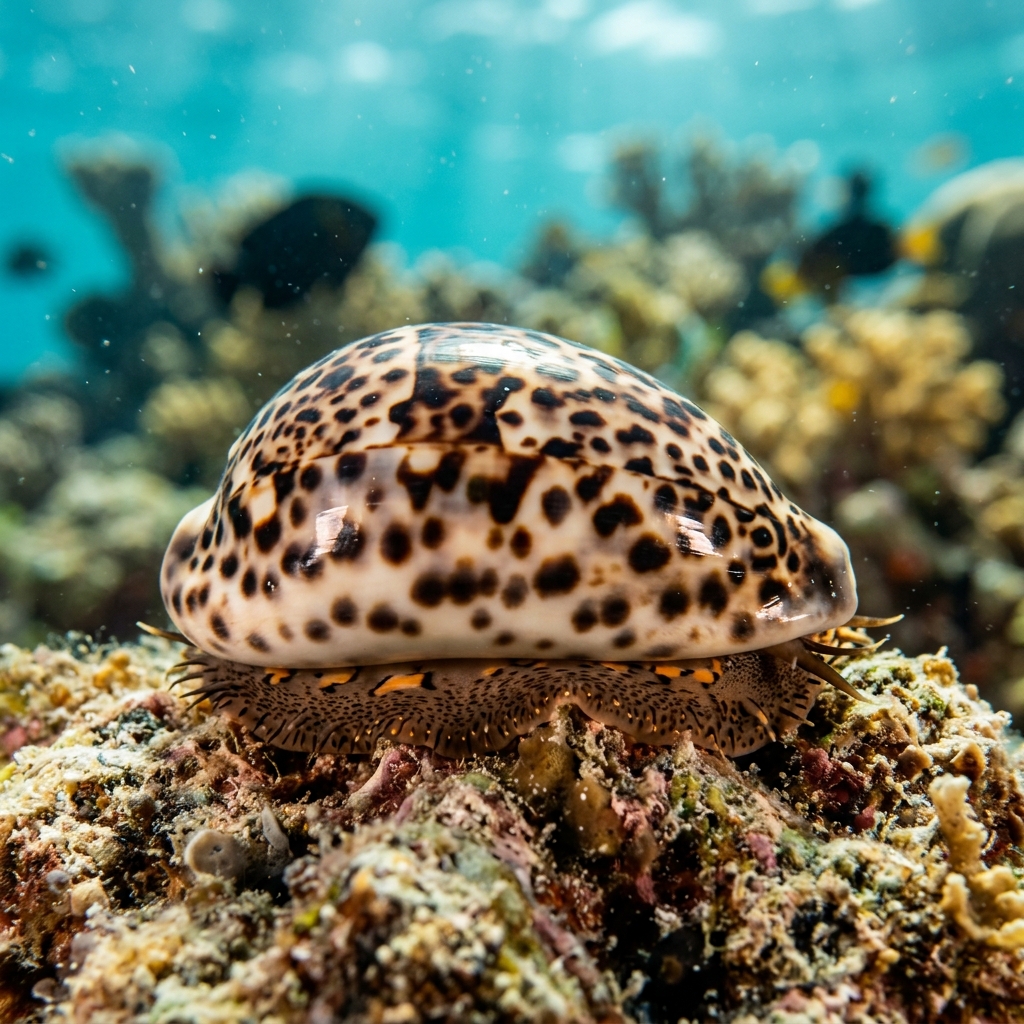
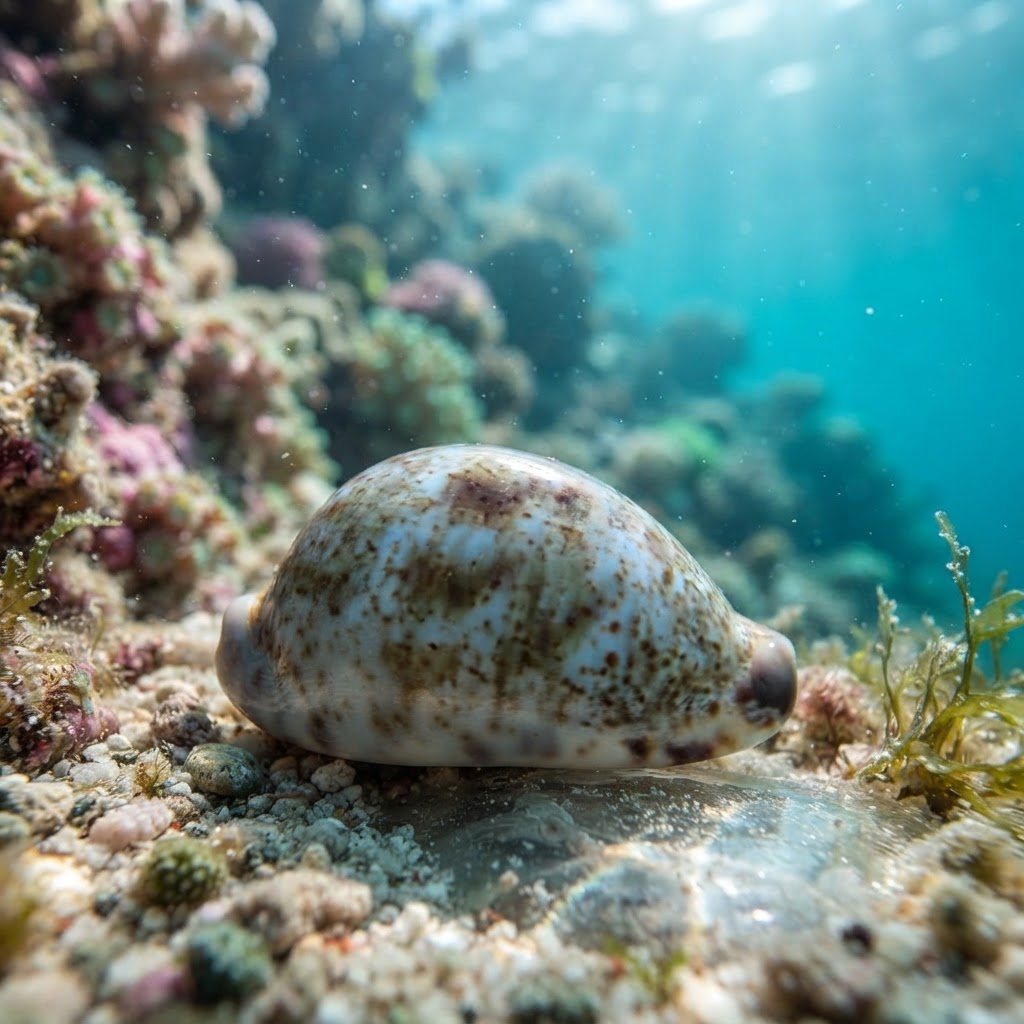
A small cowry with a smooth, glossy shell rarely more than a couple of centimetres long, oval in outline with a rounded back and a narrow slit-like opening running along its underside. Look for a mottled or fine-spotted pattern in muted browns and greys that blends closely with rubble and coral debris, making it easy to swim straight past. The mantle (the fleshy tissue that can extend over the shell when active) may partly cover the shell when the animal is out and feeding at night.
Most divers find this cowry tucked into rubble, crevices or under coral ledges during the day, where it sits motionless and relies on its dull, mottled shell to disappear against the background. It's a slow, unhurried animal that shows no reaction to divers beyond retracting slightly if directly disturbed, so a careful eye scanning rubble zones is more useful than any change in behaviour to spot it. Night dives tend to reward divers with more active individuals, as many small cowries feed and move about more after dark.
Like other cowries, it can draw its mantle up over its shell while active, which is why the glossy pattern you see in photos is often hidden while the animal is alive and moving.
Sightings don't show a clear seasonal pattern, and with a comfortable range of roughly 19 to 25C it can turn up on Queensland and New South Wales reefs at any time of year. Treat it as a year-round find rather than something tied to a particular month.
Australia is where this cowry turns up most often in diver logs, with Queensland reefs producing the bulk of sightings and New South Wales sites accounting for a smaller but reliable share. Within Queensland it has been logged across a broad spread of sites, suggesting it is worth checking rubble patches and reef crevices on most Great Barrier Reef and southern Queensland dives.
Mapping where Graceful Cowry is logged…
Australia is the standout location, with Queensland reefs producing the most sightings and New South Wales sites adding a smaller but consistent number of records.
There's no strong seasonal signal in the data, and its comfortable water temperature range of roughly 19 to 25C means it can be found year-round on Queensland and New South Wales reefs.
Look for a small, smooth, oval shell with a mottled brown-and-grey pattern tucked into rubble or reef crevices. It's easy to overlook since the pattern camouflages well against coral debris, and the mantle may partly cover the shell when the animal is active.
Exact size data isn't confirmed for this species, but like most members of its cowry genus it stays small, typically a couple of centimetres or less in shell length.
No. It poses no threat to divers and simply sits still or retracts into its shell if disturbed.
It's logged as uncommon at most sites where divers have found it, with only a handful of sites reporting it as rare and one as common, so it takes a bit of searching rather than being a guaranteed sighting.
Site and sighting data is aggregated from diver logs, iNaturalist and GBIF. For taxonomy and conservation status:
Elysia Timida
573 sites