Goniobranchus geometricus
Spot the Geometric Rainbow Dorid across Luzon, Sipadan, and Bali in warm 23-29 °C water. ID tips and best dive sites inside.
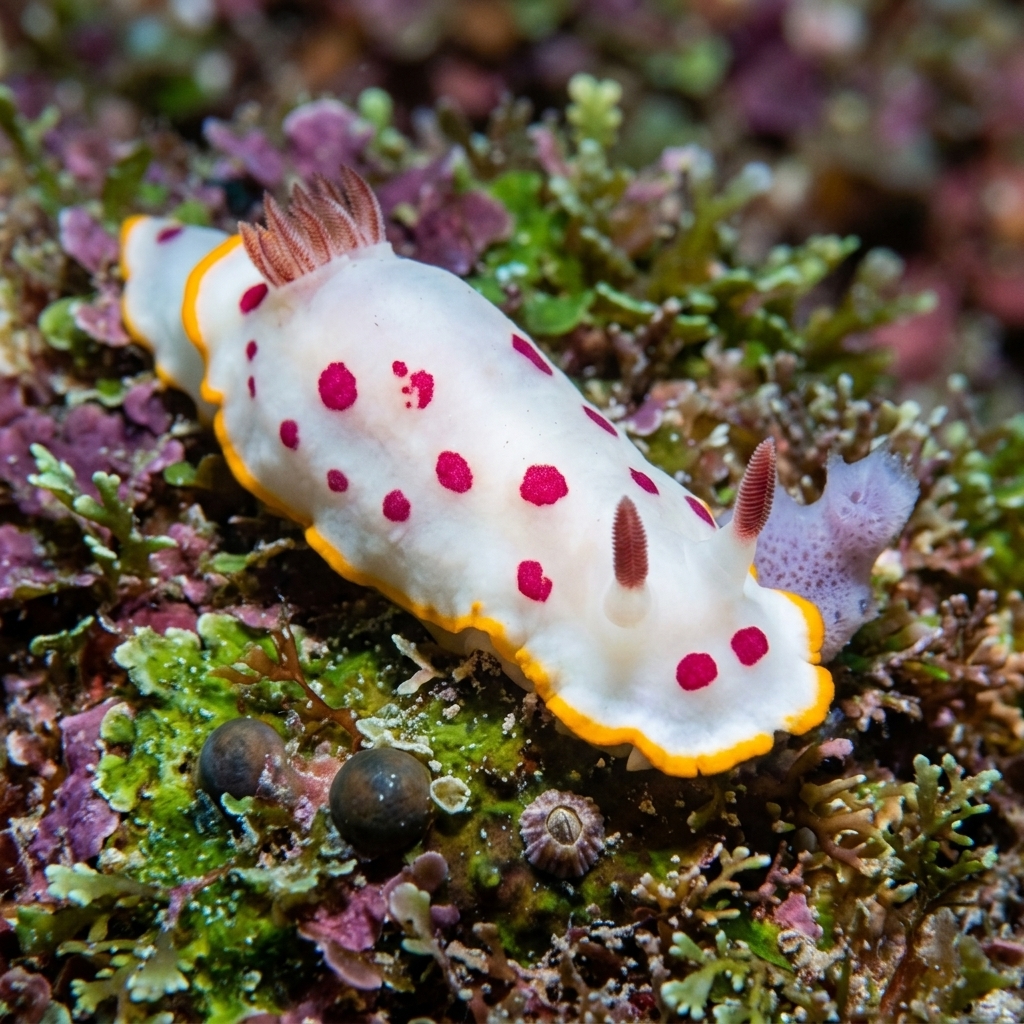
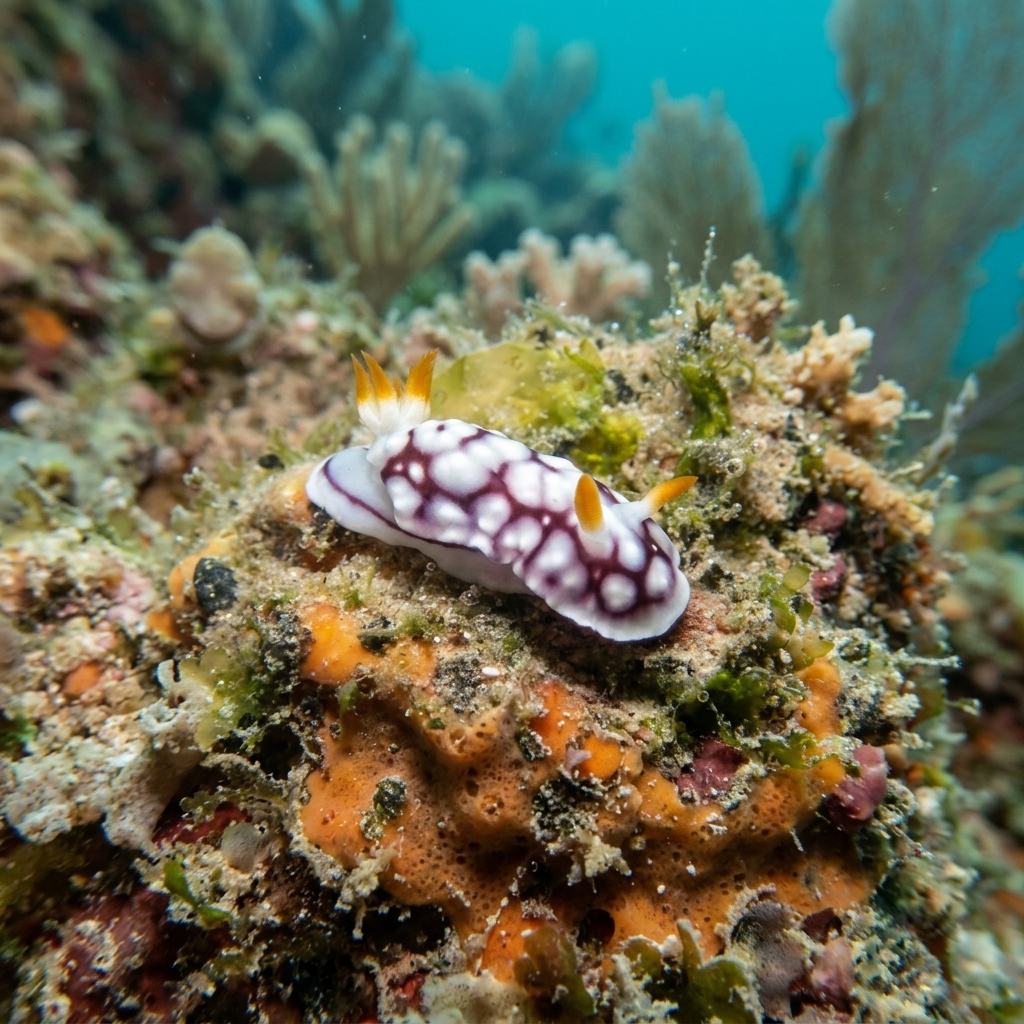
Look for a white or pale cream body covered in a bold network of dark, interconnected lines that create a distinctive geometric lattice pattern across the mantle. The mantle edge is typically trimmed with orange or reddish-orange, and the gills and rhinophores (the sensory horns on the head) are usually bright orange or red. It is a small to medium dorid, creeping slowly across reef surfaces, and that lattice pattern is your key ID feature underwater. No dramatic sexual dimorphism is documented for this species.
You will most often find one crawling slowly across hard coral, rubble, or encrusting sponge while it grazes, rarely pausing when a diver approaches. Like most dorids, it tends to be a solitary, unhurried creature; if you slow down and look closely at rubble patches or the underside of coral overhangs, your chances improve considerably. Sightings are most common during regular reef dives at recreational depths.
The geometric patterning on the mantle is not just visually striking, it likely functions as a warning signal (aposematism) to predators, advertising that the animal stores toxic or distasteful compounds sequestered from the sponges it feeds on.
In the Northern Hemisphere, where most sightings originate, it is present year-round with no concentrated season, which aligns with its warm-water niche of 23 to 29 °C across consistently tropical reefs. In the Southern Hemisphere, sightings concentrate between August and February, so target Queensland and similar destinations during those months.
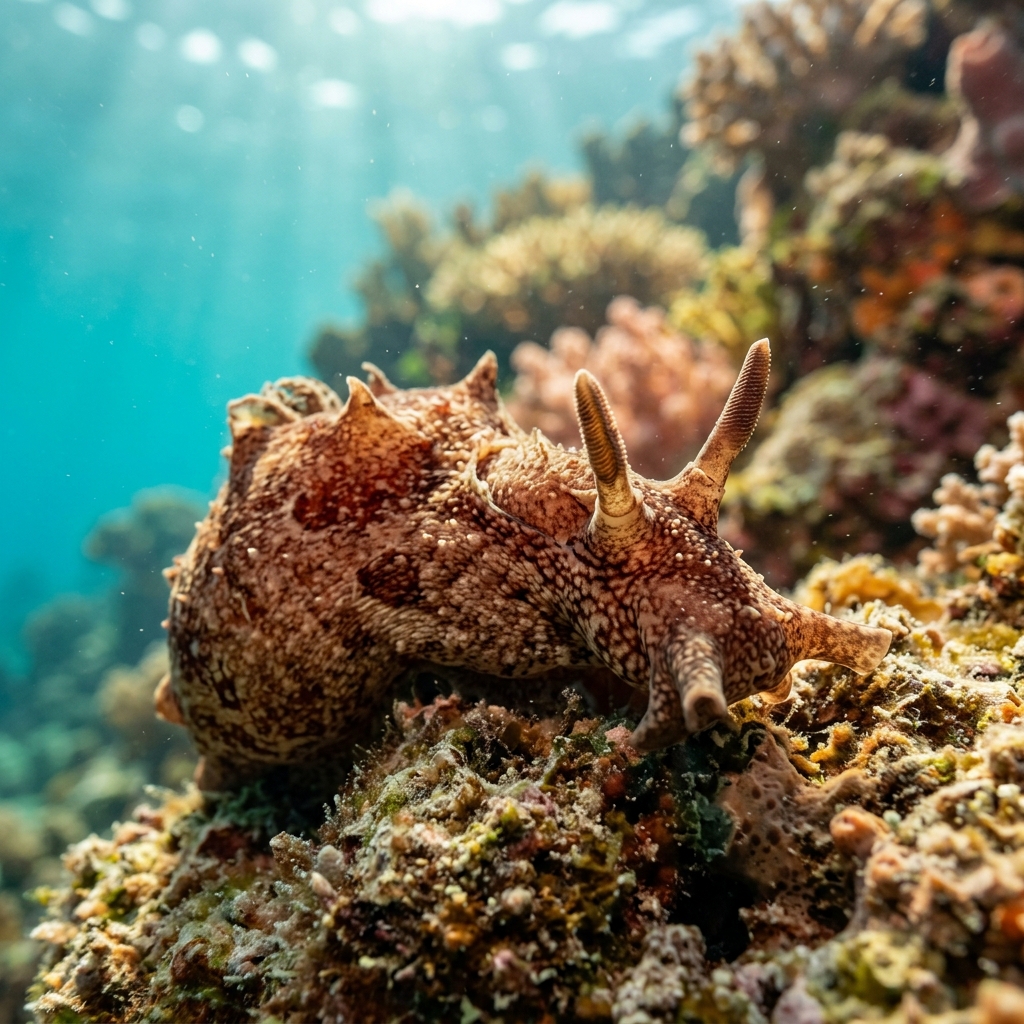
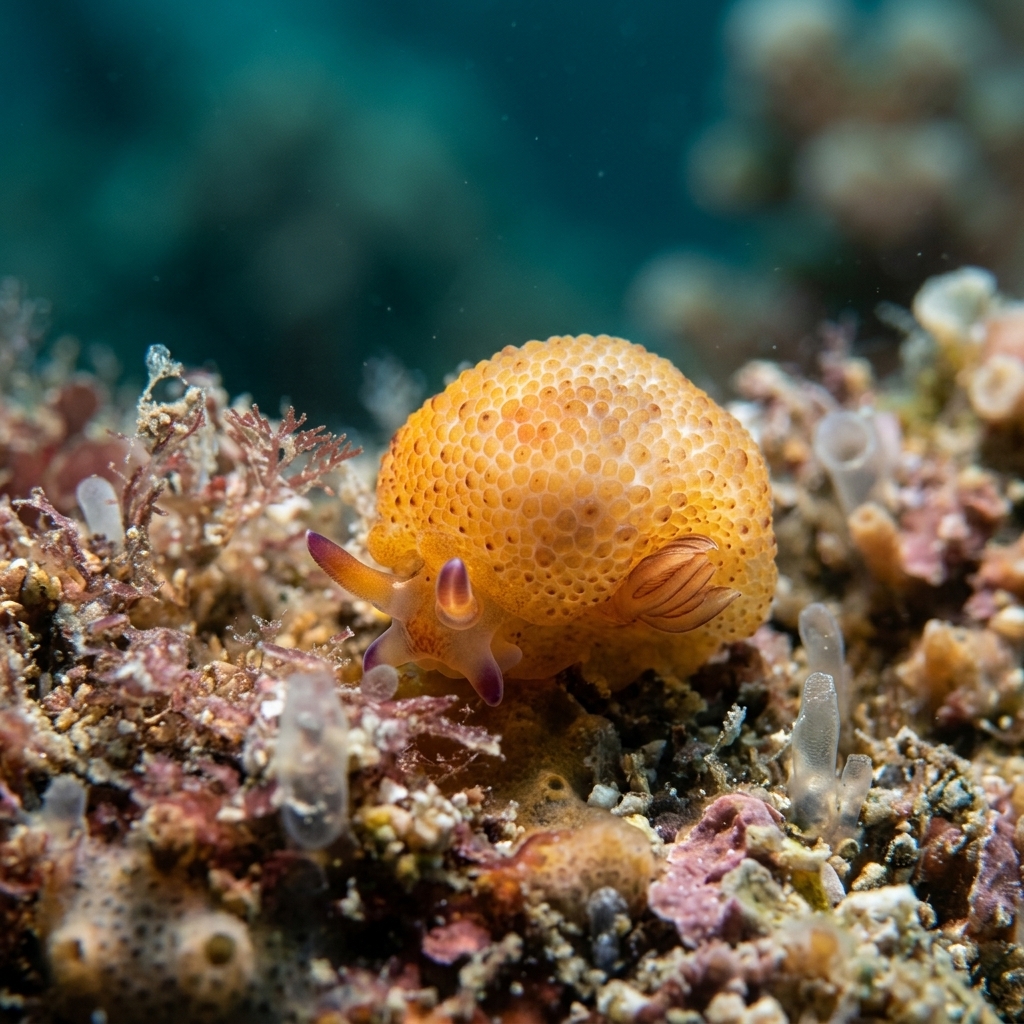
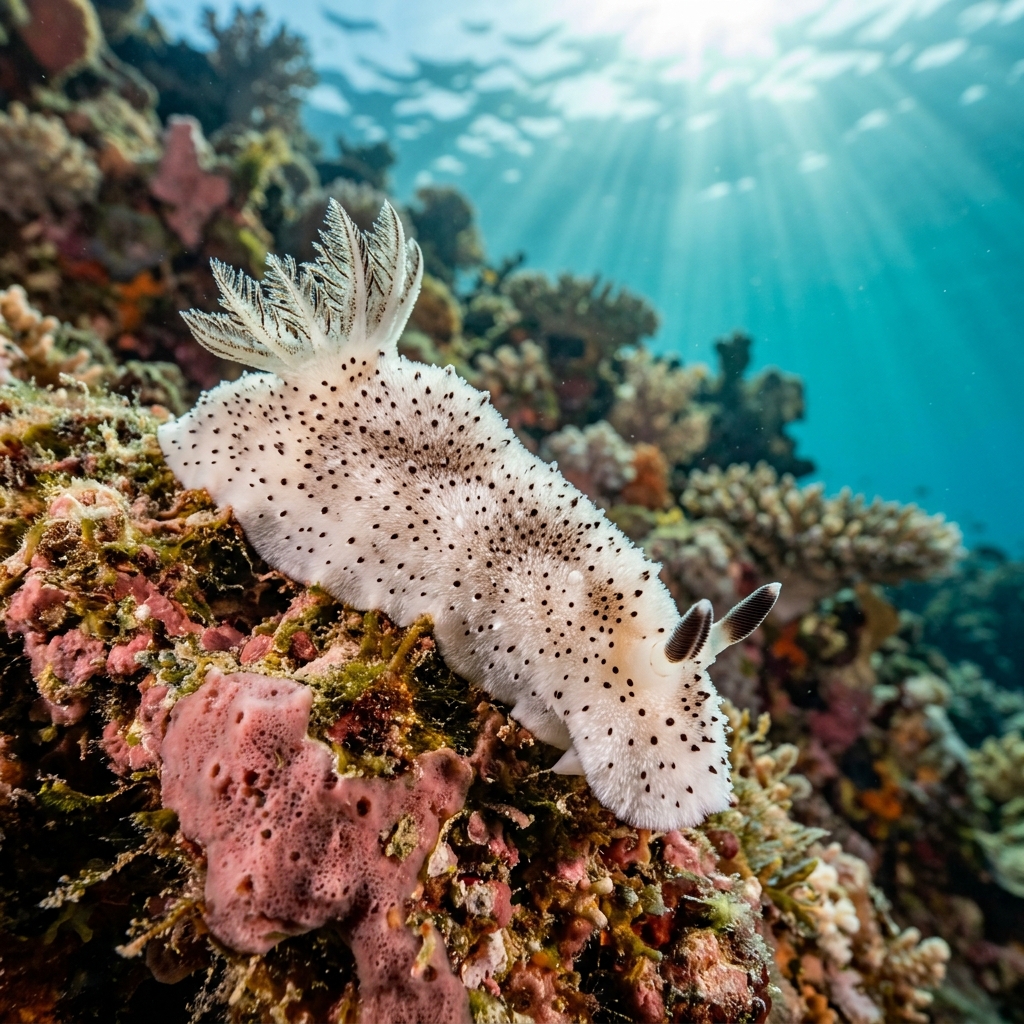
Reef neighbours a diver could mistake it for. Use the identification notes above to tell them apart.
Most logged in the Philippines, particularly around Luzon and the Visayas, and in East Sabah, Malaysia, where Sipadan and nearby sites produce regular sightings. Strong records also come from Bali and the broader Indonesian archipelago, as well as Queensland, Australia, making the Coral Triangle the clear heartland for this species.
Mapping where Geometric Rainbow Dorid is logged…
The Philippines is by far the top destination, with Luzon, the Central Visayas, and the Western Visayas all producing regular records. Sipadan and East Sabah in Malaysia, Bali in Indonesia, and Queensland in Australia are also reliable regions. The species is documented across the broader Coral Triangle and into the western Pacific and Indian Ocean.
In the Philippines, Malaysia, and Indonesia, sightings are spread across all months with no strong peak, so any time of year works. If you are diving in Australia or other Southern Hemisphere locations, plan for August through February when sighting frequency is highest.
Key in on the dark lattice or network pattern covering the pale white or cream mantle, it looks like a hand-drawn geometric map. The mantle rim is edged in orange or reddish-orange, and the gills and rhinophores are a matching bright orange. No other common reef nudibranch in its range combines that lattice pattern with the orange trim quite so distinctly.
No, they pose no threat to divers whatsoever. Like most nudibranchs, they are slow-moving and entirely focused on grazing. Simply avoid touching them, not for your safety, but for theirs.
The vivid colouration is a classic nudibranch defence strategy called aposematism, a visual warning to predators that the animal is unpalatable or toxic. Chromodoridid nudibranchs typically sequester defensive compounds from the sponges they eat, and their bright patterns broadcast that message clearly to any fish that might consider a snack.
Site and sighting data is aggregated from diver logs, iNaturalist and GBIF. For taxonomy and conservation status:
Light-spotted Aegires
3,168 sites