Ctenolabrus rupestris
Small reddish-brown wrasse common on rocky reefs from Brittany to the Lisbon Coast, active in cool water from 8.7 to 15 C year-round.
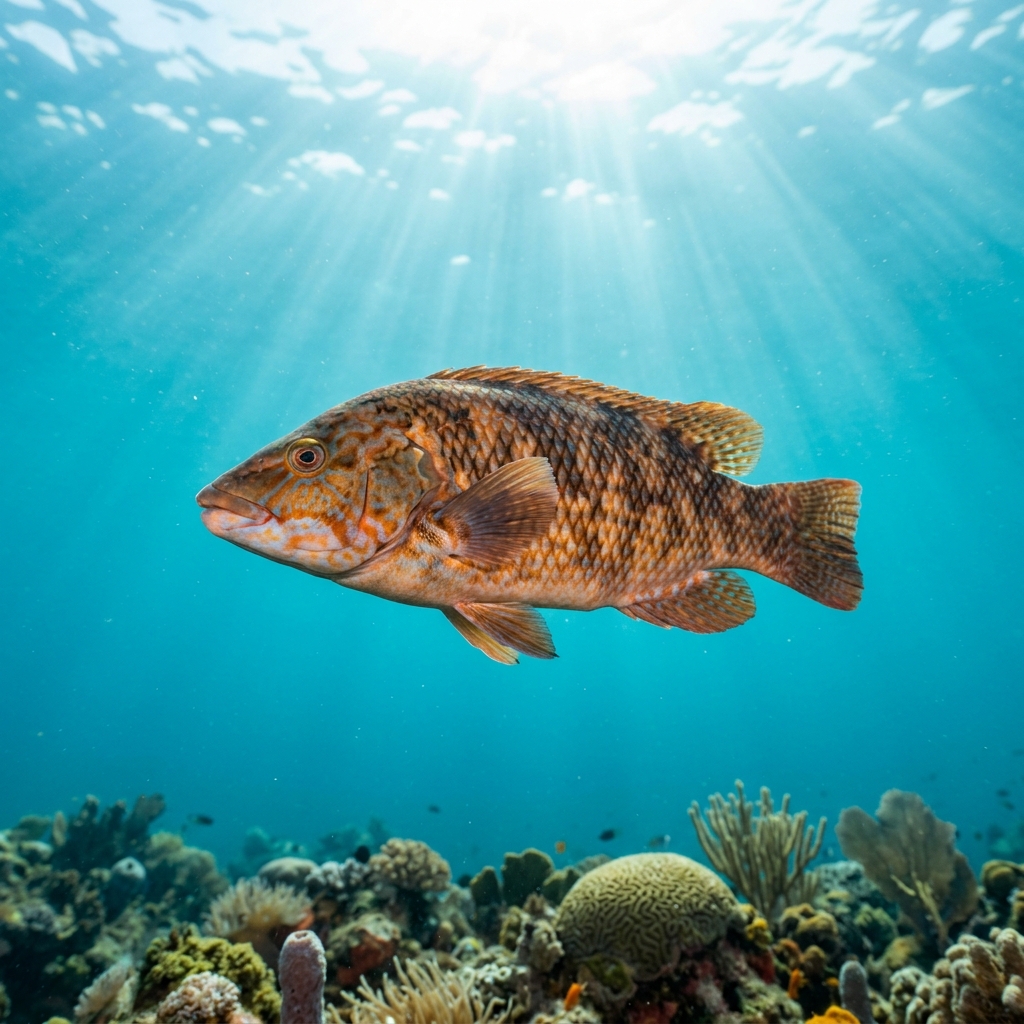
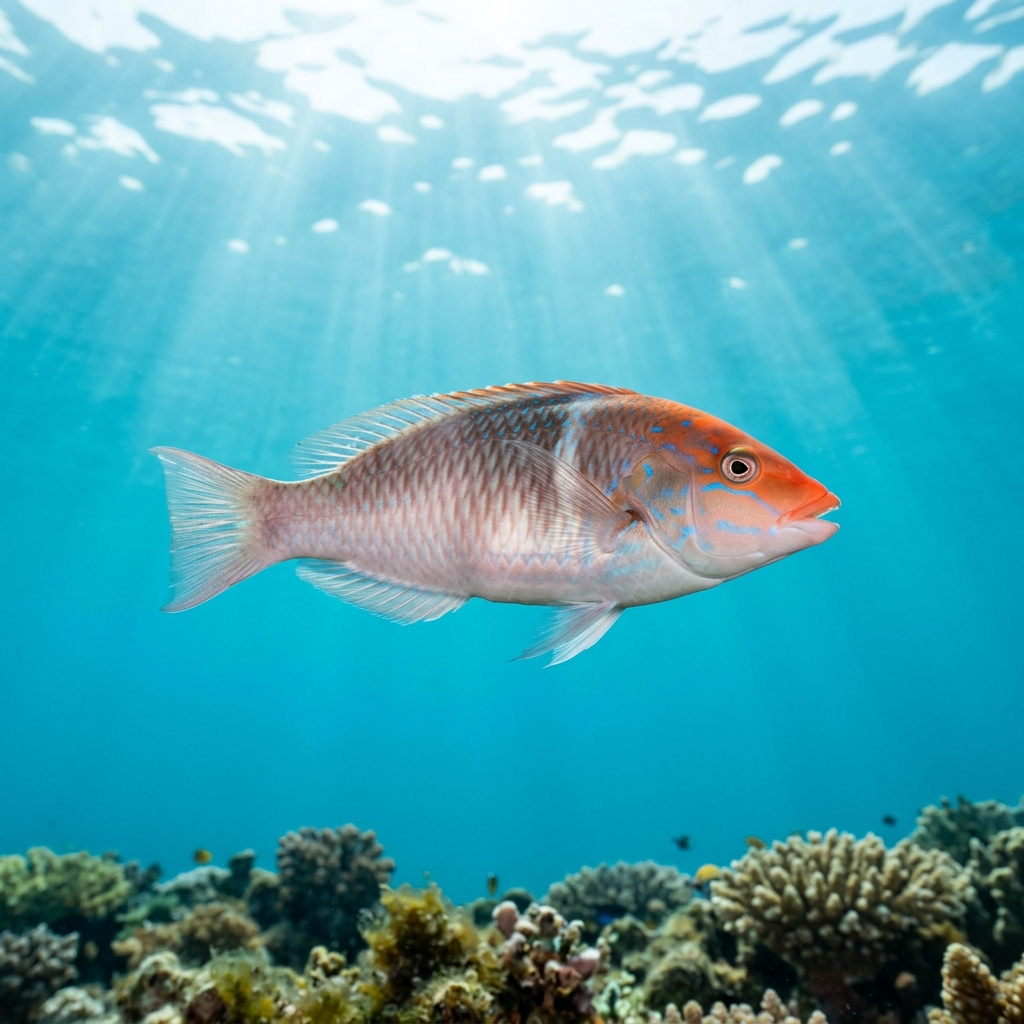
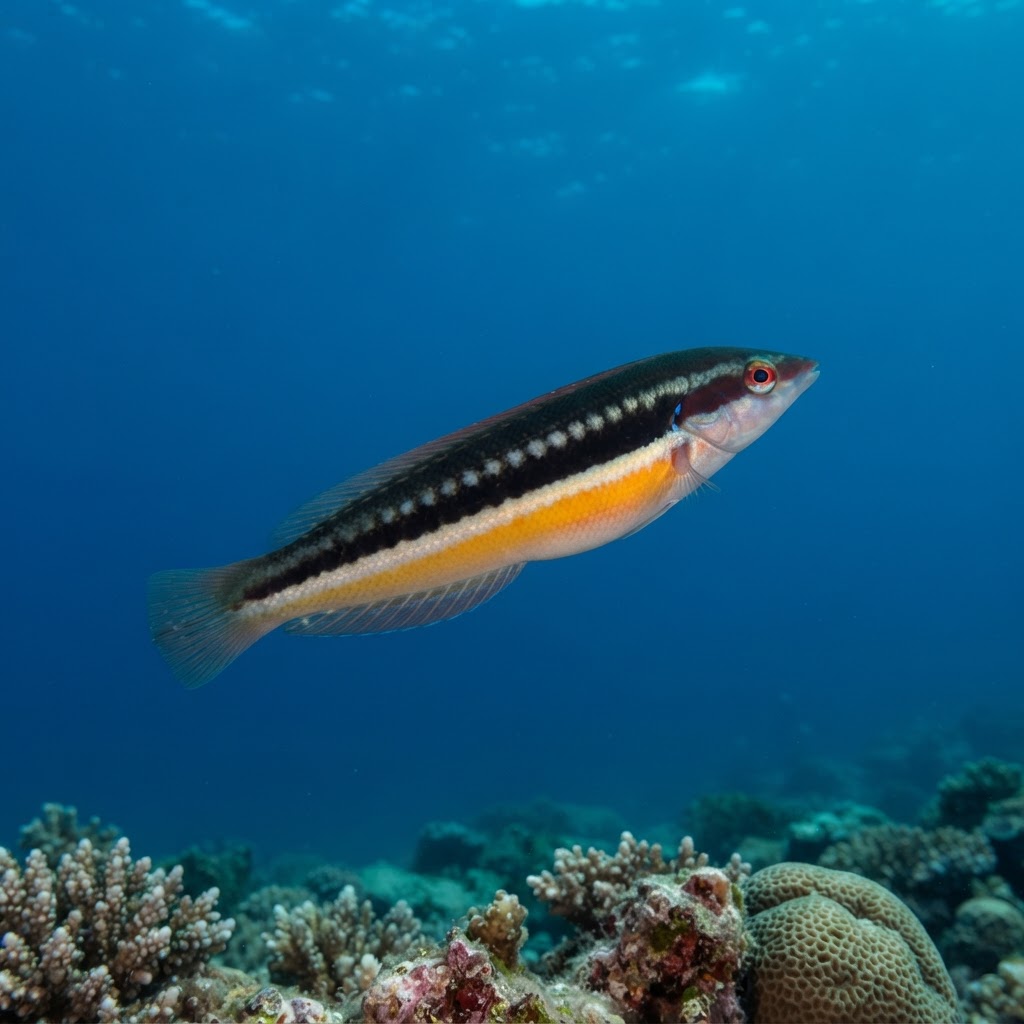
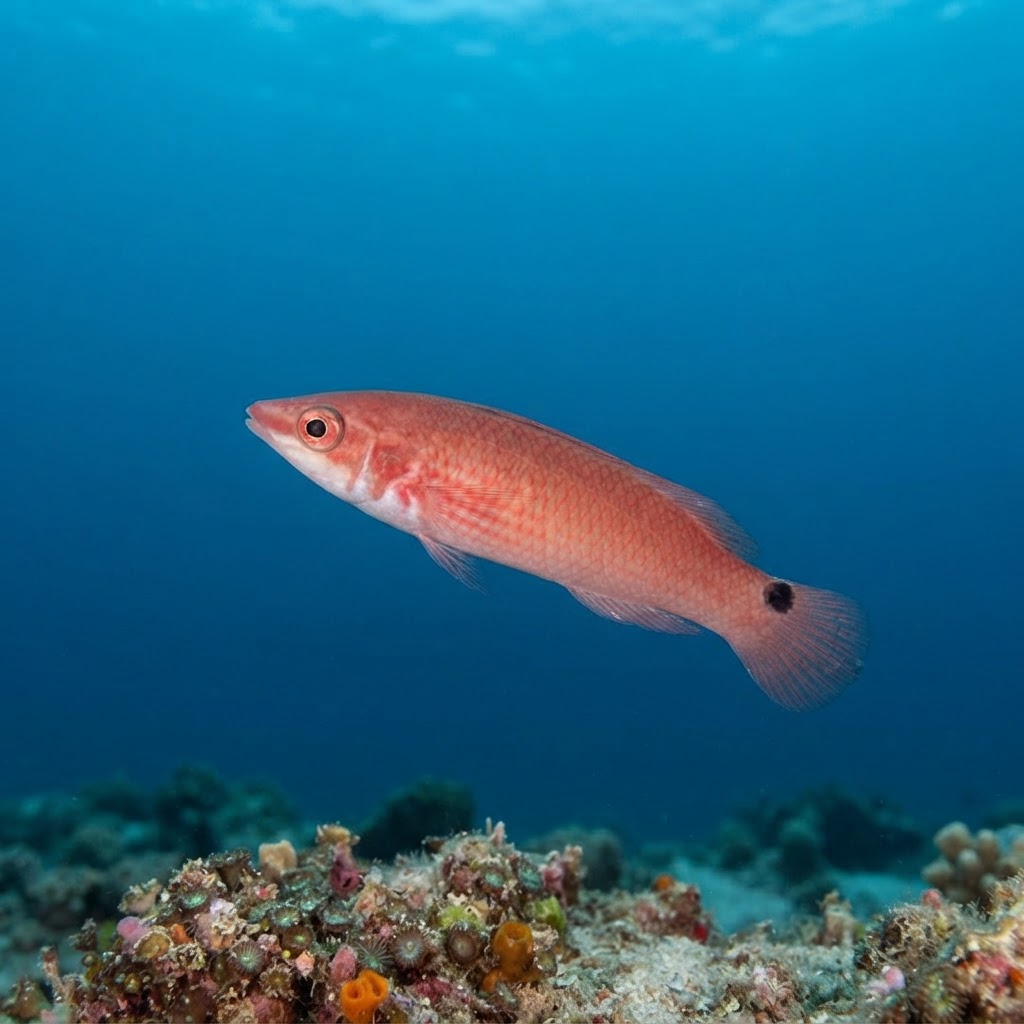
A small, slender wrasse rarely more than 12 cm, with a reddish-brown to olive body that fades pale on the belly. The clearest mark to key on underwater is a dark blotch at the base of the tail and often a second smaller spot near the front of the dorsal fin. It moves in quick, darting bursts close to rock and weed rather than swimming openly in the water column.
Divers typically spot it darting between rocks and kelp holdfasts, picking at small invertebrates rather than holding still for a look. It stays close to cover on reef and rocky ground rather than venturing into open water, and it's generally unfazed by divers as long as you're not crowding its shelter. Most sightings are a brief flash of colour rather than a lingering encounter, which fits its uncommon-to-rare logging at most sites.
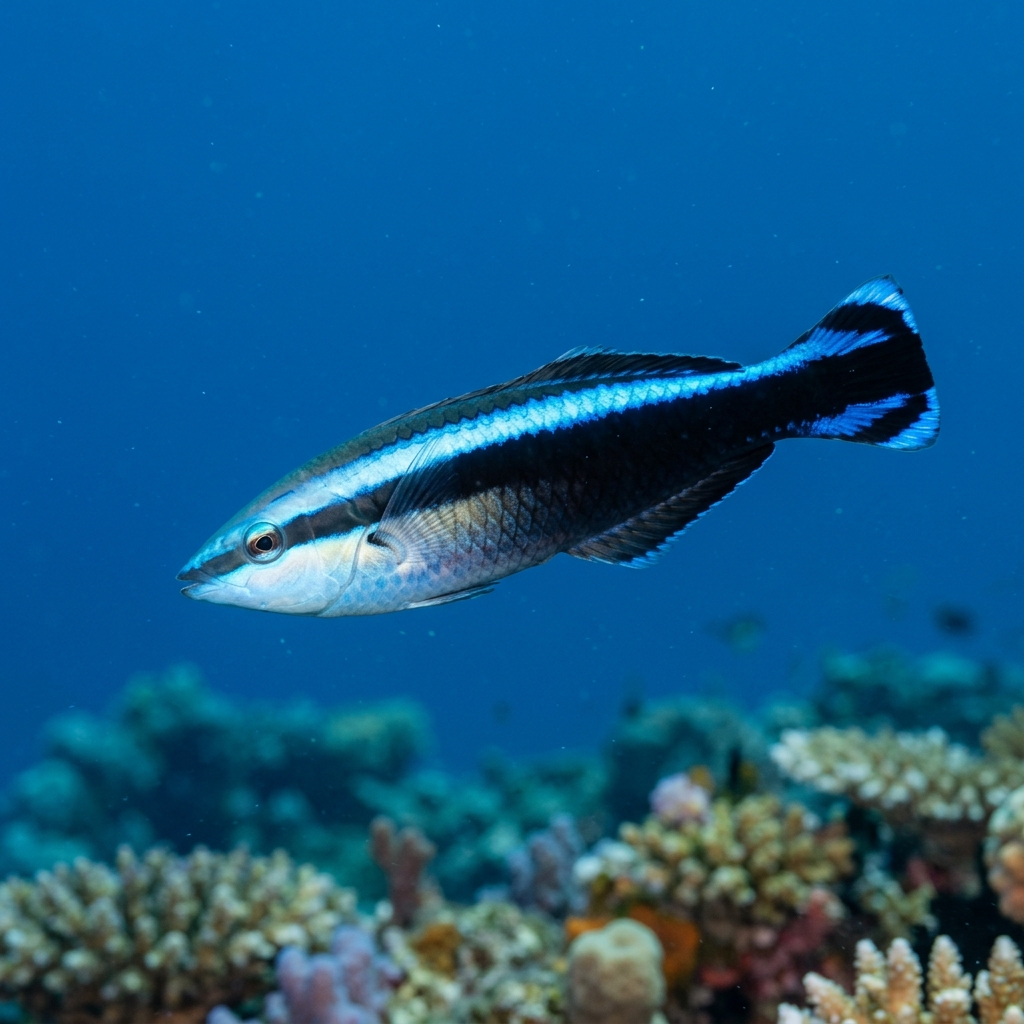
It acts as a cleaner fish on some reefs, picking parasites off larger fish, a behaviour better known in tropical cleaner wrasses but also documented in this cooler-water species.
There's no strong seasonal pattern in the sighting data, so treat it as a year-round encounter. Its comfort range of 8.7 to 15 C covers the cool temperate water it lives in for most of the year across its range.
Most consistently logged in France, especially the Bay of Biscay, Brittany, and the French Riviera and Provence, with strong numbers also from the Lisbon Coast and Cantabrian Coast in Portugal and Spain. Northern Ireland and parts of Germany and Denmark, including Schleswig-Holstein and Jutland, also produce regular sightings on cooler northern reefs.
Mapping where Goldsinny Wrasse is logged…
It's most reliably seen in France, particularly the Bay of Biscay, Brittany, and the French Riviera and Provence, as well as the Lisbon Coast in Portugal and the Cantabrian Coast in Spain. Northern Ireland, Germany's Schleswig-Holstein, and Denmark's Jutland region also have regular sightings.
There's no clear seasonal peak in the data, so it's considered a year-round sighting wherever water temperature sits in its 8.7 to 15 C comfort range.
Look for a small reddish-brown fish, usually well under 12 cm, darting near rocky cover. The giveaway mark is a dark blotch at the base of the tail, sometimes paired with a smaller spot near the front dorsal fin.
They're small, typically topping out around 12 cm, making them one of the more modest wrasses divers log on temperate reefs.
No, they pose no risk to divers. They're small, retreat into rocky cover, and have no venom or aggressive behaviour toward people.
Yes, they've been observed picking parasites off larger fish, a cleaning behaviour more commonly associated with tropical cleaner wrasses but recorded in this species too.
Site and sighting data is aggregated from diver logs, iNaturalist and GBIF. For taxonomy and conservation status:
Bird Wrasses
3,632 sites