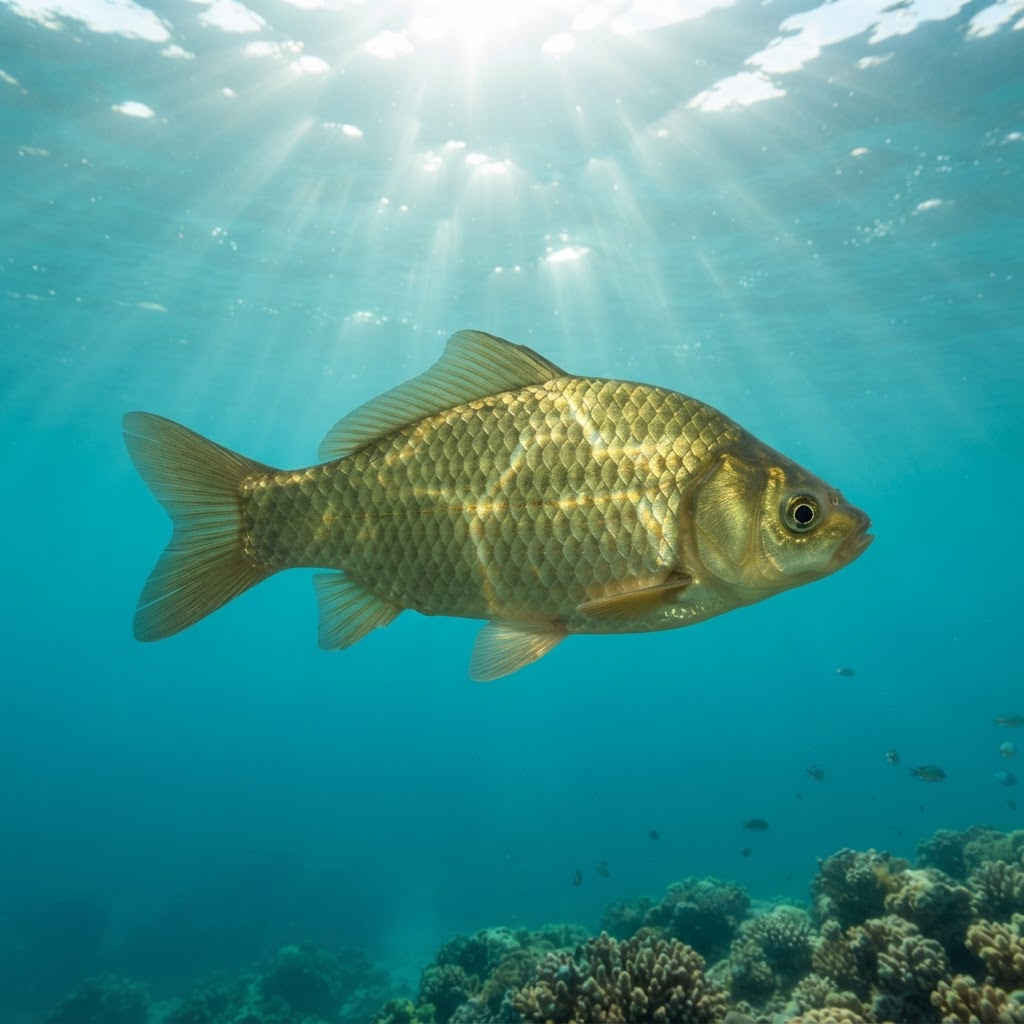
Carassius auratus
Escaped goldfish now thrive in cold Ontario lakes and quarries, most reliably spotted around 7 to 13°C in Canadian freshwater sites.
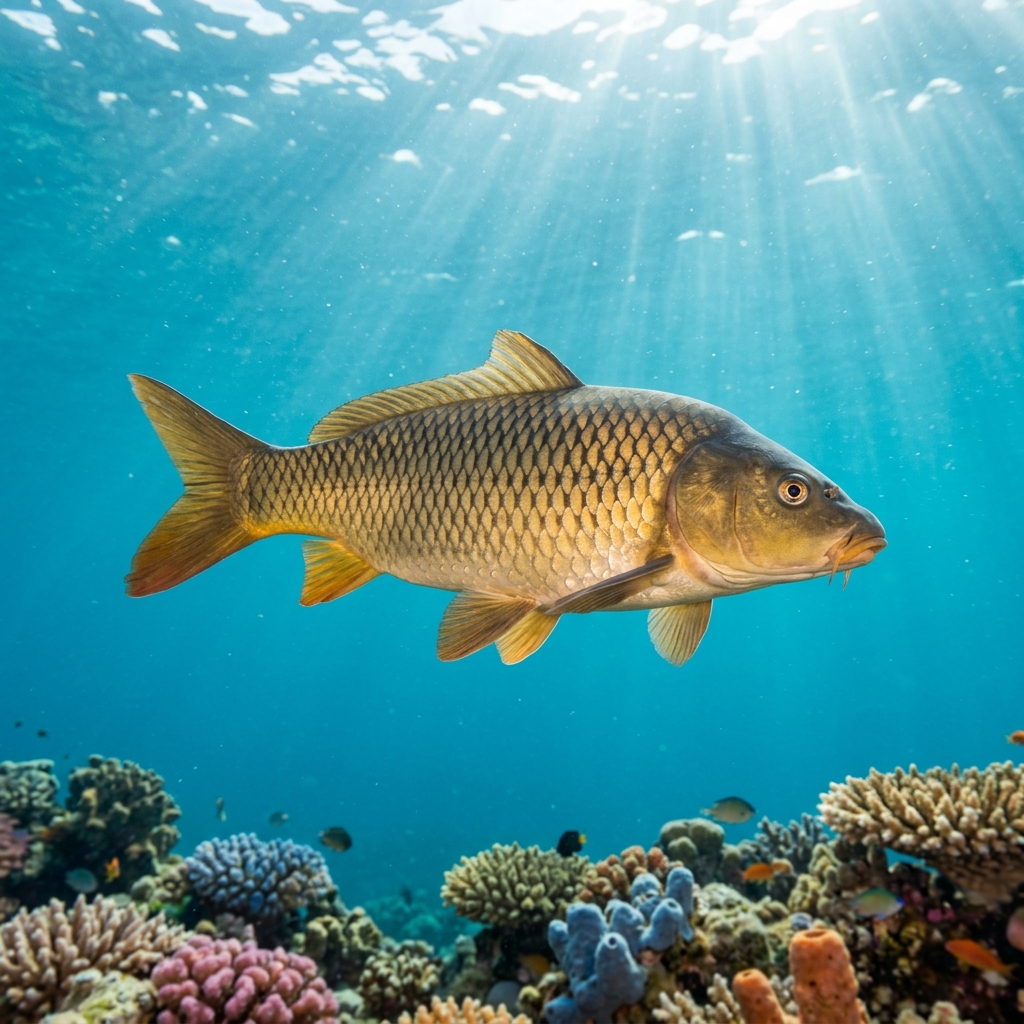
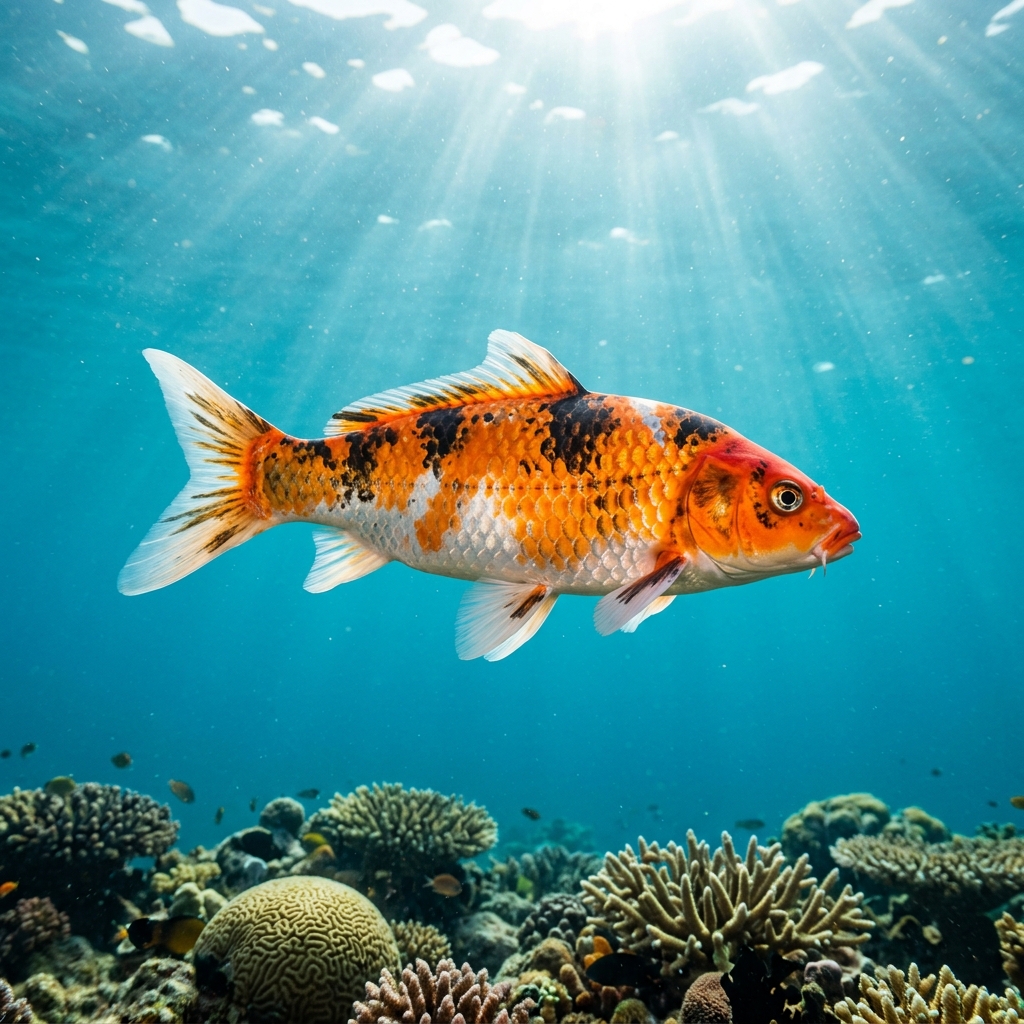
Look for a deep-bodied, torpedo-shaped fish up to about 34 cm, usually orange to bronze but sometimes mottled with patches of black, white or grey where wild populations have reverted toward their olive-brown ancestral colouring. It has no barbels (whisker-like feelers) around the mouth, which helps separate it from some other freshwater fish, and a long, undivided dorsal fin running along its back. Fins are typically a duller orange or translucent rather than the bright red of ornamental strains.
Divers typically find them cruising slowly near the bottom or hovering around weed beds and silty substrate in lakes and quarries, feeding on algae, detritus and small invertebrates. They are unbothered by divers, often continuing to forage within easy view rather than bolting, and tend to stick in loose groups rather than tight schools.
Every wild goldfish population divers log in Canadian lakes started as released or escaped pets, and given enough time and cold water these fish can grow far larger and duller-coloured than anything sold in a shop.
Sightings show no clear seasonal pattern, and observed water temperatures range from a cold 7.4 to 13.4°C, suggesting divers encounter them across the colder parts of the year in temperate Canadian sites rather than during a narrow warm-water window.
Wild and feral goldfish are most consistently logged in Ontario, Canada, with further sightings in Nova Scotia, Canada, and a single Texas, United States site. Ontario's lakes, quarries and slow rivers currently account for the bulk of confirmed diver sightings.
Mapping where Goldfish is logged…
Ontario, Canada is by far the most reliable place, with additional sightings logged in Nova Scotia, Canada and one site in Texas, United States. Most sightings come from lakes, quarries and slow-moving freshwater sites rather than reefs or coastal dives.
There is no strong season in the data, and sightings span cold water from about 7.4 to 13.4°C, so goldfish appear to be a year-round find in the Canadian lakes and quarries where divers log them.
Look for a stocky, torpedo-shaped fish up to 34 cm with no barbels around the mouth and a long dorsal fin. Wild individuals often lose the bright orange of pet-shop fish, showing bronze, olive or mottled black-and-white patterns instead.
Freed from the confines of a tank, goldfish in lakes and quarries can reach around 34 cm, noticeably larger and bulkier than the small ornamental fish most people picture.
No. They pose no threat to divers and are generally curious or indifferent, continuing to forage nearby rather than reacting defensively.
These populations trace back to released or escaped pet goldfish that established themselves in cold freshwater habitats. Over generations in the wild they often grow larger and revert to duller, more camouflaged colouring than their ornamental ancestors.
Site and sighting data is aggregated from diver logs, iNaturalist and GBIF. For taxonomy and conservation status:
Sun Perch
2,182 sites