Thalassoma hebraicum
Common on Seychelles and KwaZulu-Natal reefs in 24-28C water, this yellow-gold wrasse is a year-round Indian Ocean regular.
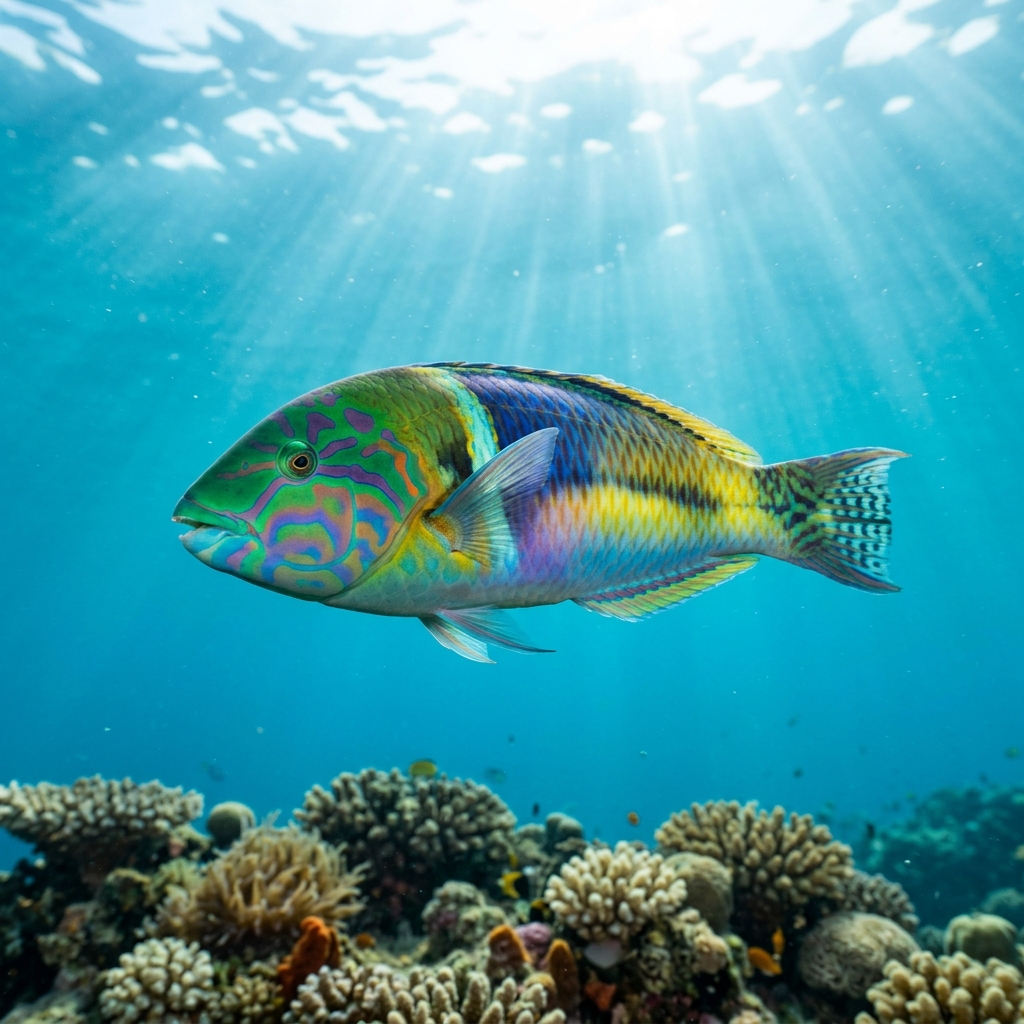
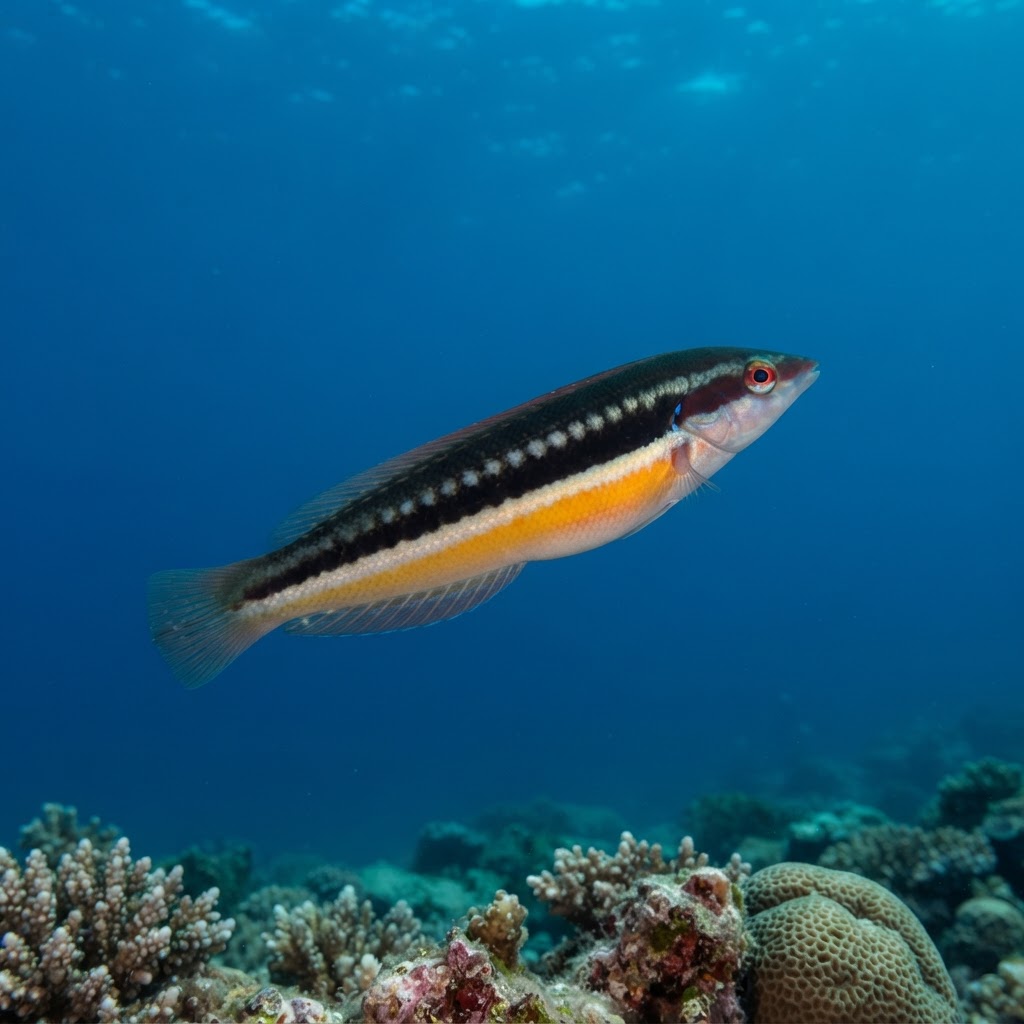
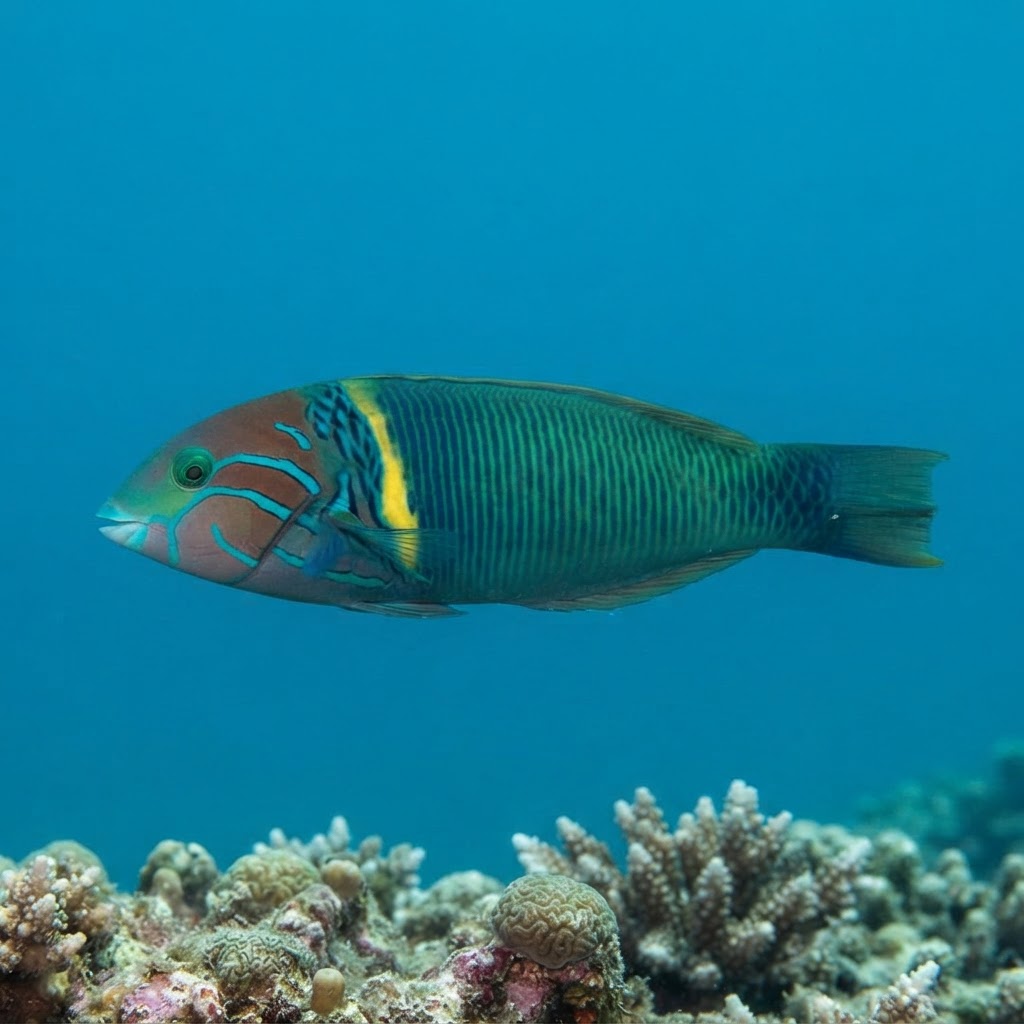
Small, slender wrasse to about 16 cm with a blue-green head that fades into a bright yellow-gold saddle across the mid-body, then a greenish-blue rear half and tail. It swims with the quick, darting pectoral-fin strokes typical of Thalassoma wrasses, rarely holding still. Males tend to show the boldest, cleanest colour blocking, while females and smaller individuals often look duller and more washed-out along the flanks.
Expect to see it darting low over reef flats and rubble patches, picking at the substrate or midwater for small invertebrates rather than schooling tightly. It pays little attention to divers and will often keep foraging within a few metres of you, making it an easy, low-drama subject on shallow to mid-depth reef dives. Most sightings come from typical daytime reef dives rather than any particular time of day.
Like other Thalassoma wrasses, it likely changes sex and colour pattern as it grows, with the boldest gold-and-blue males developing from what start out as duller, female-phase fish.
Sightings show no strong seasonal pattern, and with a comfortable temperature range of roughly 24 to 28C, it is present on these reefs year-round. Plan around good diving conditions at your chosen site rather than chasing a particular month for this fish.
Most reliably logged around the Inner Islands of Seychelles and along KwaZulu-Natal in South Africa, with strong numbers also off Zanzibar in Tanzania and the Diani area of Kenya. Smaller but consistent populations turn up at Ponta do Ouro in Mozambique and Nosy Be in Madagascar, making this a western Indian Ocean reef regular rather than a rare find.
Mapping where Goldbar Wrasse is logged…
It is most commonly logged in the Seychelles Inner Islands and along KwaZulu-Natal in South Africa, with reliable sightings also off Zanzibar, Diani in Kenya, Ponta do Ouro in Mozambique, and Nosy Be in Madagascar.
There is no strong season for this species; it stays on reef habitat year-round in water between about 24 and 28C, so any time you are diving the western Indian Ocean is a fair chance.
Look for a small, fast-swimming wrasse around 16 cm with a blue-green head, a yellow-gold band across the middle of the body, and a greenish-blue tail section. Bold, clean colour blocking usually marks out the larger males.
They top out at around 16 cm, making them one of the smaller reef wrasses you will encounter on an Indian Ocean dive.
No. They are harmless, small-bodied reef fish that ignore divers and pose no risk in the water.
Like many Thalassoma wrasses, individuals likely shift in colour and pattern as they mature and change sex, with duller females developing into the boldest gold-and-blue males over time.
Site and sighting data is aggregated from diver logs, iNaturalist and GBIF. For taxonomy and conservation status:
Cleaver Wrasse
2,700 sites