Siganus punctatus
Yellow-spotted grey reef fish common around Koh Tao and Kwajalein Atoll, at home in warm 25-29C water year-round.
Safety warning
The dorsal, anal and pelvic fin spines carry venom that causes sharp, lingering pain if you brush against or handle one. It won't approach divers aggressively, so the simple fix is to look and not touch, especially when reaching into reef crevices where one might be resting.
If you're stung
Venomous fin spinesGeneral first-aid guidance, not a substitute for professional medical care. In an emergency, call your local emergency number.
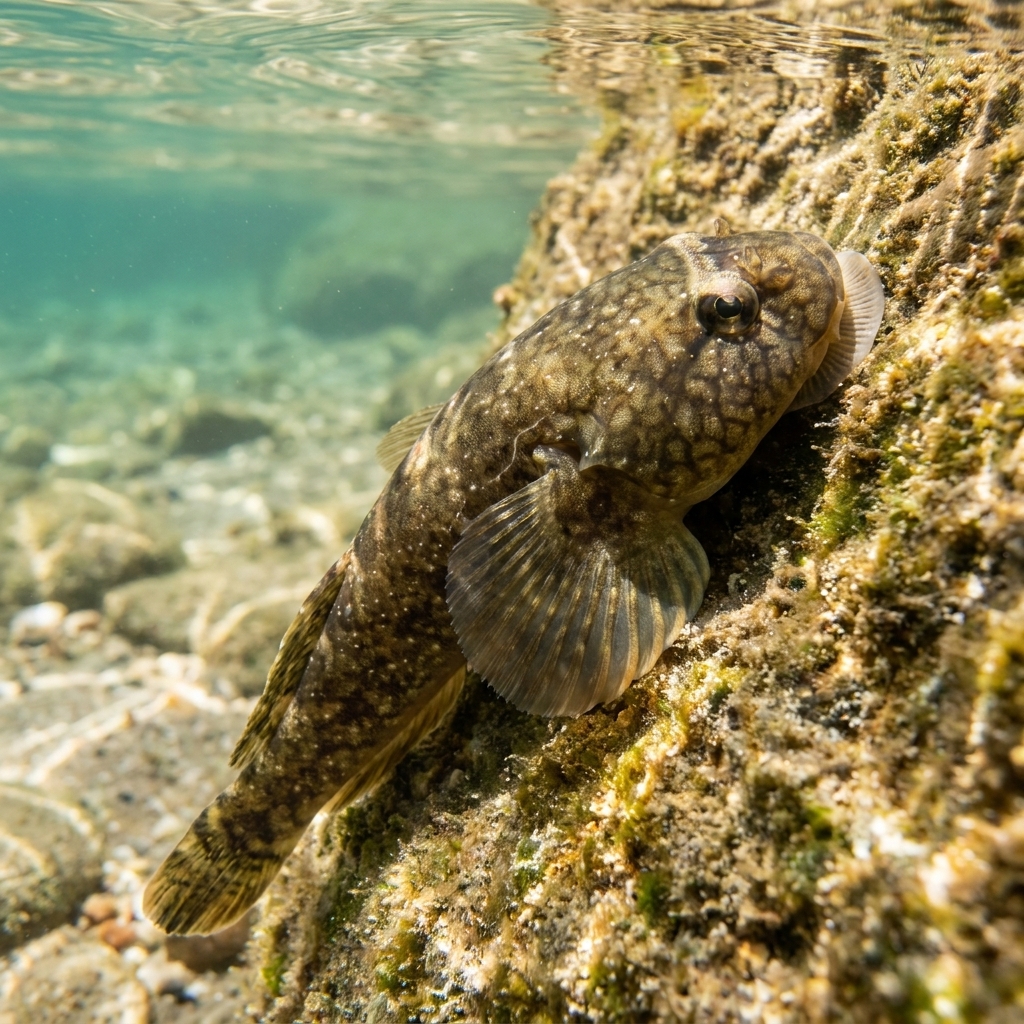
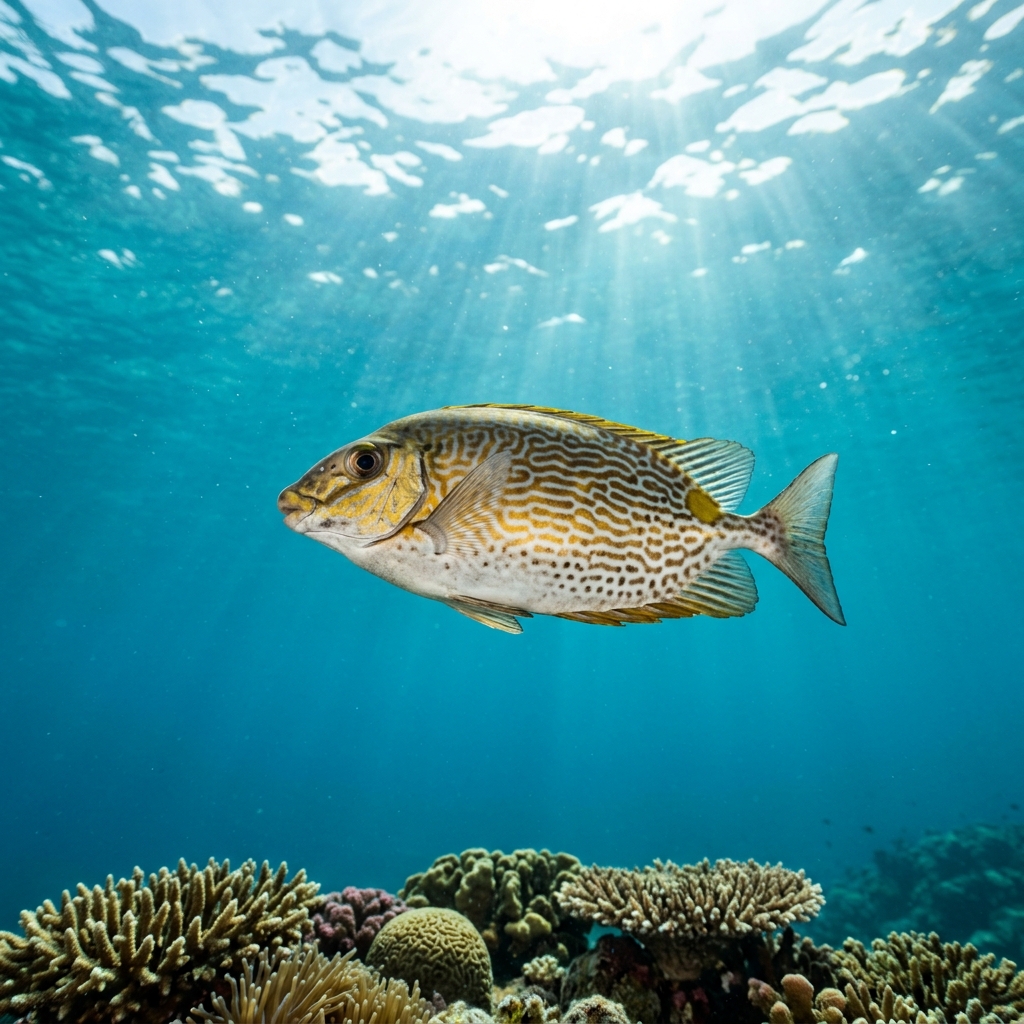
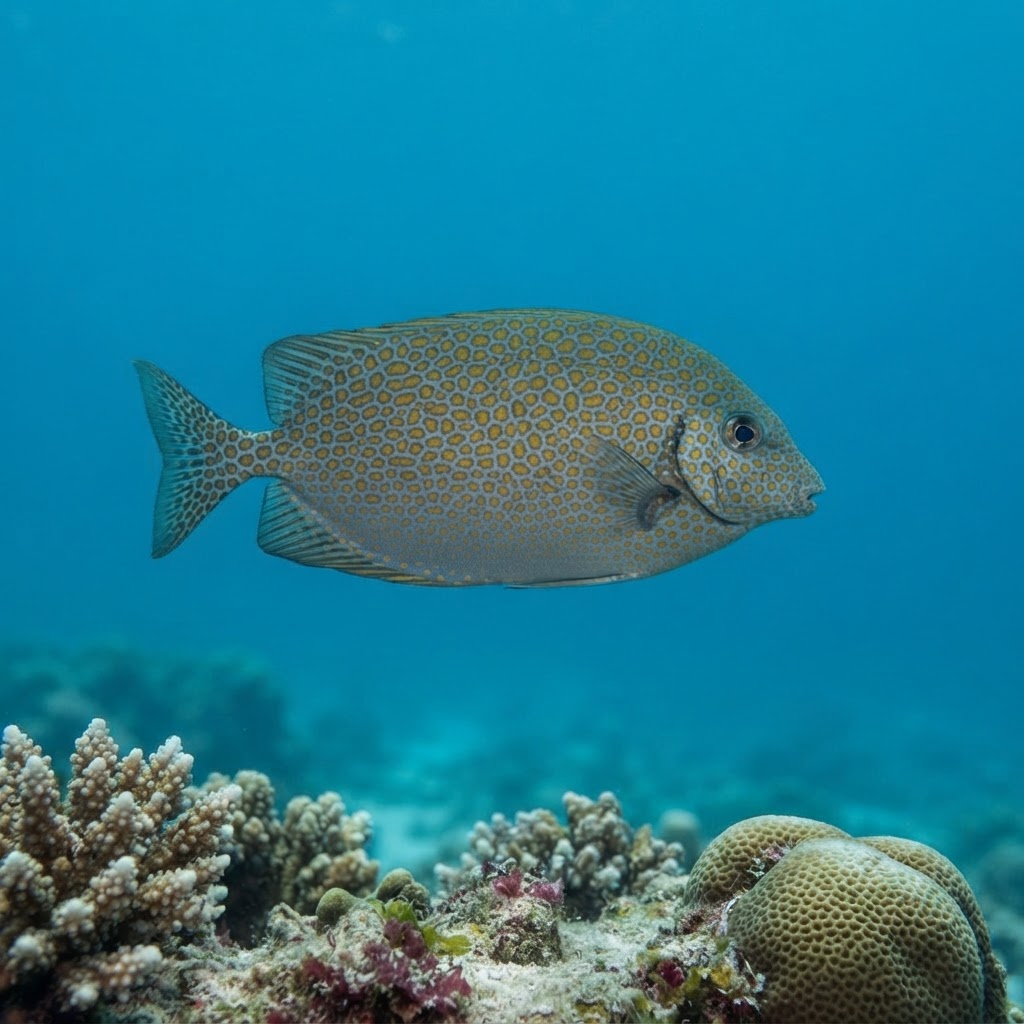
Grows to around 28 cm, with an oval, laterally flattened body covered in small gold-yellow spots over a grey to olive base. The giveaway mark is a bold black blotch ringed in yellow near the base of the tail, easy to pick out even at a distance. It swims with a steady, unhurried grazing motion low over the reef, often tipping nose-down to pick at algae.
Usually seen alone or in loose pairs, grazing slowly over algae-covered rock and coral rubble, often on the reef flat or slope in shallower water. It tends to hold its ground rather than bolt when a diver approaches, though it will drift off to a comfortable distance if pressed. Most sightings come from unhurried daytime dives rather than night dives, matching its algae-grazing habits.
Like other rabbitfishes, it carries venomous spines in its dorsal, anal and pelvic fins, a defence it can flare instantly if grabbed or cornered rather than an active weapon it uses to hunt.
No clear seasonal pattern shows up in the data, and its comfort range of 24.7 to 29 C spans tropical reefs year-round, so any month is a fair bet. Look for it during daylight hours when it's out grazing rather than tucked into reef structure.
Most reliably logged around Koh Tao in Thailand, which accounts for the bulk of sightings, with further reliable populations around Kwajalein Atoll in the Marshall Islands and the Rock Islands of Palau. Divers also report it in Queensland, Raja Ampat in Indonesia, the Yasawa Islands in Fiji, and Nouméa in New Caledonia, generally as an uncommon to rare find at any given site.
Mapping where Gold-spotted Rabbitfish is logged…
Koh Tao in Thailand is the most consistent spot, with further sightings around Kwajalein Atoll in the Marshall Islands, the Rock Islands of Palau, Queensland in Australia, and Raja Ampat in Indonesia. At most of these sites it's an uncommon rather than guaranteed find.
There's no strong seasonal signal in diver sightings, and warm water in the 25 to 29 C range holds year-round across its range, so it's a fair sighting on any month's dive.
They carry venomous spines in the dorsal, anal and pelvic fins that sting painfully if touched, but they don't attack or chase divers. Keep hands away from them and watch where you place your fingers near reef ledges.
Look for a grey-olive, oval-bodied fish around 28 cm covered in small gold spots, with a distinctive black-and-yellow blotch at the base of the tail. It grazes slowly over the reef rather than darting between cover.
They typically reach around 28 cm in length, a mid-sized reef fish easy to spot as it grazes over coral rubble and rock in the shallows to mid-depths.
Their common defence isn't speed but venom: sharp spines in the fins that flare up when threatened, a trait shared across the whole rabbitfish family rather than a hunting tool.
Site and sighting data is aggregated from diver logs, iNaturalist and GBIF. For taxonomy and conservation status:
Soldierfish
3,612 sites