Opistognathus randalli
Pale burrow-dweller flecked with gold, most reliably found in the Visayas and Raja Ampat at 28-29C, year-round.
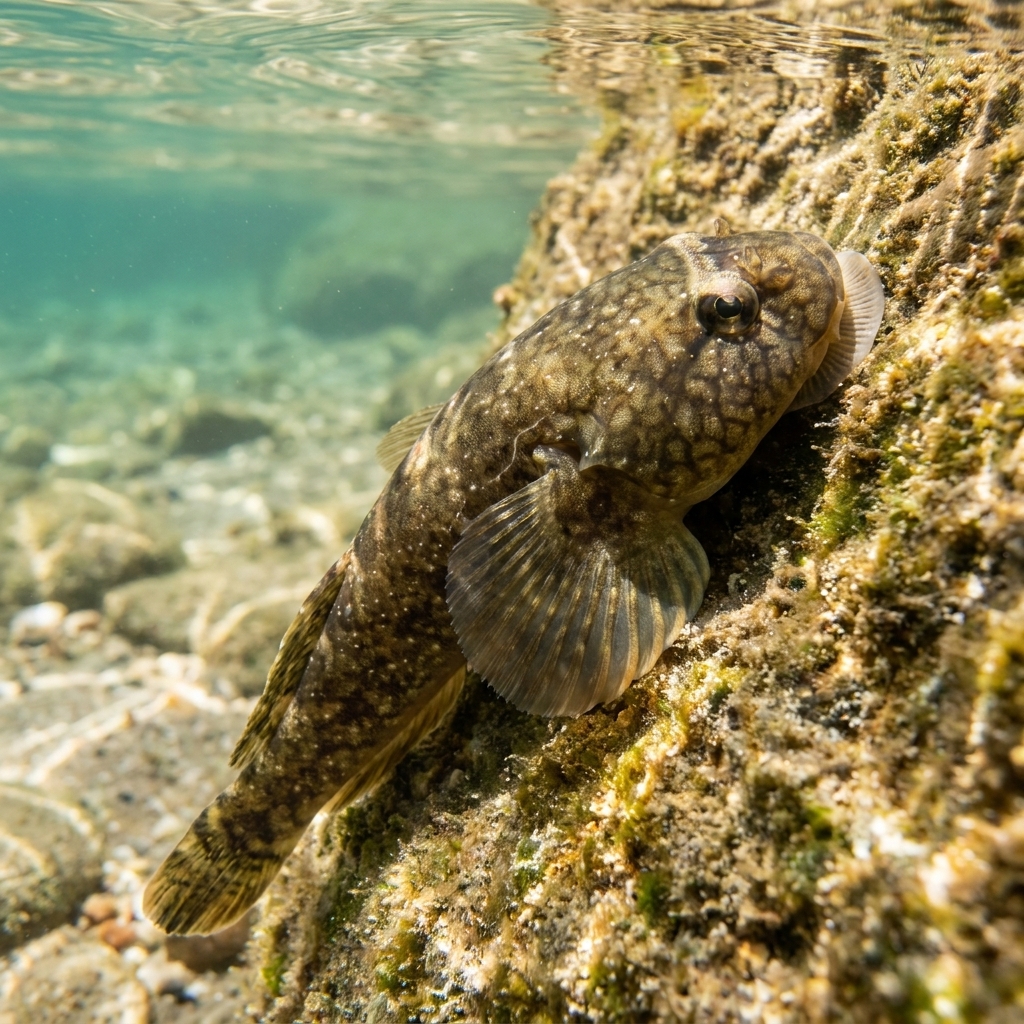
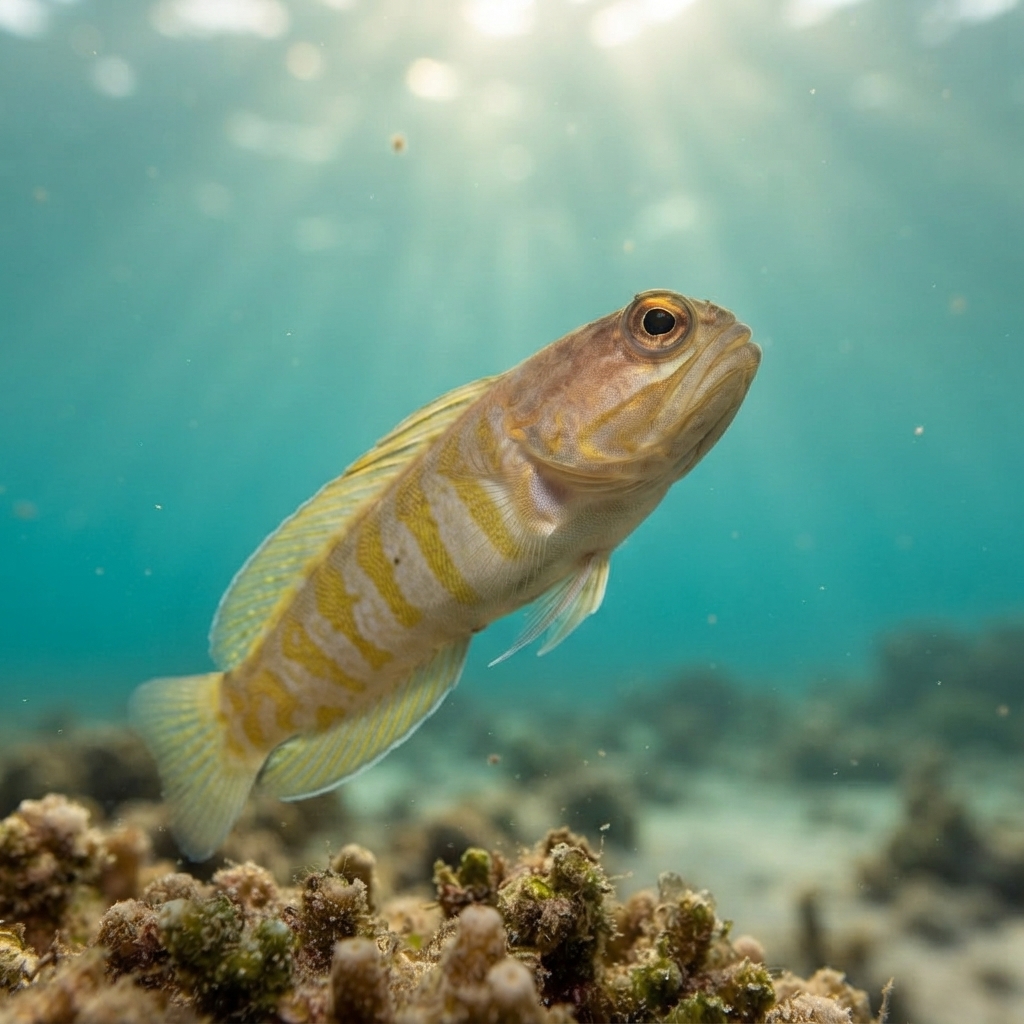
A small, slender fish around 7 cm long that spends almost all its time with just its head and front body out of a burrow in sand or rubble. Pale grey to bluish body scattered with fine gold speckles, a blunt head, and large eyes set high for spotting plankton and threats. Look for it hovering vertically at its burrow entrance rather than swimming freely over the reef.
Watch for it hovering nose-up over its burrow on sand or rubble flats, retreating tail-first the instant a diver gets too close or moves too fast. It feeds on drifting plankton picked off the water column right above the burrow mouth, darting back down between bites. Slow, low approaches from a distance give the best chance of watching it settle back out and resume feeding.
Like other jawfish, it uses its oversized mouth to shift sand and rubble, constantly rebuilding and maintaining the burrow it retreats into when startled.
No clear seasonal pattern shows up in the sightings data, and with a narrow, warm comfort range of roughly 28.4 to 29.3C, these reefs stay diveable year-round, so any month works.
Most consistently logged across the Philippines, especially the Visayas, where it turns up on sand and rubble patches at a strong number of sites. Indonesia is the other stronghold, with regular sightings in Raja Ampat, West Papua, and Sulawesi, and it has also been recorded off Dili in Timor-Leste.
Mapping where Gold-specs Jawfish is logged…
The Visayas in the Philippines is the most reliable region, followed by Raja Ampat, West Papua, and Sulawesi in Indonesia. It has also been recorded near Dili in Timor-Leste.
There's no strong seasonal pattern in the sightings, and warm reef temperatures around 28 to 29C hold steady year-round, so it can be found in any month.
Look for a small pale grey to bluish fish about 7 cm long, dotted with fine gold speckles, hovering upright at the mouth of a sandy burrow rather than swimming over the reef.
They stay small, reaching around 7 cm in length, and spend most of that length tucked into a burrow with only the head and forebody visible.
No, they pose no danger to divers. They are shy burrow-dwellers that retreat underground rather than confront anything approaching.
Like other jawfish, it uses its mouth as a digging tool, constantly moving sand and rubble to build and repair the burrow it shelters in.
Site and sighting data is aggregated from diver logs, iNaturalist and GBIF. For taxonomy and conservation status:
Soldierfish
3,612 sites