Monetaria annulus
A pinhead-sized shell with a golden ring, most often spotted on night dives around Okinawa and Bali's shallow reef flats.
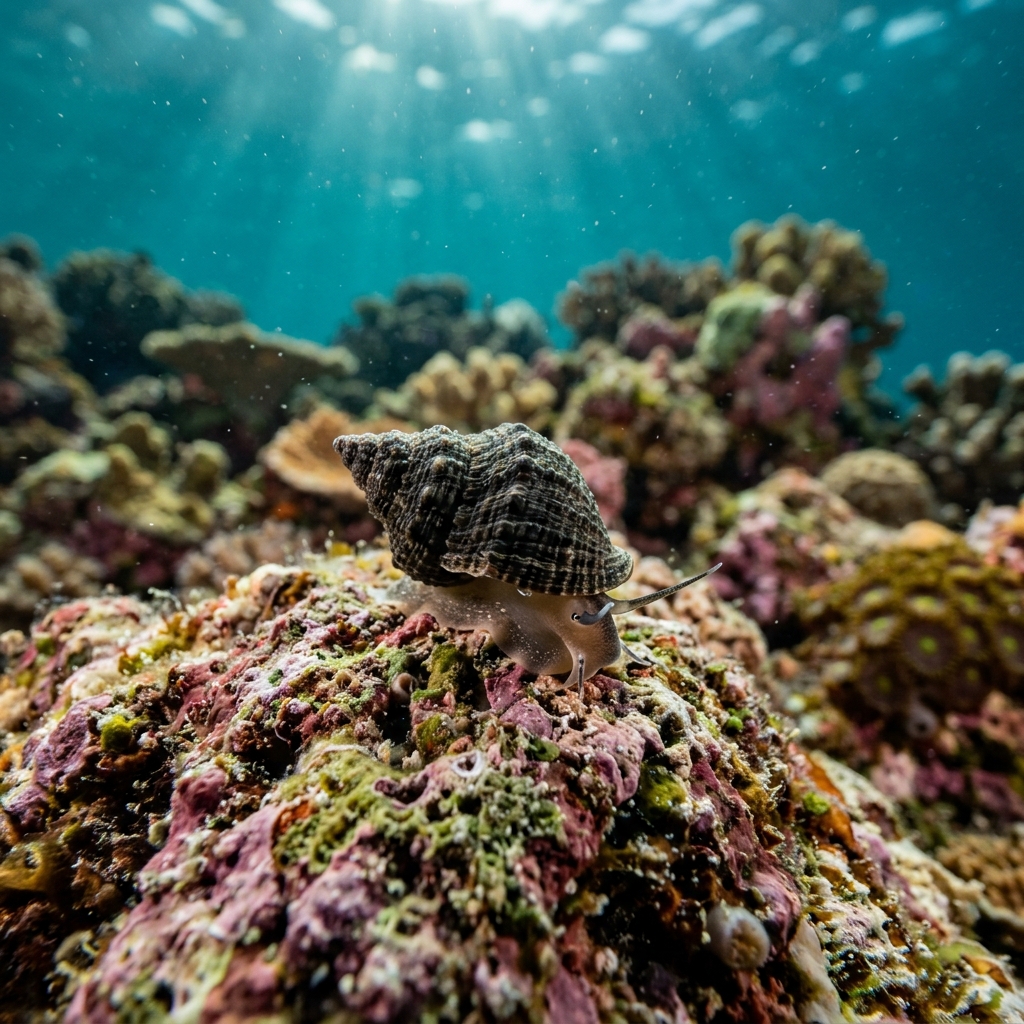
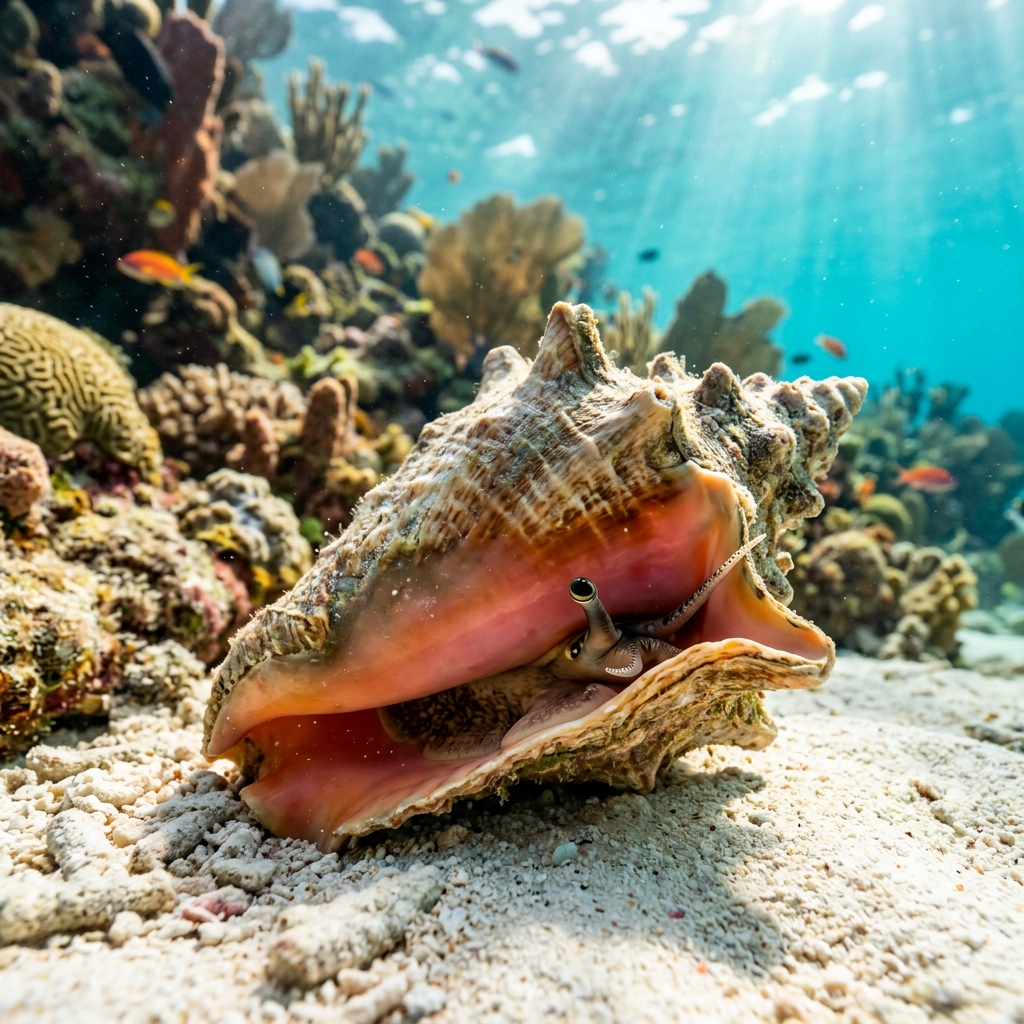
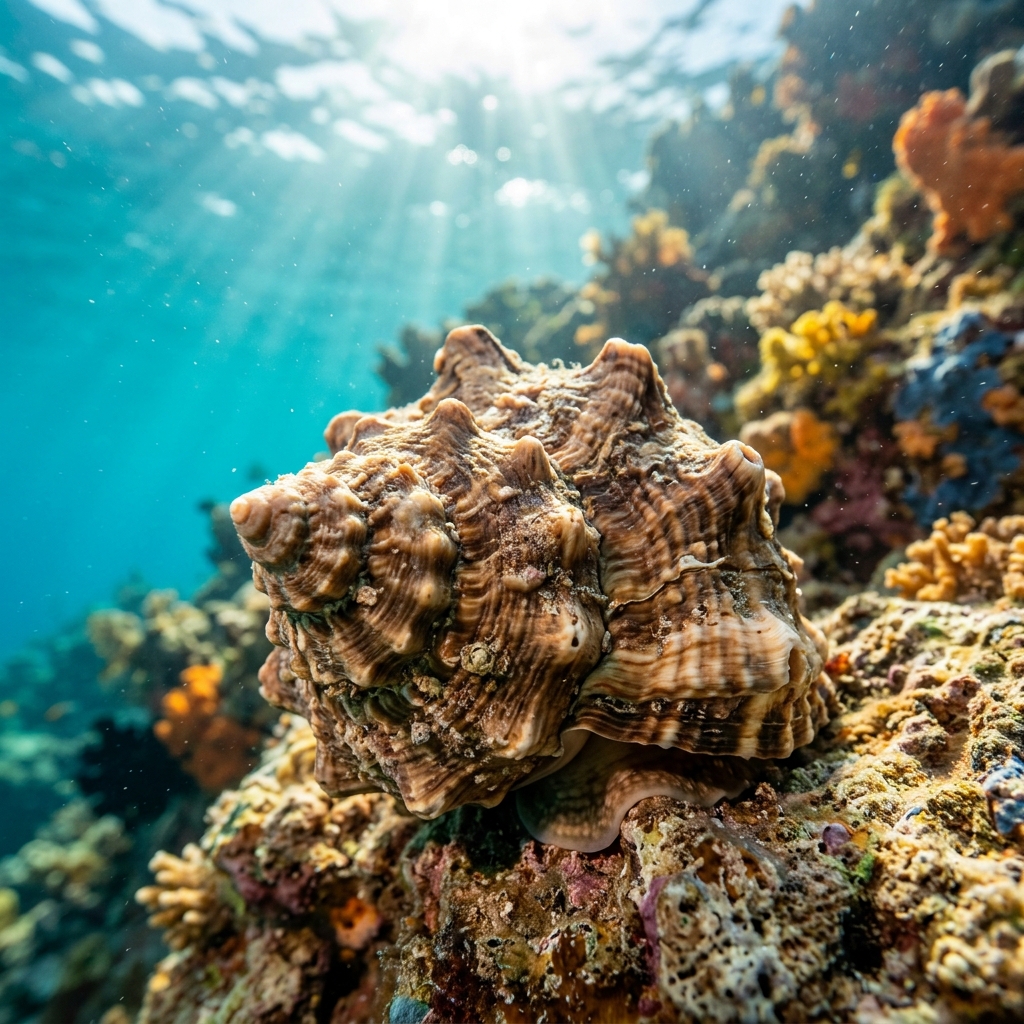
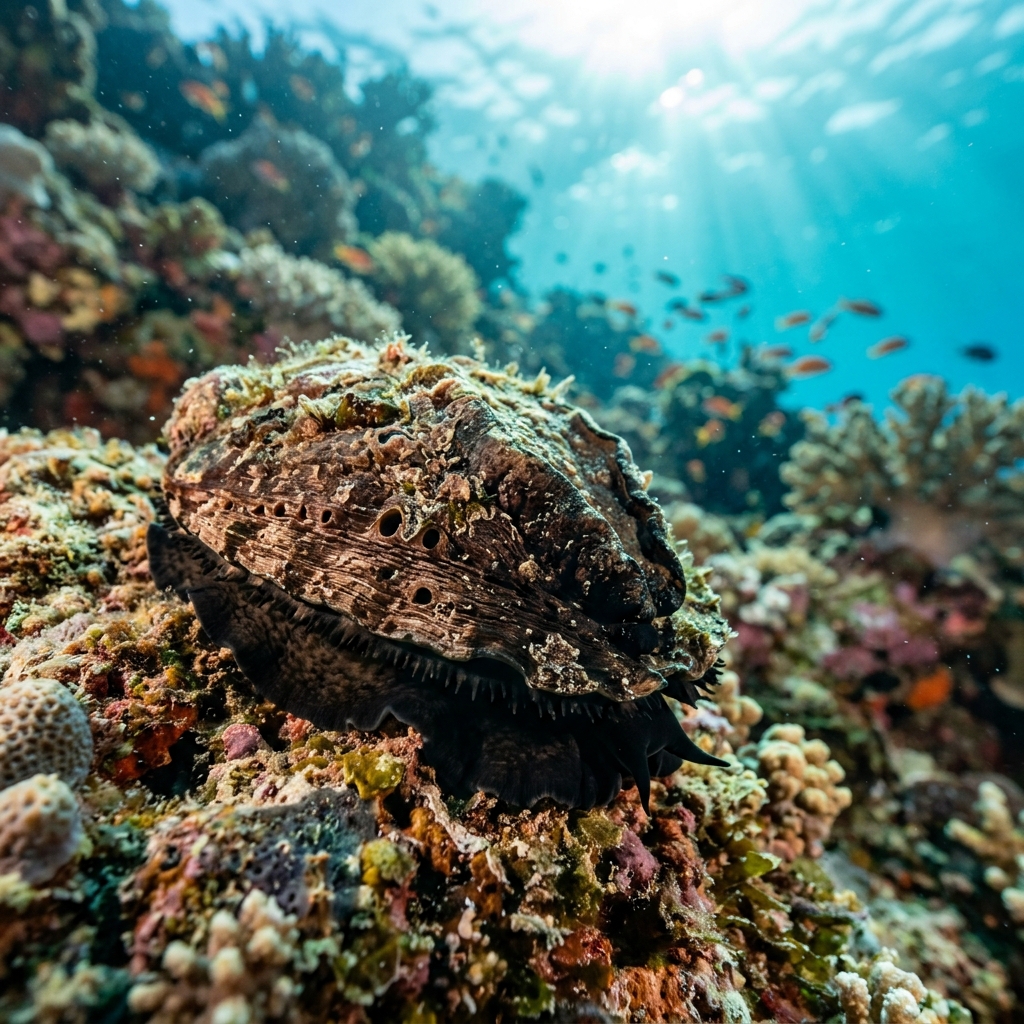
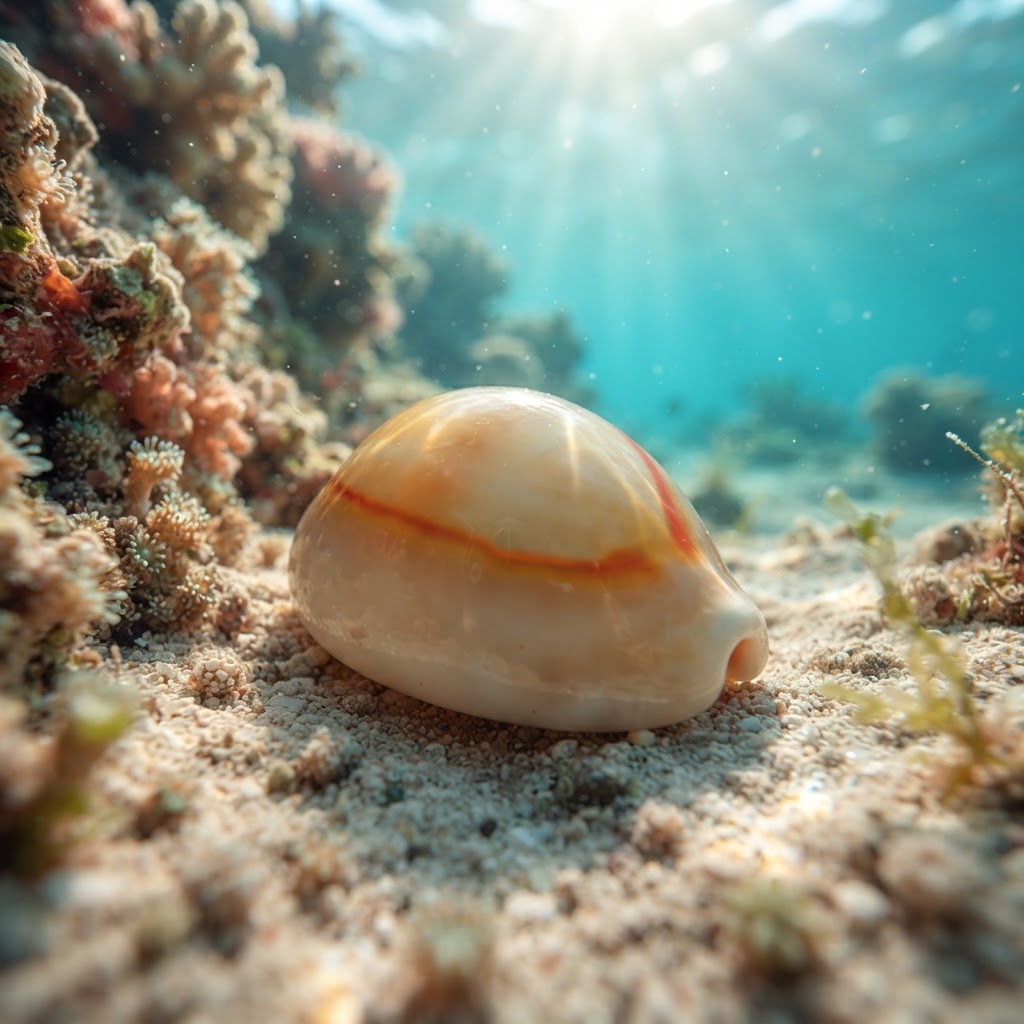
Look for a small, glossy oval shell about 2 cm long, dark brown to grey on top with a distinct orange-gold ring or band across the back that gives the species its name. The underside is flatter with a narrow toothed opening running along it, and the live animal often has a dark mantle it can extend over the shell when active. It sits low on rock or rubble and is easy to miss unless you're scanning close to the substrate.
Spends daylight hours tucked into crevices, under rubble or beneath rock ledges, often with its mantle drawn back over the shell so only the glossy surface shows. Most sightings come from divers combing shallow rubble and reef-flat areas rather than open reef, and it pays little attention to a diver's presence since it moves slowly and has no real means of fleeing. Night dives in the same shallow zones can turn up more active individuals grazing across rock surfaces.
Cowrie shells like this one build their glossy finish by wrapping the mantle over the shell during life, which is why the surface looks almost polished rather than eroded like most snail shells.
No clear seasonal pattern shows up in the data, and its comfort range of roughly 22.5 to 29.5 C spans warm tropical reefs year-round, so it's a reasonable find on any dive within its range and depth. Shallow, sheltered spots tend to produce more sightings simply because that's where divers spend slow, close-focus time looking.
Most reliably logged in Okinawa and the Ryukyu Islands in Japan, with strong numbers also out of Bali in Indonesia and Queensland in Australia. Divers also find it around Zanzibar in Tanzania and Grand Baie and Trou aux Biches in Mauritius, generally in shallow reef and rubble zones under 8 metres.
Mapping where Gold Ring Cowrie is logged…
Best known from Okinawa and the Ryukyu Islands in Japan, and also logged regularly around Bali in Indonesia, Queensland in Australia, Zanzibar in Tanzania, and Mauritius.
There's no strong season in the sightings data, and its warm-water range of about 22.5 to 29.5 C keeps it present on tropical reefs all year, so any time you're diving shallow rubble zones in its range is worth a look.
Check for a small glossy shell around 2 cm long with a dark brown to grey top marked by a distinct orange-gold band, and a flatter underside with a narrow toothed slit. It sits tight against rock or rubble rather than out in the open.
They stay small, typically around 2 cm in shell length, which is part of why they're easy to overlook on a reef.
No, they pose no risk to divers. They're slow-moving, shell-bound molluscs with no sting or bite to worry about.
Like other cowries, it wraps its mantle over the shell while alive, which is what keeps the shell surface so glossy compared with typical weathered snail shells.
Site and sighting data is aggregated from diver logs, iNaturalist and GBIF. For taxonomy and conservation status:
Triton Shell
2,297 sites