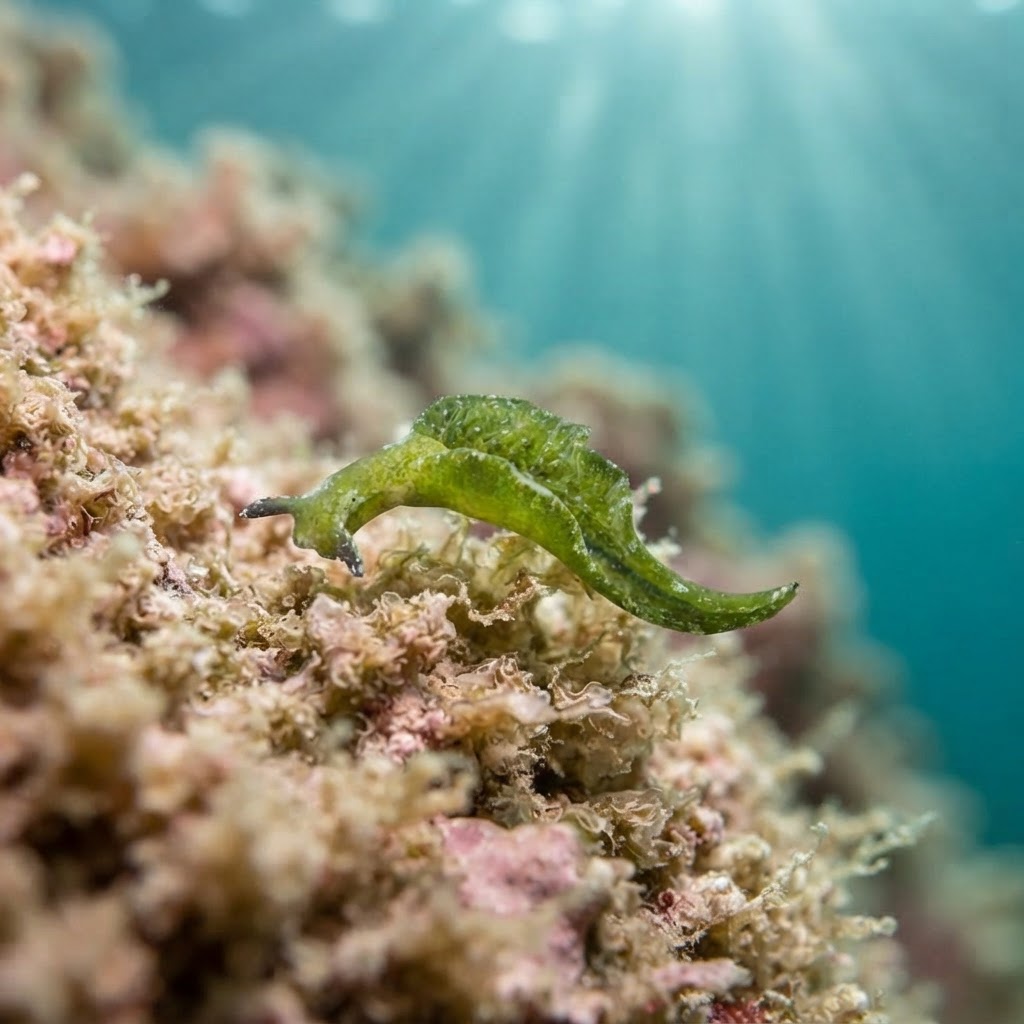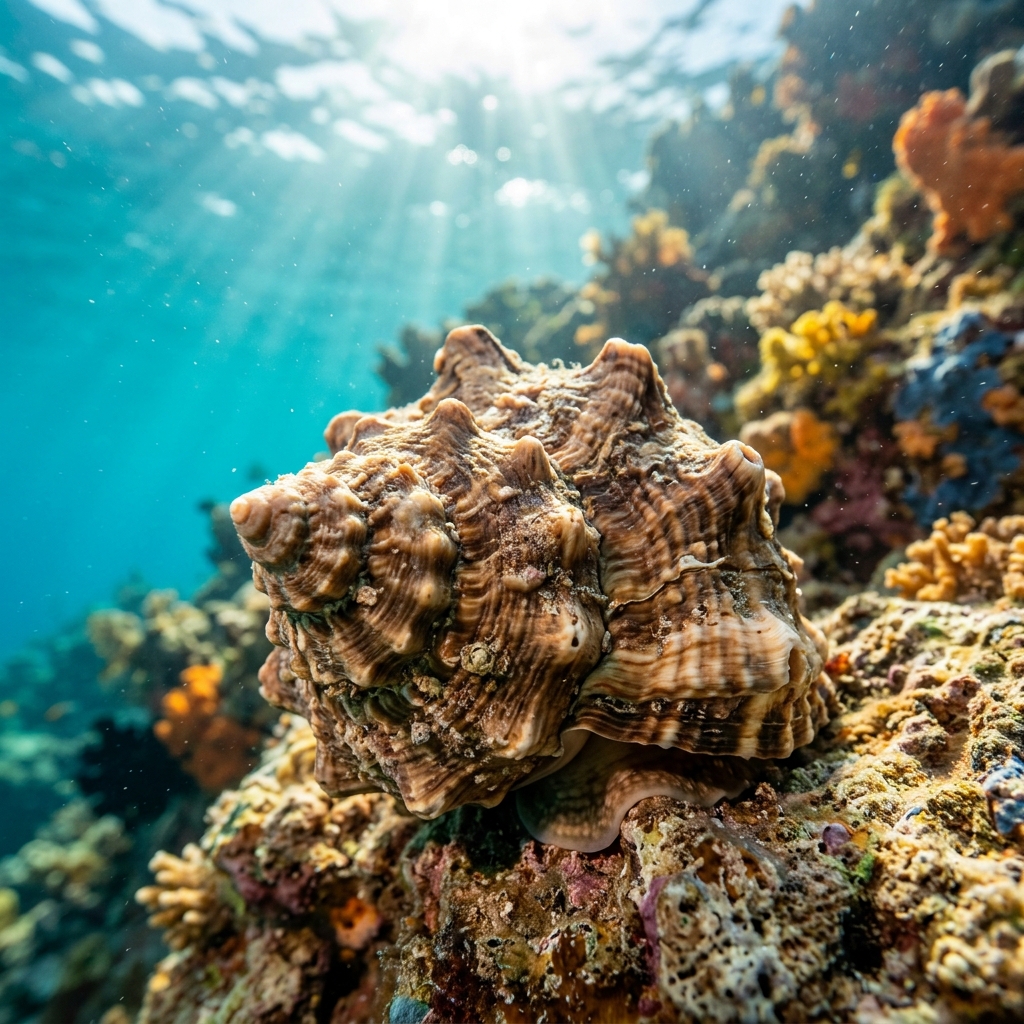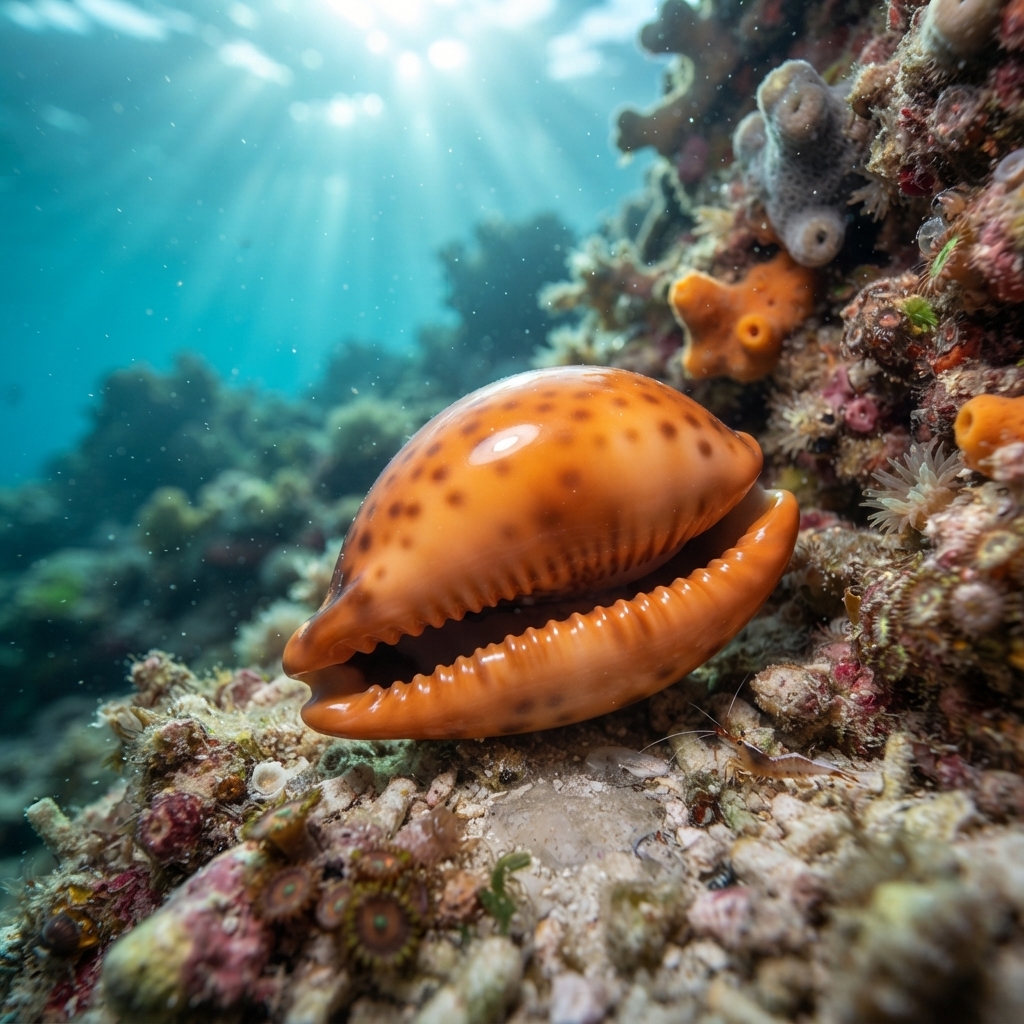
Pustularia globulus
A rare find in Kwajalein Atoll, Marshall Islands, this small cowrie hides on reefs year-round in warm 25.5 to 31.5 C water.
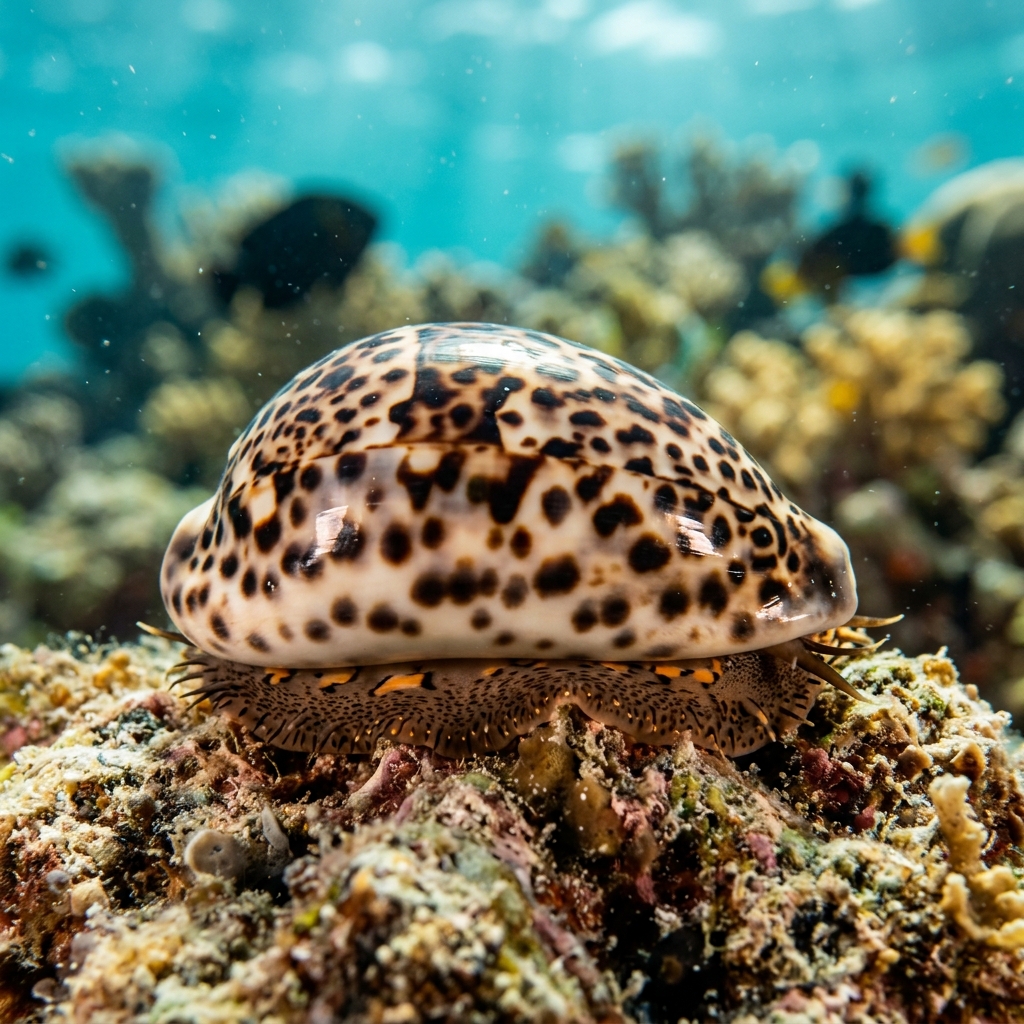
Look for a small, egg-shaped shell with a glossy, rounded (globose) profile rather than the elongated oval typical of many cowries. The shell surface is smooth and porcelain-like, usually pale with fine mottling, and the mantle can extend over the shell when the animal is active. Its compact, rounded shape combined with its small size is the main giveaway against other reef-dwelling sea snails and slugs sharing the same rubble and coral habitat.
This is a slow-moving, reef-associated snail that divers find tucked into rubble, crevices, or under coral debris rather than out in the open. It shows little reaction to divers beyond withdrawing into its shell if disturbed, and most sightings come from divers deliberately searching small crevices and rubble patches rather than spotting it mid-swim.
Cowries like this one secrete a mantle that wraps over the shell while feeding or moving, which is part of why the shell often looks glossier and less worn than other snail shells on the reef.
There is not enough seasonal data to point to a particular window, and the observed water temperature range of 25.5 to 31.5 C spans typical year-round conditions for this part of the Pacific, so it is best treated as a possible sighting any month.
Every logged sighting of this cowrie comes from Kwajalein Atoll in the Marshall Islands, making that atoll the only reliable place divers have recorded it so far. Within the data it turns up across a spread of sites there, though it stays a rare to uncommon find rather than a guaranteed spot.
Mapping where Globose Cowrie is logged…
Kwajalein Atoll in the Marshall Islands is the only region with confirmed sightings so far, spread across a number of sites within the atoll.
There is no clear seasonal pattern in the data, and warm water in the 25.5 to 31.5 C range persists through the year in this region, so sightings are possible year-round.
Check for a small, rounded, glossy shell with an egg-like shape rather than an elongated one, usually resting in rubble or crevices on the reef rather than out in the open.
Exact size data is not available, but like other members of the cowrie family it stays small, typically only a few centimetres across, and is easy to miss without a close look.
No, it is logged as rare at most sites where divers have recorded it, with only a handful of sites reporting it as uncommon rather than rare.
Site and sighting data is aggregated from diver logs, iNaturalist and GBIF. For taxonomy and conservation status:
Elysia Timida
573 sites