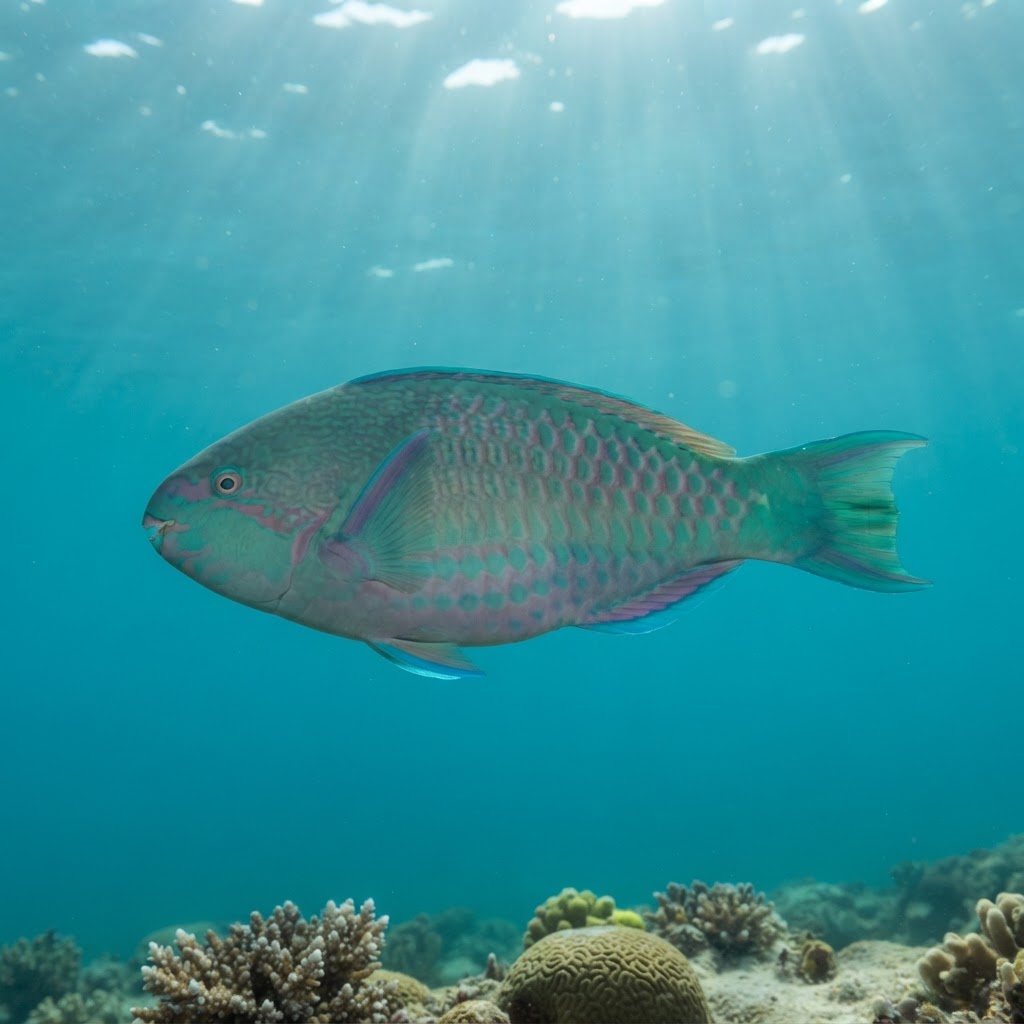
Scarus globiceps
Spot this uncommon parrotfish in the Tuamotu Islands and Queensland, comfortable year-round in warm 25-29C reef water.
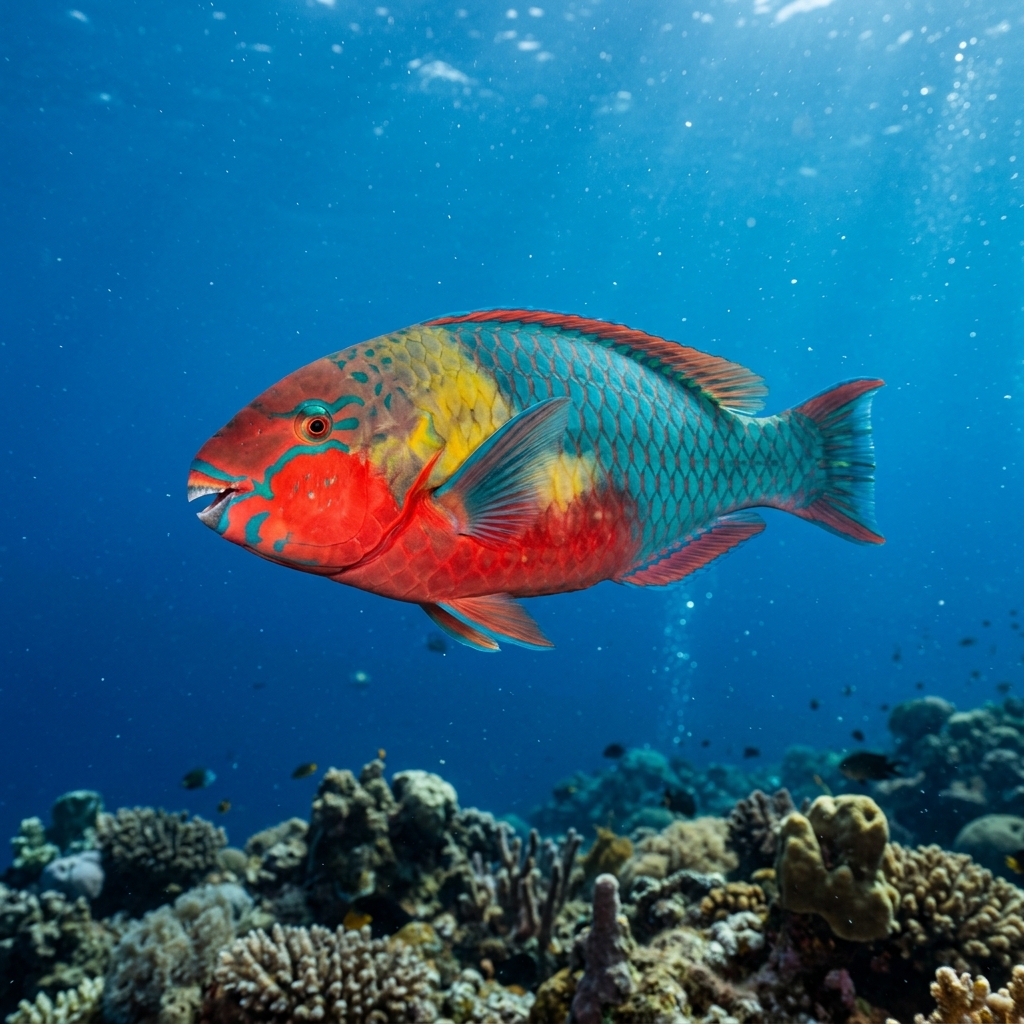
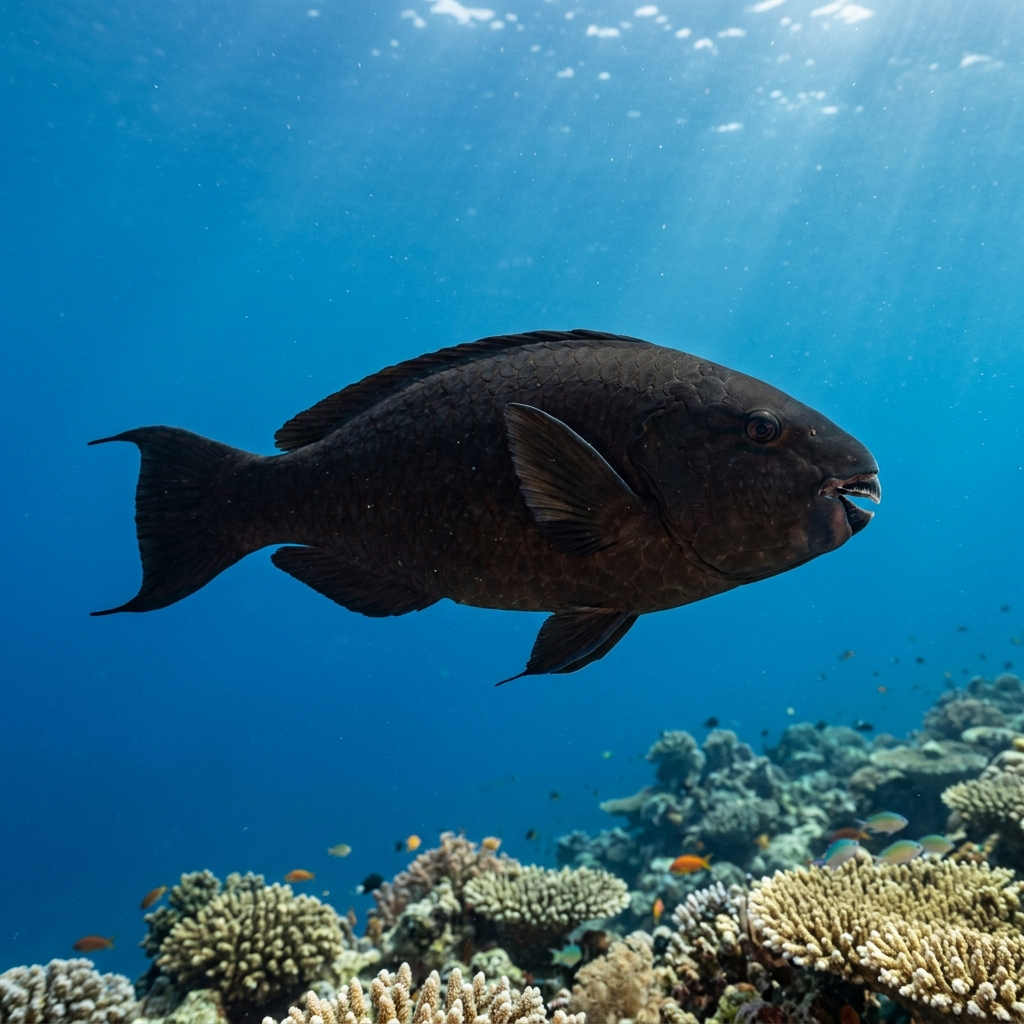
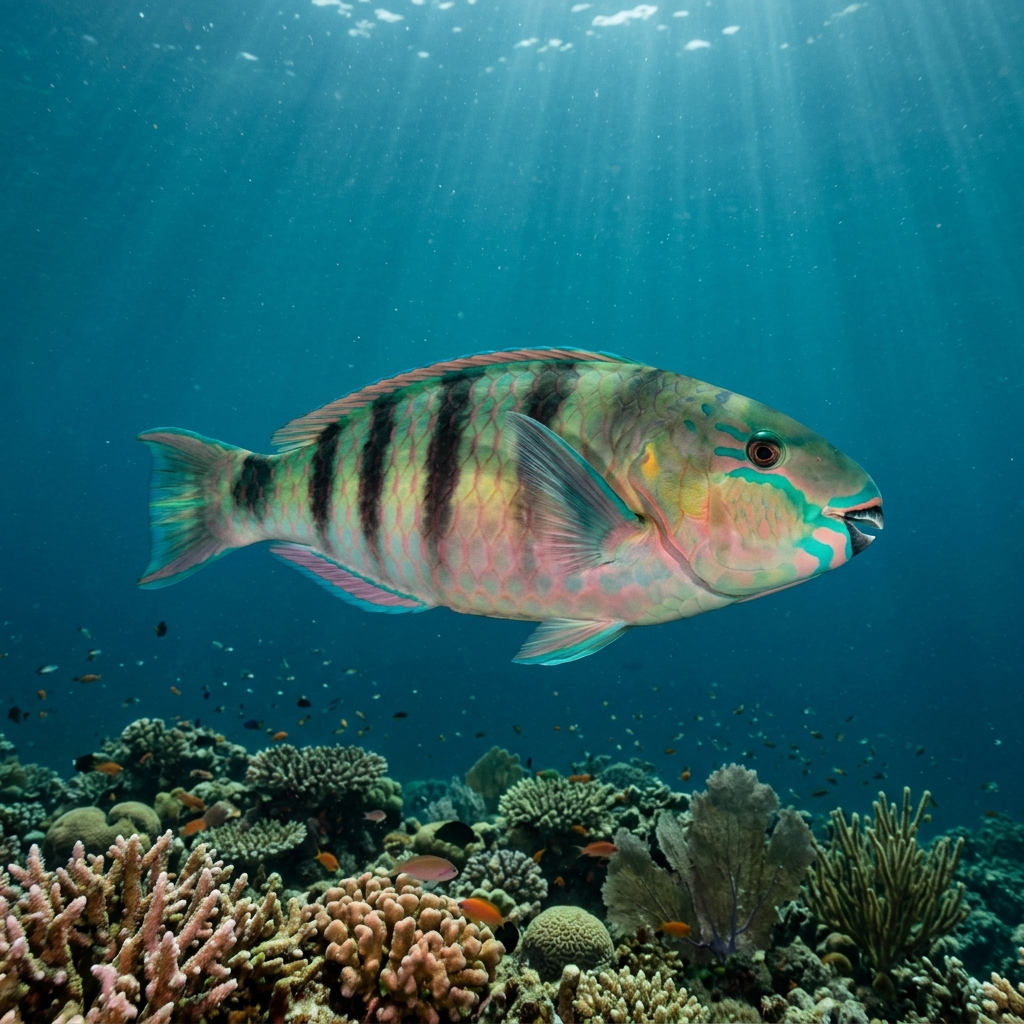
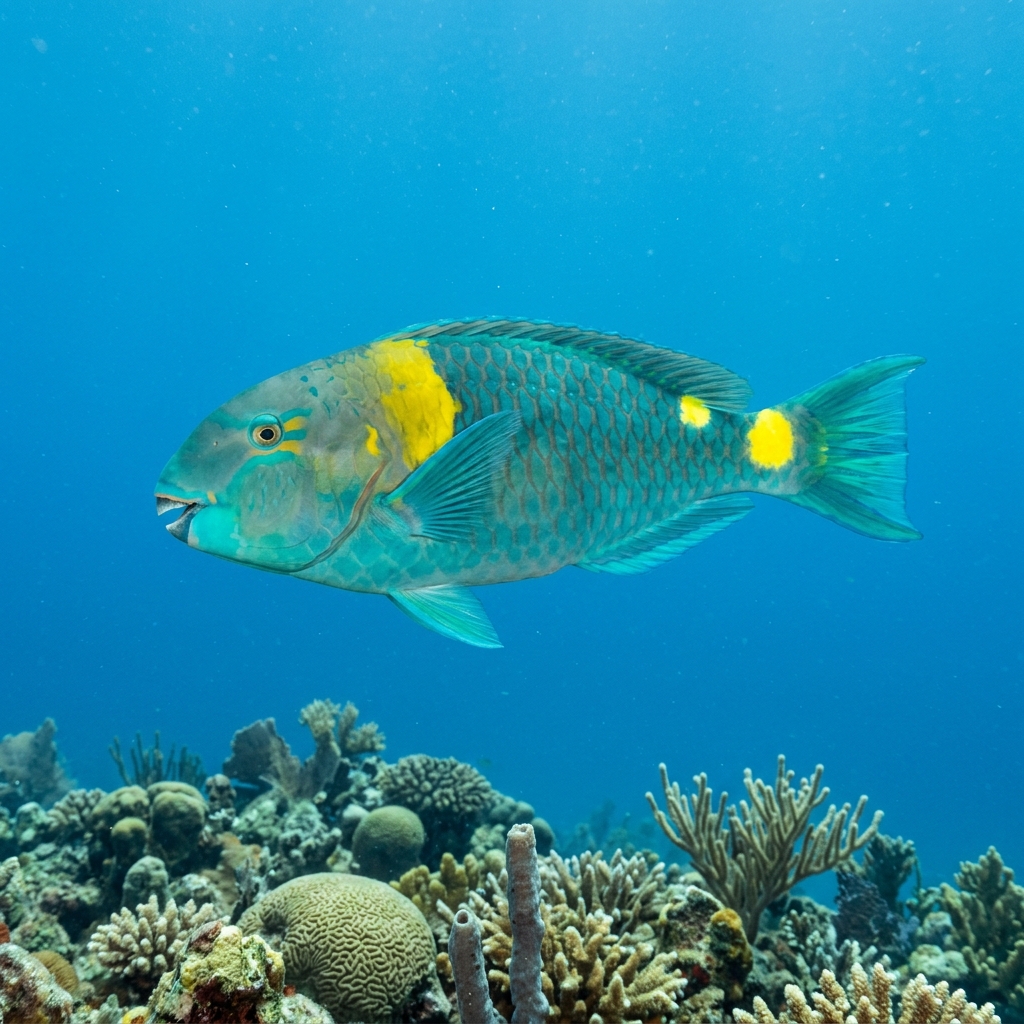
Recognisable by its blunt, rounded head profile and stocky, medium-length body reaching around 31 cm. Colouring runs through mottled greens and browns typical of mid-sized parrotfish, with the fused beak-like teeth visible when it noses into the reef surface. Look for it grazing low over hard structure rather than schooling in open water.
Divers typically find it working alone or loosely associated with other reef fish, browsing algae off dead coral and rubble patches during daylight hours. It tends to keep a low profile against the reef rather than venturing into open water, and doesn't show much interest in passing divers beyond a mild retreat if approached too fast. Best looked for close to the substrate on reef flats and slopes rather than along drop-offs.
Like other parrotfish, its fused teeth let it scrape algae and fine organic matter off dead coral, and the material it processes contributes to the fine sand that builds up on nearby beaches.
No clear seasonal pattern shows up in the sighting data, and its comfort range of roughly 25 to 29C matches tropical reefs year-round, so any month is fair game in the Tuamotus or on the Great Barrier Reef.
Most reliably logged in French Polynesia, especially across the Tuamotu Islands, and on reefs in Queensland, Australia. Scattered sightings also come from Fiji's Lomaiviti region, New Caledonia's Nouméa area, and Kwajalein Atoll in the Marshall Islands, though it stays uncommon wherever it turns up.
Mapping where Globehead Parrotfish is logged…
Best chances are in French Polynesia's Tuamotu Islands and along Queensland's reefs in Australia, with occasional sightings in Fiji, New Caledonia, and the Marshall Islands. It stays uncommon everywhere it's found, so don't expect large numbers.
There's no strong seasonal pattern in the sighting records, and it sits comfortably in 25 to 29C water year-round, so it can turn up on any dive in tropical Pacific reefs regardless of month.
Look for a rounded, blunt head and a stocky body around 31 cm long, coloured in mottled greens and browns. It's usually seen grazing low against dead coral or rubble rather than swimming in open water.
They typically reach about 31 cm in length, putting them in the mid-size range for reef parrotfish rather than among the larger species.
No, they pose no danger to divers. They're grazers that spend their time scraping algae off the reef and will simply move off if you get too close.
Yes, their fused beak-like teeth scrape algae and dead coral surfaces clean, and the material they process breaks down into the fine sand that collects on nearby beaches.
Site and sighting data is aggregated from diver logs, iNaturalist and GBIF. For taxonomy and conservation status:
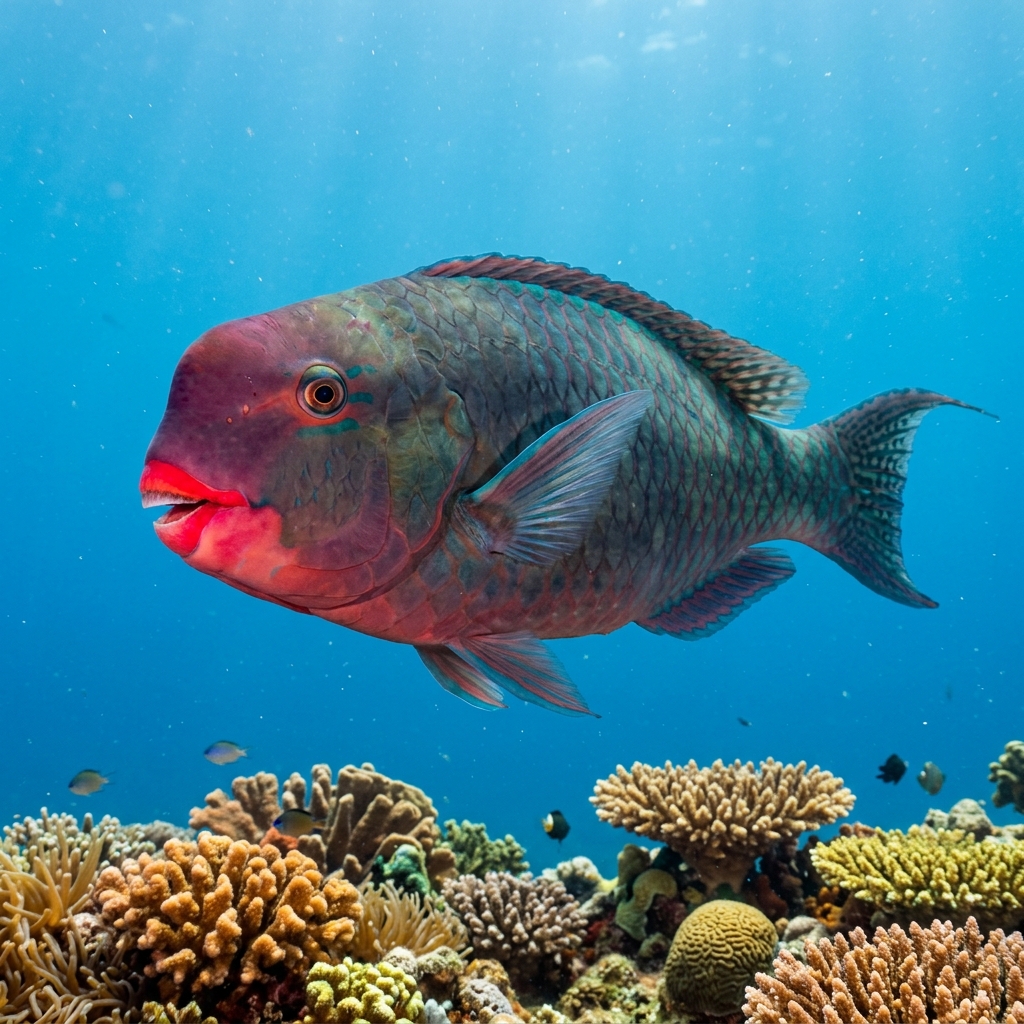
Redlip Parrotfish
2,789 sites