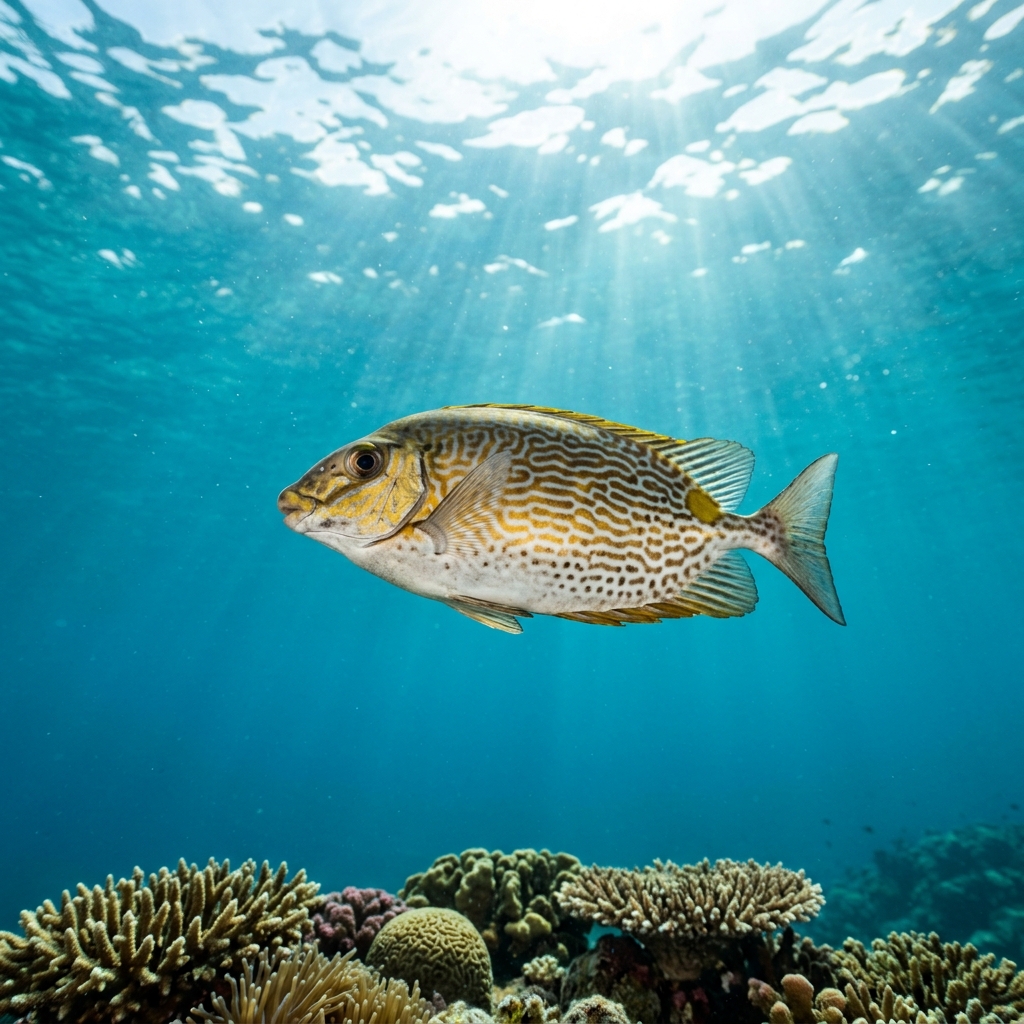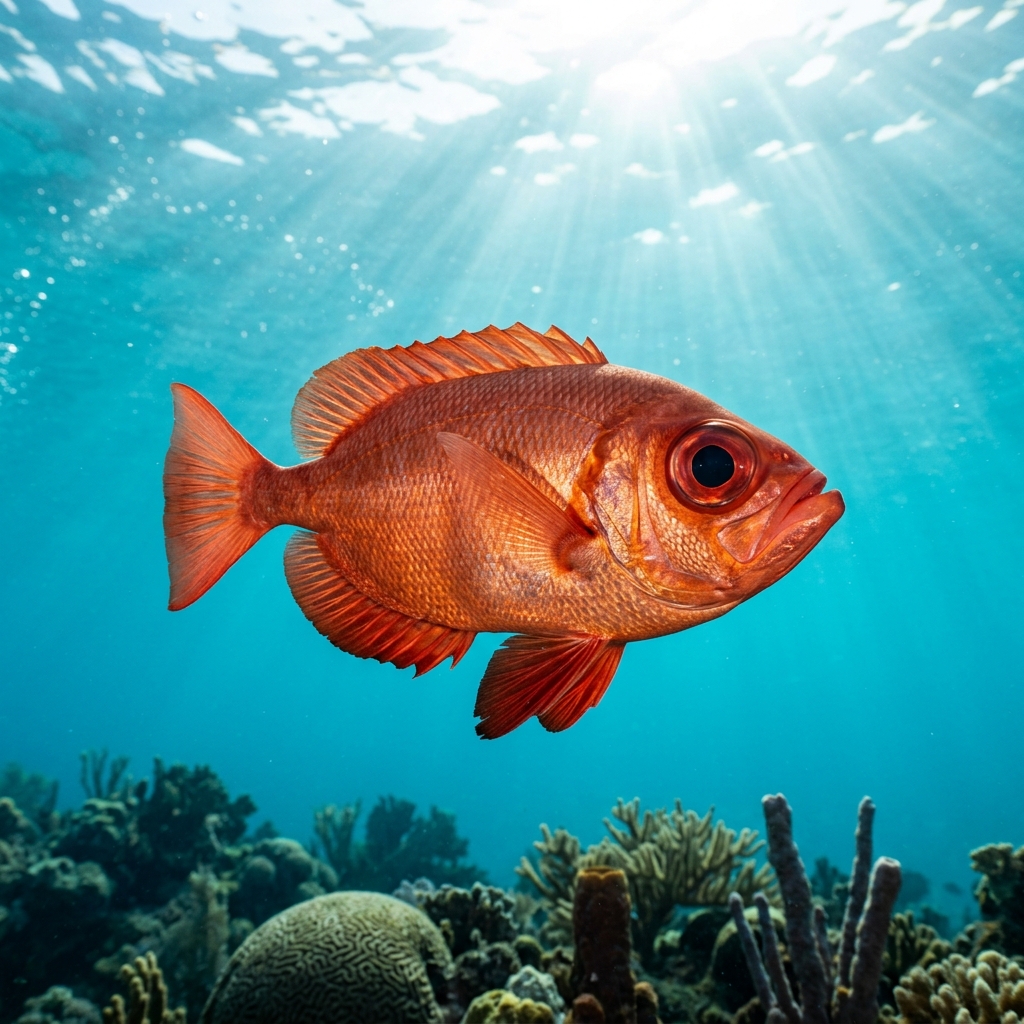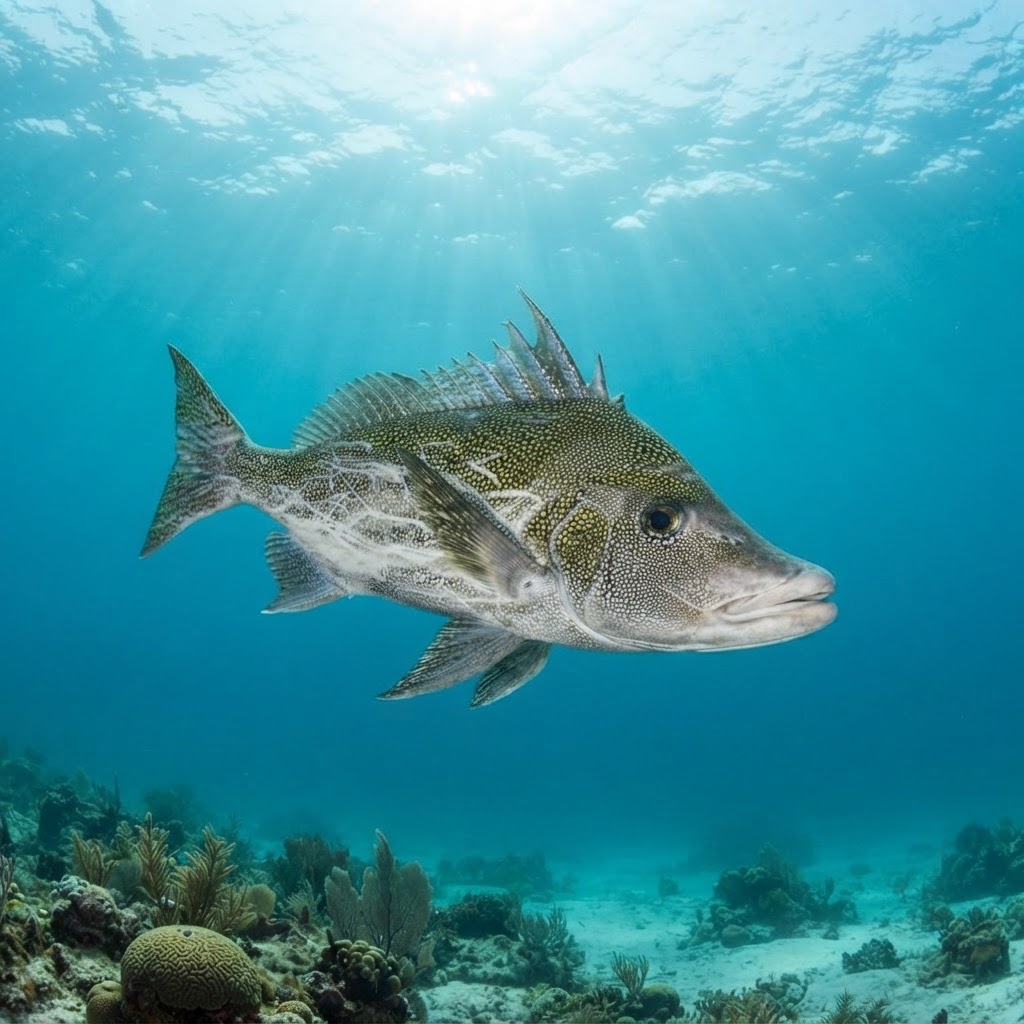
Paristiopterus labiosus
A rarely-logged deepwater fish with a humped snout, seen in cool water between 14 and 18 C. Here's how to spot one.
Look for a deep, almost oval-shaped body with a steep, humped forehead and a noticeably thick-lipped, pouty snout that gives the species its odd profile. It grows to around 70 cm and shows a pale grey to silvery body, sometimes with faint darker banding, and a compressed, plate-like shape that reads more like a boarfish or armourhead than a typical reef fish. There's no confirmed colour difference recorded between juveniles and adults in the available data.
Divers who encounter this species tend to find it hanging in open water or hovering near structure in cool, deeper water rather than cruising shallow reef flats. It isn't a fish that schools conspicuously or interacts with divers, more a slow, steady presence you notice rather than one that comes to check you out.
That heavy-lipped, humped-snout look is shared across the boarfish family (Pentacerotidae), a group of deeper, cool-water fish that are far more at home on temperate rocky reefs and seamounts than on tropical coral.
There isn't enough monthly sighting data to identify a season, so treat it as a year-round possibility wherever the water sits in its preferred 14 to 18.1 C range.
Sighting data for this species is too sparse to name reliable dive sites or countries right now. It's best treated as a cool-water, deeper-dwelling fish that turns up as an incidental sighting rather than a targetable one.
Mapping where Giant Boarfish is logged…
They reach around 70 cm in length, giving them a deep, heavy-bodied profile in the water rather than a long, slender one.
Key on the steep, humped forehead and thick-lipped snout combined with a deep, laterally flattened body. That silhouette is distinctive among cool-water fish and doesn't closely match typical tropical reef species.
There isn't enough sighting data to pin down a season, so it's best considered a year-round possibility in water within its 14 to 18.1 C comfort range.
No, they're not considered dangerous to divers and there's no aggressive or defensive behaviour recorded for the species.
Confirmed dive-site data for this species is currently too limited to point to specific locations, so sightings are best treated as an occasional, cool-water surprise rather than a planned encounter.
Site and sighting data is aggregated from diver logs, iNaturalist and GBIF. For taxonomy and conservation status:
Soldierfish
3,612 sites