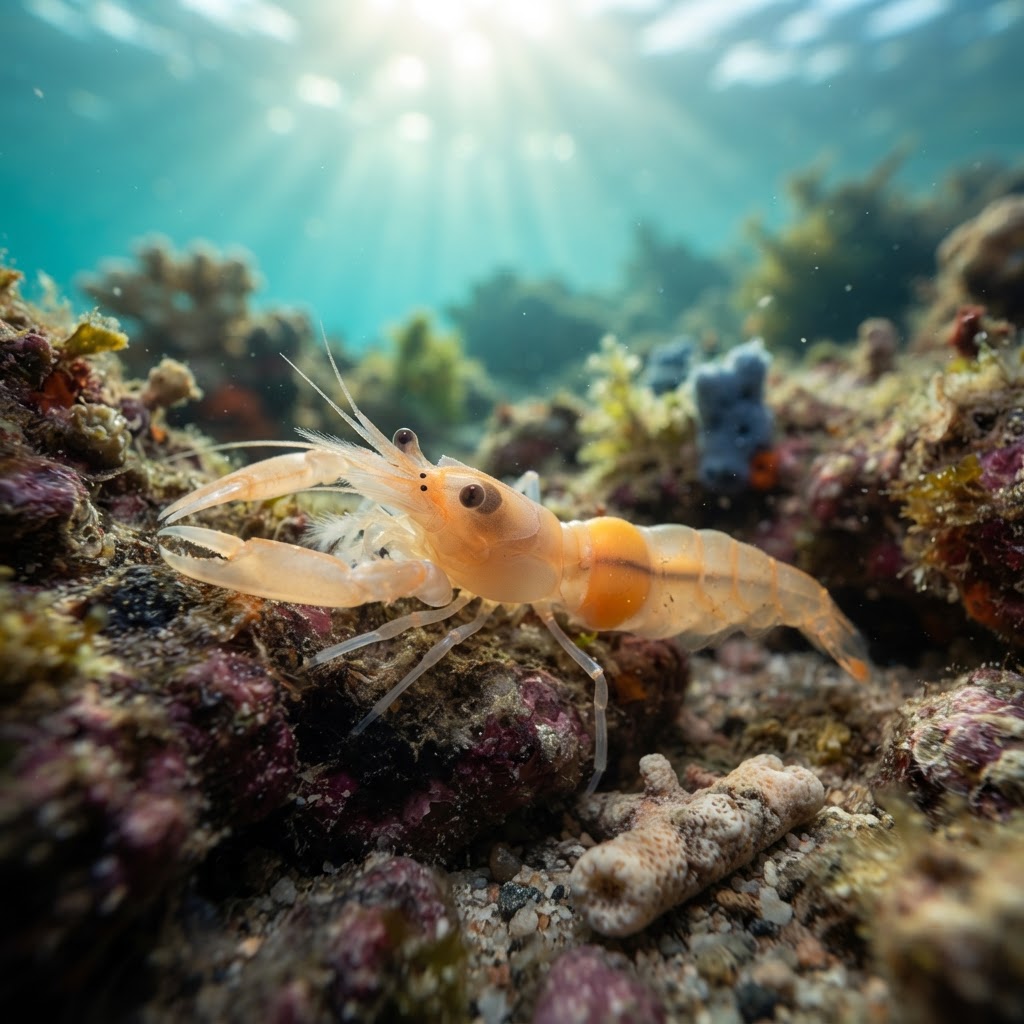
Neotrypaea californiensis
Rarely seen but there if you look: ghost shrimp burrow into sand from British Columbia to California in cool 9-19C water.
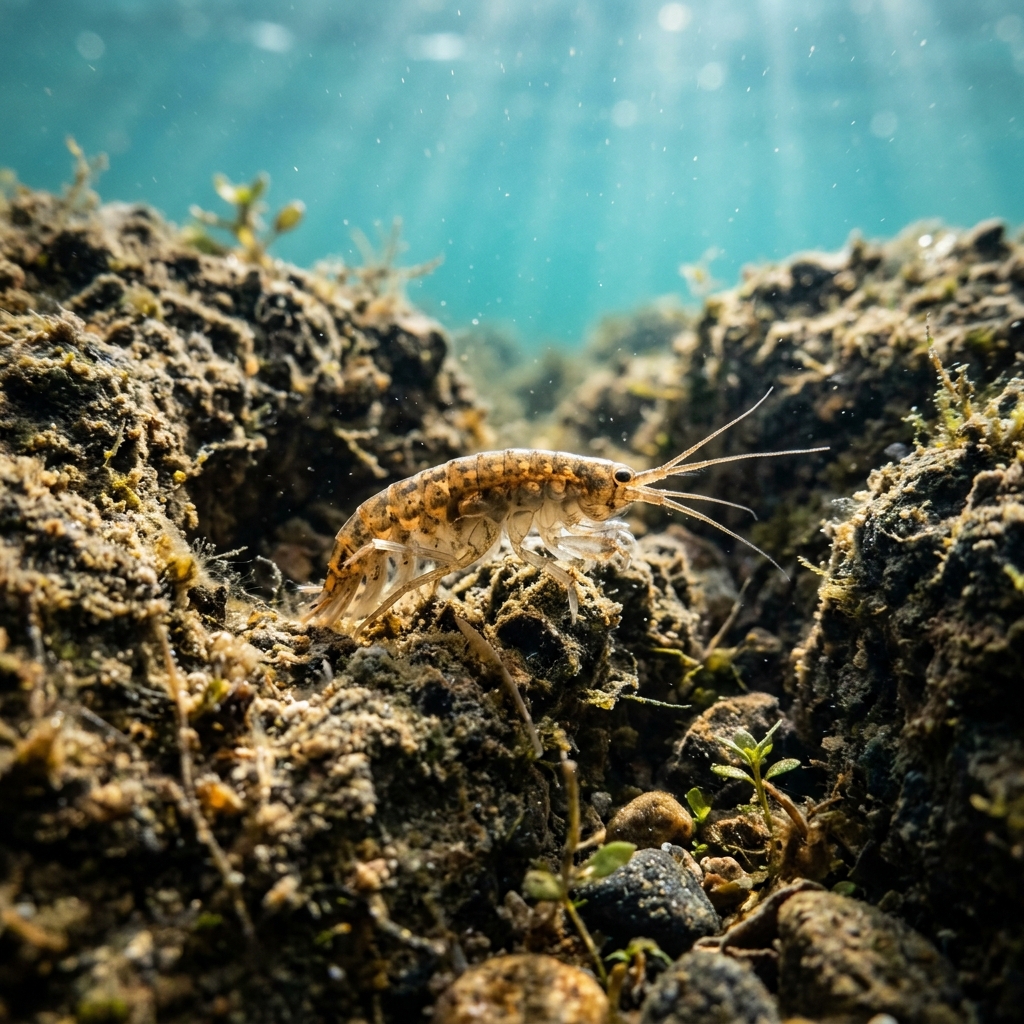
A small, pale pinkish-white crustacean around 8 cm long with a soft, almost translucent body and one noticeably enlarged claw. Unlike hard-shelled crabs, its exoskeleton looks thin and papery, and it has a long, narrow abdomen it uses to back into burrows. Divers almost never see the whole animal at once, usually just the front claws or a puff of sediment at a burrow mouth in sand or mud.
Ghost shrimp spend almost all their time inside burrows dug into sand or mud, so what divers actually see is usually a claw or antenna at the entrance, or clouds of disturbed sediment as one works underground. They are shy and retreat instantly at any disturbance, which is part of why sightings are logged as rare even at sites where they are known to live. Best found by slowing down over soft-bottom areas and watching burrow openings rather than swimming past looking for the animal itself.
Ghost shrimp are prolific burrowers and their tunnel networks aerate and turn over huge volumes of seafloor sediment, functionally reshaping the mudflats and bays they live in.
Sightings show no clear seasonal pattern, and with a comfortable range of roughly 9 to 19C it can turn up on any dive through the year in its Pacific coast range. Treat it as a year-round possibility rather than something tied to a particular month.
This is a sand and mud flat specialist, most reliably logged in British Columbia, Canada, with additional sightings across the Pacific Northwest and California in the United States. Sites tend to be soft-bottom areas rather than reef or rock, so look at muddy bays and estuarine dive sites in these regions rather than classic coral or kelp terrain.
Mapping where Ghost Shrimp is logged…
British Columbia, Canada is the strongest area for sightings, with further records across the Pacific Northwest and California in the United States. Look for soft sand or mud flat dive sites rather than reef or rocky terrain.
There is no strong seasonal pattern in the sightings, and the species tolerates a wide temperature range from around 9 to 19C, so it can be found year-round wherever it occurs.
Look for a small, pale, almost translucent crustacean around 8 cm long with one enlarged claw, usually only partly visible at the mouth of a burrow in sand or mud. The soft, thin-shelled body sets it apart from hard-shelled crabs on the same seafloor.
Adults reach around 8 cm in length, making them small enough to miss entirely if you are not looking closely at burrow openings in sand or mud.
No, ghost shrimp pose no danger to divers. They are shy burrowers that retreat into their tunnels at the first sign of disturbance.
They spend nearly their whole lives underground, digging and maintaining extensive burrow systems in sand and mud that turn over large amounts of sediment and reshape the seafloor around them.
Site and sighting data is aggregated from diver logs, iNaturalist and GBIF. For taxonomy and conservation status:
Rockpool Prawn
2,179 sites