Anampses geographicus
A rare find on reefs in Western Australia, this patterned wrasse turns up year-round in waters of 24 to 29 C.
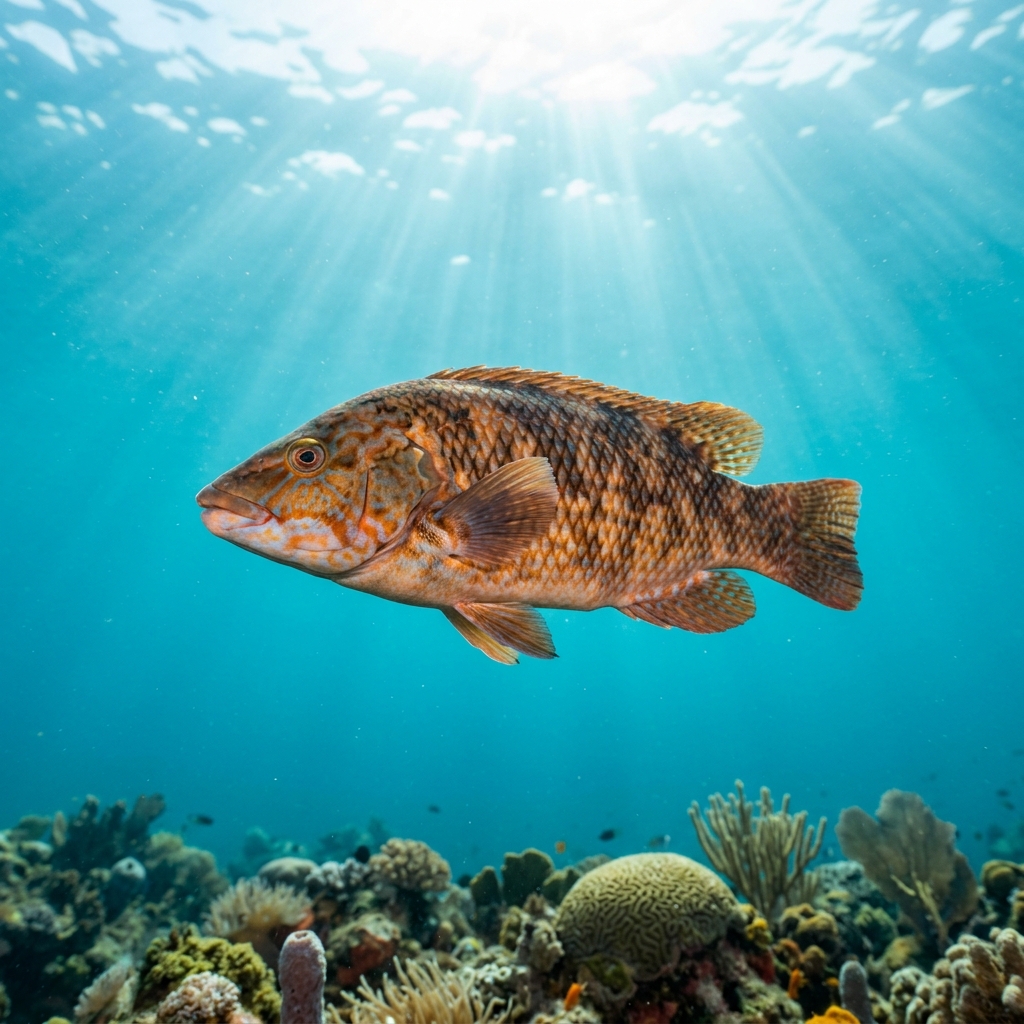
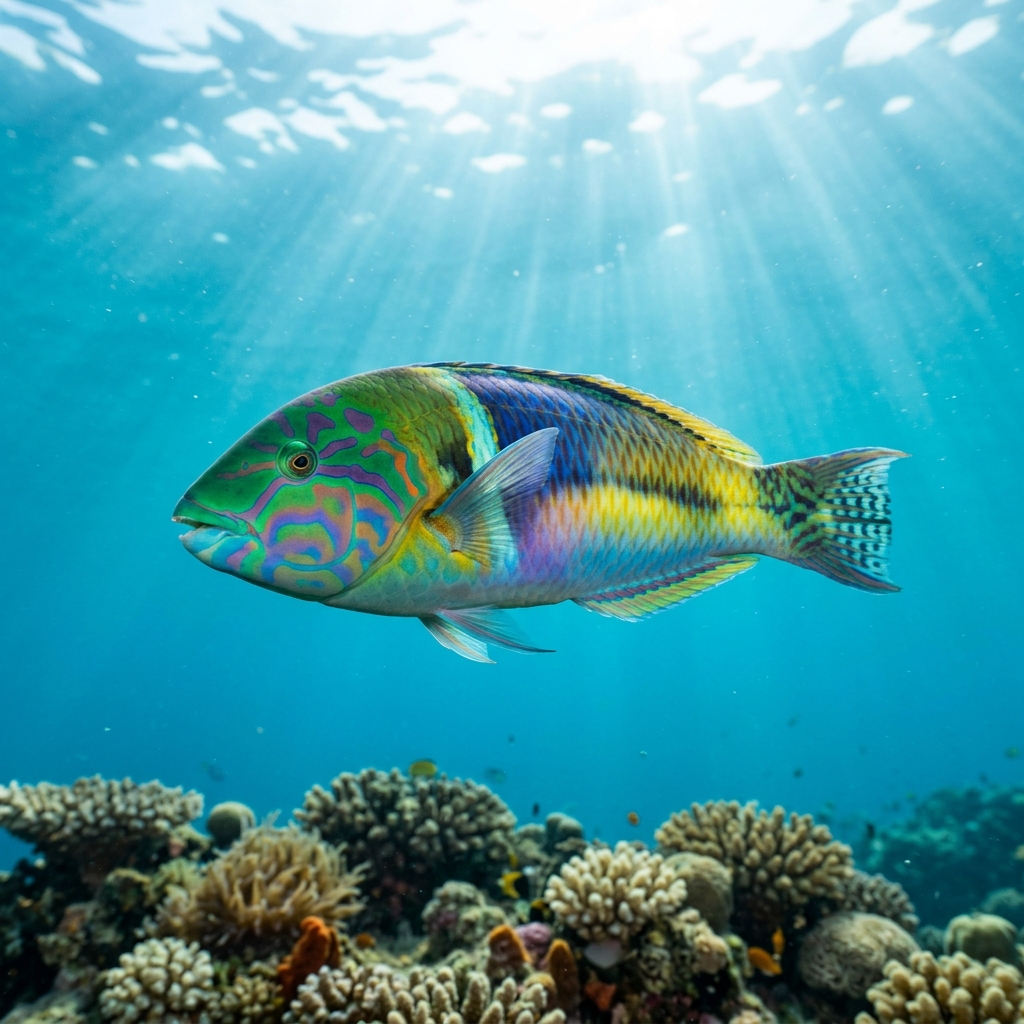
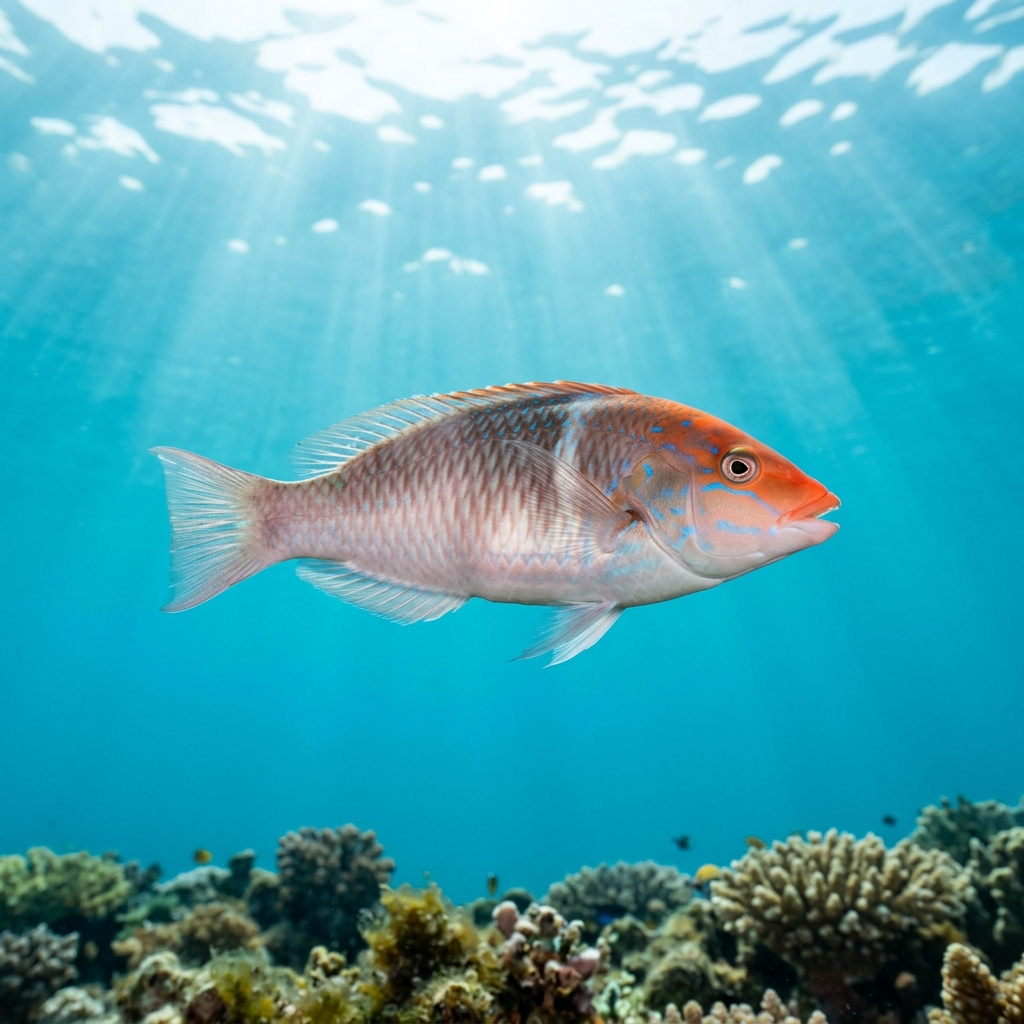
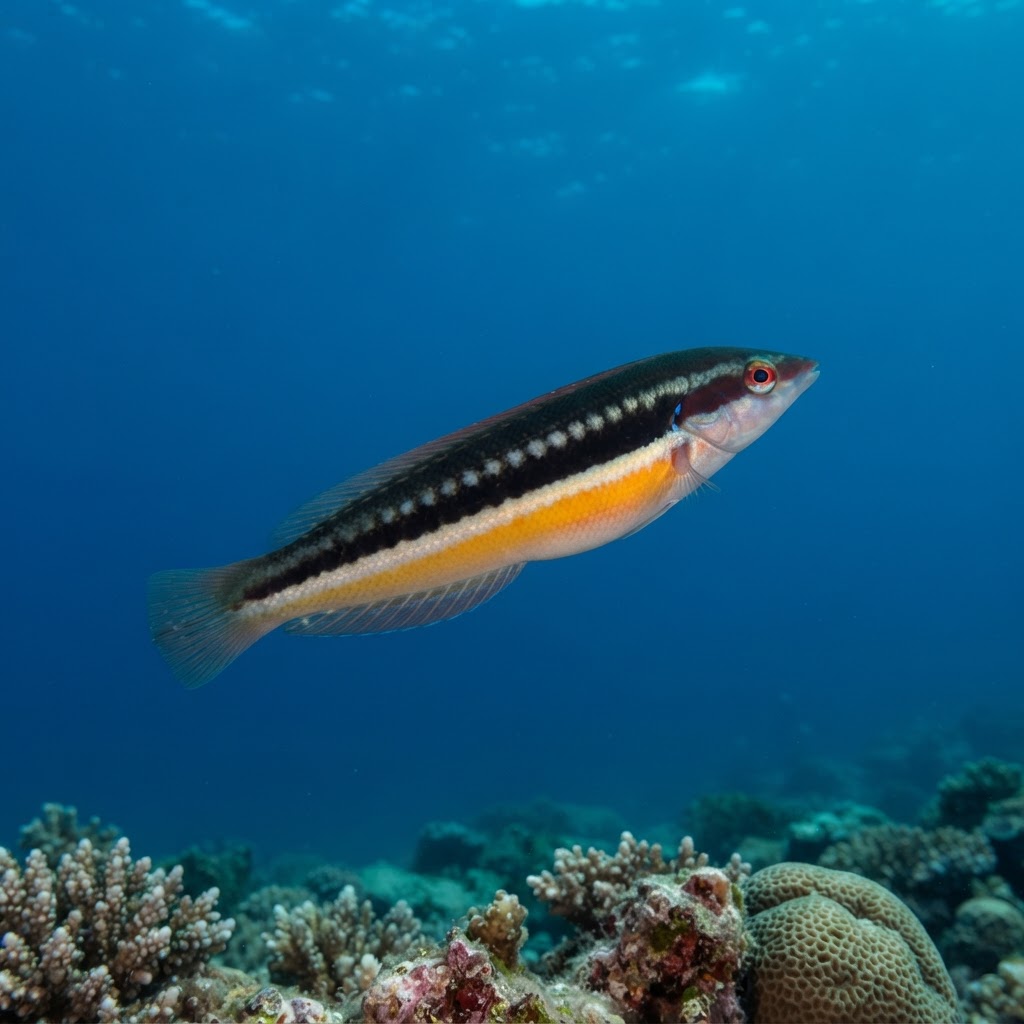
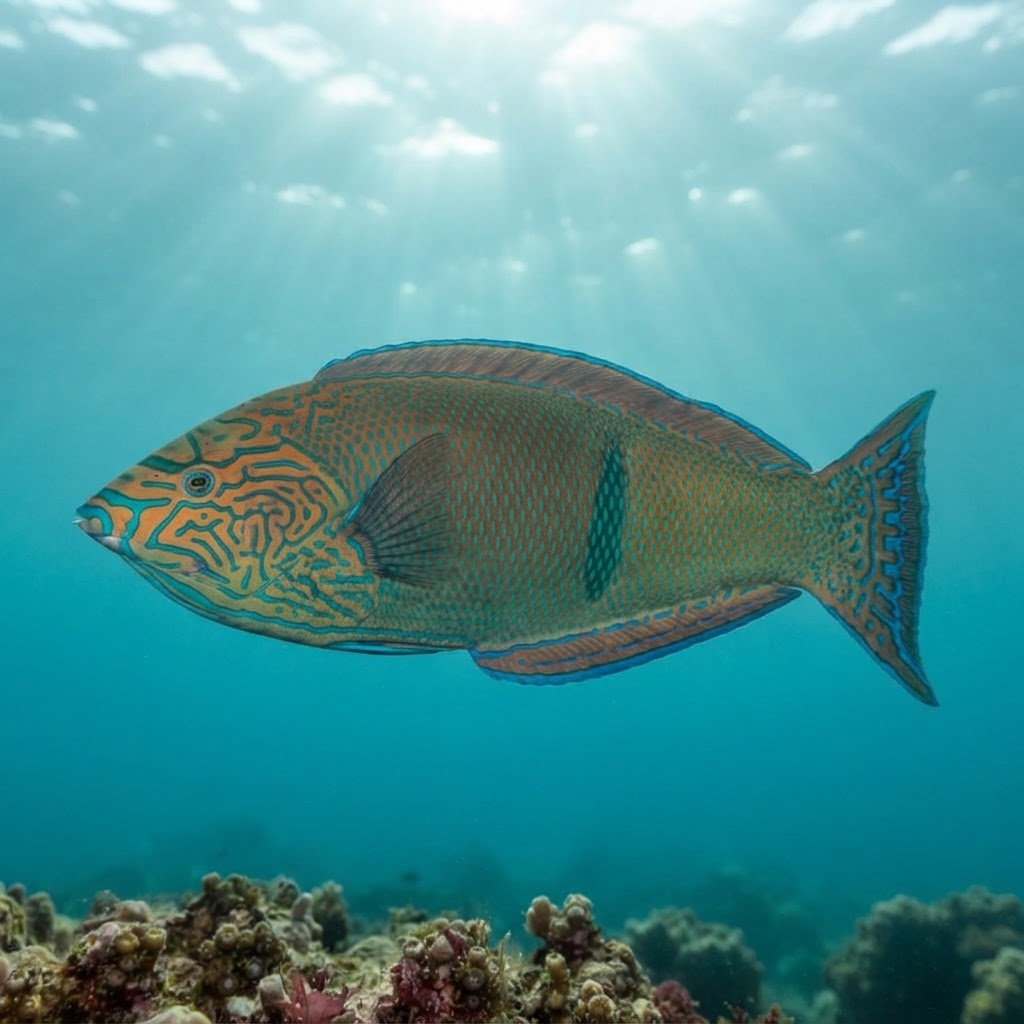
A stocky, torpedo-shaped wrasse to about 22 cm, covered in a fine maze-like pattern of pale lines over a brown to olive body, giving it the mottled, map-like look that earns the name. It swims with the quick, darting wing-beats of the tail typical of small wrasses rather than gliding, usually low over sand patches or rubble near reef structure. Look for the busy, irregular scribble pattern rather than any single bold stripe or blotch, since that fine detail is the main giveaway at a glance.
Divers most often spot it working sand patches and rubble zones close to reef edges, picking at the bottom rather than schooling or patrolling open water. It tends to stay low and can be flighty, darting for cover among rocks or coral heads when a diver gets too close, which is part of why logs mark it as rare at most sites. Patient, slow approaches over sandy fringe areas give the best chance of a proper look before it bolts.
Like many wrasses, it is a daytime forager that beds down in sand or under rubble at night, so dawn and dusk dives over its sandy haunts are a reasonable bet for activity.
No clear seasonal pattern shows up in the sighting data, and its comfortable range of 24.6 to 29.3 C spans typical reef temperatures year-round, so it can turn up on any dive regardless of month.
Most consistently logged in Western Australia, which accounts for the large majority of sightings, with smaller numbers of dive reports from Luzon in the Philippines and Sulawesi in Indonesia. It is best treated as a Western Australian specialty on Fin's data, with Southeast Asian sightings a bonus rather than a given.
Mapping where Geographic Wrasse is logged…
Western Australia is by far the strongest region for sightings, with additional but sparser reports from Luzon in the Philippines and Sulawesi in Indonesia.
There is no strong seasonal signal in the sighting data. It sits comfortably in water from about 24.6 to 29.3 C, so it is present on reefs across the year rather than tied to a particular season.
Look for a stocky wrasse around 22 cm with a fine, maze-like pattern of pale lines across a brown body, usually seen darting low over sand and rubble near reef structure rather than swimming in open water.
They typically reach around 22 cm in length, a modest size that fits the smaller end of the wrasse family rather than the large reef-dominating species.
Yes, most dive sites where it has been logged rate it as a rare sighting, with only a couple of sites reporting it as common, so spotting one is a nice bonus rather than a guarantee.
Site and sighting data is aggregated from diver logs, iNaturalist and GBIF. For taxonomy and conservation status:
Bird Wrasses
3,632 sites