Genicanthus lamarck
Spot Blackstriped Angelfish in the Philippines and Indonesia. Most logged in the Visayas and Maluku, in warm 27-29 °C water. Tips on ID and timing.
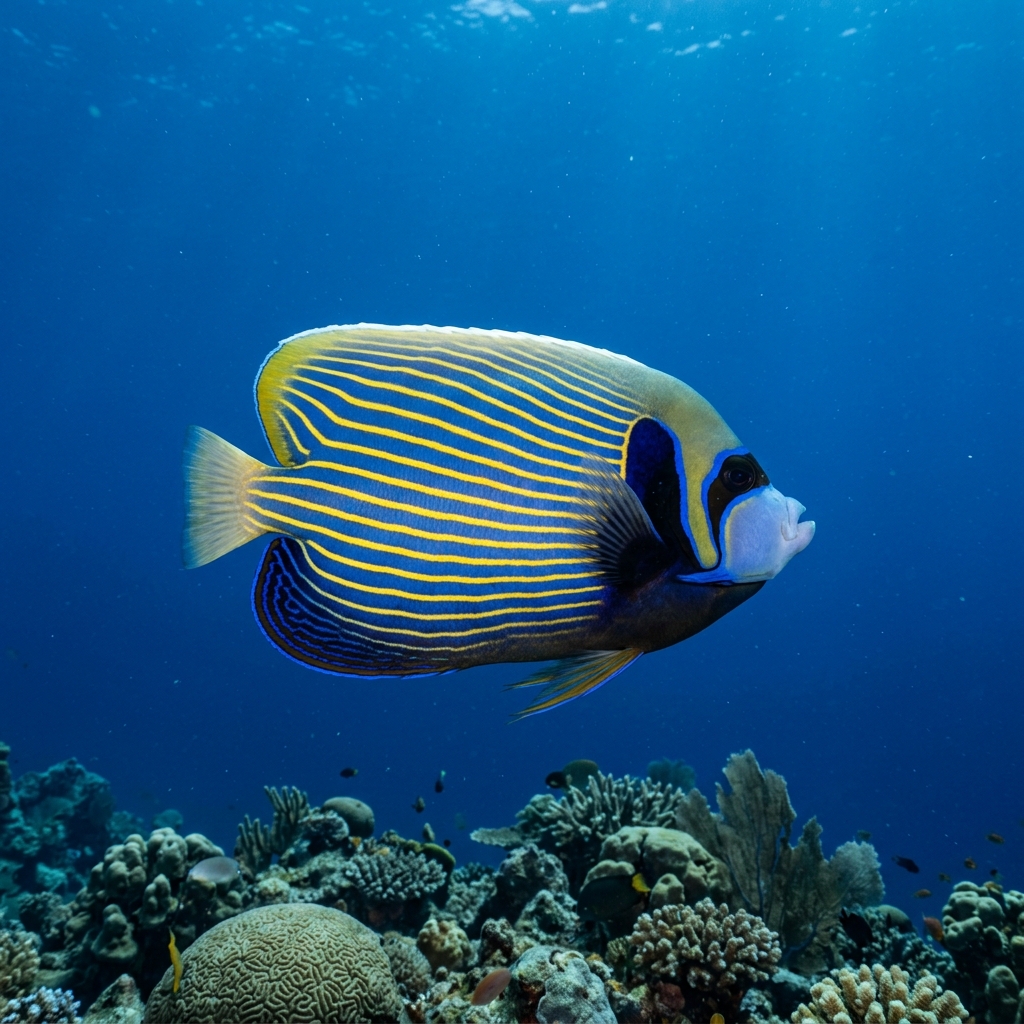
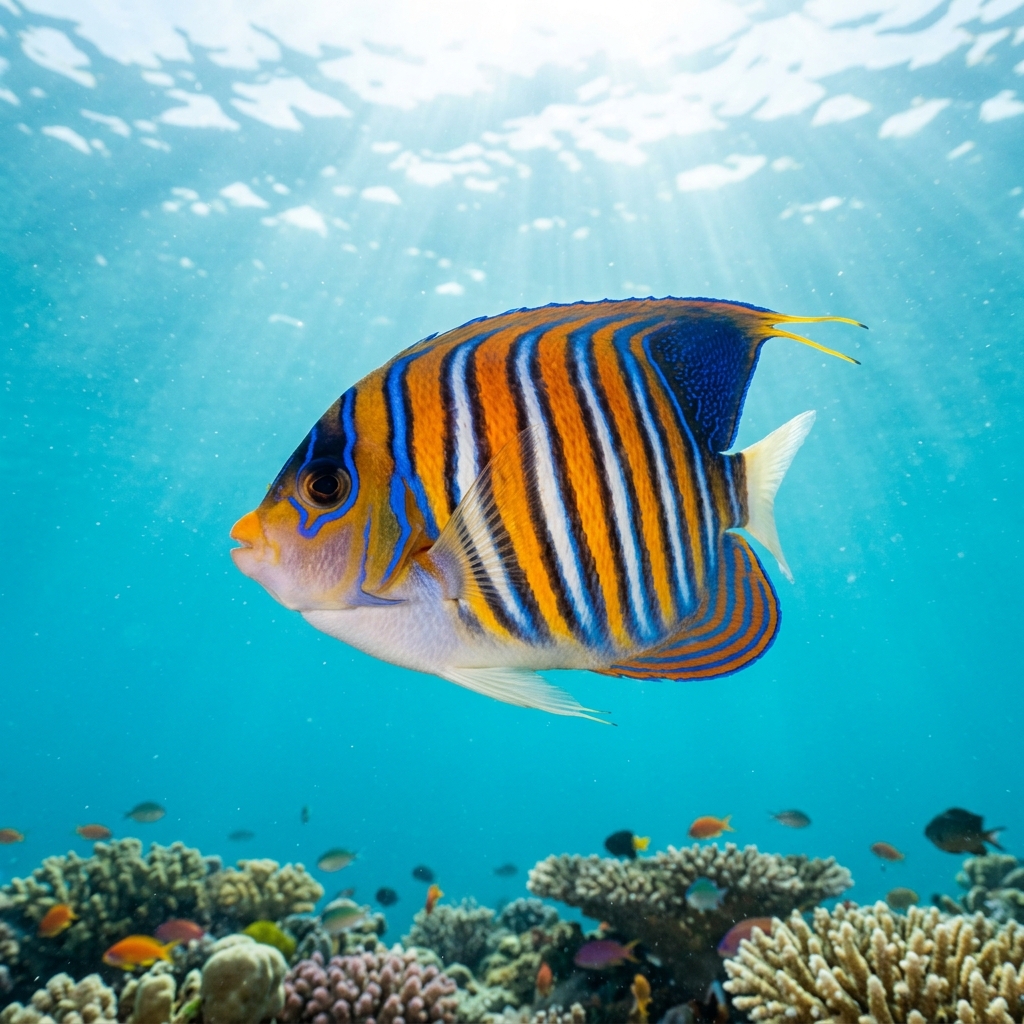
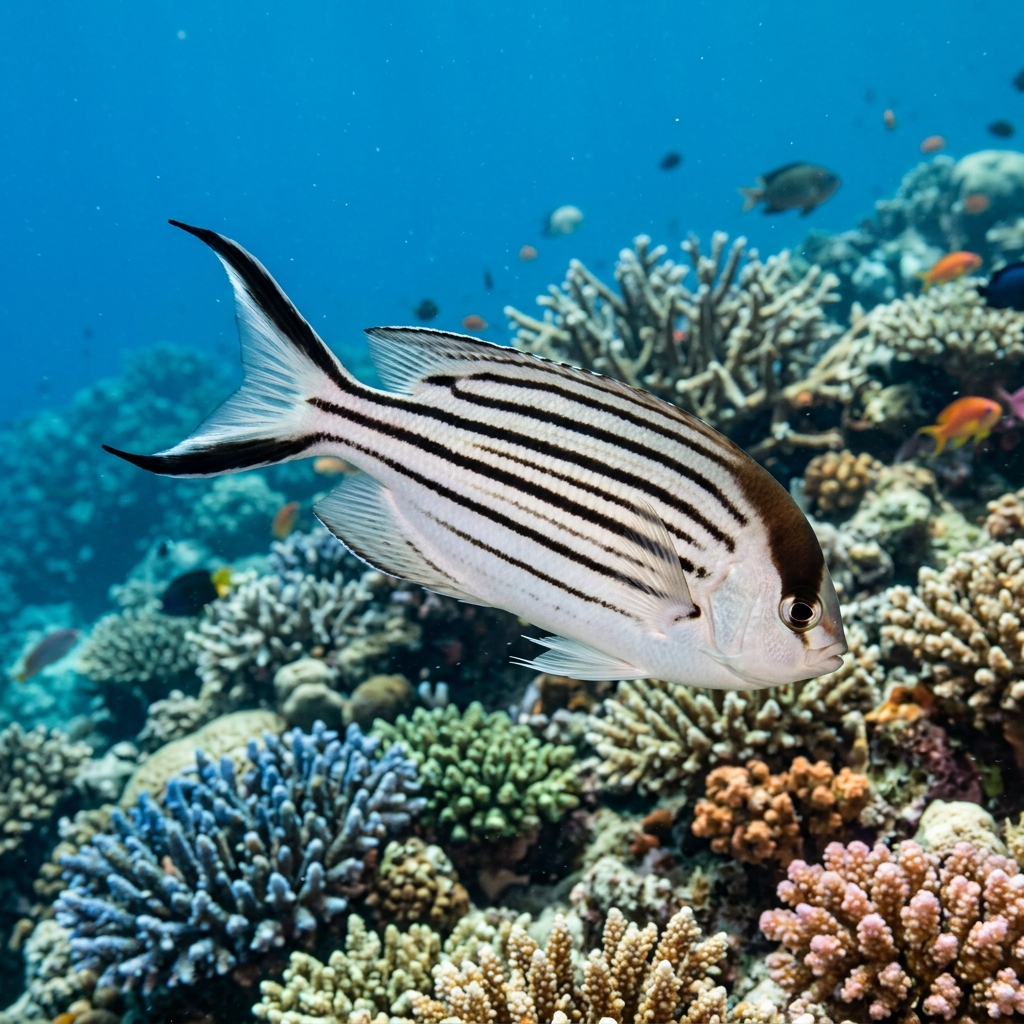
Bold horizontal black stripes running along a pale whitish-yellow body make this one of the more distinctive angelfish at mid-water depths. It has a slender, laterally compressed body typical of the Genicanthus genus, which generally signals a planktivore (plankton feeder) rather than a sponge-grazer, and that slender profile helps distinguish it from chunkier angelfishes. Sexes are visually different: males carry additional colouration and marking detail while females tend to show the clean striped pattern most prominently. Look for the neat, evenly spaced dark stripes and the relatively elongated caudal (tail) fin lobes.
Blackstriped Angelfish tend to patrol reef walls and slopes at open-water depth ranges, often seen swimming in small groups or pairs rather than hugging the reef face the way sponge-feeding angels do. They are generally approachable but can move off quickly if a diver closes in fast, so a slow, steady approach gives the best view. Spotting them often requires looking up or across open water from the reef edge rather than scanning the coral itself.
Genicanthus angels are among the few angelfish that are sexually dichromatic and feed primarily on zooplankton in the water column rather than picking at sponges and coral. This makes the Blackstriped Angelfish more likely to be seen mid-water than the majority of its family, which alters entirely where on a dive you should look for it.
In the Northern Hemisphere the sightings data concentrates from May through December, so that window gives the best odds. The species sits comfortably in warm water between 27 and 29 °C, which aligns with peak season conditions across the Philippine and Indonesian sites where it is most commonly logged.
The Philippines account for the large majority of logged sightings, with the strongest records spread across Central Visayas, Luzon and North Philippines, and East and North Visayas. Indonesia is the next most reliable destination, particularly Maluku and Papua, followed by Bali, Lombok and Java. Smaller but consistent records come from the Okinawa Islands in Japan and the north coast of Timor-Leste.
Mapping where Blackstriped Angelfish is logged…
The Philippines is by far the top destination, with strong records across Central Visayas, Luzon, and the East and North Visayas. Indonesia is the next best bet, especially Maluku and Papua and the Bali-Lombok area. Okinawa in Japan and Timor-Leste's north coast round out the confirmed sighting areas.
Northern Hemisphere sighting data points to May through December as the most productive window. This period aligns with warmer water conditions in the Philippines and Indonesia, where the species is most commonly logged.
Look for a slim, laterally flattened angelfish with evenly spaced horizontal black stripes on a pale body and elongated tail-fin tips. The slender build and mid-water swimming position, away from the reef face, are reliable cues. Females show the classic striped pattern; males add extra markings and colouration.
Genicanthus angelfish are sexually dichromatic, meaning males and females are visually distinct. Females carry the neat striped pattern the species is known for, while males develop additional and more complex markings. This is unusual in the angelfish family and can cause confusion when you encounter both sexes together.
Site and sighting data is aggregated from diver logs, iNaturalist and GBIF. For taxonomy and conservation status:
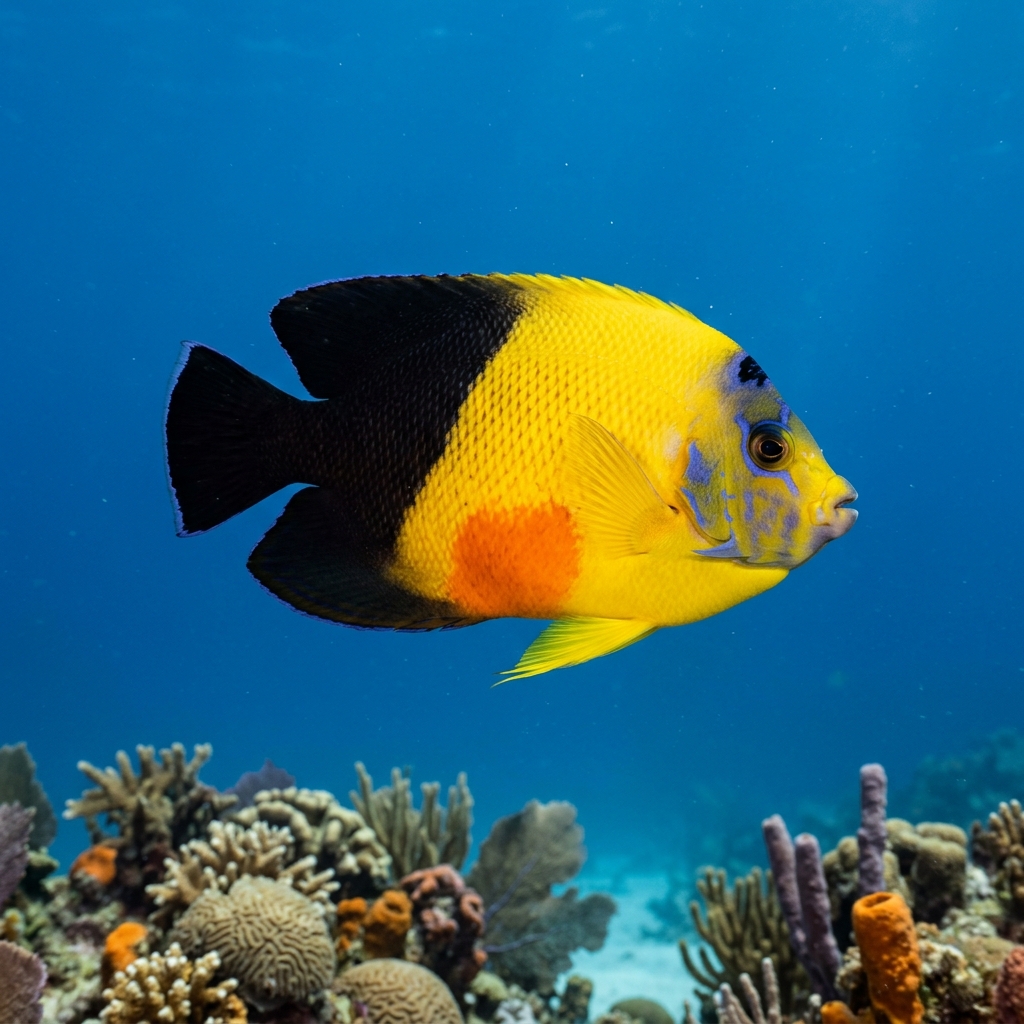
Rock Beauty
1,573 sites