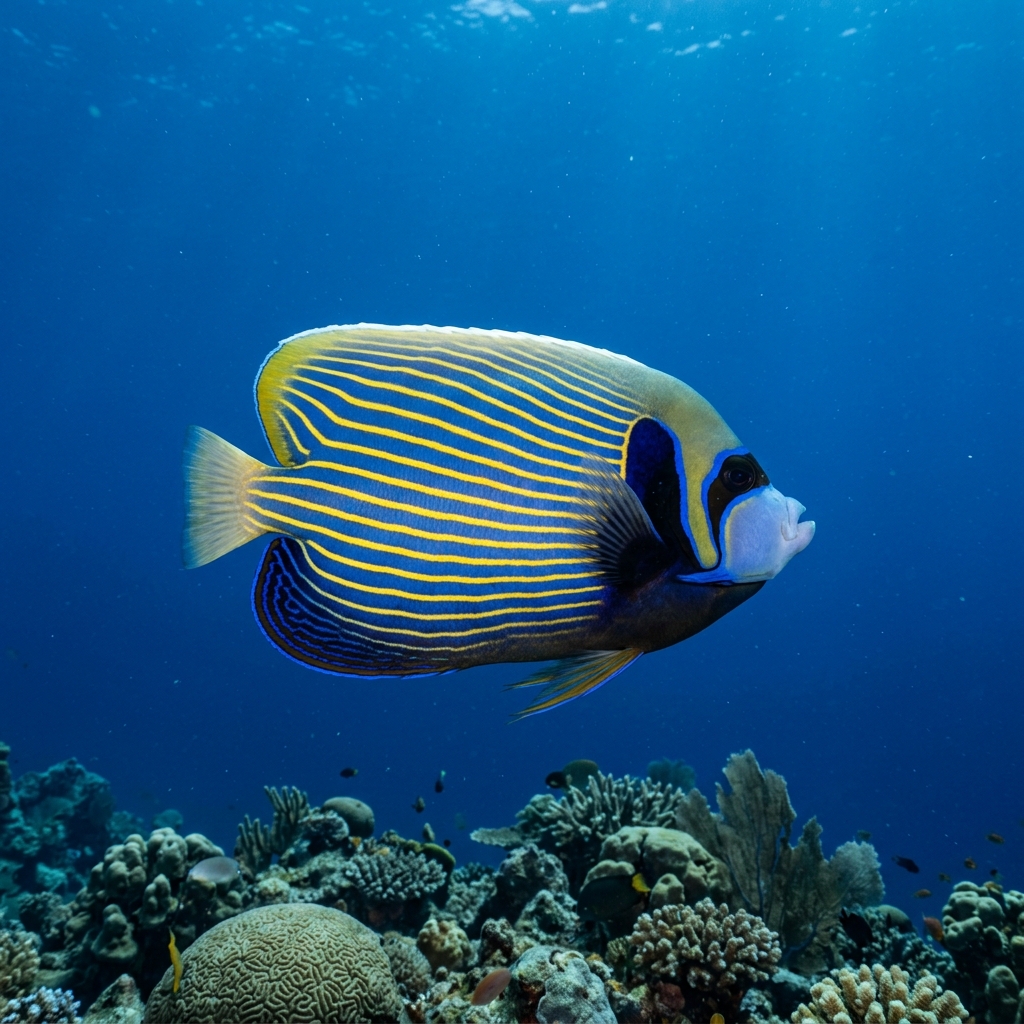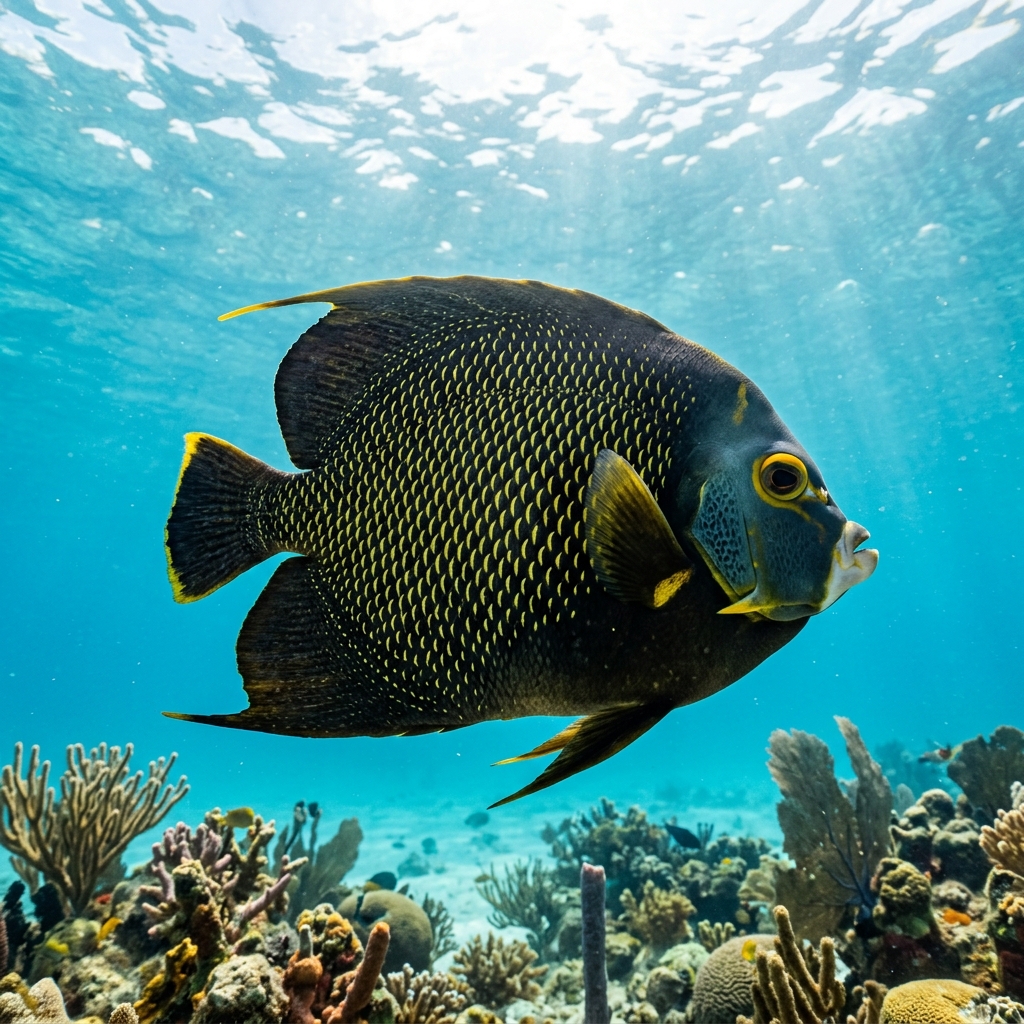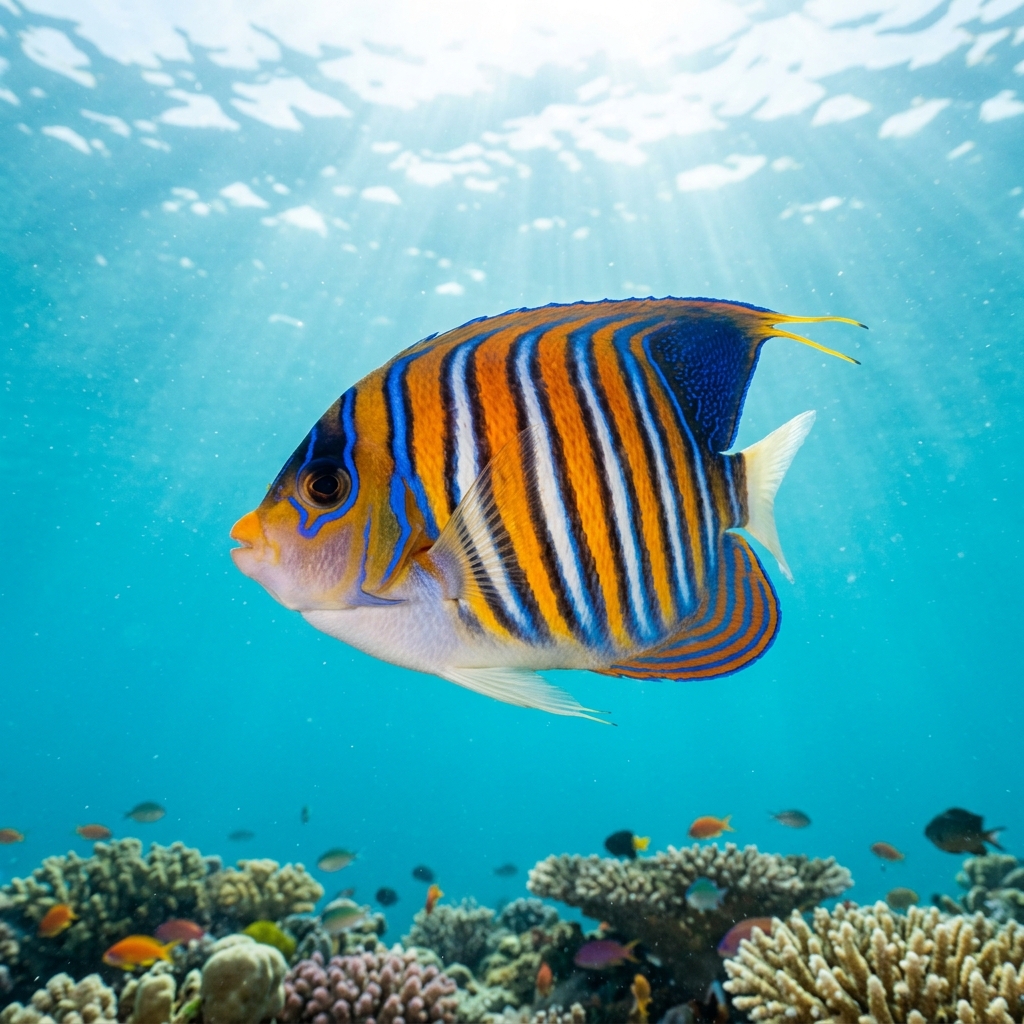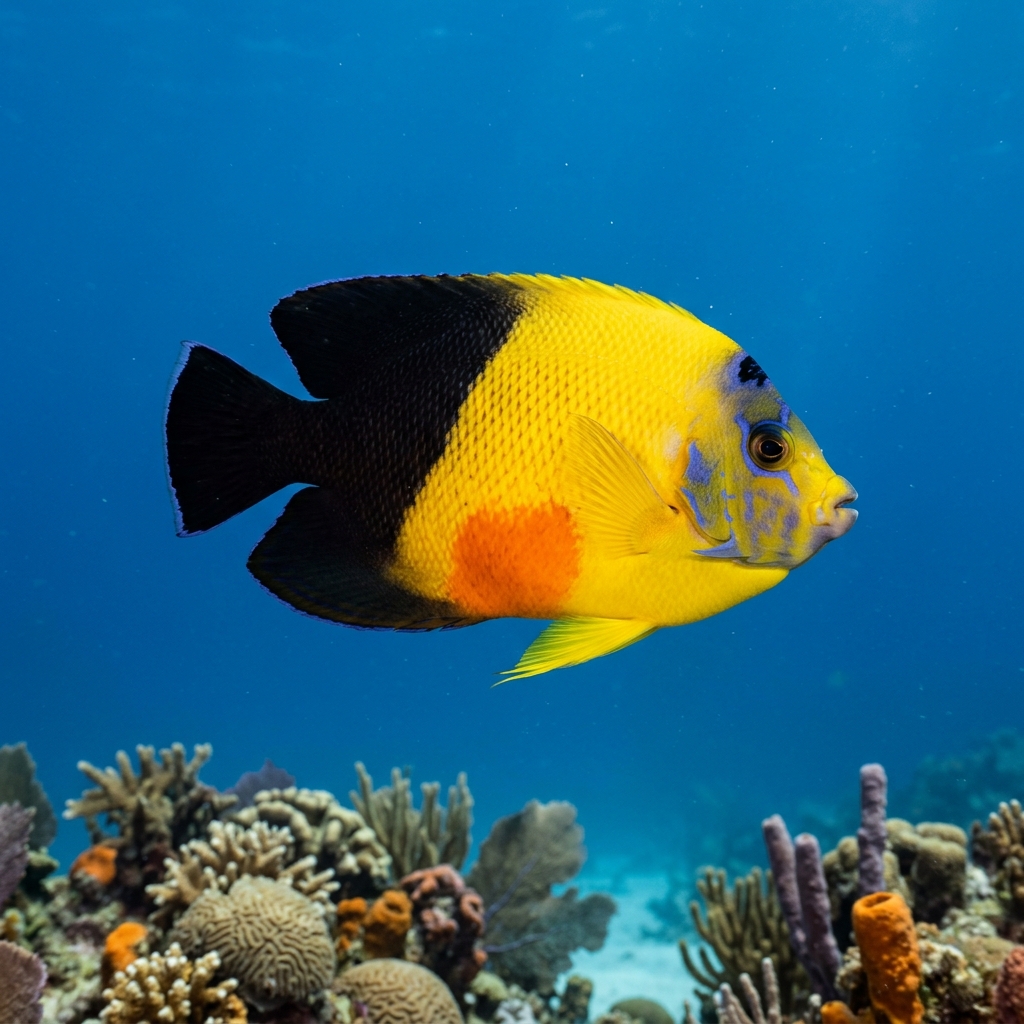
Genicanthus caudovittatus
Spot Zebra Angelfish in the Red Sea, most logged around Safaga and Sharm el Sheikh, with sightings peaking Oct, Jan in 22-28 °C waters.
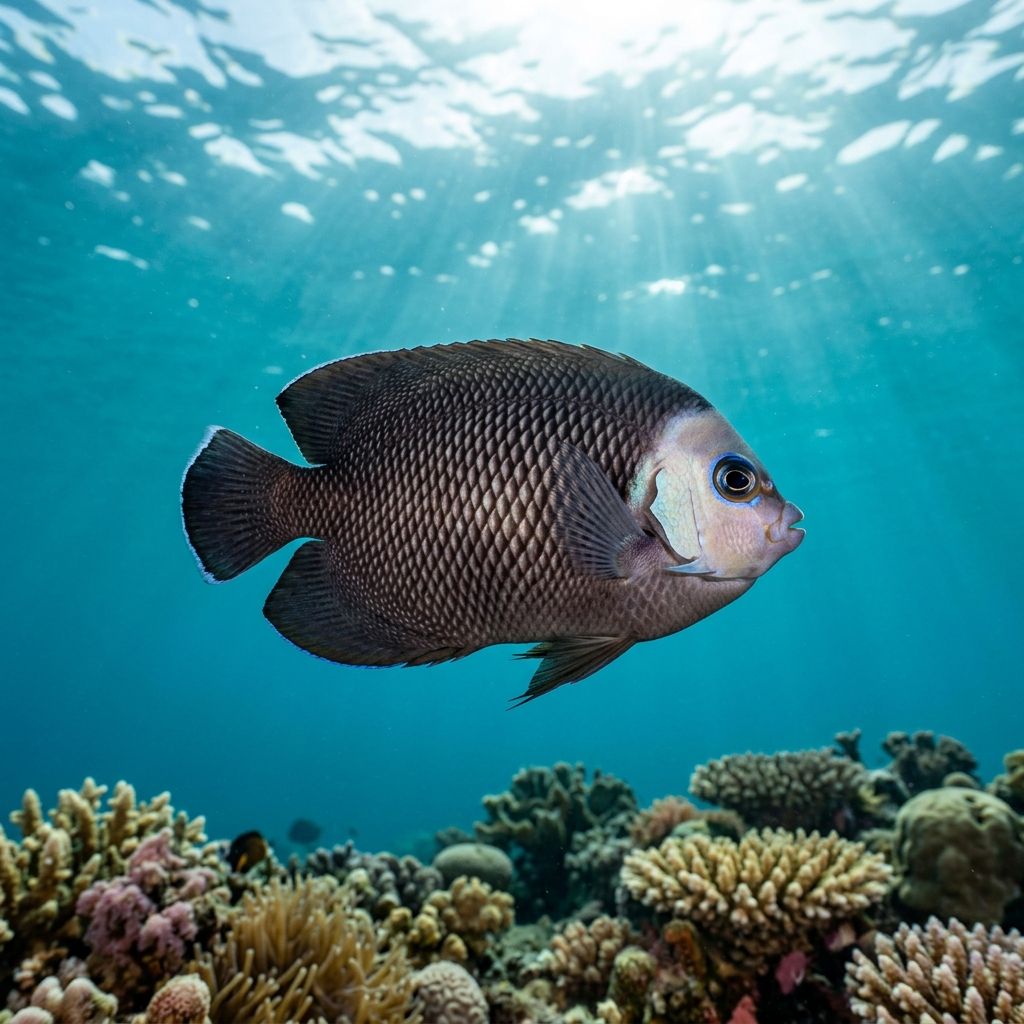
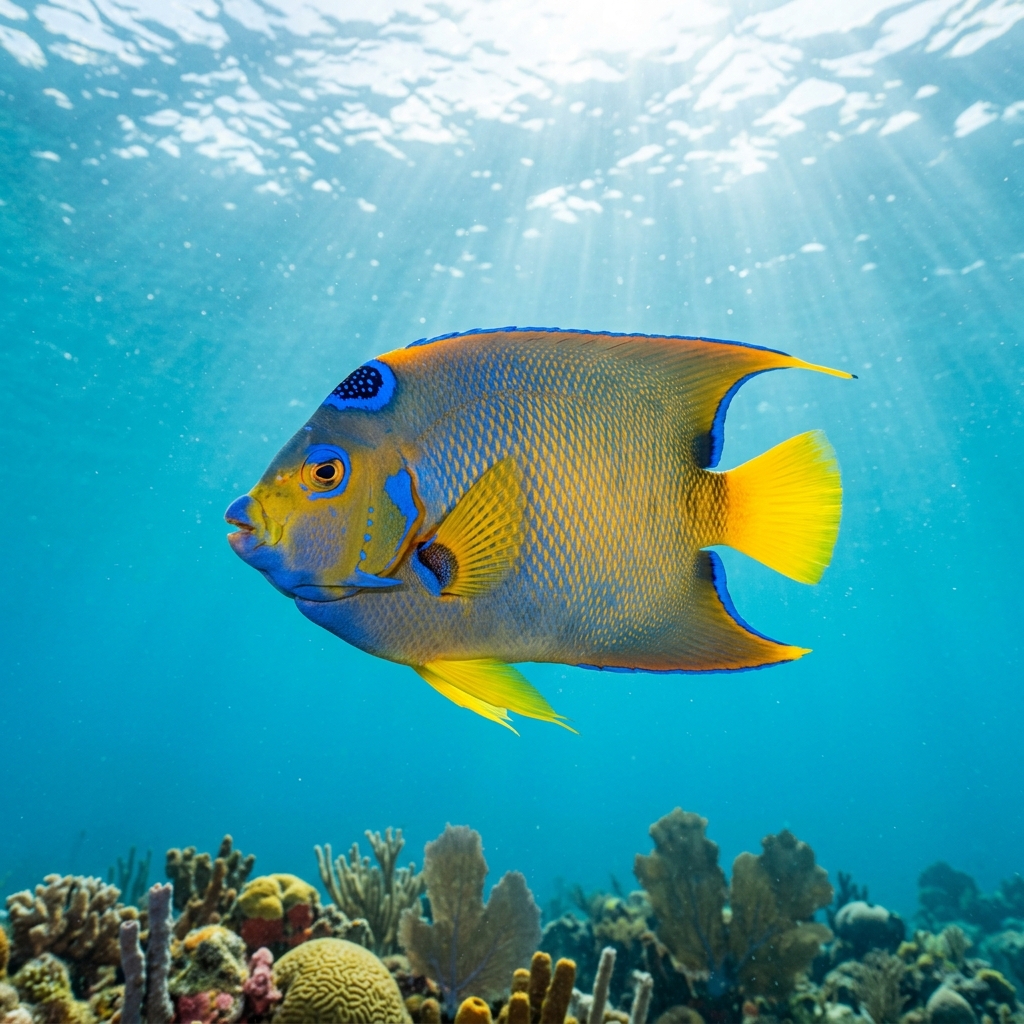
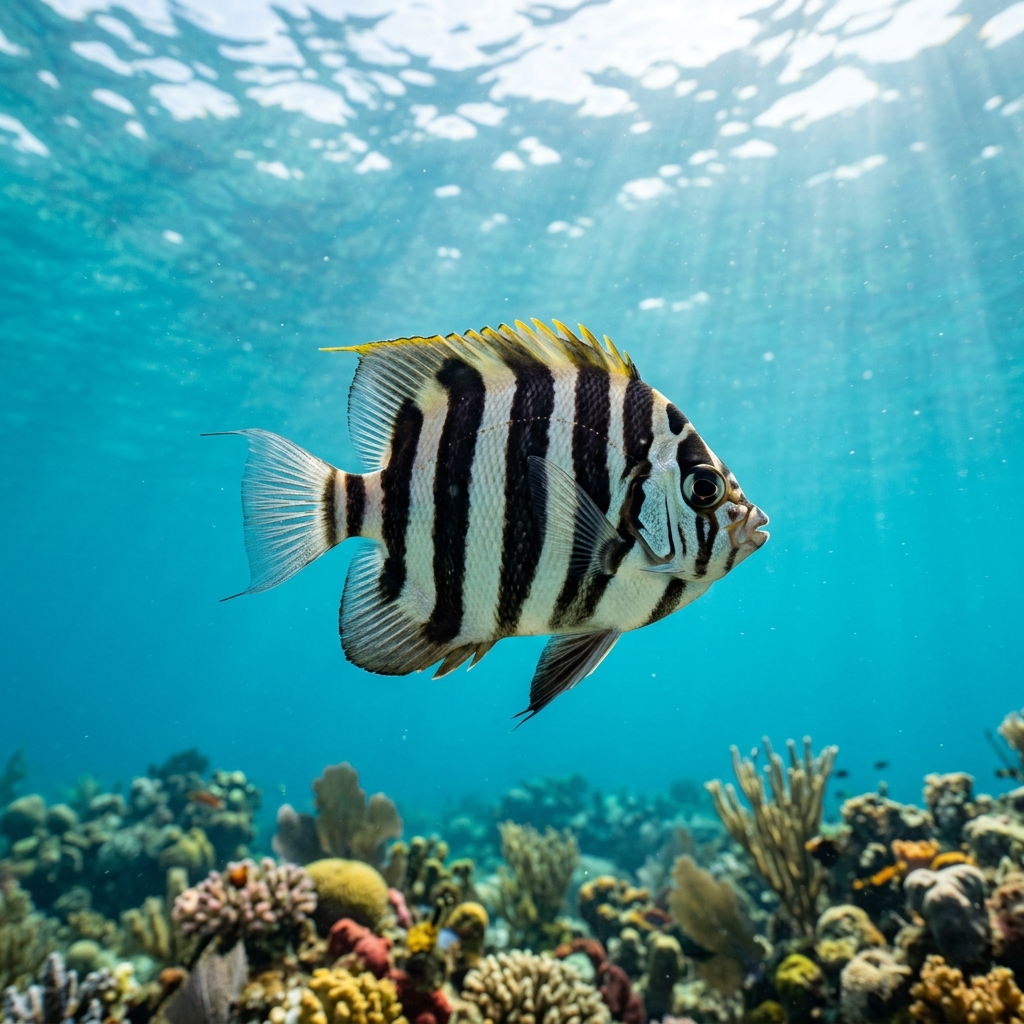
Bold black vertical stripes on a white or pale yellow body give this mid-sized angelfish its name, and the lyre-shaped (forked and elongated) tail is the clincher, no other Red Sea angelfish shares that combination. Males typically show a yellow wash on the head and upper body, while females are paler with more uniform striping. Look for it in open water just off the reef face rather than tucked into crevices.
Zebra Angelfish tend to cruise in open water close to the reef wall, often in pairs or small harems led by a single male, making them easier to spot than species that hide in coral. They are moderately shy, approach slowly and they will often hold position, but a direct lunge sends them back into deeper water. Dives in the 22-28 °C range that Egypt and Jordan offer year-round seem to suit them well.
Like many angelfish, Genicanthus caudovittatus is a protogynous hermaphrodite: females can transition into males, usually when a dominant male disappears from a social group. The male that results is noticeably different in colour from the females he once resembled.
Northern-hemisphere sightings concentrate between October and January, so a late-autumn or winter Red Sea trip gives you the best chance of an encounter.
Virtually all logged sightings come from the Red Sea and Gulf of Aqaba, making Egypt by far the top destination, Safaga, Sharm el Sheikh, and Marsa Alam together account for the great majority of records, with Hurghada adding further options. Aqaba in Jordan is a reliable secondary spot, and a handful of sightings have been logged off the Durban and North Coast area of South Africa and at the Farasan Banks in Saudi Arabia.
Mapping where Zebra Angelfish is logged…
The Red Sea is your best bet by a wide margin. Safaga, Sharm el Sheikh, and Marsa Alam in Egypt are the most frequently logged locations, with Aqaba in Jordan a solid secondary option. Isolated sightings have also been recorded off South Africa's Durban and North Coast and at Saudi Arabia's Farasan Banks.
Based on diver observations in the northern hemisphere, sightings peak between October and January. A Red Sea trip during those months, when water temperatures typically sit between 22 and 26 °C, gives you the strongest chance of an encounter.
Look for bold black vertical stripes on a pale body combined with a lyre-shaped tail with elongated tips, no other angelfish in the Red Sea shares that exact combination. Males carry a yellow wash on the head; females are paler with more even striping. They tend to swim in open water just off the reef face rather than hiding in coral.
Yes. They are protogynous hermaphrodites, meaning females can transition into males. This typically happens when the dominant male of a social group disappears. The resulting male looks noticeably different, developing yellow colouration and longer tail filaments, compared to the females in the same group.
Site and sighting data is aggregated from diver logs, iNaturalist and GBIF. For taxonomy and conservation status:
Rock Beauty
1,573 sites