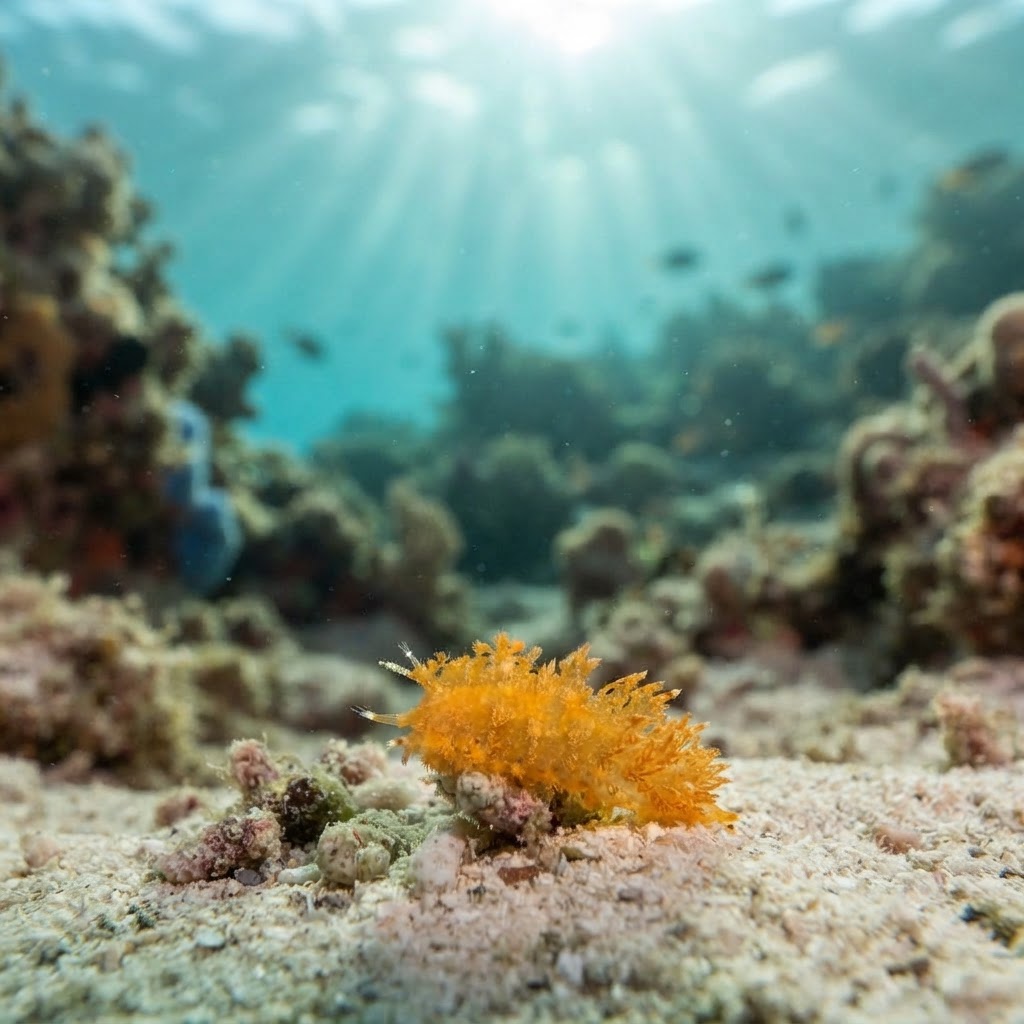
Tritoniopsis frydis
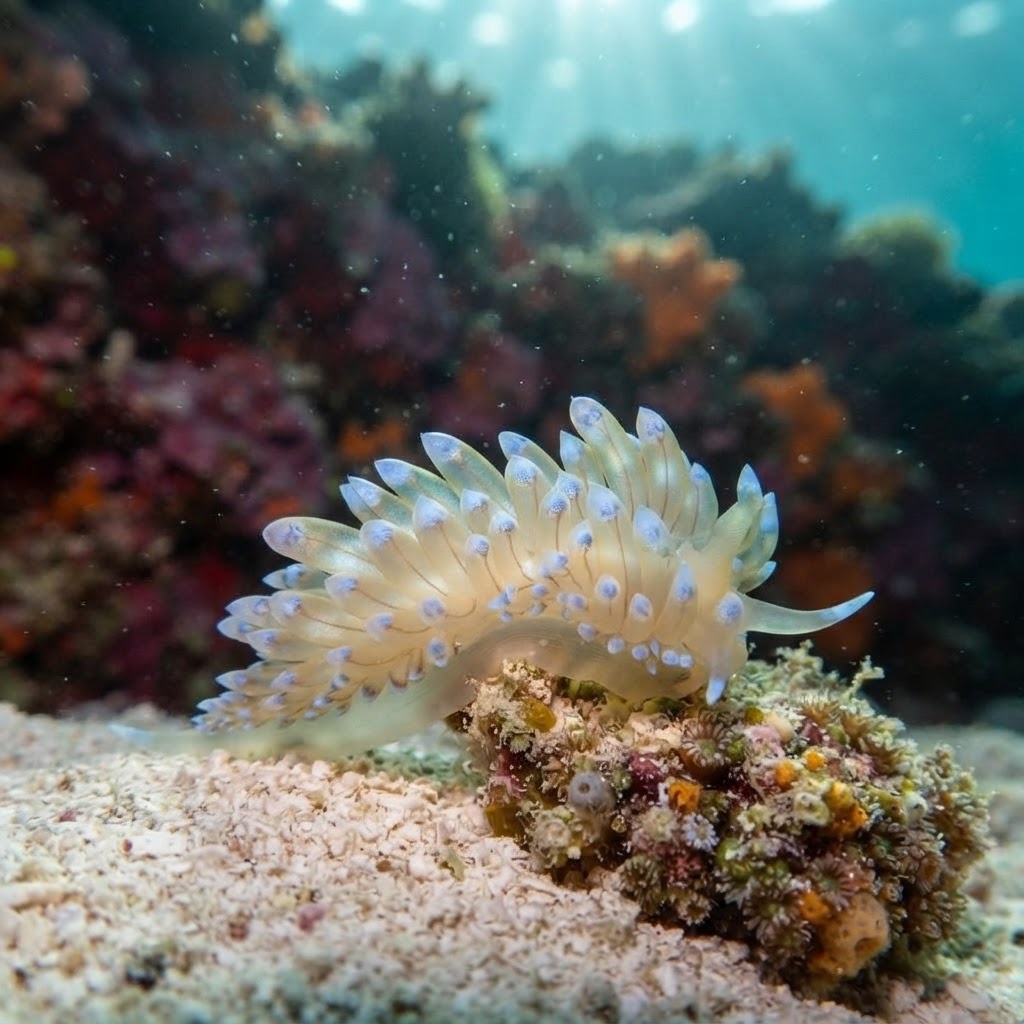
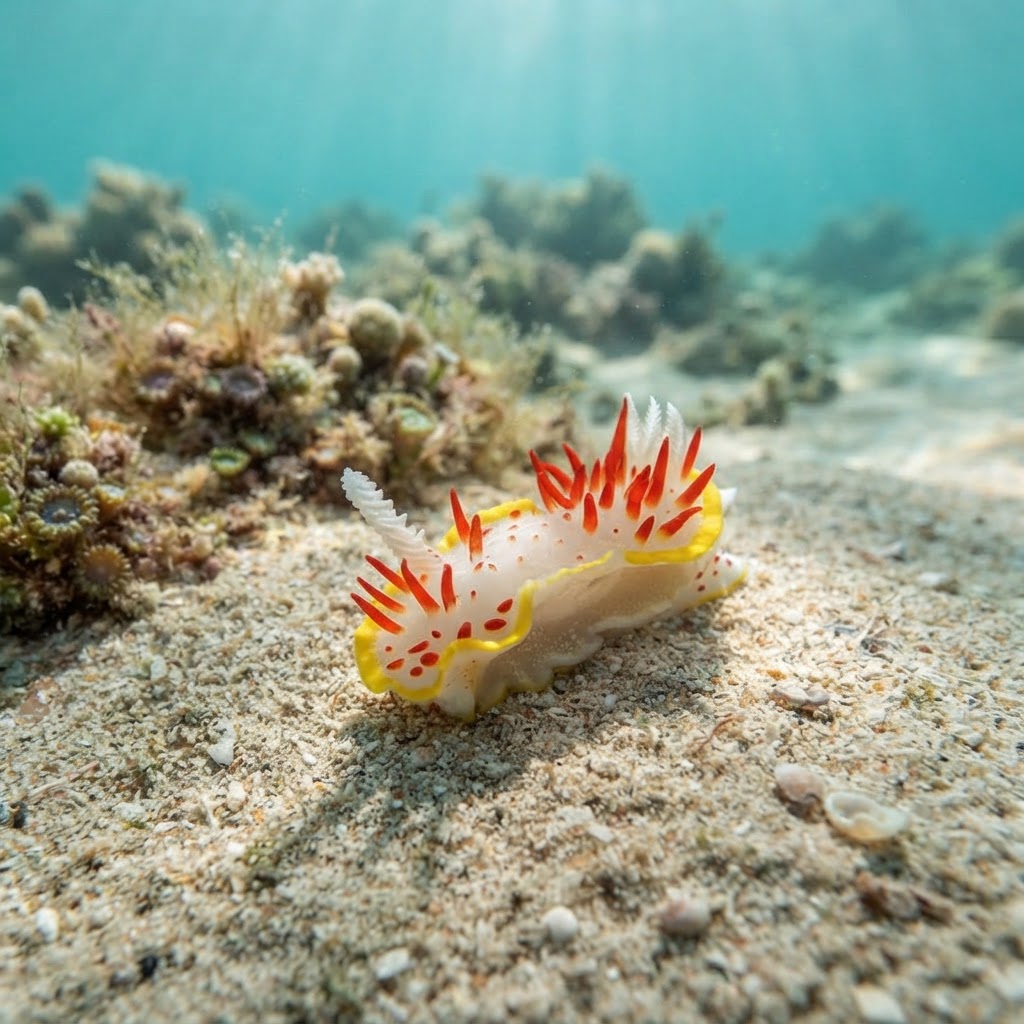
A tiny 1cm nudibranch turning up on Guadeloupe's Grande-Terre reefs and Grenada year-round in warm 25-31C water.
A tiny nudibranch, barely a centimetre long, so you're looking for a small pale or translucent body rather than bold colour. Look along the back for the branching, feathery gill tufts (the cerata) that mark it as a member of the tritoniidae family, and check soft coral or gorgonian branches where it tends to sit tucked against the stem. At this size it's easy to swim straight past, so slow down and scan the base of sea fans and soft coral colonies rather than the open reef.
Divers log this one sitting still or grazing slowly on soft coral and gorgonian branches, usually tucked in close to the stem rather than out in the open. It shows no reaction to divers beyond the usual nudibranch indifference, so a slow approach and a steady hand (or macro lens) is all it takes to get a good look. Most sightings come from divers actively searching soft coral heads rather than spotting it in open water.
Like other tritoniids, it likely feeds on the polyps of the soft corals and gorgonians it's found clinging to, which is why divers find it parked on the colony rather than roaming the reef.
No clear season shows up in the data, and with a comfortable range of roughly 25 to 31C on these reefs it's a year-round sighting rather than a seasonal one. Plan around good visibility and calm conditions for the close-focus hunting this species needs, not around a particular month.
Reef neighbours a diver could mistake it for. Use the identification notes above to tell them apart.
Most reliably logged around Grande-Terre in Guadeloupe, which accounts for the bulk of sightings, with smaller but steady populations off Grenada Island and Grand Cayman. All three are Caribbean sites, so this is currently a Caribbean speciality rather than a widespread find.
Mapping where Gastropod is logged…
Grande-Terre in Guadeloupe has the strongest run of sightings, with Grenada Island and Grand Cayman also producing steady finds. It's currently a Caribbean speciality rather than a species you'll find worldwide.
There's no detected season, so it's a year-round find on Caribbean reefs sitting in the 25 to 31C range. Any month with decent visibility for macro work is fair game.
Look for a body barely a centimetre long with feathery, branching gill tufts along the back, usually tucked against soft coral or gorgonian branches. Its small size and pale colouring mean it's found by close scanning rather than by standing out.
Around 1cm, making it one of the smaller nudibranchs divers log on Caribbean reefs. You'll need a slow, close search of soft coral colonies to spot one.
It's most often found on soft coral and gorgonian branches, and like related tritoniid nudibranchs it almost certainly feeds on the polyps of those colonies. That's why divers find it parked on the coral rather than cruising open reef.
Site and sighting data is aggregated from diver logs, iNaturalist and GBIF. For taxonomy and conservation status:
Blue Dragon
3,163 sites