Heteroconger longissimus
Swaying colonies on sandy slopes in Tenerife and the Bay Islands, best spotted in 21-28°C water year-round.
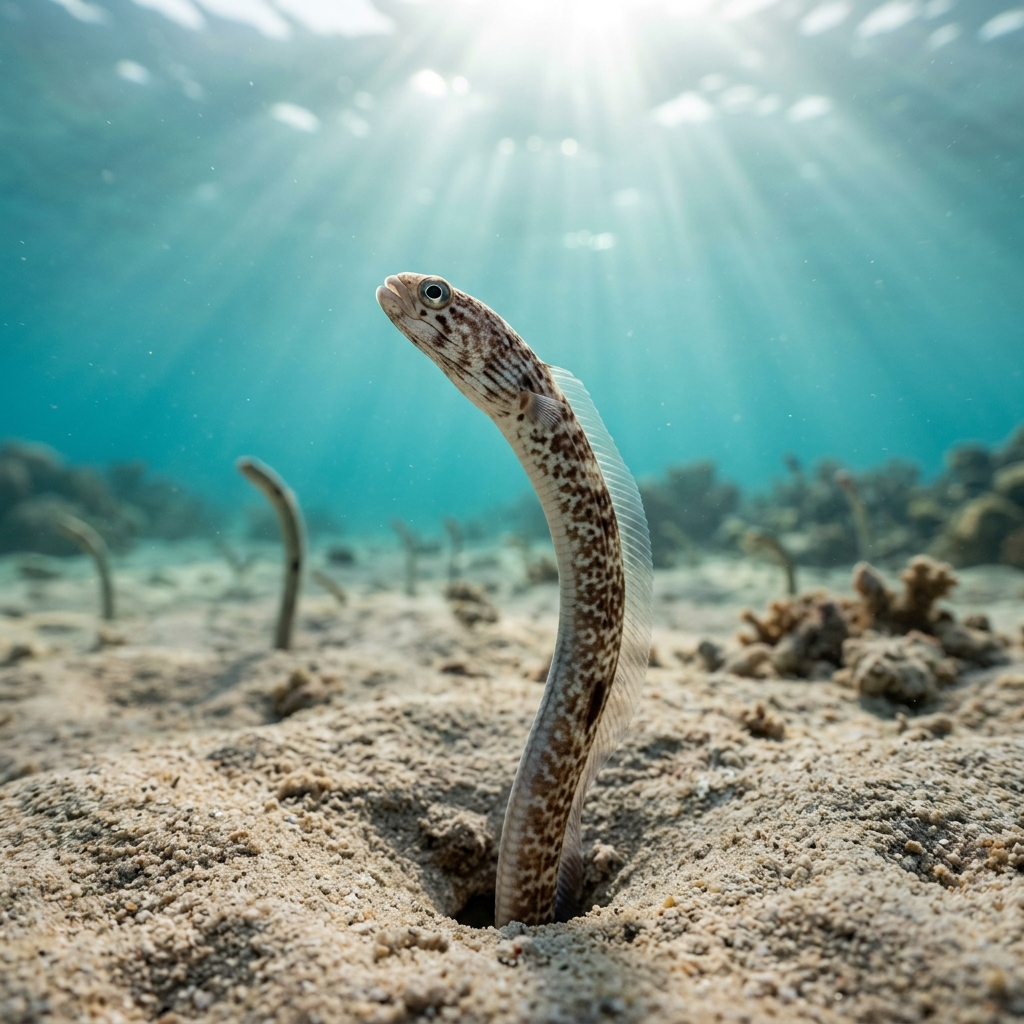
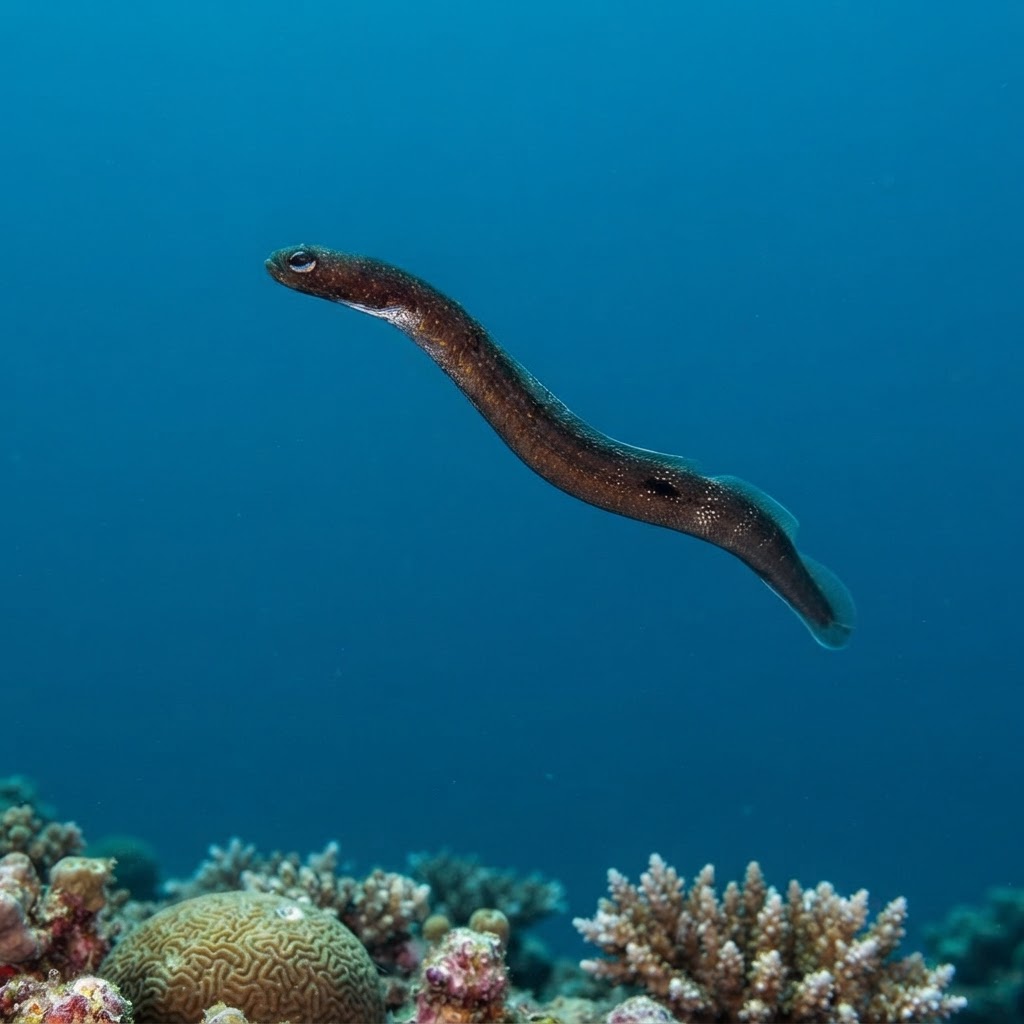
Slender, grey-brown body with fine dark speckling, reaching about 35 cm but almost always seen with only the front third above the sand. Looks like a thin garden snake swaying in the current, tail buried permanently in a burrow. Colonies of dozens can dot a sandy slope, each eel keeping a fixed distance from its neighbours. Approach slowly and they retract into the sand; stop moving and they re-emerge within a minute or two.
Found colonially on open sand patches away from the reef itself, each eel anchored tail-down in its own burrow and swaying with the current to pick plankton from the water. They are shy around divers, sinking out of sight the moment you get close, so the best views come from staying still or approaching low and slow along the sand rather than swimming straight at a colony. Most active during daylight when plankton drift is highest.
An entire colony can vanish into the sand within seconds of a diver's approach, then reappear eel by eel from the edges inward once the perceived threat has passed, a habit that makes a slow, patient approach far more rewarding than a fast one.
No clear seasonal pattern shows up in sightings, and the 21 to 28°C range it tolerates covers these sites year-round, so any month works for a dive.
Most reliably found on sandy slopes around the Canary Islands, especially Tenerife, Lanzarote, Fuerteventura and El Hierro, plus a strong Caribbean presence in the US Virgin Islands (Saint Croix), Honduras' Bay Islands, Bonaire, Saba and the Cayman Islands. Madeira is another dependable spot for a sighting.
Mapping where Brown Garden Eel is logged…
The Canary Islands, particularly Tenerife, Lanzarote, Fuerteventura and El Hierro, are the most consistent spots, along with Madeira. In the Caribbean, look for them on sandy slopes in Saint Croix, Honduras' Bay Islands, Bonaire, Saba and the Cayman Islands.
There is no strong seasonal pattern, so they are seen year-round wherever water stays in their comfortable 21 to 28°C range, which covers most of their known sites throughout the year.
Look for a thin, speckled grey-brown body swaying above a sandy patch, with only the front section visible above a burrow. Colonies of many individuals spaced evenly apart are the giveaway, rather than a single eel out on open reef.
They reach around 35 cm in length, though divers only ever see the upper third or so since the rest stays buried in its burrow.
They retract tail-first into their sand burrows at the first sign of a threat and only re-emerge once the diver settles or moves off. Staying still and approaching slowly gives the best chance of a lasting view.
No, they pose no threat to divers and simply retreat into the sand if approached. They spend their time filter-feeding on plankton and have no interest in interacting with people.
Site and sighting data is aggregated from diver logs, iNaturalist and GBIF. For taxonomy and conservation status:
Garden Eel
2,448 sites