Bodianus eclancheri
Reddish-orange wrasse found almost exclusively around the Galápagos Islands, comfortable from 16.6 to 24°C. Here's where and when divers log it.
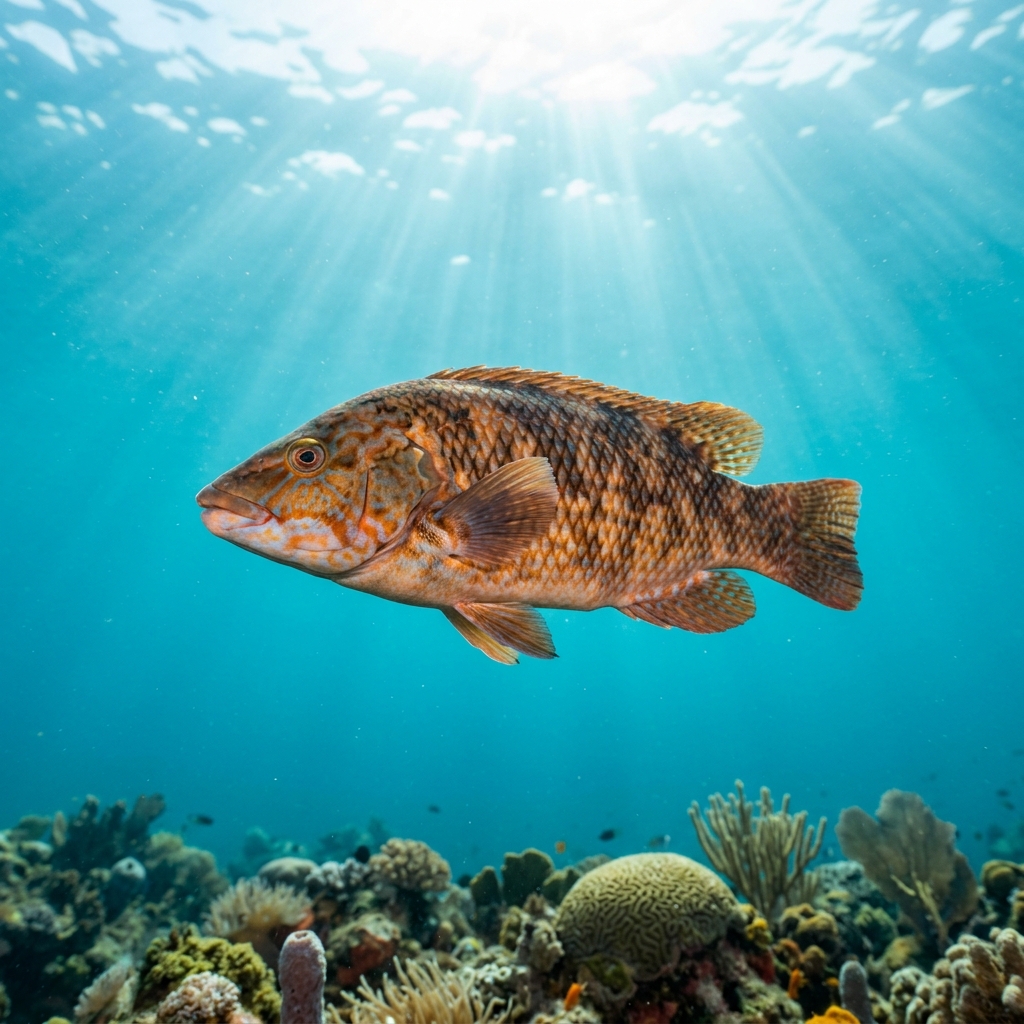
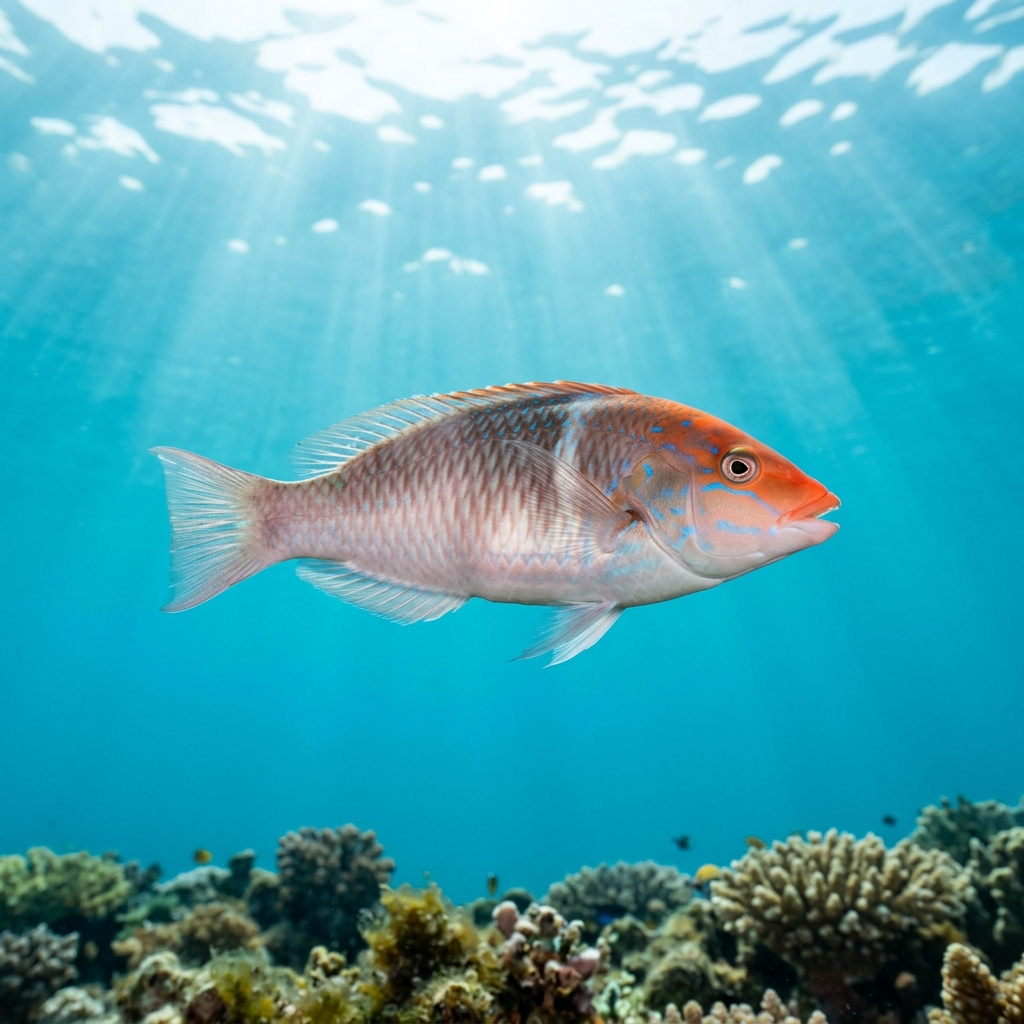
A chunky, deep-bodied wrasse reaching around 43 cm, with a blocky head and a sloping snout typical of hogfish. Colouring runs from reddish-orange to brick-red, often mottled with paler patches along the flanks, and the fins carry a similar rusty wash. It swims with the steady, unhurried wing-beat of the pectoral fins that most hogfish use rather than a full-body swimming motion, which helps separate it from faster-moving reef fish nearby.
Divers typically find it working low over rock and rubble, picking at the substrate for small invertebrates rather than schooling in open water. It tends to hold its ground near cover and isn't especially flighty around divers, though it's not a fish that comes in close either. Most sightings are on the reef floor or along rocky slopes rather than in the water column.
Like many hogfish in the genus Bodianus, individuals are thought to change sex over their lifetime, with larger, more dominant fish typically developing as males, a trait shared across much of the wrasse family.
Sightings show no detectable seasonal pattern, so treat it as a year-round resident of the Galápagos rather than a species tied to a particular month. It's been recorded across a wide temperature range, from 16.6 to 24°C, which tracks with the islands' mix of cool upwelling water and warmer surface conditions through the year.
This one is effectively a Galápagos specialty: every logged sighting in the data comes from Ecuador, concentrated in the Galápagos Islands. If you're diving the archipelago's rocky reefs and current-swept walls, it's a realistic find, though divers log it as uncommon at most sites and only common at a handful.
Mapping where Galápagos Hogfish is logged…
Sightings are essentially confined to the Galápagos Islands, Ecuador, where it turns up on rocky reef sites across the archipelago. Outside the Galápagos it isn't a species divers report seeing.
There's no strong seasonal pattern in the sighting data, so it's considered a year-round resident of the Galápagos. It's been recorded across water temperatures from 16.6 to 24°C, spanning both cooler and warmer periods in the islands.
Look for a deep-bodied, reddish-orange wrasse around 43 cm with a blocky hogfish head and paler mottling along the sides. It moves in a slow, deliberate way close to rock and rubble rather than schooling in open water.
They reach roughly 43 cm in length, making them a solidly sized wrasse rather than a small reef fish.
They belong to the genus Bodianus, a group known for sex change over the course of an individual's life, with larger dominant fish typically becoming male. This is a common pattern across wrasses generally.
Site and sighting data is aggregated from diver logs, iNaturalist and GBIF. For taxonomy and conservation status:
Bird Wrasse
3,632 sites