Lepidonectes corallicola
Perched on rocky reef in the Galápagos Islands, this tiny blenny turns up on most dives if you look close, water sits 23.5-25.6°C.
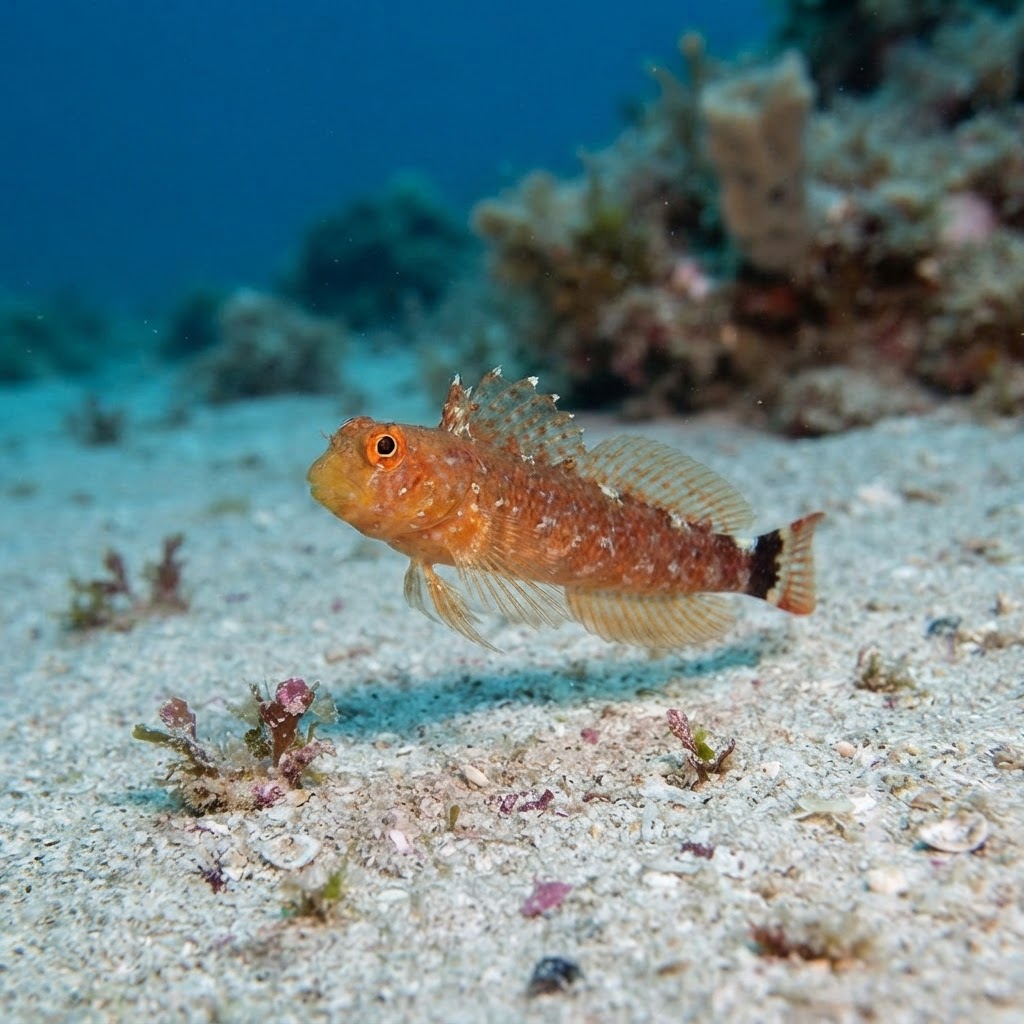
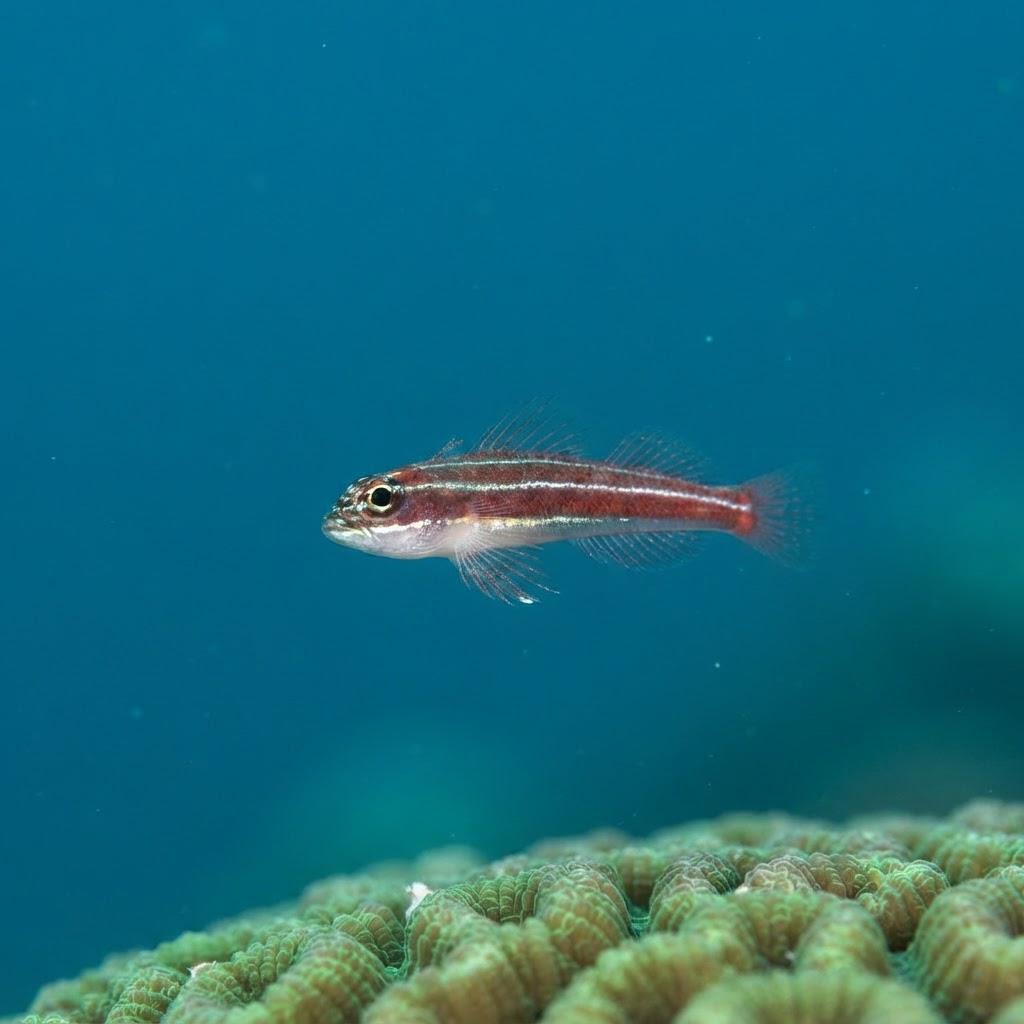
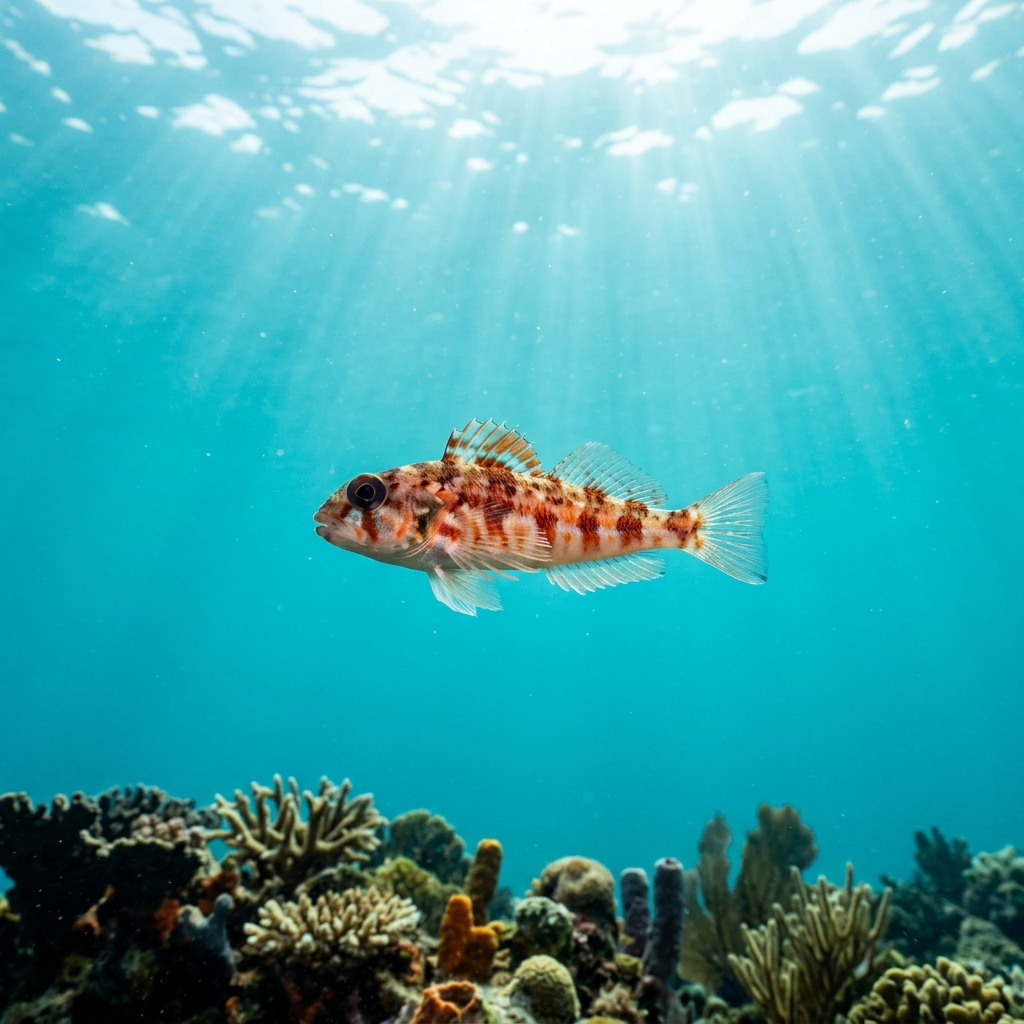
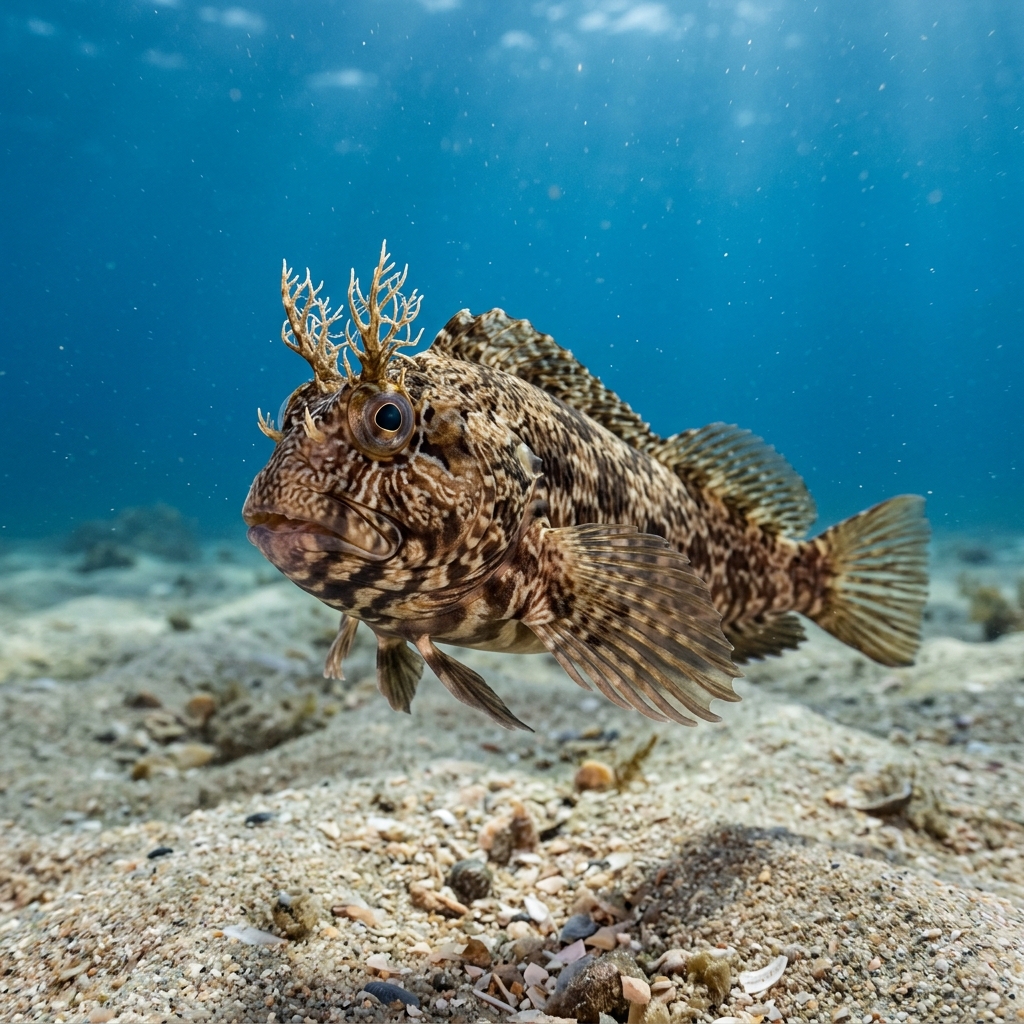
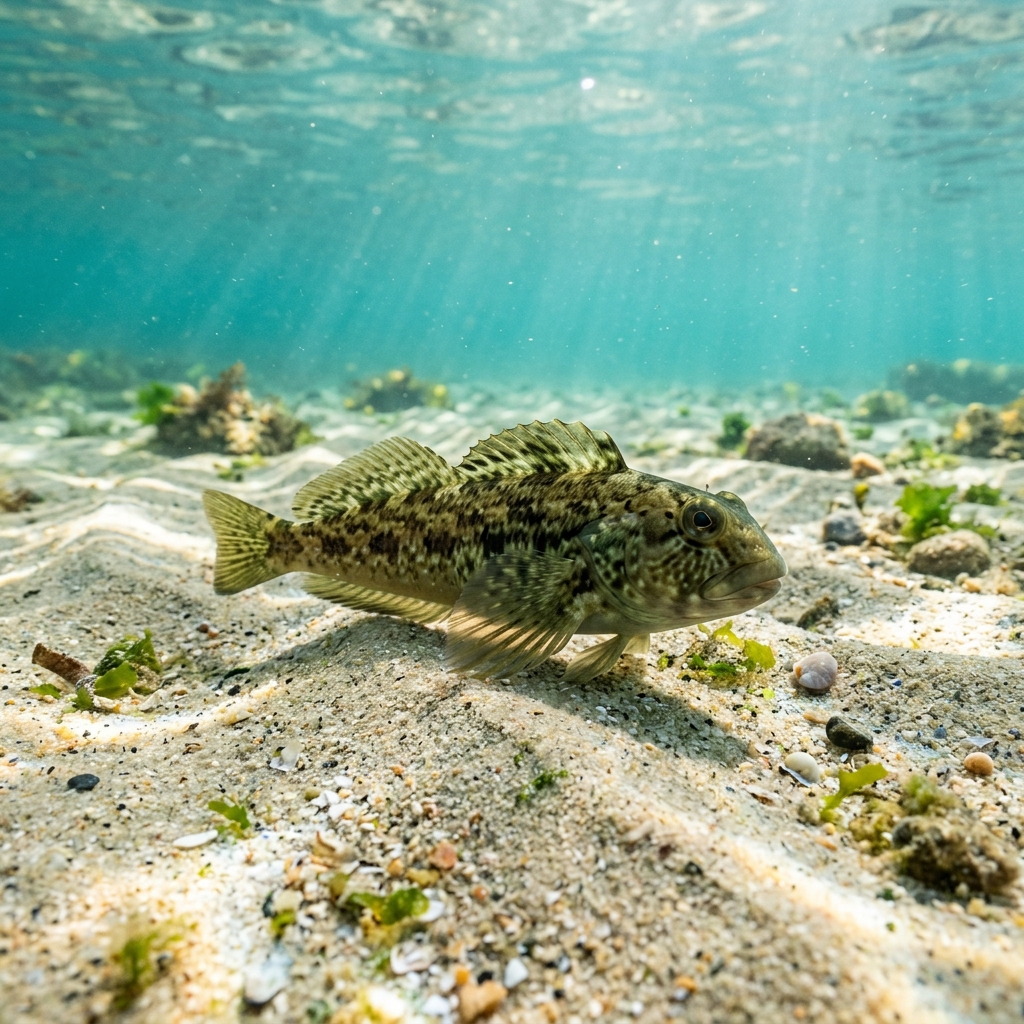
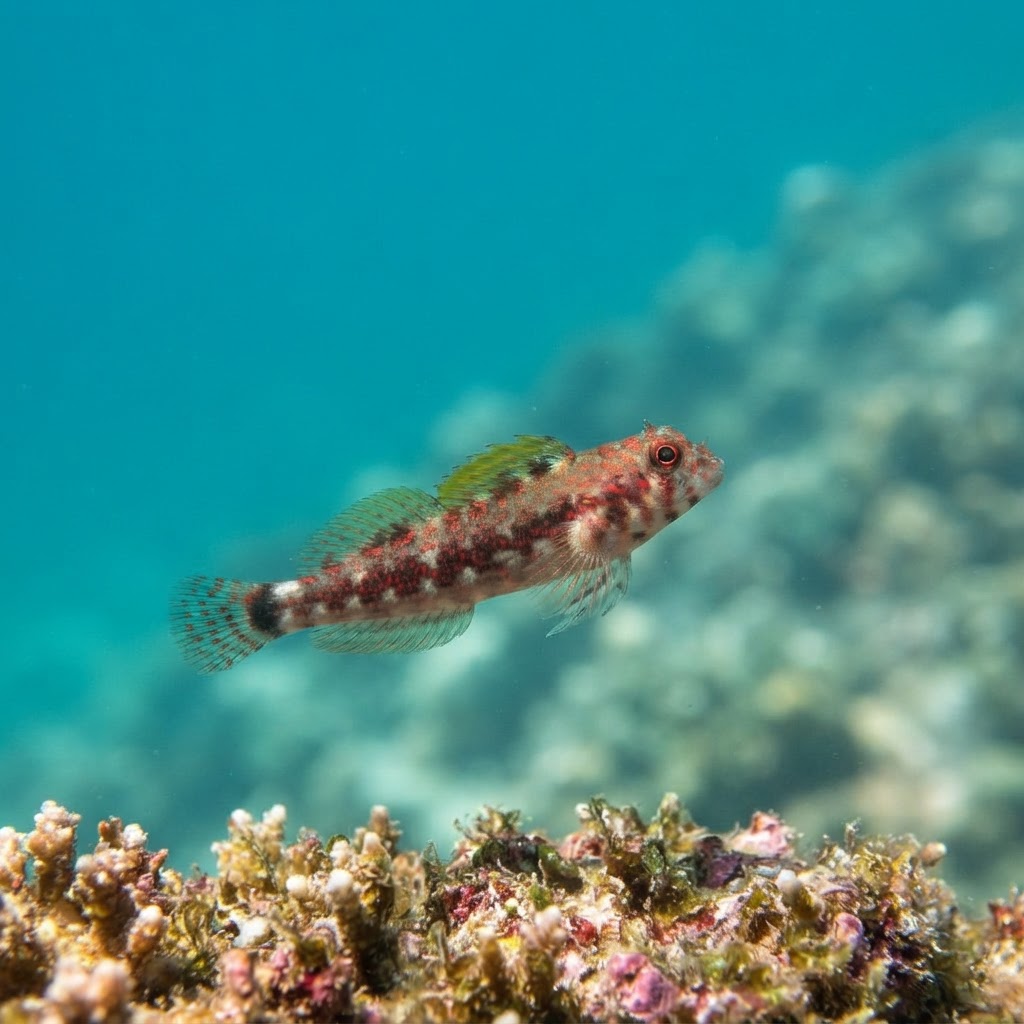
A tiny, big-eyed fish barely 6cm long, usually seen propped up on its pelvic fins on rock or rubble rather than swimming freely. Body colour runs mottled brown to olive, blending closely with algae-covered substrate, and the three separate dorsal fins that give triplefins their name are the key giveaway once you spot one holding still. Look at eye level along the rock rather than out in open water, it perches rather than hovers.
Spend most of the dive perched motionless on rock or encrusted rubble, using their pelvic fins as a prop while scanning for tiny prey and rivals. They tend to hold their ground rather than bolt when a diver approaches, then dart a short hop to the next perch if pressed, so slow, close looking at the reef surface is the way to actually find one.
Triplefins like this one lack a swim bladder, which is exactly why they rest propped on the bottom instead of hovering in midwater like most reef fish.
Sightings show no clear seasonal pattern, and with water sitting in a narrow 23.5-25.6°C band year-round in the Galápagos it appears to be a consistent, any-month find rather than a seasonal one.
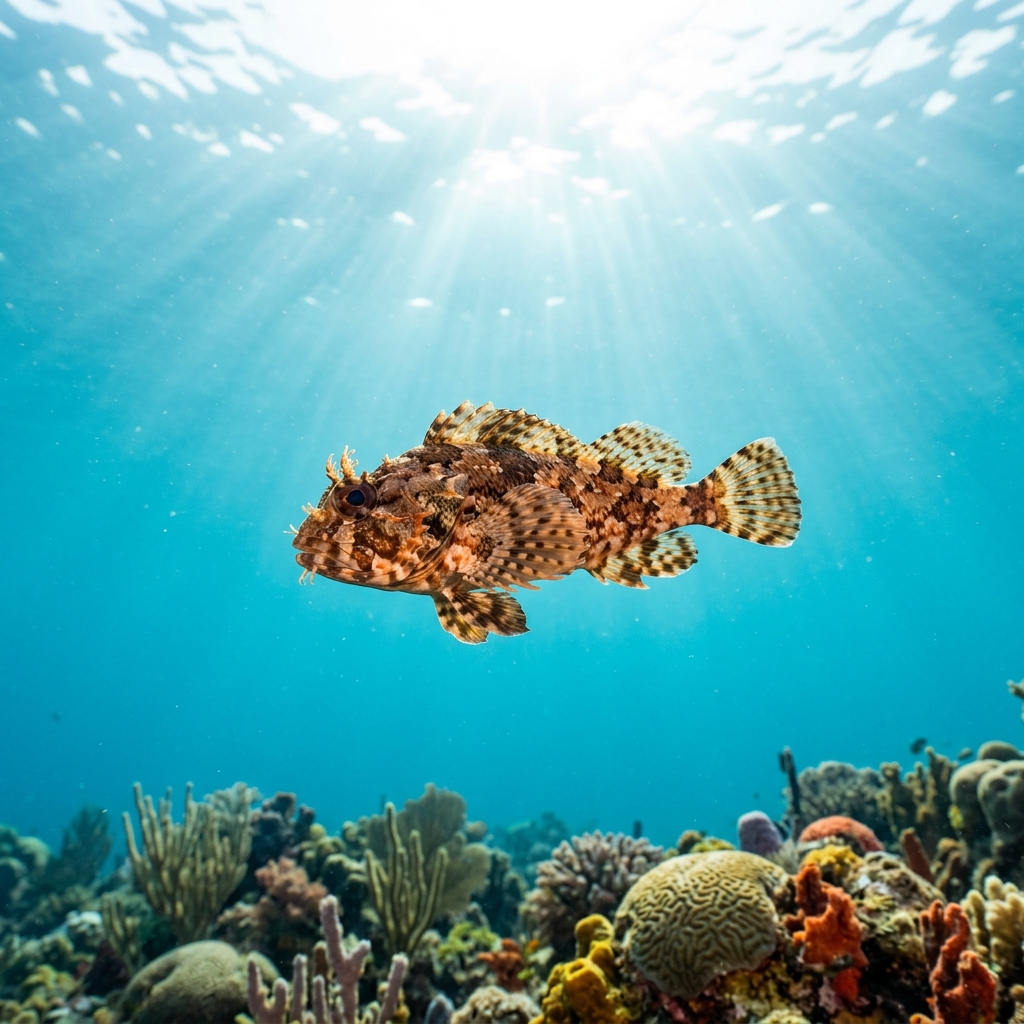
Reef neighbours a diver could mistake it for. Use the identification notes above to tell them apart.
This one is a Galápagos specialty, logged across dive sites throughout the Galápagos Islands, Ecuador, and nowhere else in the current data. If you are diving the archipelago's rocky reefs and boulder slopes, check the substrate closely, it shows up at more sites as uncommon than as common, so patience pays off.
Mapping where Galapagos Triplefin Blenny is logged…
It is essentially a Galápagos Islands endemic in the dive data, found across rocky reef sites throughout the archipelago in Ecuador. It has not been logged diving elsewhere.
There is no detected season, sightings are spread across the year, matching the stable 23.5-25.6°C water the Galápagos holds year-round.
Look for a 6cm mottled brown fish perched still on rock rather than swimming, with three distinct dorsal fins along its back. It blends into algae-covered substrate, so scan close rather than looking for movement.
Around 6cm, small enough that most divers only spot them once they slow down and scan rocky surfaces closely.
Like other triplefins, it has no swim bladder, so it cannot hover in midwater. Instead it props itself on its pelvic fins on rock or rubble and hops between perches.
Site and sighting data is aggregated from diver logs, iNaturalist and GBIF. For taxonomy and conservation status:
Rusty Blenny
2,605 sites