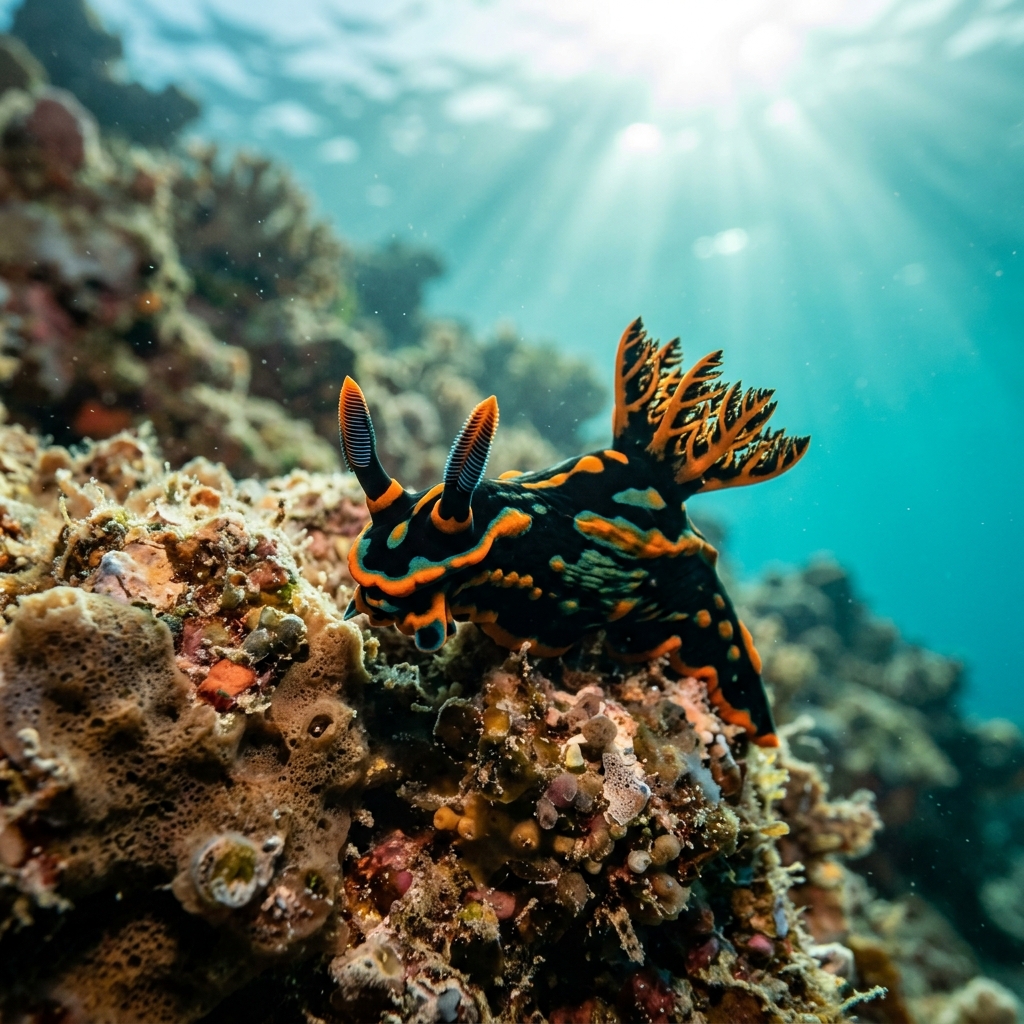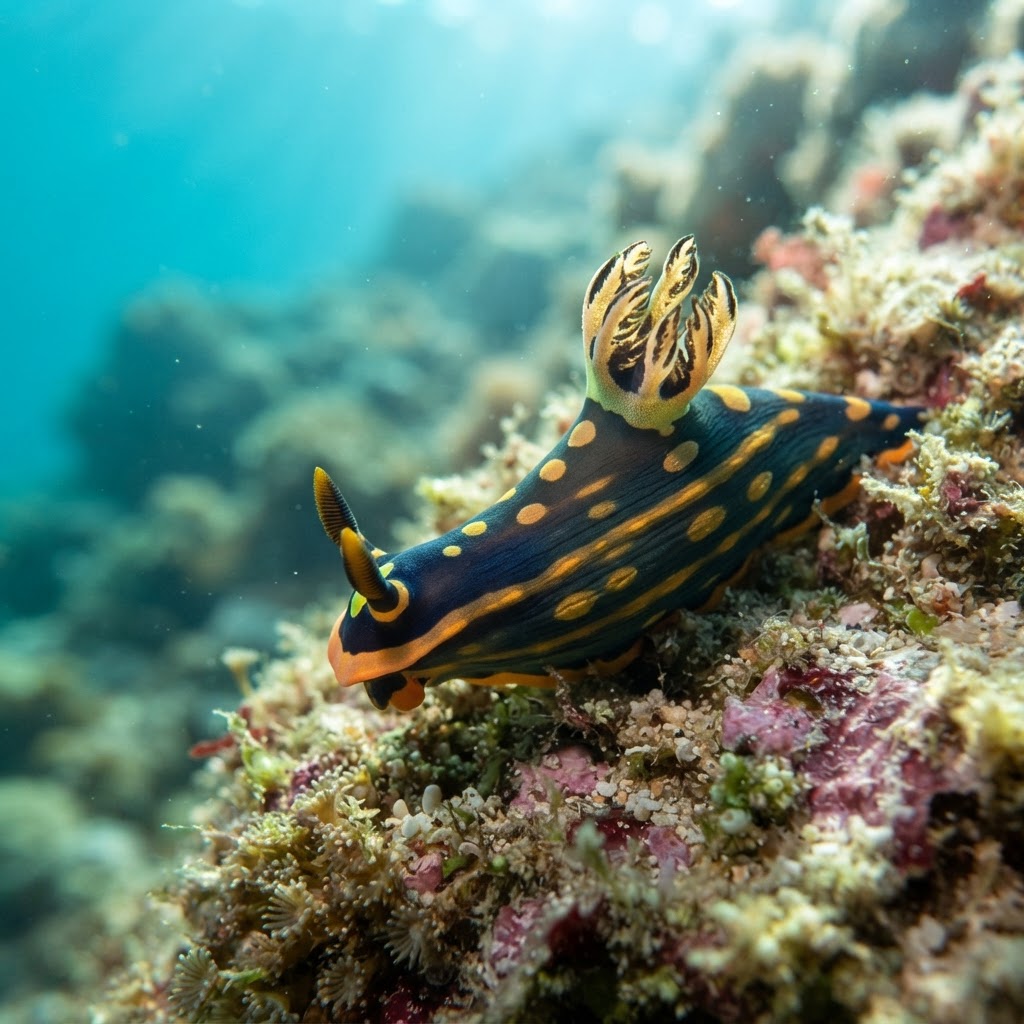
Tambja gabrielae
Rare nudibranch logged almost exclusively in Sulawesi, Indonesia, in warm 26-32C reef water year-round. Here's how to find one.
A small, elongate nudibranch with a smooth green to blue-green body and contrasting orange or yellow markings running along the edges and gill cluster (the feathery breathing organ on its back). Like other Tambja species it has a slug-like, faintly ridged body with no shell, moving slowly across hard substrate. The bright colour combination and gill tuft are the main things to key on underwater, since size and depth range aren't well documented for this species.
Divers typically find it moving slowly across rubble, sponge-covered rock or reef substrate, grazing rather than swimming, which makes it an easy subject once spotted. It shows no reaction to divers beyond continuing its slow crawl, so a close, unhurried look with a torch or macro lens rarely disturbs it. Most sightings come from the same reef and slope habitats where other Tambja and Nembrotha nudibranchs are found, so it's often spotted while scanning the same patch for several colourful species at once.
Like other members of its family, it almost certainly feeds on bryozoans (tiny colonial reef animals encrusting rock and coral rubble), using that diet to build up the toxins that make brightly coloured nudibranchs unpalatable to predators.
Sightings don't show a clear seasonal pattern, and the water it's found in sits in a warm 25.7 to 31.7C band typical of tropical Sulawesi reefs year-round, so there's no strong reason to time a trip around a particular month.
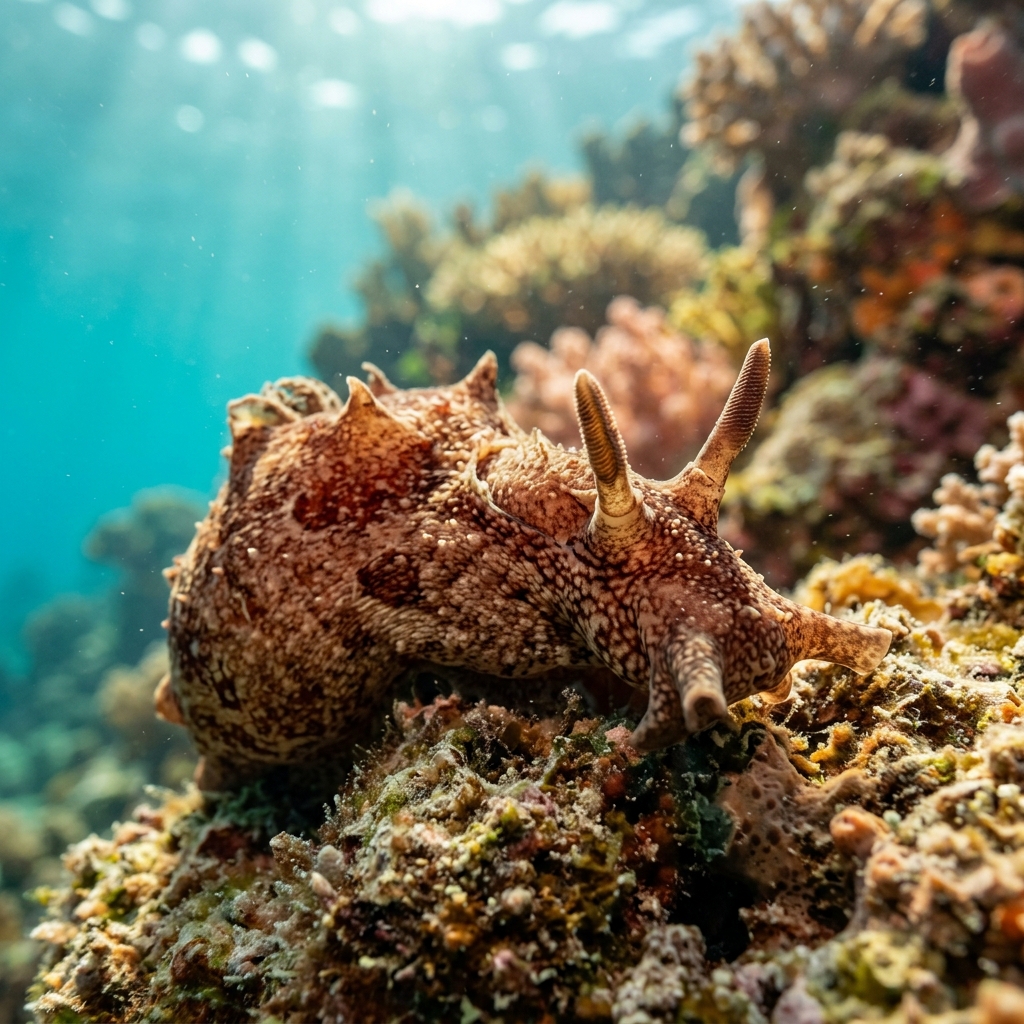
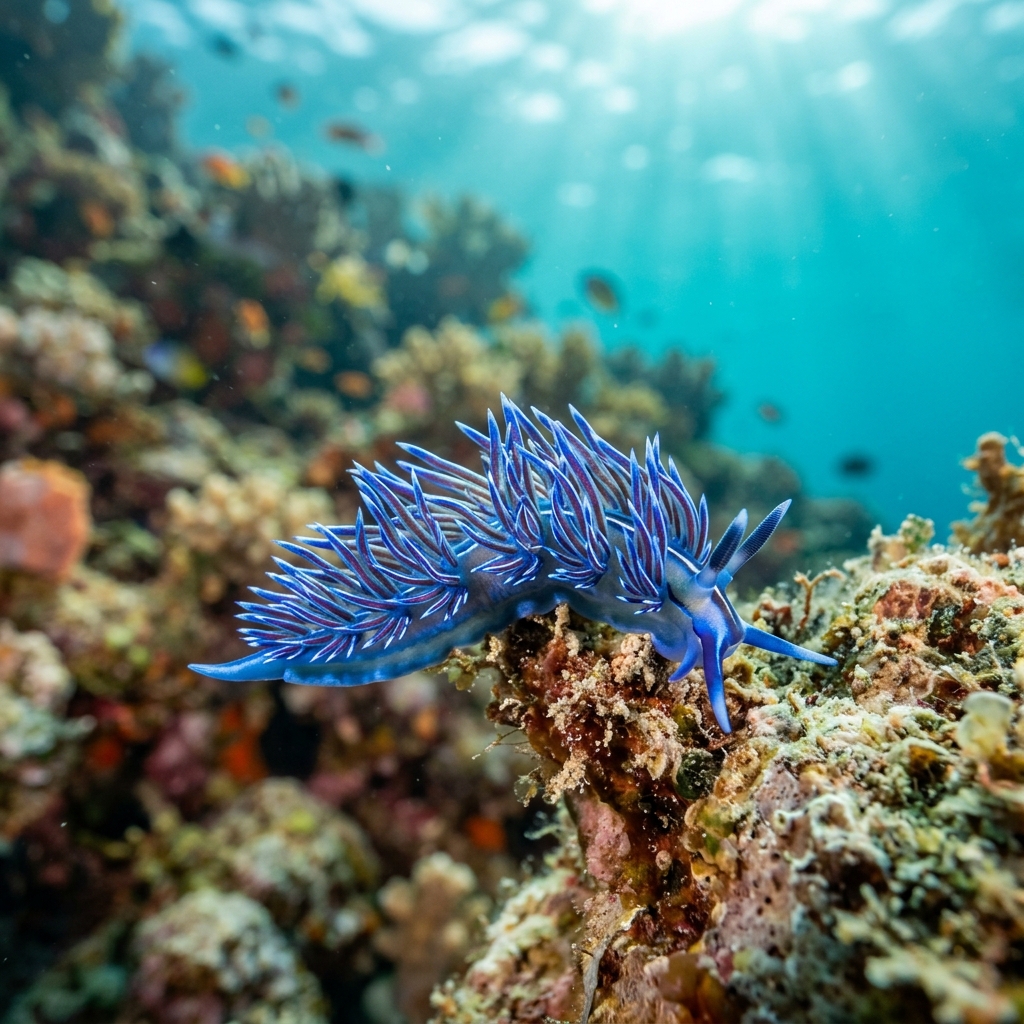
Reef neighbours a diver could mistake it for. Use the identification notes above to tell them apart.
Every logged sighting of this species comes from Sulawesi, Indonesia, making it effectively a Sulawesi specialty among divers who log nudibranchs closely. Within the region it turns up at a spread of sites, uncommon at most but reliably reported at several, so patient reef and muck divers in Sulawesi have the best real shot at it.
Mapping where Gabriela's Tambja is logged…
Sulawesi, Indonesia is the only region with confirmed sightings, spread across a number of local dive sites. It's an uncommon find even there, so treat it as a bonus spot rather than a guaranteed target.
There's no detected season for this species, and it's found in consistently warm water between roughly 26 and 32C, so it can turn up on Sulawesi reefs at any time of year.
Look for a small, slow-moving green to blue-green nudibranch with orange or yellow trim along its body and gill cluster. It lacks a shell and crawls across rock, rubble or sponge rather than swimming.
Exact size data hasn't been recorded for this species. As with related Tambja nudibranchs, expect a small animal, likely just a few centimetres long, best appreciated with a macro lens.
No. It poses no threat to divers and can be observed closely without any risk, though as with all nudibranchs it's best not to touch or handle it.
Site and sighting data is aggregated from diver logs, iNaturalist and GBIF. For taxonomy and conservation status:
Light-spotted Aegires
3,168 sites