Lepidozygus tapeinosoma
A small blue-and-silver damselfish logged in Queensland reefs and Kwajalein Atoll, hovering in warm 27-29C water year-round.
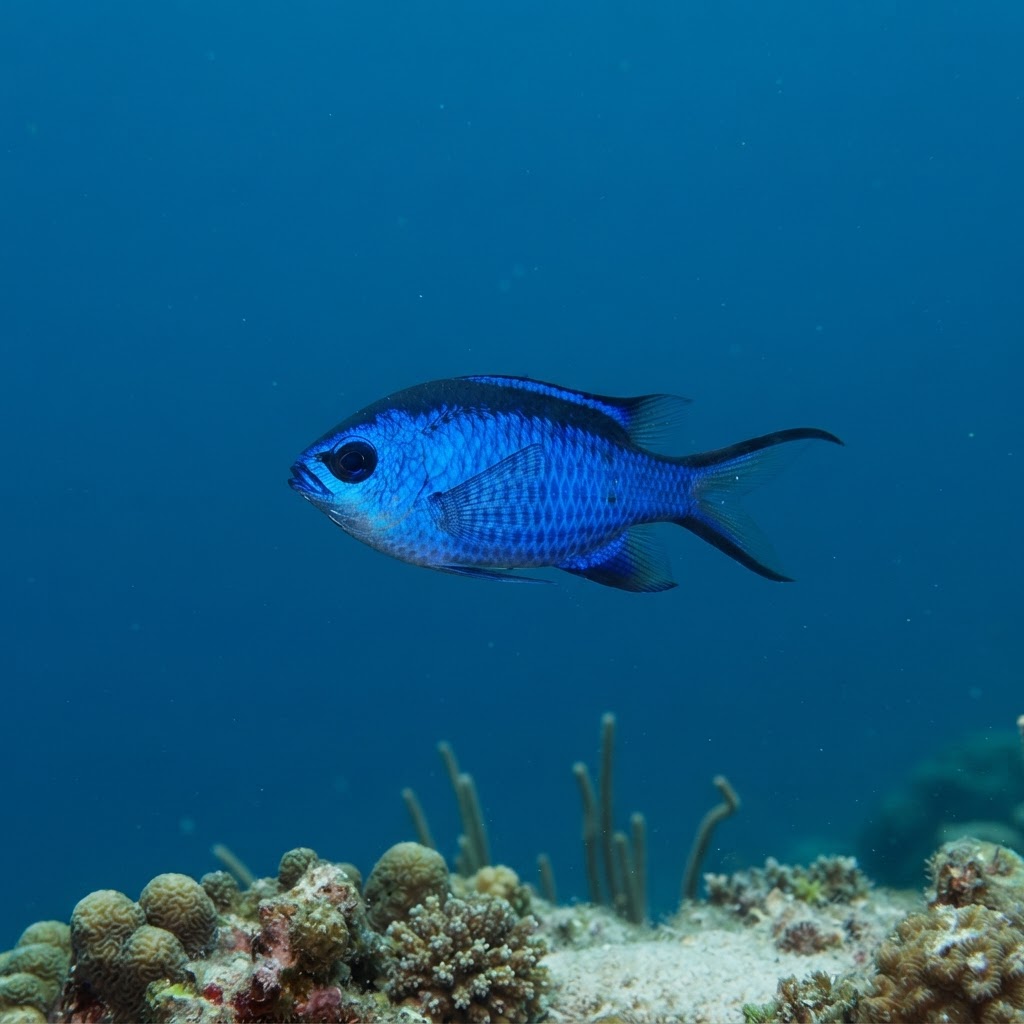
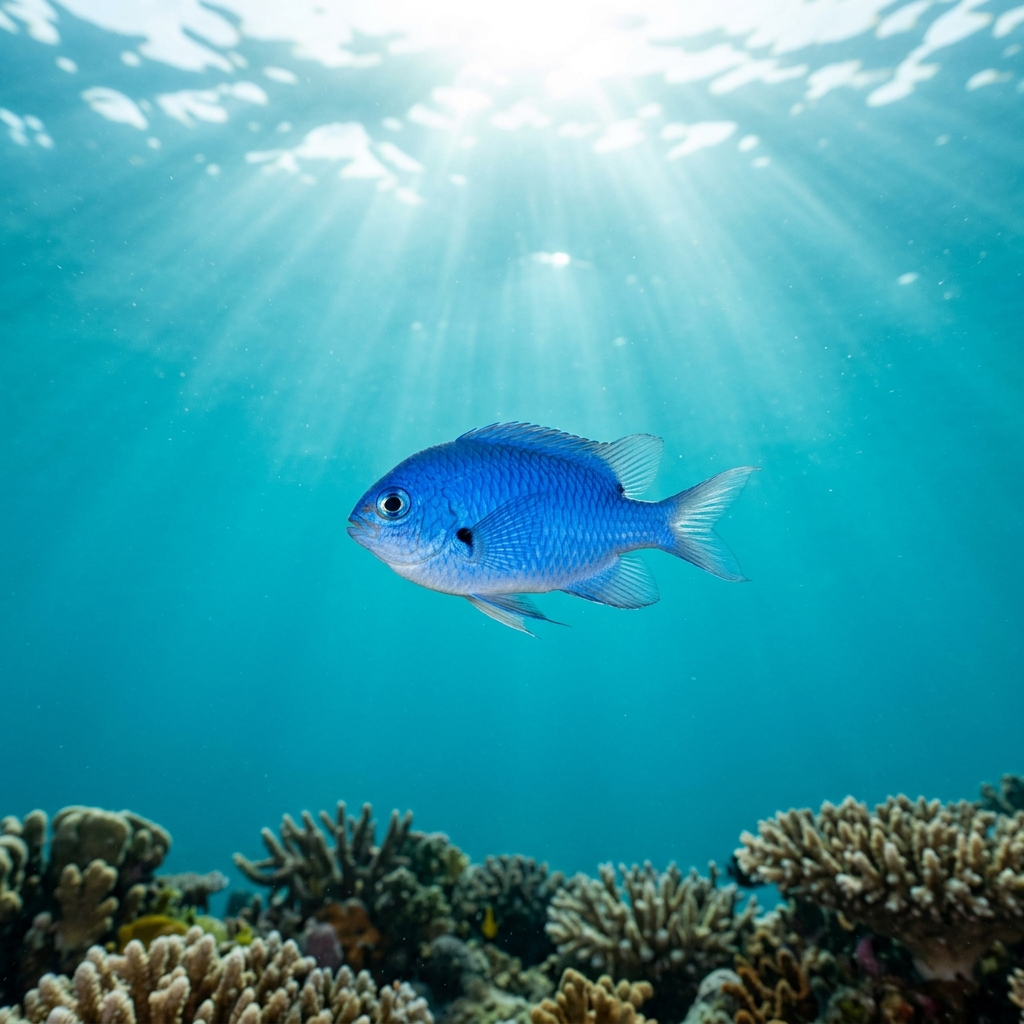
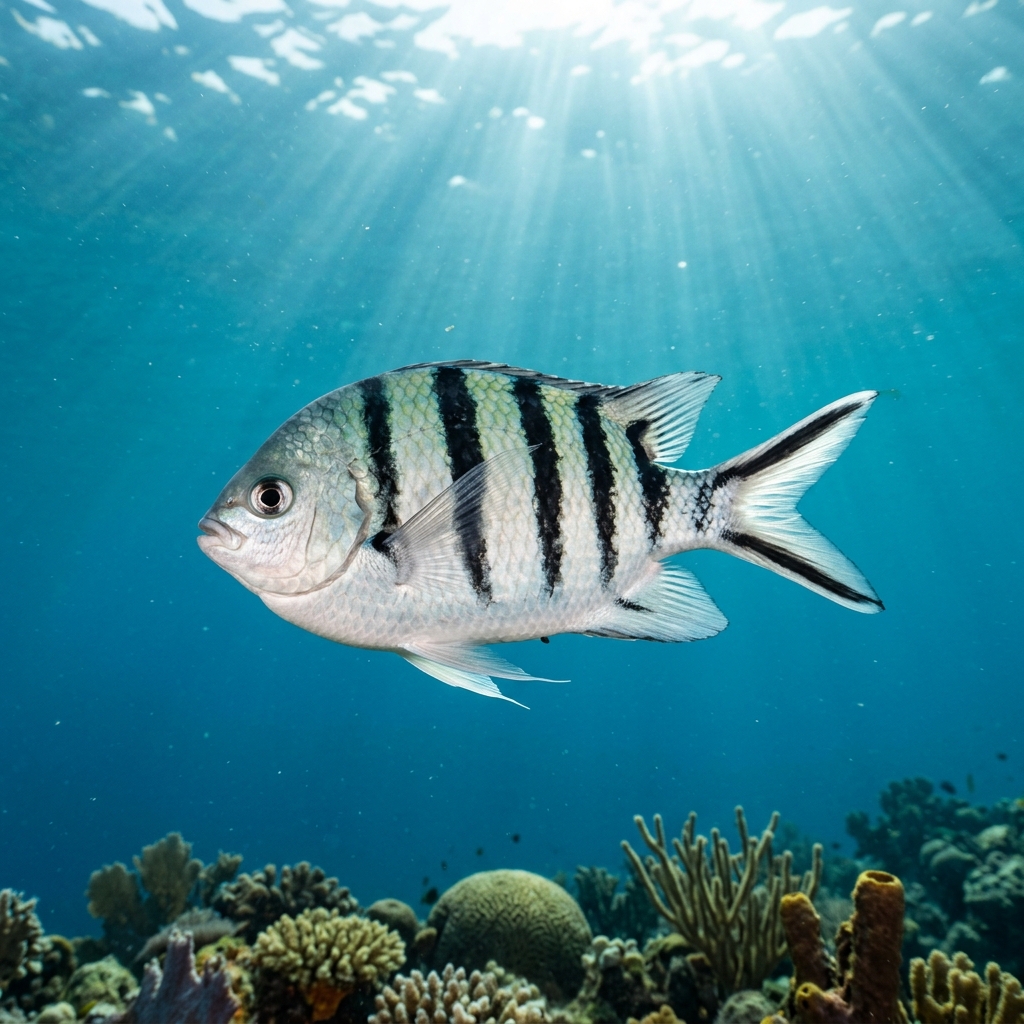
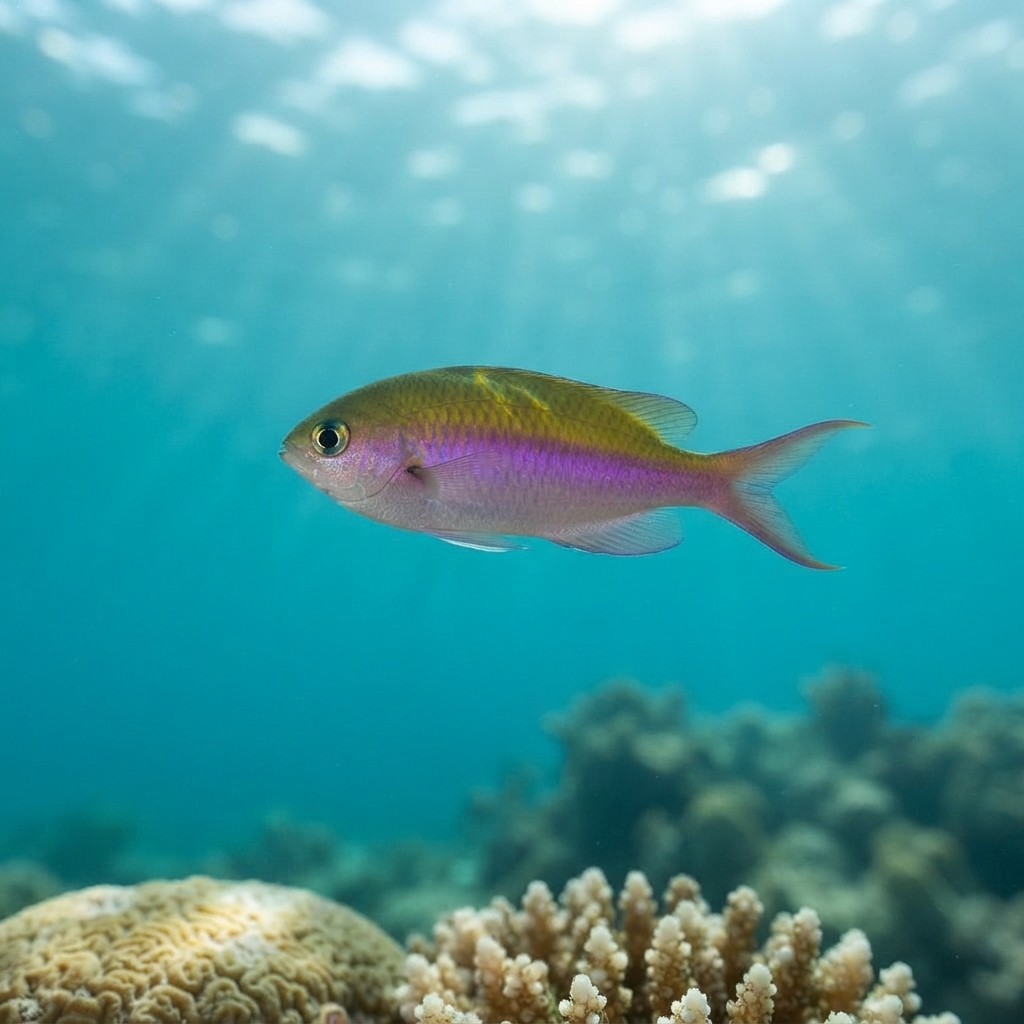
A slim, torpedo-shaped damselfish around 7 cm long, with a blue-grey to olive back that fades to a pale silvery belly, giving it a two-tone look quite different from the deeper, rounder bodies of most reef damselfish. It tends to hang in loose groups just off the reef rather than sitting tight against coral, which combined with its slender profile is the quickest way to pick it out underwater.
Divers typically find it hovering in small loose groups a little off the reef structure, picking at plankton drifting past in the current rather than feeding directly off the substrate. It is not territorial or aggressive the way many damselfish are, and it tends to drift away calmly rather than dart into cover when divers approach.
Unlike most damselfish, which are fiercely territorial over a patch of coral, this species feeds mid-water on plankton in loose aggregations, behaving more like a small fusilier than a typical reef-bound damselfish, which is where its common name comes from.
No clear seasonal pattern in the sightings data, and its comfort range of 26.6 to 29.3C matches warm tropical and subtropical reef water year-round, so there is no strong reason to time a trip around a particular month.
Reef neighbours a diver could mistake it for. Use the identification notes above to tell them apart.
Logged most often on reefs in Queensland, Australia, with further confirmed sightings off KwaZulu-Natal in South Africa and Kwajalein Atoll in the Marshall Islands. It shows up as an uncommon find at most of these sites rather than something you are guaranteed to see on every dive.
Mapping where Fusilier Damselfish is logged…
It has been logged on reefs in Queensland, Australia, along KwaZulu-Natal in South Africa, and around Kwajalein Atoll in the Marshall Islands. At most of these sites it is an uncommon sighting rather than a fish you will see on every dive.
There is no detected seasonal pattern for this species. It sits comfortably in 26.6 to 29.3C water, which holds year-round on the tropical and subtropical reefs where it is found, so any month is a reasonable bet.
Look for a slim, torpedo-shaped fish about 7 cm long with a blue-grey back fading into a pale silvery belly. It usually hovers in small loose groups above the reef feeding on plankton, rather than sitting close against coral like most damselfish.
They stay small, reaching around 7 cm in length, which is typical for damselfish but noticeably slimmer-bodied than many of their relatives.
Most damselfish are territorial and stick close to a patch of coral, but this species feeds mid-water in loose plankton-picking groups, more like a fusilier than a typical damselfish, which is exactly where its name comes from.
No. They are not aggressive or territorial towards divers and simply drift off calmly if you get close.
Site and sighting data is aggregated from diver logs, iNaturalist and GBIF. For taxonomy and conservation status:
Dascyllus
3,697 sites