Fundulus diaphanus
Spot banded killifish in the Great Lakes and Northeast waters of Canada and the US. Cold-tolerant, down to 3°C, and logged year-round by divers.
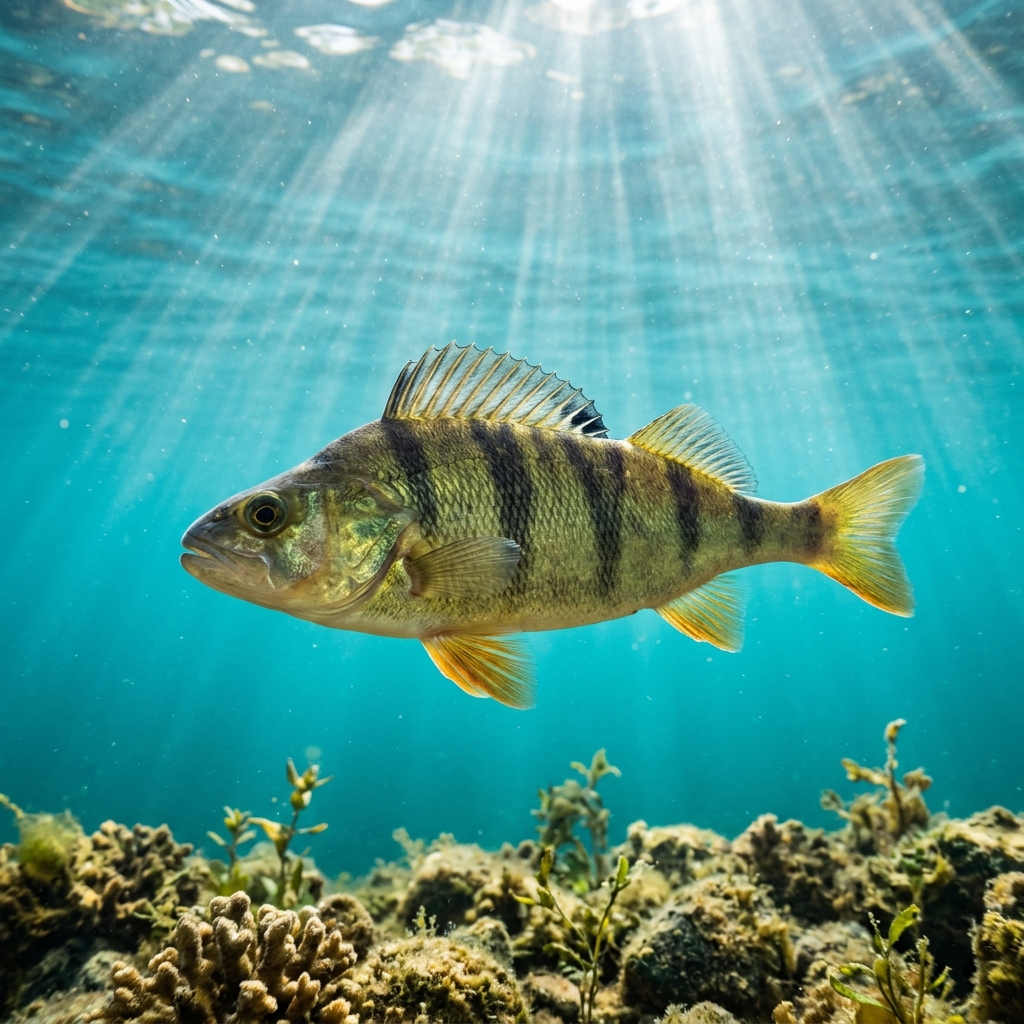
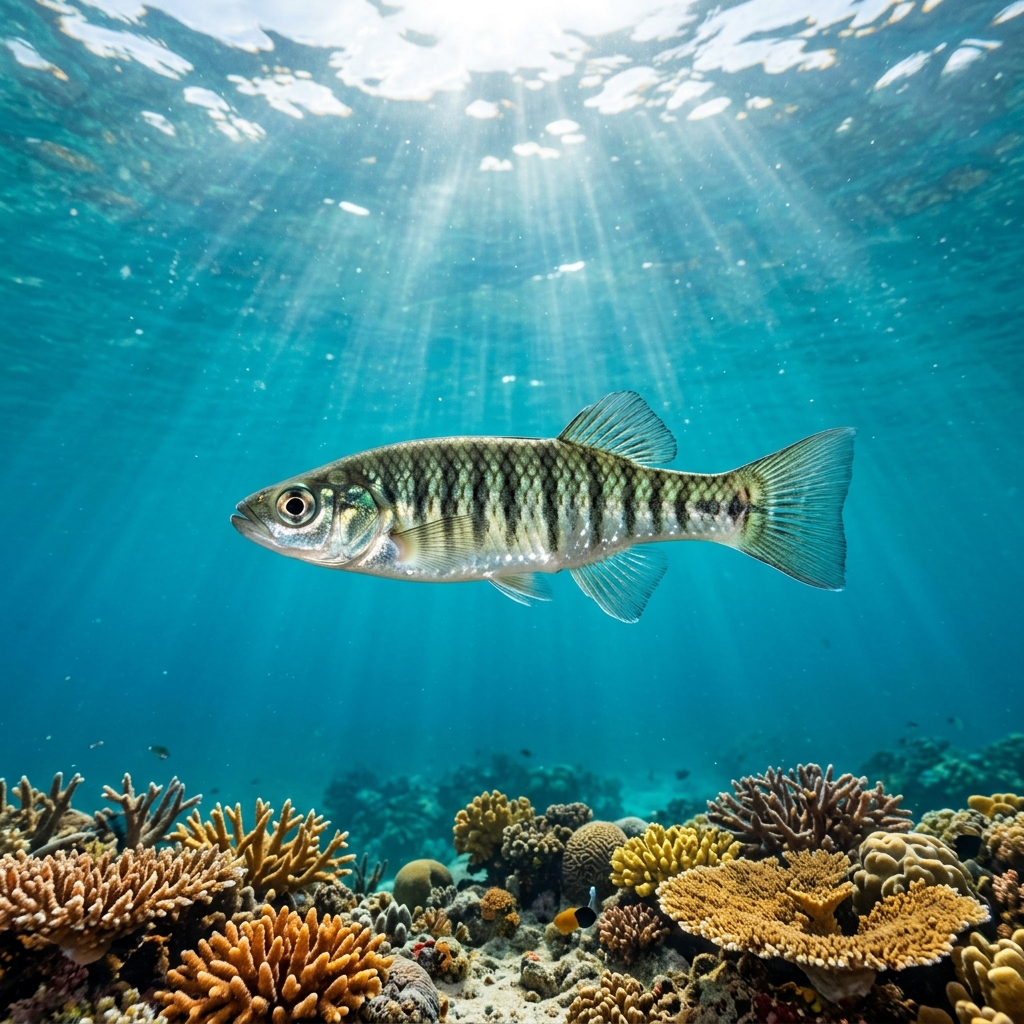
A slender, small freshwater fish with a noticeably flattened head and an upturned mouth built for surface feeding. Its most reliable underwater marker is a series of dark, evenly spaced vertical bands running along the pale silvery-green body. The dorsal fin sits far back near the tail, giving the fish a distinctive elongated silhouette. Look for it swimming in loose schools close to the water surface or just above submerged vegetation.
Banded killifish tend to school near the water's surface or among submerged aquatic plants, often in sheltered bays, lake margins, and slow-moving backwaters. They are not particularly wary and will often hold position or circle slowly when a diver approaches, making observation straightforward if you move calmly. Most encounters happen in shallow water where light penetrates well and vegetation provides cover.
Banded killifish are among the hardiest freshwater fish in northeastern North America, capable of surviving under ice in winter and tolerating a remarkably wide temperature swing across seasons. This cold tolerance is a big part of why they persist across the Great Lakes region year-round.
There is not enough monthly sighting data to point to a specific peak season, so treat it as a year-round possibility. Its observed temperature range stretches from just above freezing to around 22°C, meaning it can be active even during cold-water dives when many other species are less visible.
Almost all logged sightings come from the Great Lakes and Ontario region of Canada, which accounts for the large majority of known dive sites. A smaller but consistent cluster of sightings comes from the Great Lakes and Northeast United States. These cold, freshwater environments are where you have the best chance of an encounter.
Mapping where Banded Killifish is logged…
Most logged dive encounters come from the Great Lakes and Ontario region of Canada, with additional sightings from the Great Lakes and Northeast United States. Look in shallow, sheltered freshwater sites such as lake margins and weedy bays in these regions.
There is no clear seasonal peak in the available data. Because banded killifish tolerate water temperatures from just above freezing to around 22°C, they are potentially active across all seasons wherever they live, including during cold winter dives under ice.
Key in on the evenly spaced dark vertical bars along a pale, elongated body, the upturned mouth, and the rear-set dorsal fin. They typically school near the surface or above vegetation in shallow freshwater, which narrows the ID further in their Great Lakes range.
They are a small fish. Most adults reach around 7 to 10 cm in length, though some individuals can approach 13 cm. In the water they appear slender and lightweight, easy to overlook unless you are specifically watching for surface-oriented schooling fish.
No. They pose no threat whatsoever to divers. They are small, non-aggressive, and will typically ignore or gently avoid a diver rather than flee outright.
Site and sighting data is aggregated from diver logs, iNaturalist and GBIF. For taxonomy and conservation status:
Sun Perch
2,182 sites