Bathygobius soporator
Mottled and small at 10cm, this goby turns up year-round on rocky shores in Florida and Rio de Janeiro. Here's where to look.
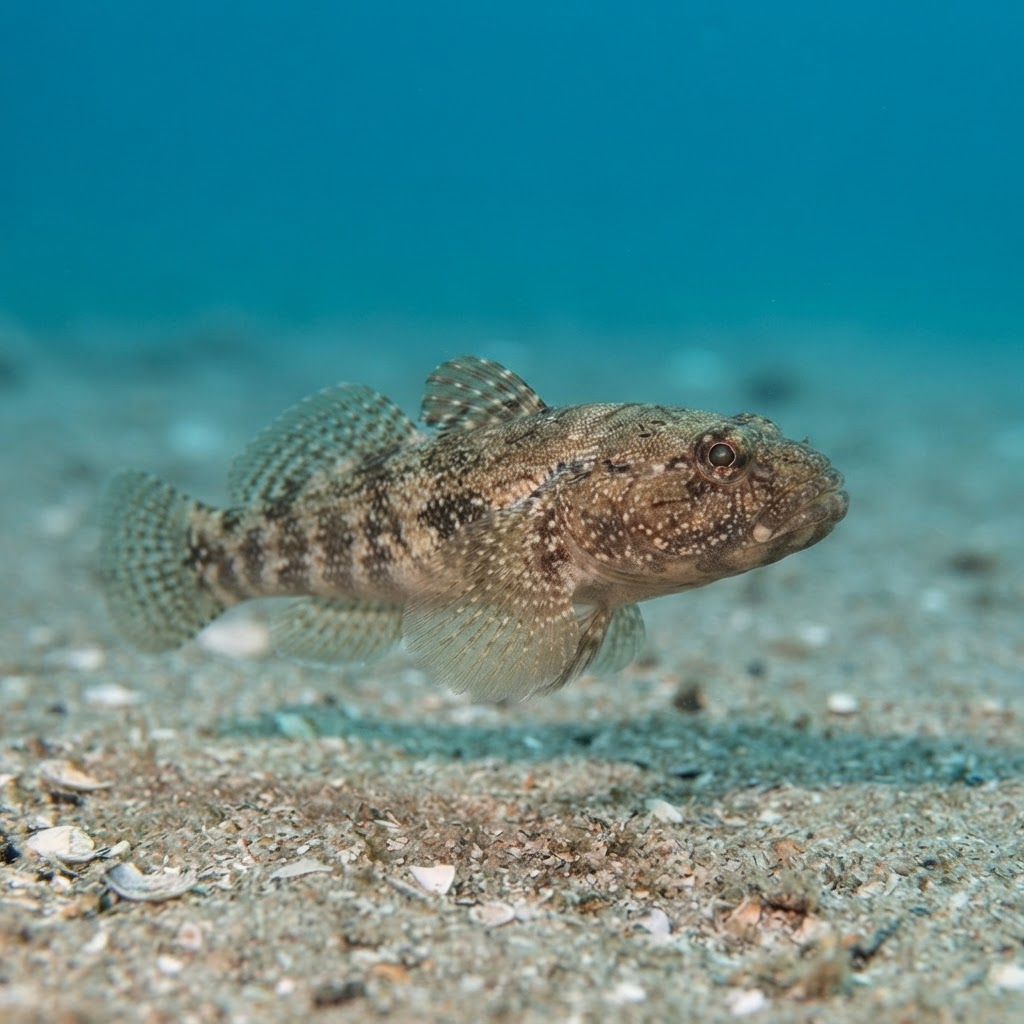
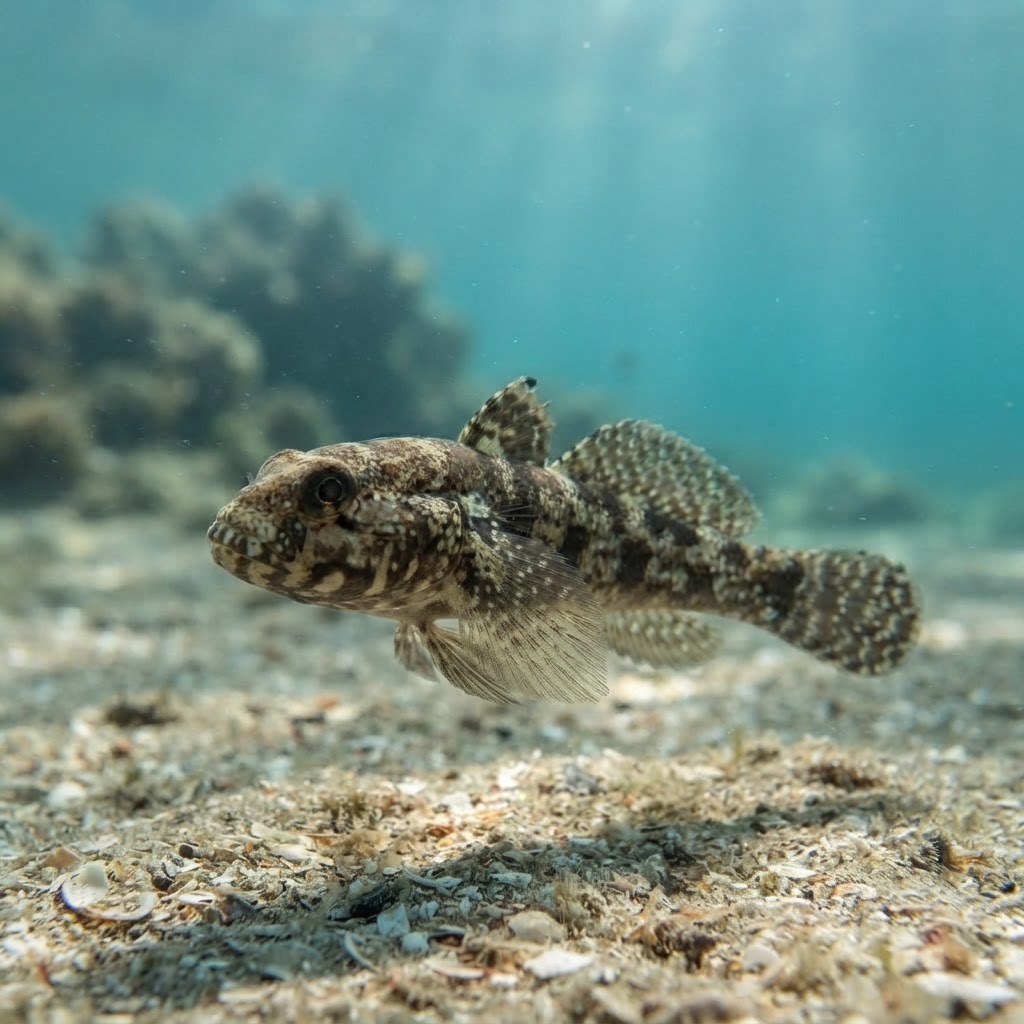
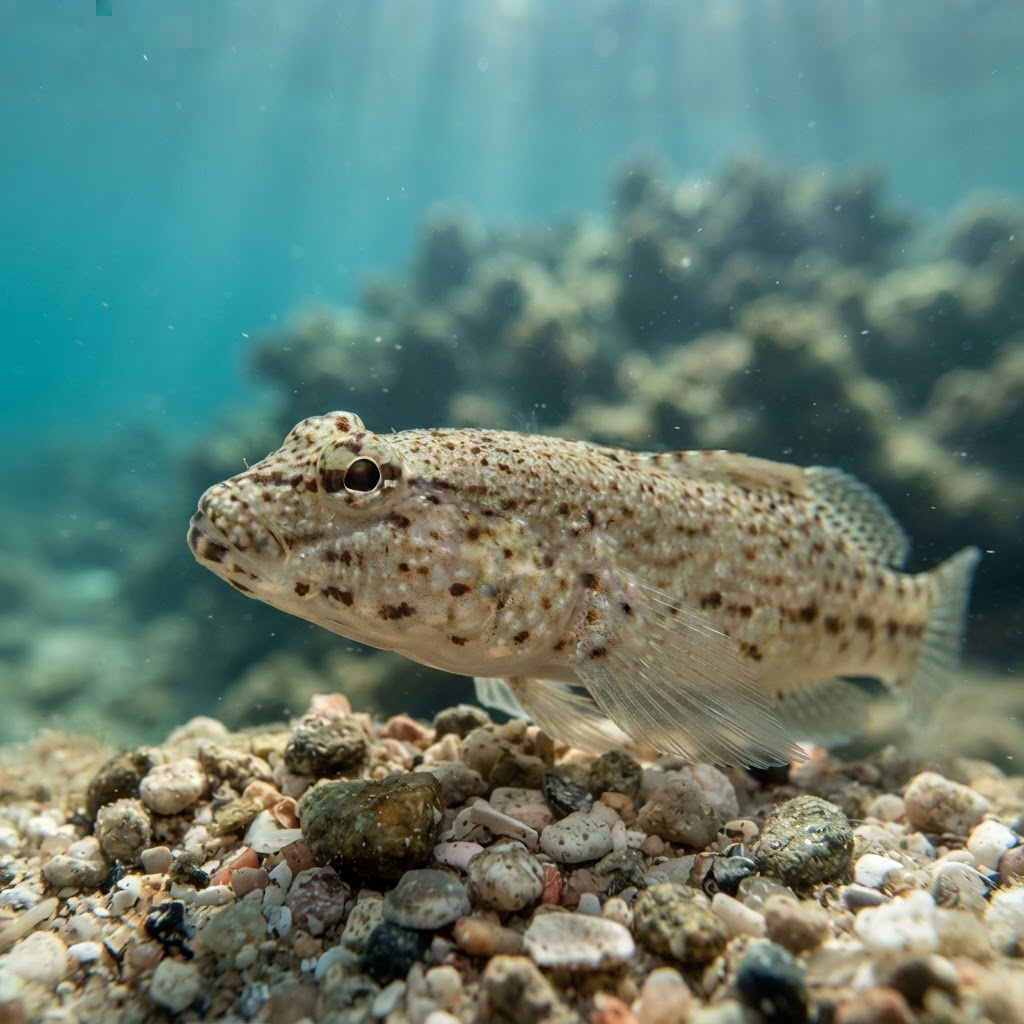
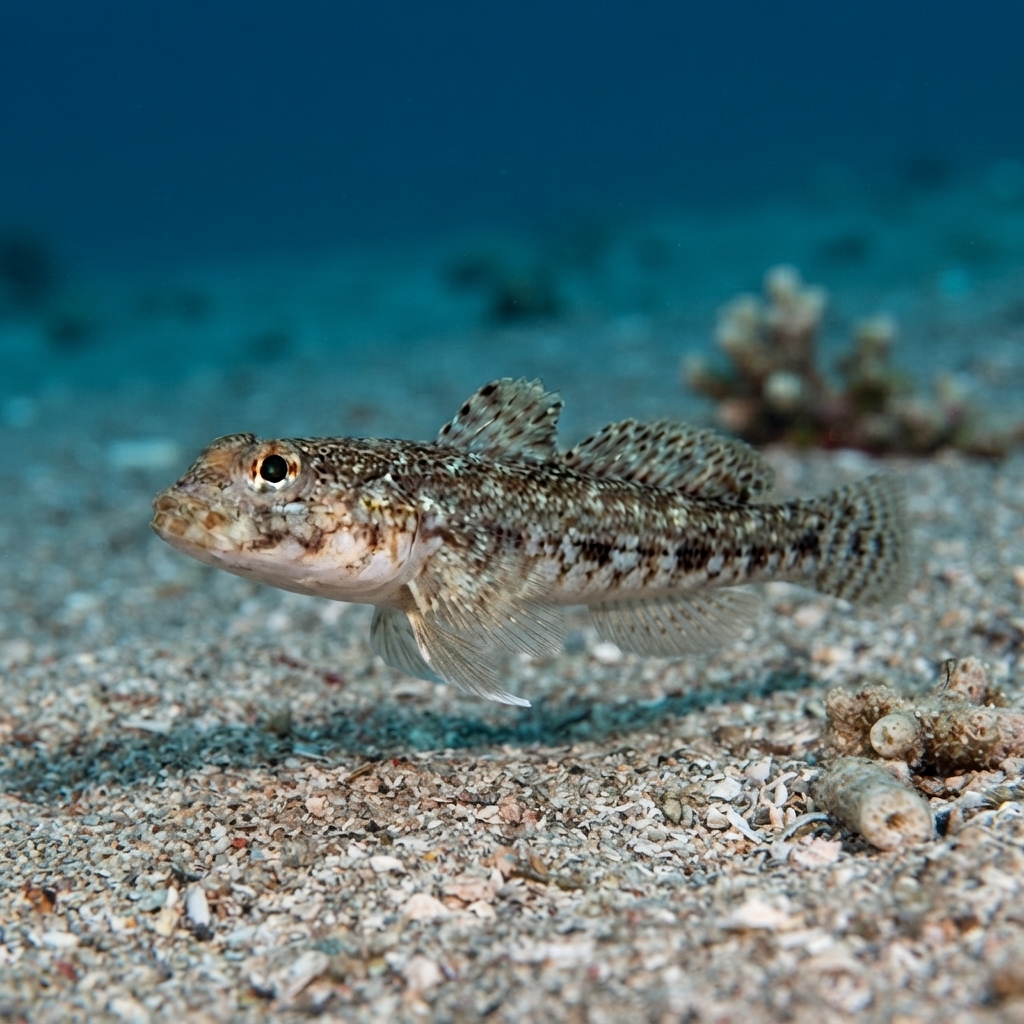
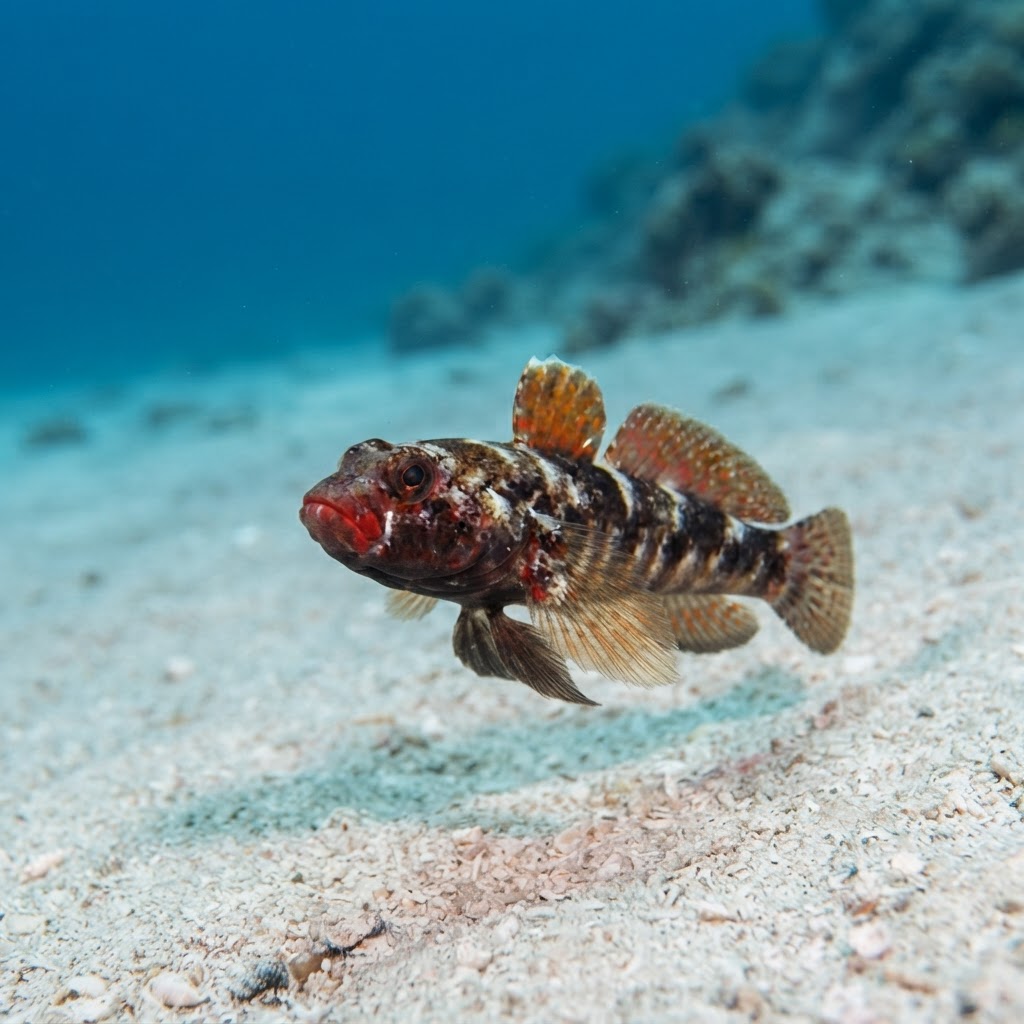
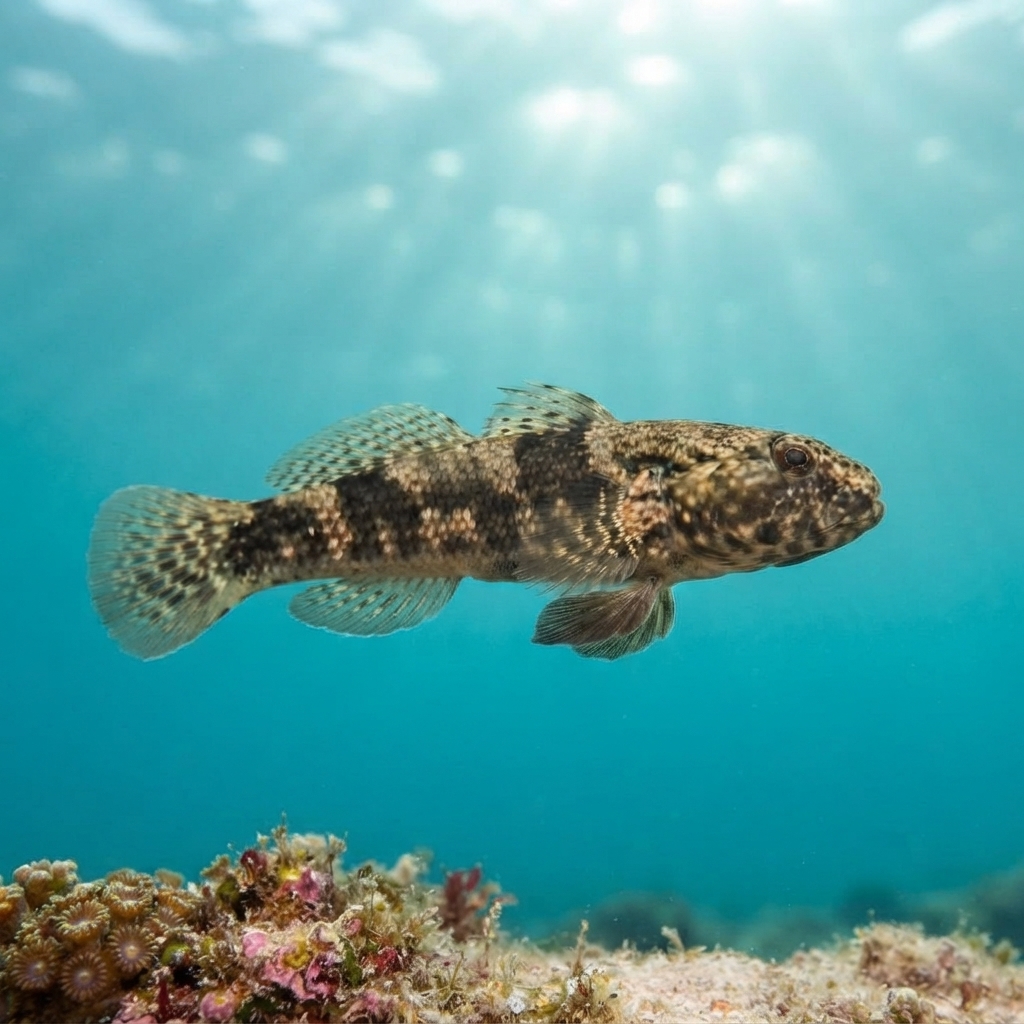
A stocky little fish, rarely more than 10cm, with a mottled brown-and-tan body that breaks up its outline against rock and rubble. Look for the propped-up posture on fused pelvic fins, a blunt head, and a habit of perching motionless rather than swimming freely. There's no bright pattern to key on here; it's the shape and stillness that give it away.
Expect to find it perched on rock or rubble in shallow water, often tucked into a crevice or sitting still on an exposed surface with its head up. It doesn't school or swim much when approached; it tends to hold its ground or make a short dart to the next rock rather than flee the area outright. Most sightings are in the shallows close to shore, the kind of habitat you'd also find at low tide in a rockpool.
Frillfin gobies are known for a striking bit of memory: individuals stranded by an outgoing tide can leap accurately between disconnected tidepools, apparently navigating from a mental map of the terrain formed while it was still submerged.
No clear seasonal pattern shows up in the sighting data, and with a comfortable range of 23.4 to 28C it's a year-round resident wherever it's found rather than a seasonal visitor.
Reef neighbours a diver could mistake it for. Use the identification notes above to tell them apart.
Most reliably logged along Florida, especially its shallow rocky and tidepool habitats, and in Brazil across Rio de Janeiro, Santa Catarina, and Pernambuco. It's an uncommon but steady find at these sites rather than something you'll see on every dive, and Texas rounds out the US range in smaller numbers.
Mapping where Frillfin Goby is logged…
Florida in the United States and Rio de Janeiro, Santa Catarina, and Pernambuco in Brazil are the most consistent places divers and snorkellers log this species, usually in shallow rocky habitat close to shore.
There's no strong season in the data. It sits comfortably in water from 23.4 to 28C, so it's present year-round wherever it's found rather than tied to a particular month.
Look for a small, mottled brown fish around 10cm long perched motionless on rock or rubble in shallow water, propped up on its fused pelvic fins rather than swimming freely.
They stay small, typically reaching around 10cm in length, which is normal for a goby that spends its life tucked into rocky crevices and shallow rubble.
It's famous for its ability to leap accurately between separate tidepools when stranded by a falling tide, seemingly using a memorised map of the terrain it swam over earlier.
Site and sighting data is aggregated from diver logs, iNaturalist and GBIF. For taxonomy and conservation status:
Slender Goby
806 sites