Colpodaspis thompsoni
A translucent egg-shaped sea slug found on muck and reef slopes in Sabah, Malaysia, year-round in warm 24-30C water.
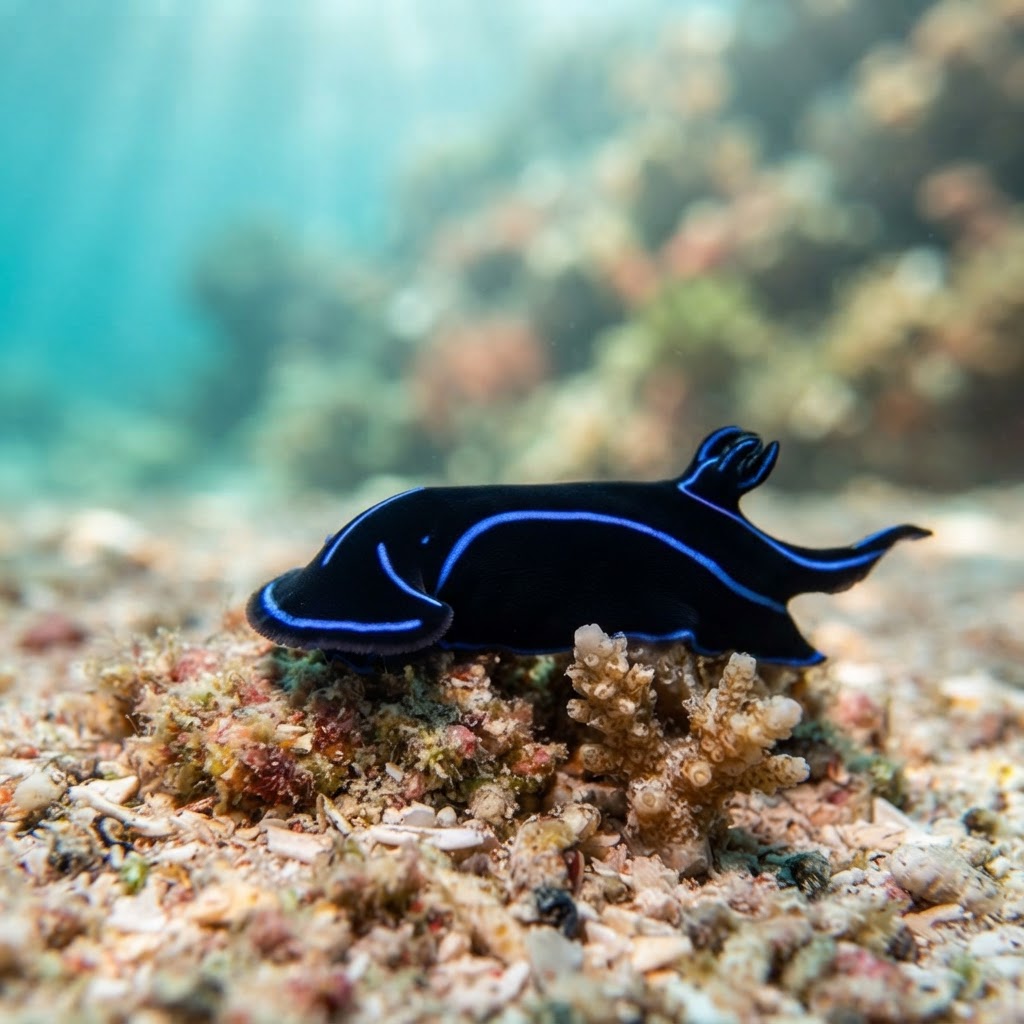
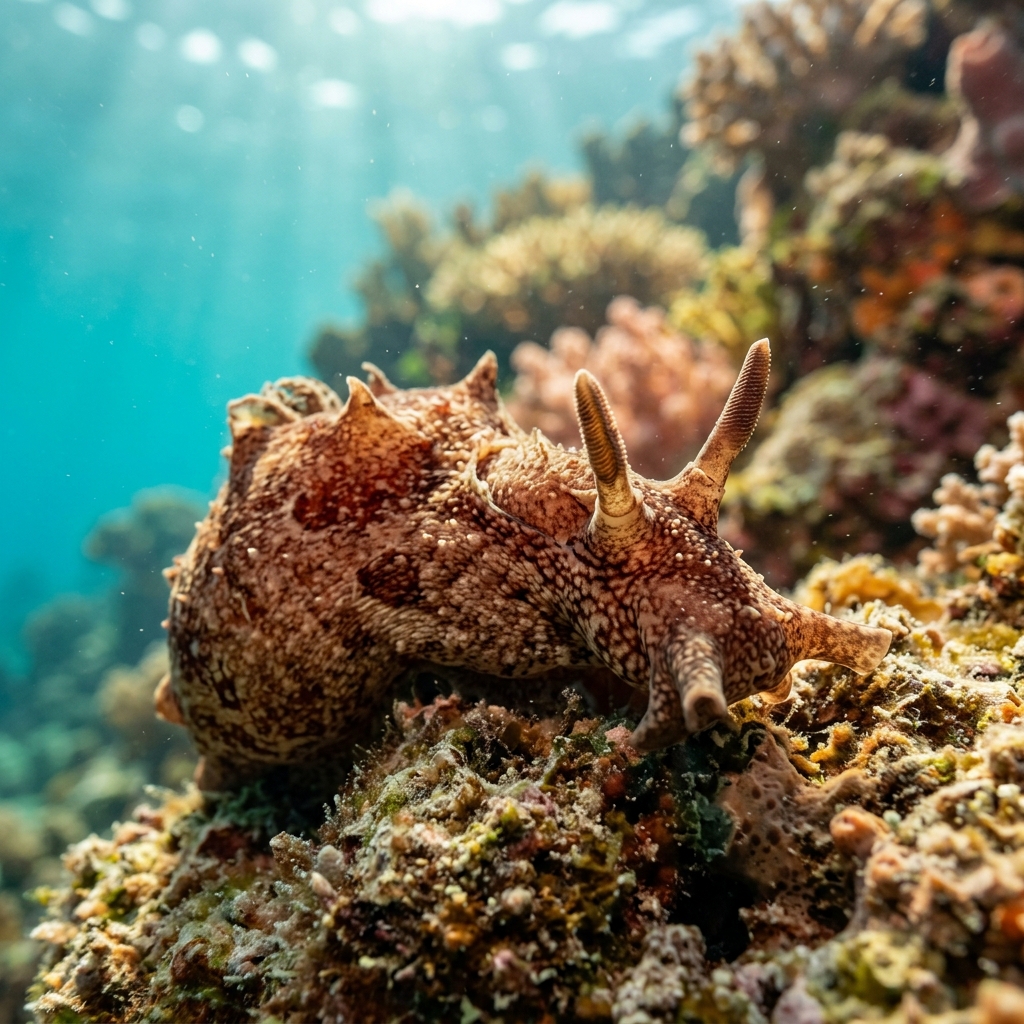
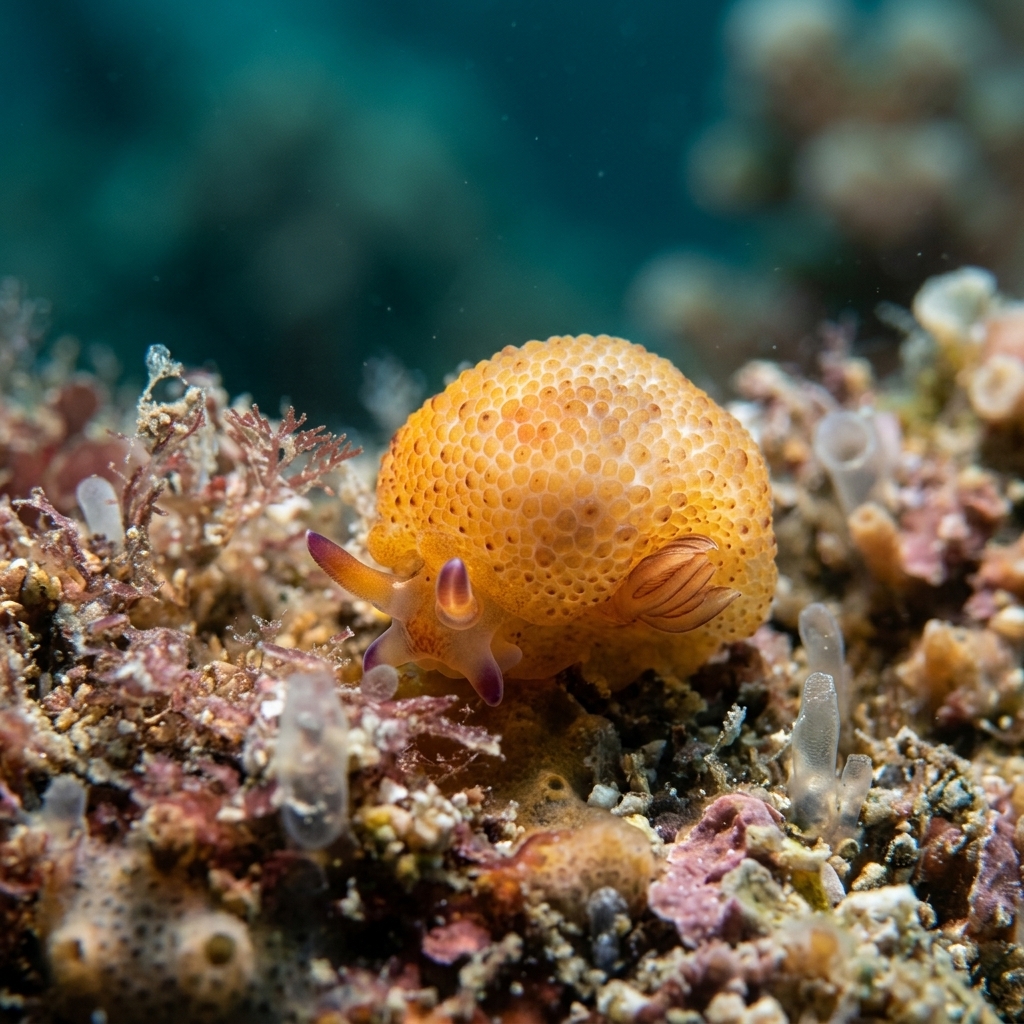
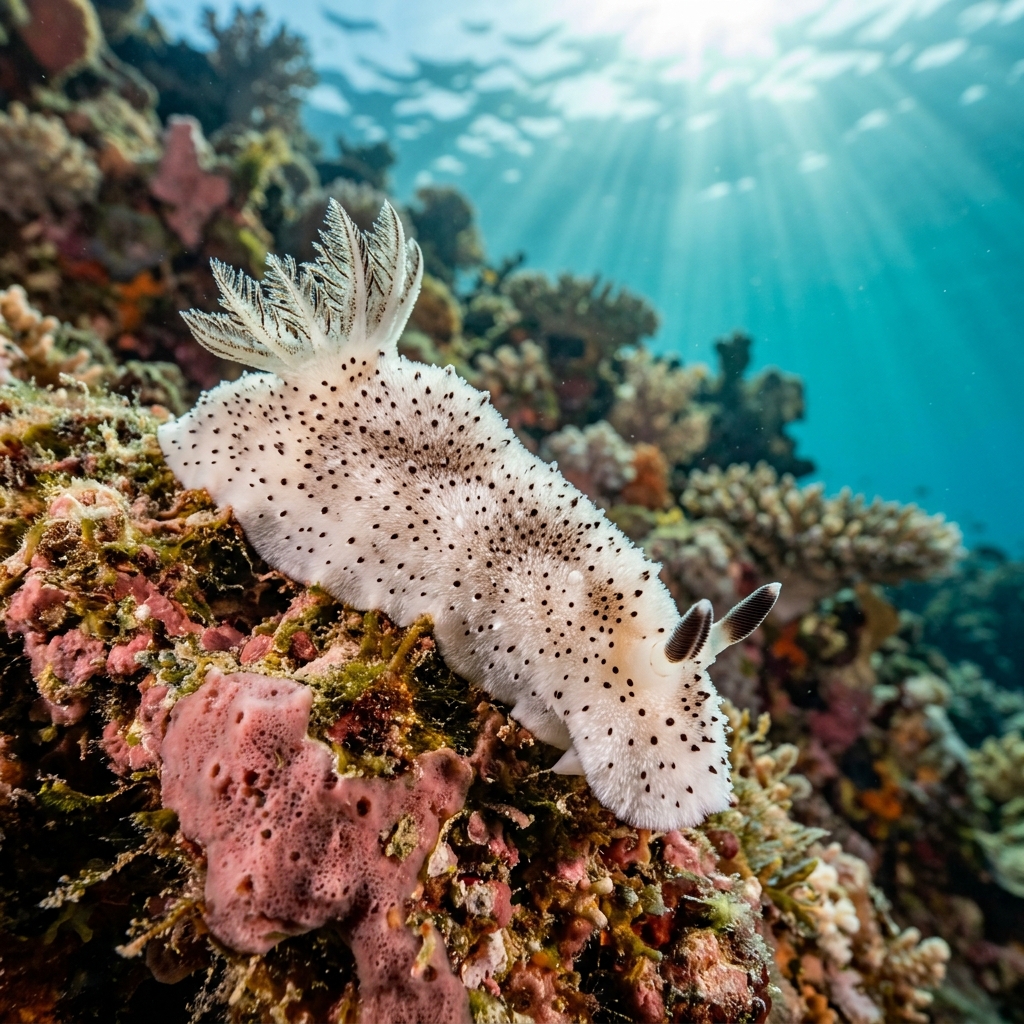
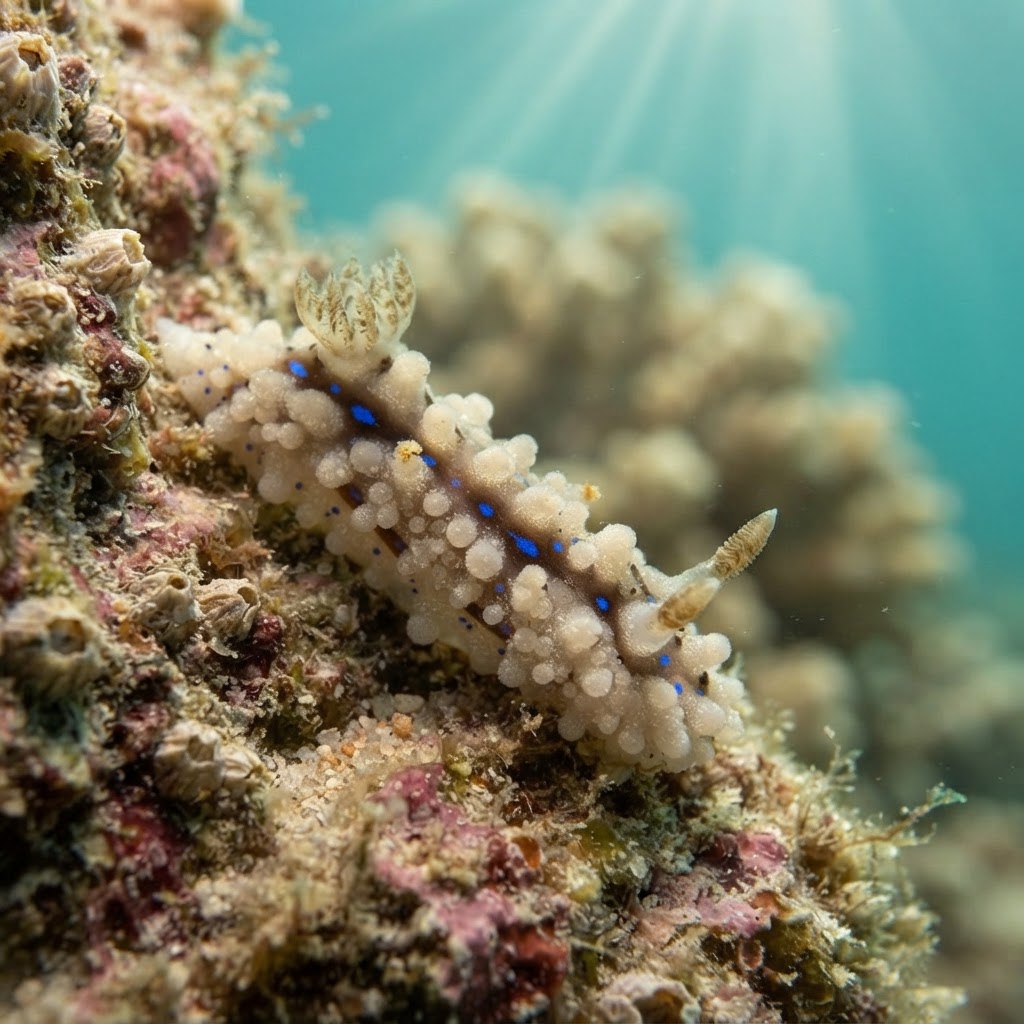
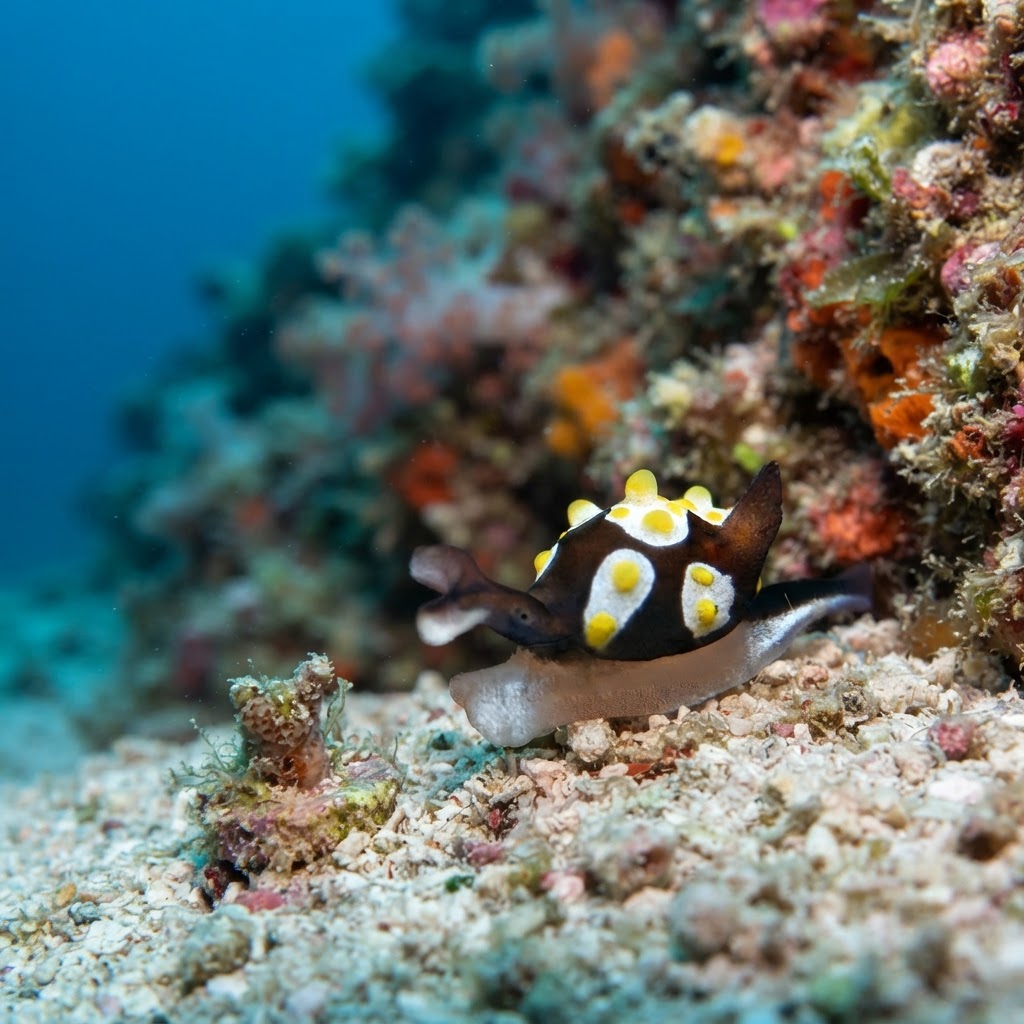
Small, smooth, egg-shaped body with a translucent to pale yellowish sheen that gives it the look of a fried egg sitting on the seabed. No shell is visible externally; the body is soft, glossy and rounded with no obvious appendages or frilly gills breaking up the outline. Its plain, unmarked surface and simple oval shape are the main things to key on against the fussier headshield slugs it shares habitat with.
Found crawling slowly over sand, rubble or muck bottoms rather than up on hard coral, usually spotted by divers doing a slow, close-focus scan of the substrate. It shows no reaction to divers beyond its usual unhurried grazing pace, making it an easy subject to photograph once located. Most sightings come from depths well within recreational limits, on the sandy fringes and slopes where bubble snails tend to forage.
Like other bubble snails, it lacks an external shell as an adult and relies on its plain, low-profile shape to blend into sand and silt rather than on colour or pattern for camouflage.
No clear seasonal pattern shows up in the sightings, and with a comfortable range of roughly 24 to 30C across its sites it is present on tropical reefs year-round. Divers in Sabah or Taiwan can reasonably expect a chance of finding it on any visit rather than needing to time a particular month.
Reef neighbours a diver could mistake it for. Use the identification notes above to tell them apart.
Most reliably logged in Sabah, Malaysia, which accounts for the bulk of sightings, with further records from Sumatra in Indonesia and Xiaoliuqiu and Longdong in Taiwan. Smaller but steady numbers also turn up around Luzon in the Philippines, making this a species with a clear Southeast Asian and Taiwanese spread rather than a single hotspot.
Mapping where Fried Egg Bubble Snail is logged…
Sabah in Malaysia is the strongest area for sightings, with further records from Sumatra in Indonesia, and Xiaoliuqiu and Longdong in Taiwan, plus Luzon in the Philippines.
There is no detected seasonal pattern, and it sits comfortably in 24 to 30C water, so it is a year-round find on the reefs and muck sites where it occurs.
Look for a small, smooth, egg-shaped body with a translucent pale yellow tone, no visible shell, and a plain unmarked surface, usually crawling slowly over sand or rubble rather than on coral.
No, it poses no danger to divers and can be observed and photographed safely at close range without any risk of sting or bite.
As an adult it has no external shell, unlike many of its bubble snail relatives, relying instead on its smooth, low profile to stay inconspicuous on sand and silt bottoms.
Site and sighting data is aggregated from diver logs, iNaturalist and GBIF. For taxonomy and conservation status:
Light-spotted Aegires
3,168 sites