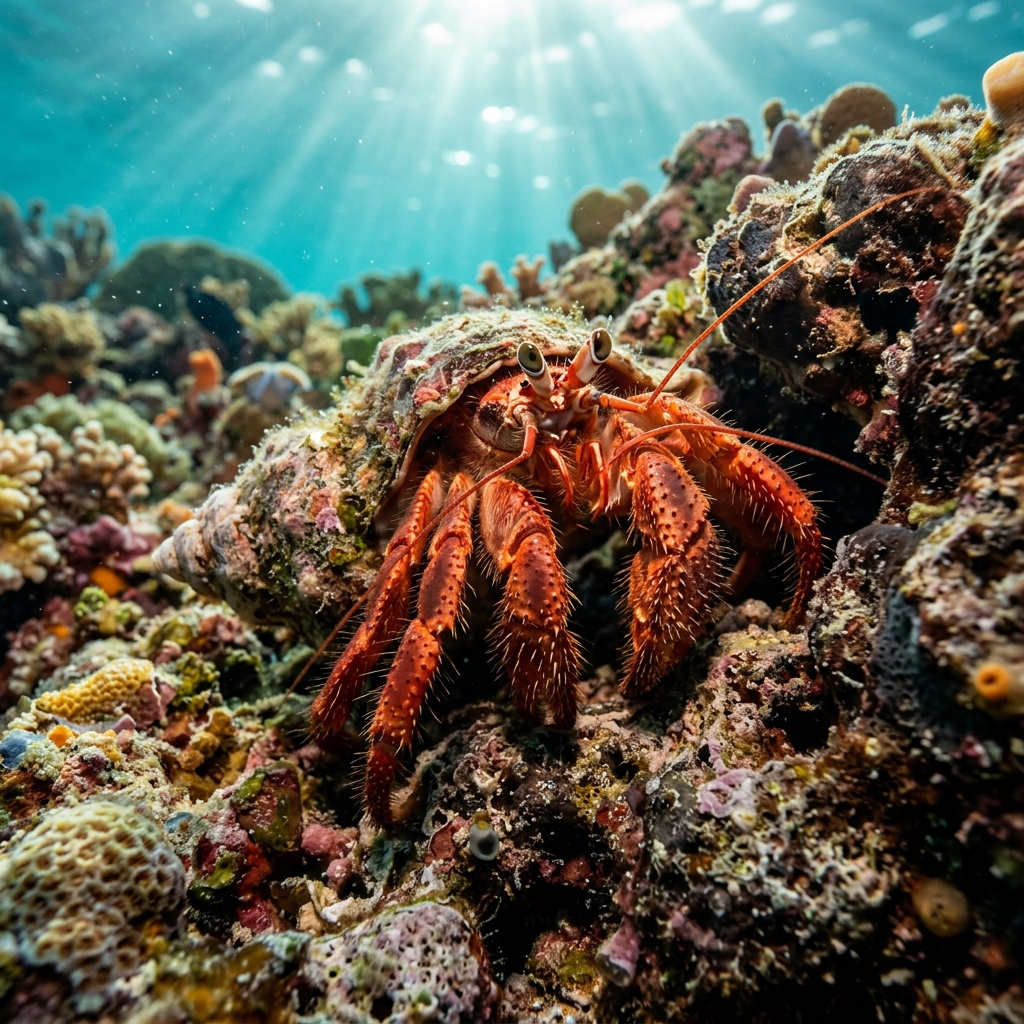
Potamidae spp.
Freshwater crabs live in rivers and streams at 16-28 °C worldwide. Learn how to spot and identify these elusive crustaceans on your next freshwater dive.
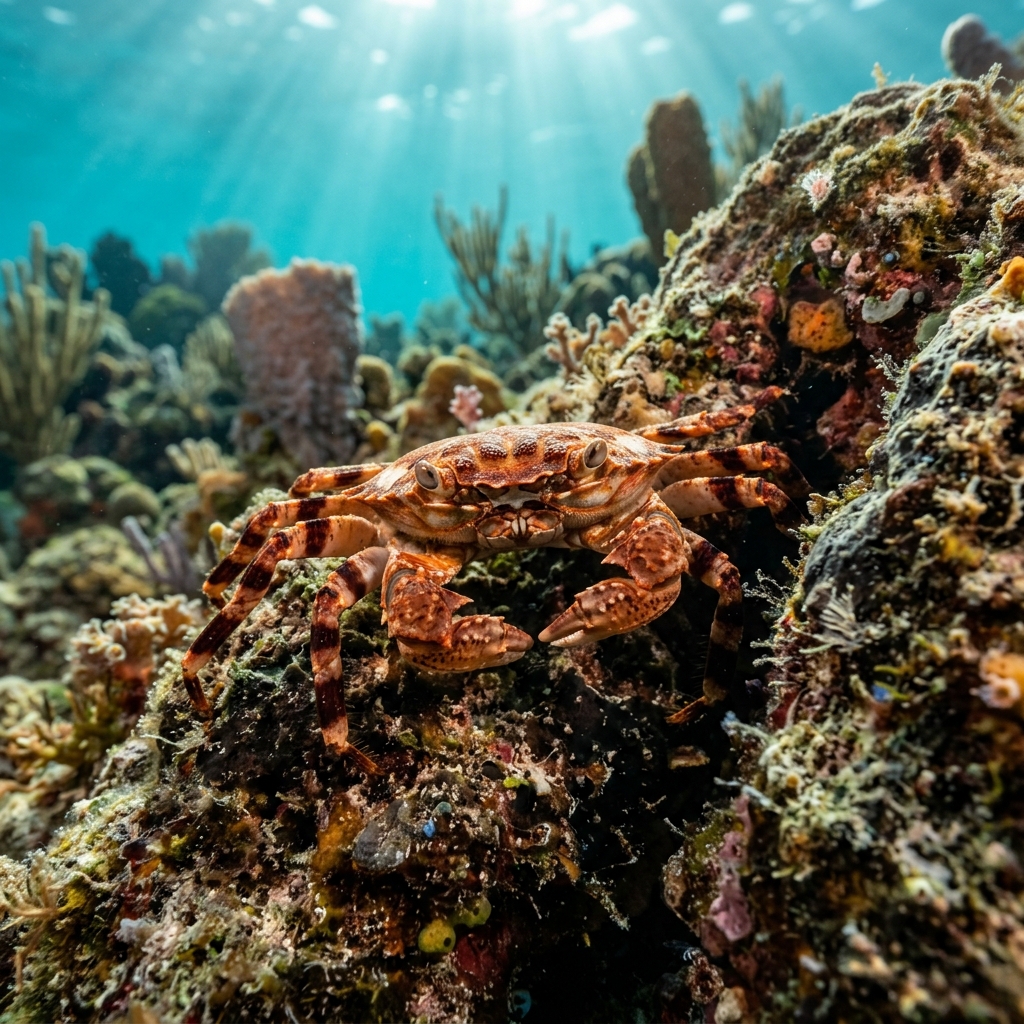
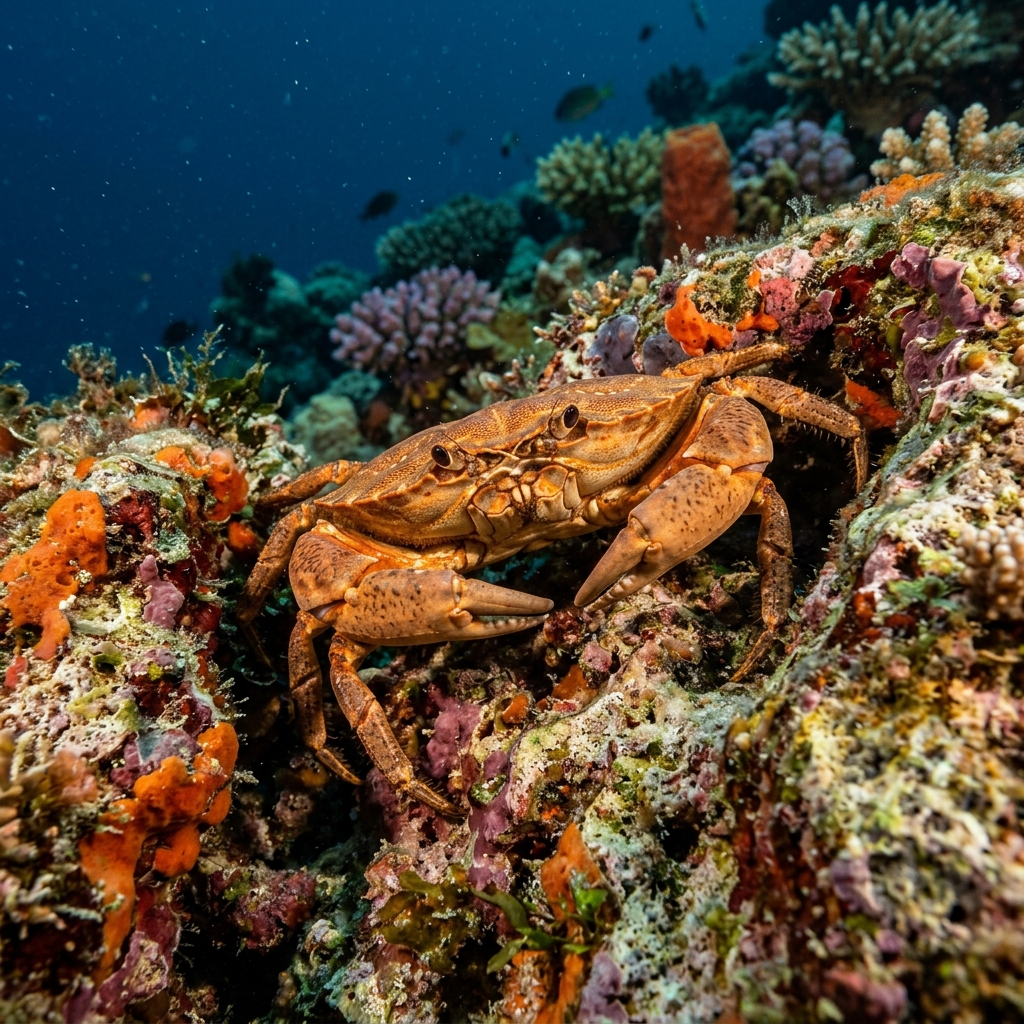
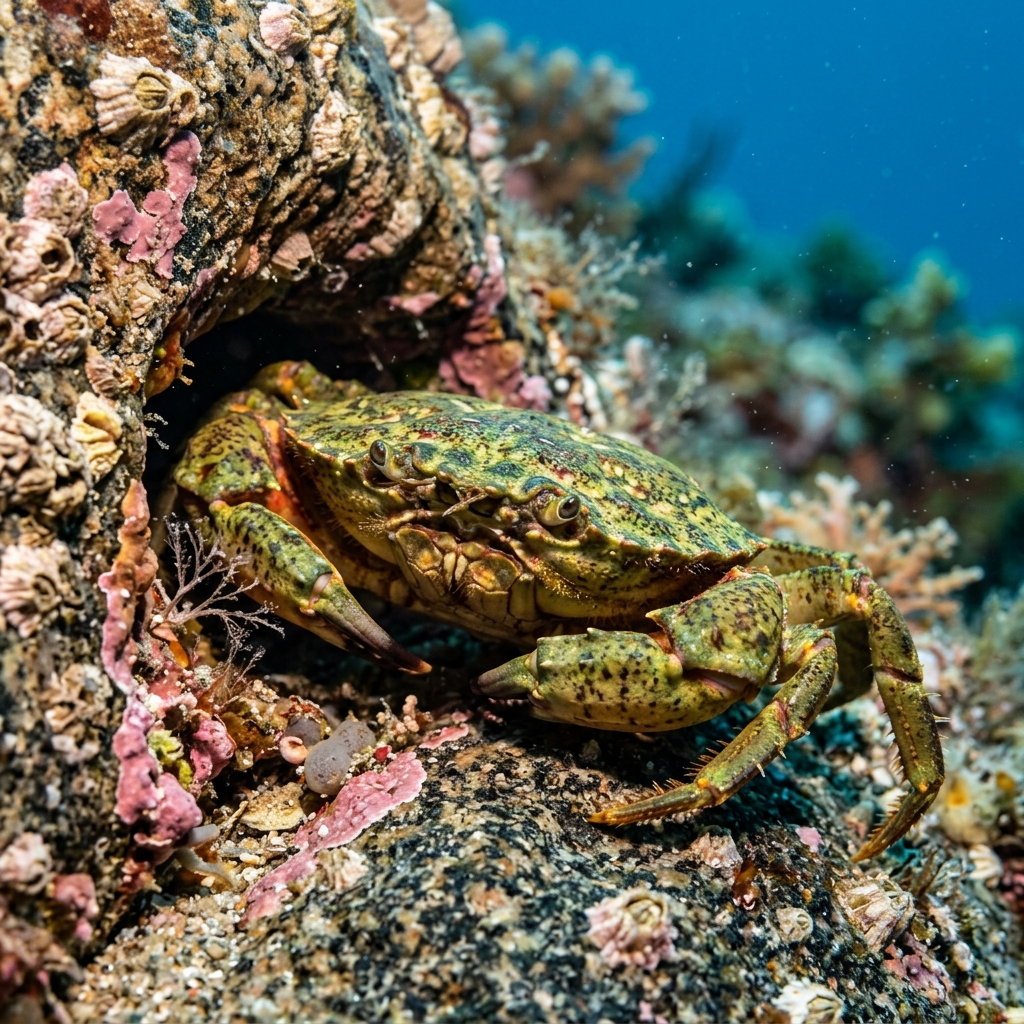
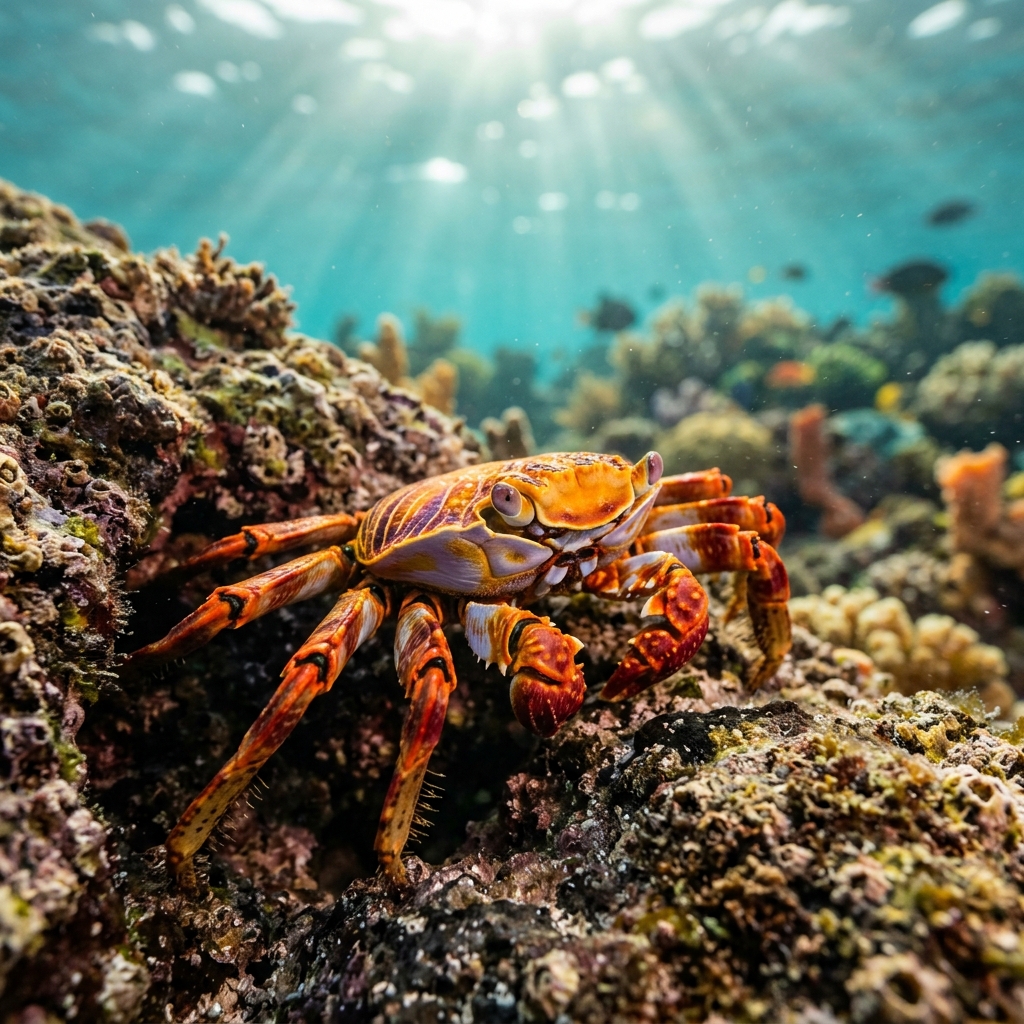
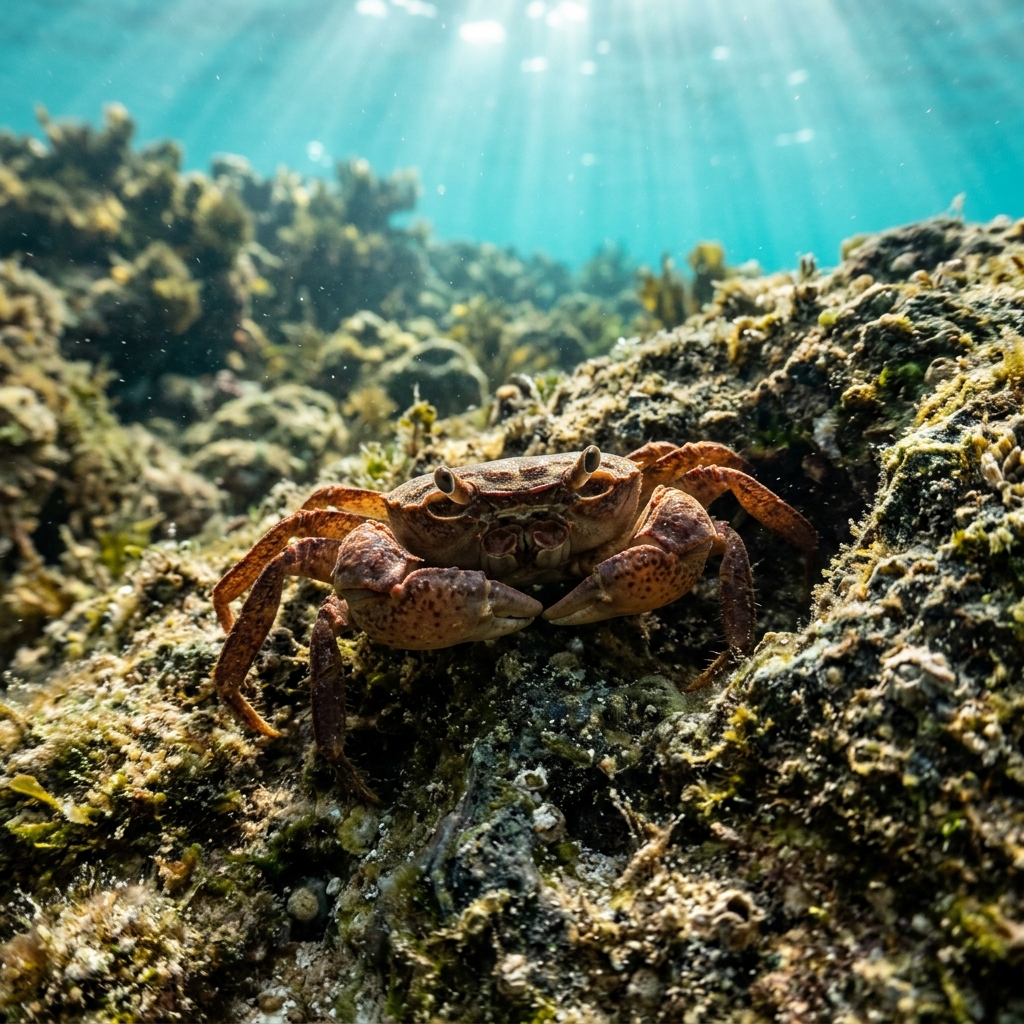
Potamidae crabs share the classic crab body plan but are built for freshwater: a broad, domed carapace (the fused upper shell) that tends towards earthy browns, olive greens, and reddish tones that blend with riverbed substrate. Legs are sturdy and flattened for gripping wet rocks and debris rather than swimming. Size varies considerably across the family, from coin-sized species to palm-width individuals, so overall shape and habitat are more reliable ID cues than size alone. Males carry a narrow, triangular flap on the underside, while females have a noticeably wider, rounded flap used to carry eggs.
Freshwater crabs are most often spotted pressed against submerged rocks, tucked under overhangs, or wedged between cobbles where current is slower. They tend to freeze when a diver's shadow passes over them, relying on camouflage before retreating sideways into cover. Early morning and dusk are generally the most productive times to look, when crabs venture further from hiding spots to forage.
Female Potamidae crabs brood their eggs directly under the broad abdominal flap rather than releasing larvae into open water, meaning the young emerge as fully formed miniature crabs with no free-swimming larval stage, a rare reproductive strategy among crustaceans and one reason the family has diversified into isolated river systems worldwide.
There is currently insufficient sighting data to identify a season, so encounters should be treated as possible year-round. Observed water temperatures range from roughly 16 to 29 °C, suggesting these crabs occupy temperate to tropical freshwater habitats across multiple climatic zones.
No sightings have yet been logged on Fin, so no specific sites or regions can be highlighted from diver data. As a wholly freshwater family, encounters are made by snorkelling or diving rivers, streams, and freshwater springs rather than marine reef sites. If you log a sighting, you will be among the first to map this group on Fin.
Mapping where Freshwater Crab is logged…
Potamidae crabs live in rivers, streams, and freshwater springs across tropical and subtropical regions of Asia, Africa, and southern Europe. No diver sightings have been logged on Fin yet, so encounters are uncharted. Snorkelling shallow, rocky streams is the best approach.
No seasonal pattern has emerged from diver data. Based on recorded water temperatures of 16 to 29 °C, these crabs are active across a wide temperature range, suggesting year-round presence wherever suitable freshwater habitat exists.
Look for a broad, domed carapace in browns or olive greens pressed against submerged rocks or riverbed debris. The compact body with sturdy, non-swimming legs and freshwater setting distinguishes Potamidae from any marine crab. Females show a noticeably wide rounded underflap; males have a narrower triangular one.
Size varies considerably across the Potamidae family. Some species are coin-sized, while others reach the width of a human palm. Because this is a diverse family spanning many genera, body shape and habitat are more reliable ID cues than size.
No. Unlike most marine crabs, Potamidae females brood their eggs under a protective abdominal flap and the young hatch directly as miniature fully formed crabs. This skipping of a free-swimming larval phase has allowed the family to colonise isolated river systems far from the sea.
Site and sighting data is aggregated from diver logs, iNaturalist and GBIF. For taxonomy and conservation status:
European Green Crab
2,469 sites