Phyllodesmium macphersonae
A rare, freckled nudibranch found mostly in Victoria and South Australia, plus Bali reefs, in water from 19 to 29.5C.
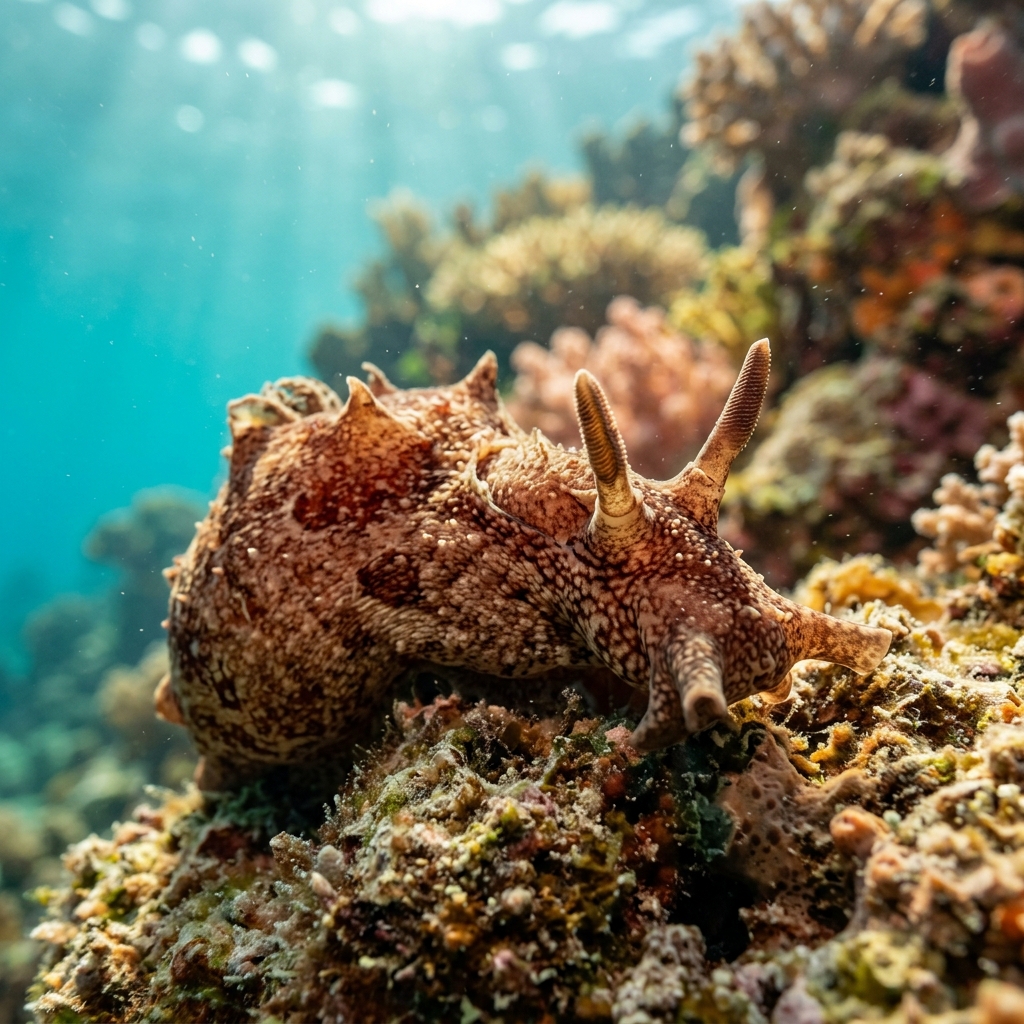
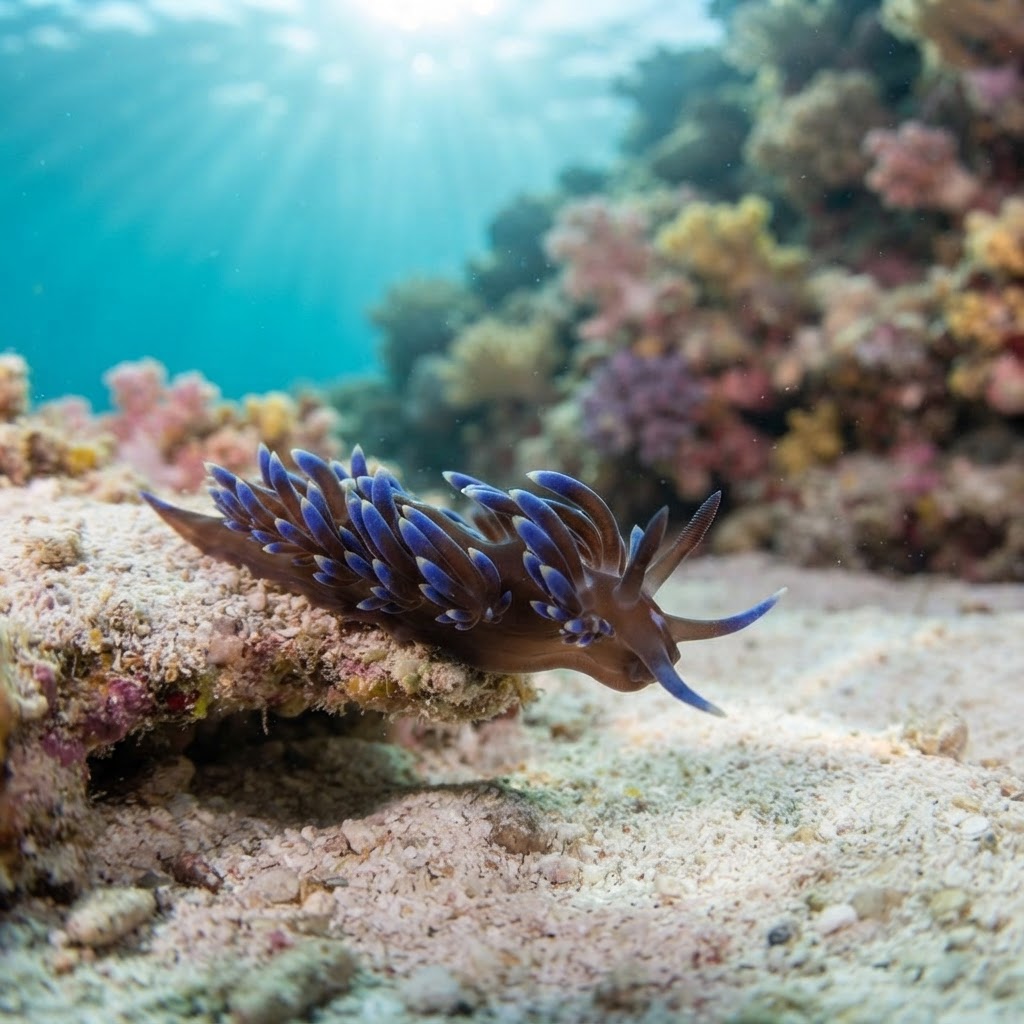
A small, slug-bodied nudibranch with a mottled, freckled brown-and-cream pattern that helps it blend into the soft coral branches it feeds on. Its back is covered in finger-like projections (cerata) that often pick up the colour of the coral polyps it has been grazing on, so individuals can look surprisingly different reef to reef. Look closely rather than for a bold pattern; this one relies on camouflage, not display colours.
Divers find it parked on or grazing over soft coral colonies, moving slowly as it feeds on the coral's tissue and polyps. It shows no reaction to divers beyond retracting slightly if disturbed, and is usually spotted during a slow, close look at soft coral rather than out in open water.
Like other members of its genus, it can absorb pigments and even functional algae from the soft coral it eats, which is part of why its colouring can shift depending on what it has been grazing on.
Sighting records don't show a clear season, and its comfort range of 19.1 to 29.5C spans temperate and tropical reefs, so divers log it year-round rather than in a narrow window.
Reef neighbours a diver could mistake it for. Use the identification notes above to tell them apart.
Most reliably logged in Australia, especially Victoria and South Australia, with further sightings along New South Wales and Queensland. Outside Australia it turns up in Bali, Indonesia, and in the Visayas region of the Philippines, though at lower numbers.
Mapping where Freckled Soft Coral Eater is logged…
Australia is the strongest region, particularly Victoria and South Australia, with additional sightings in New South Wales and Queensland. It also appears on reefs in Bali, Indonesia, and the Visayas in the Philippines.
There's no strong seasonal pattern in the sighting data, and it tolerates a wide temperature range from 19.1 to 29.5C, so it's considered a year-round find wherever it occurs.
Look for a small, freckled brown-and-cream nudibranch with soft, finger-like projections along its back, usually sitting directly on soft coral. Its colouring often matches the coral it's feeding on, making it easy to miss.
No, it poses no risk to divers. It's a small, slow-moving grazer that can simply be observed and left undisturbed on its coral host.
It feeds directly on soft coral polyps and tissue, and can take up pigments and symbiotic algae from its coral prey, which sometimes changes its own colouring.
Site and sighting data is aggregated from diver logs, iNaturalist and GBIF. For taxonomy and conservation status:
Light-spotted Aegires
3,168 sites