Callechelys lutea
A sand-dwelling eel most reliably logged in Hawaii, in water around 24 to 26C. Here's how divers tell it apart on the reef.
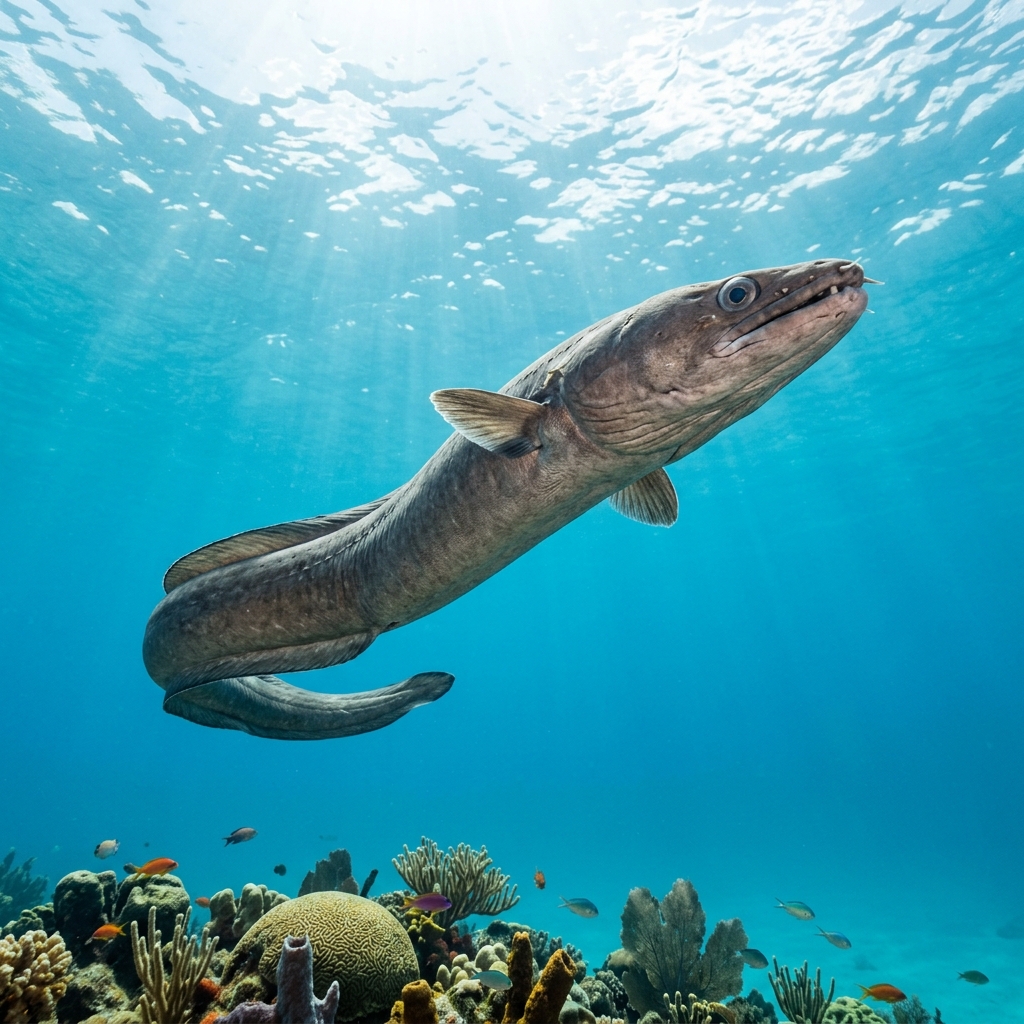
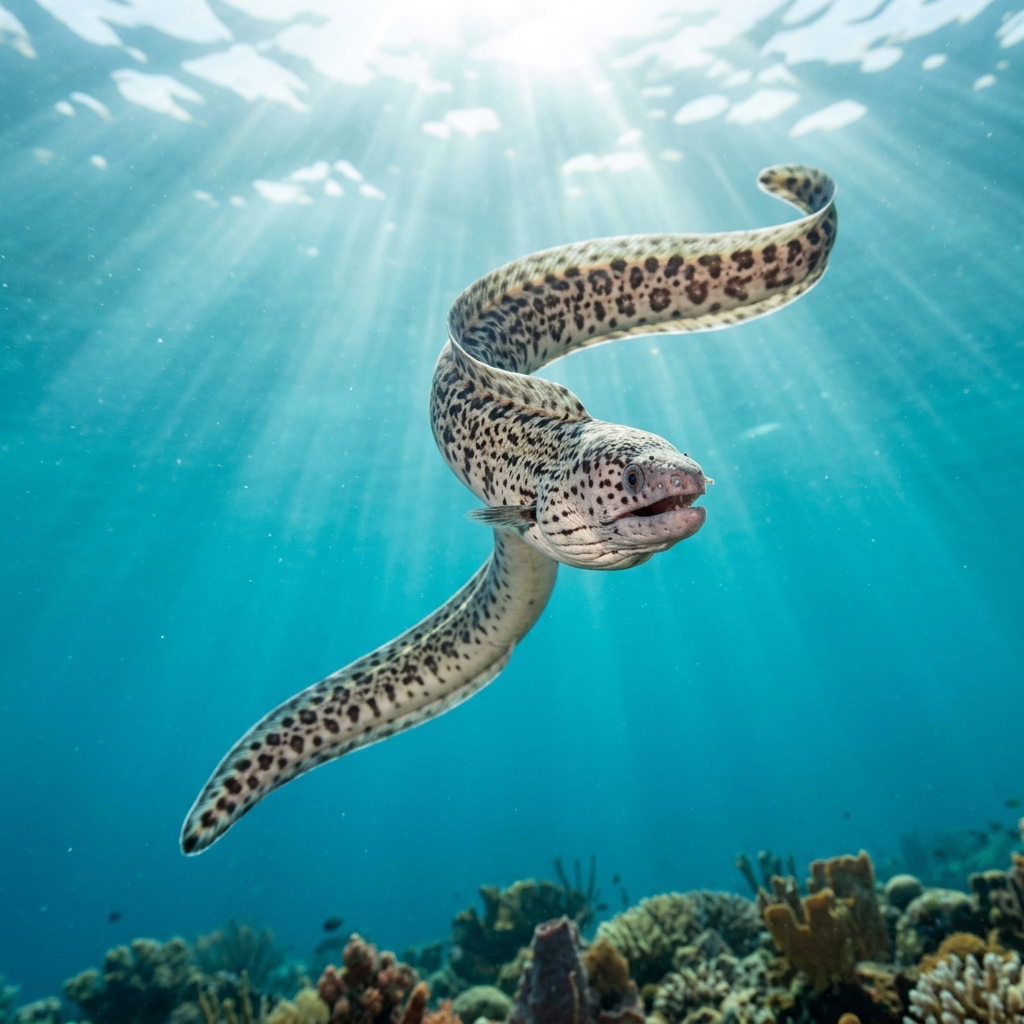
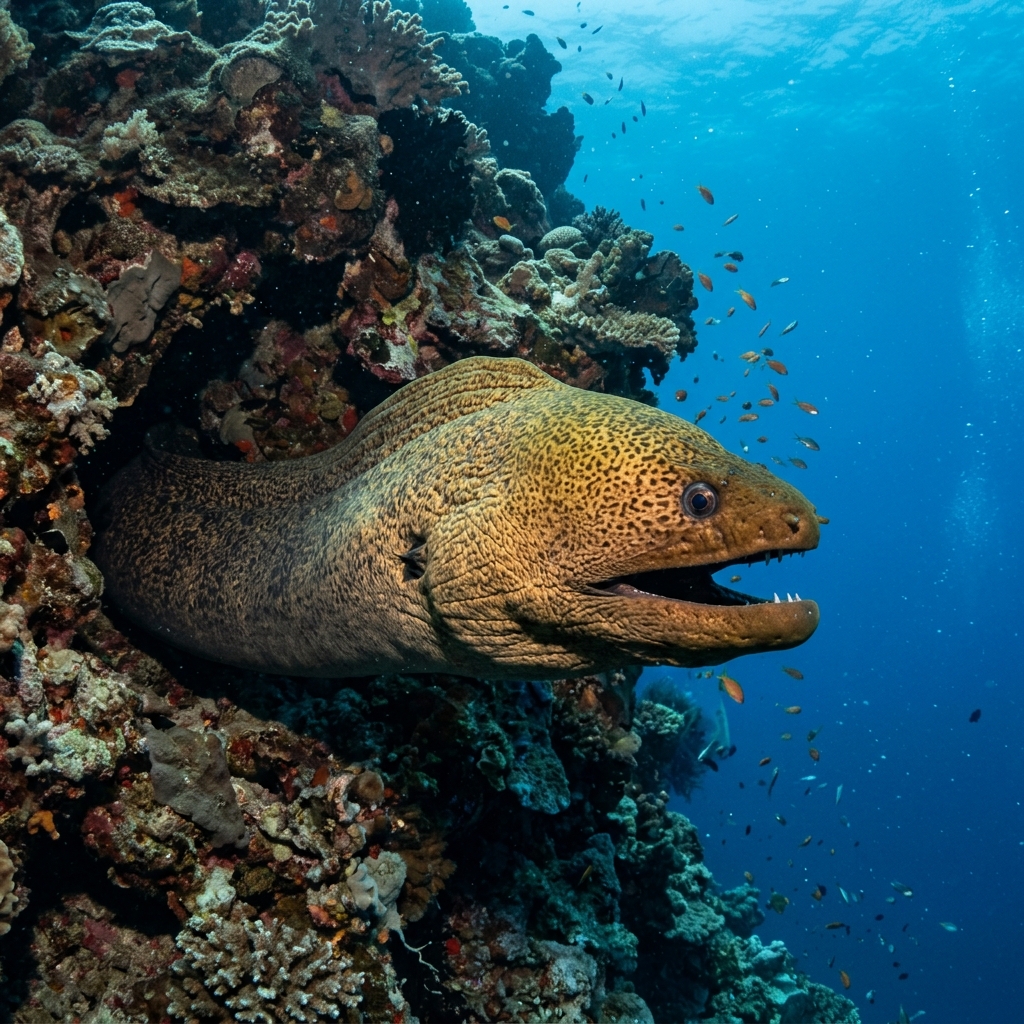
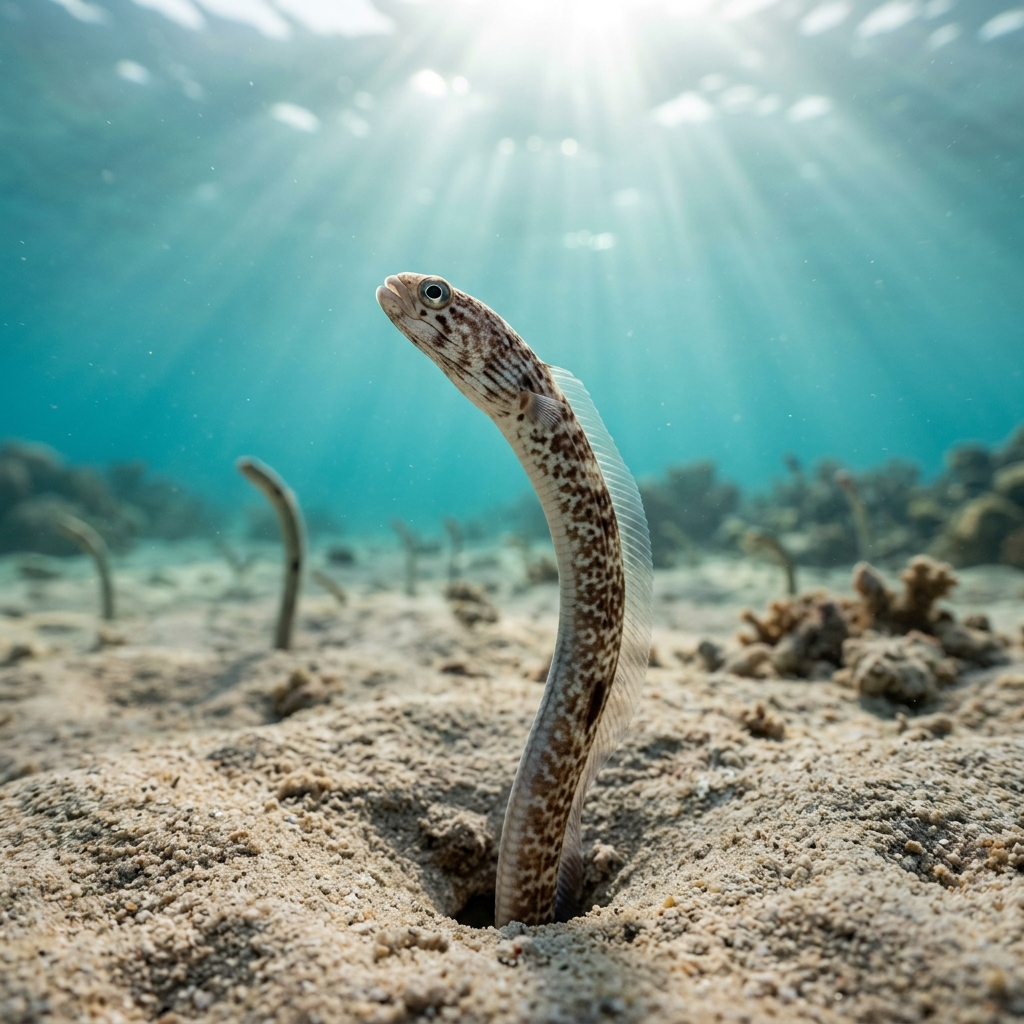
Grows to around 73cm and moves like a thin yellowish rope, usually seen with just the head or a short length of body poking out of sand. The skin is pale yellow to cream with fine dark speckling scattered across it, which is where the freckled name comes from. It has no pectoral fins and a blunt, rounded snout rather than the pointed jaws of a moray, and it lacks the tall dorsal fin that runs the length of a ribbon eel.
Spends most of its time buried in sand or rubble with only its head visible, watching the water column for small prey to ambush. Divers tend to spot it on sandy patches near reef edges rather than on the reef structure itself, often during slow, close-focus passes rather than open-water swims. It tends to hold still and retreat into the sand if approached too quickly, so a slow, low approach gives the best look.
Like other snake eels, it can back into sand tail-first using a hardened, pointed tail tip, letting it disappear into the substrate almost instantly rather than needing a burrow already dug.
Sightings show no clear seasonal pattern, and the water temperature range recorded, 24.2 to 26.4C, matches Hawaii's reef conditions pretty much year-round. That means there's no strong reason to time a trip around a particular month for this one.
Every logged sighting in the data comes from the United States, specifically Hawaii, making it the one place to reliably plan a dive around this species. Sightings there run from common to uncommon depending on the site, so it's worth asking a local dive shop which sandy patches or rubble flats they've had luck at.
Mapping where Freckled Snake Eel is logged…
Hawaii is the region where this species is most consistently logged by divers, with sightings ranging from common to uncommon across different sites there.
There's no detected season for this species, and it sits comfortably in 24 to 26C water year-round in Hawaii, so any month is fair game.
Look for a slim, pale yellow to cream eel with fine dark speckling, usually with just its head showing above sand. It lacks pectoral fins and has a blunt snout rather than the sharp jaws of a moray.
They typically reach around 73cm in length, which underwater looks like a slender rope of body rather than a bulky eel.
No, they're not considered a danger to divers. They spend most of their time buried in sand and retreat if approached, rather than confronting divers.
They can reverse tail-first into sand using a hardened, pointed tail tip, letting them vanish into the substrate in an instant rather than relying on a pre-dug burrow.
Site and sighting data is aggregated from diver logs, iNaturalist and GBIF. For taxonomy and conservation status:
Garden Eel
2,448 sites