Scarus forsteni
Uncommon but reliable in Okinawa and Green Island, Taiwan, Forsten's Parrotfish grazes warm reefs at 25-29C year-round.
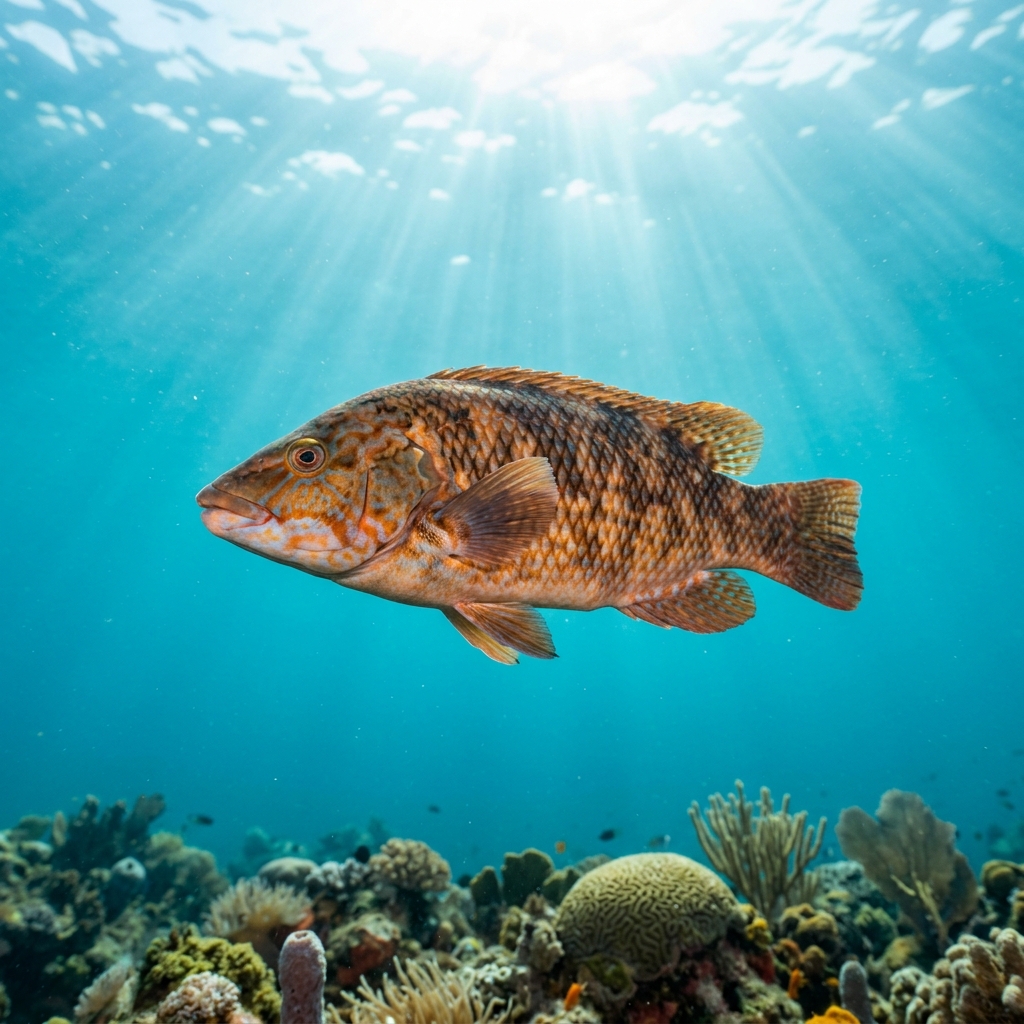
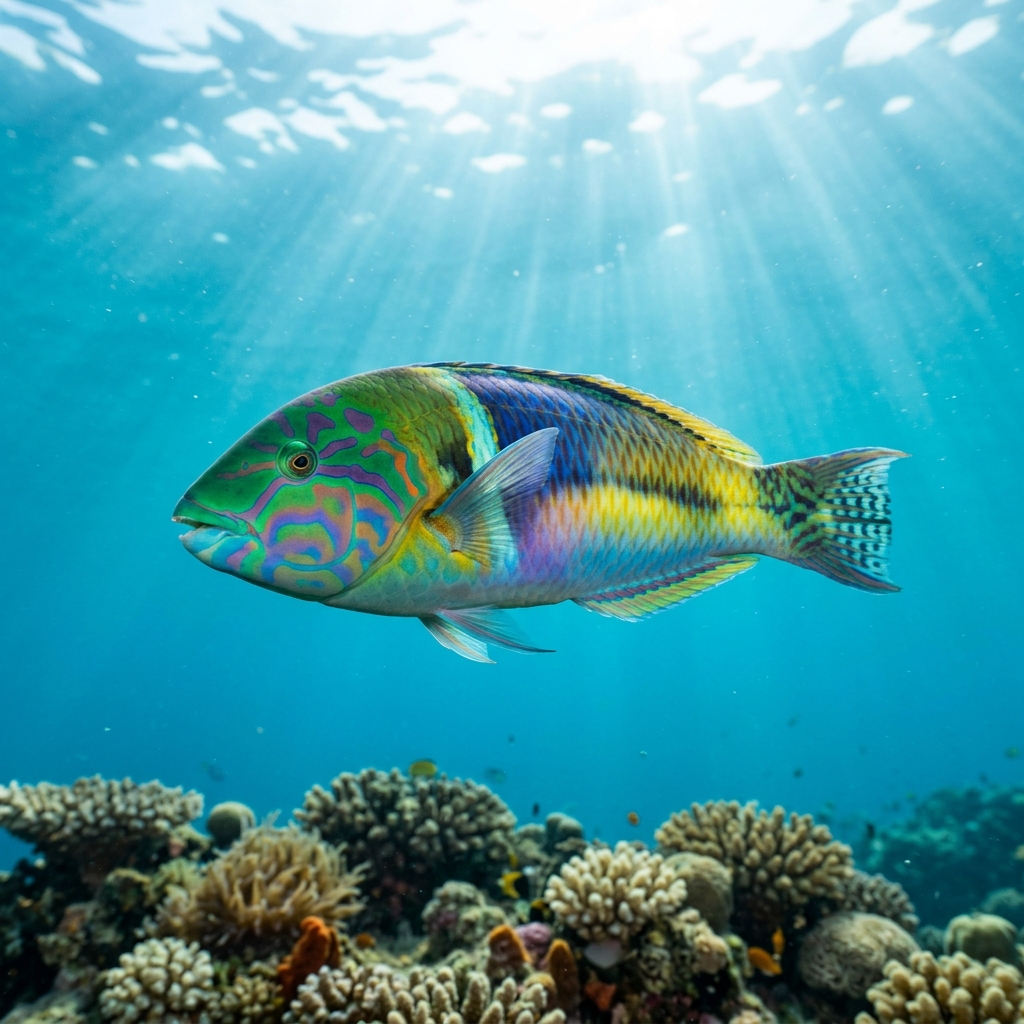
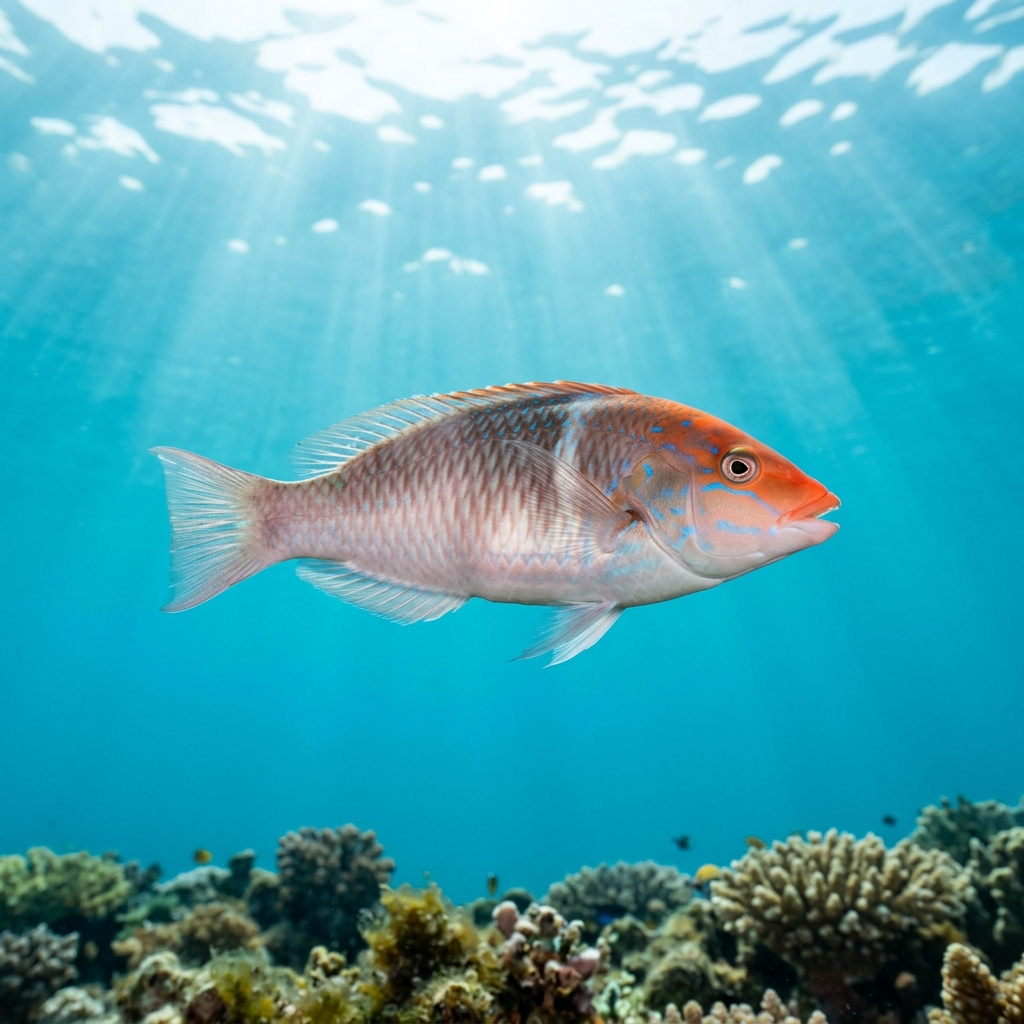
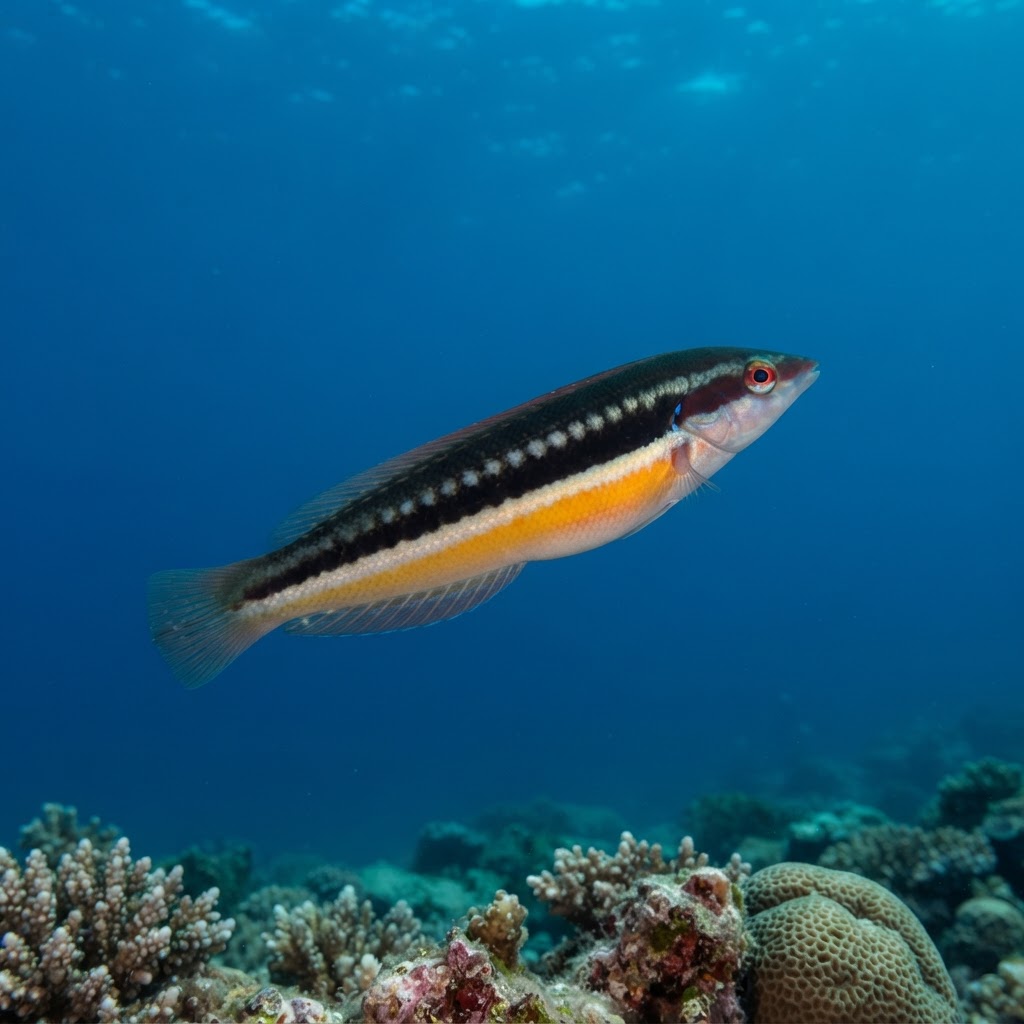
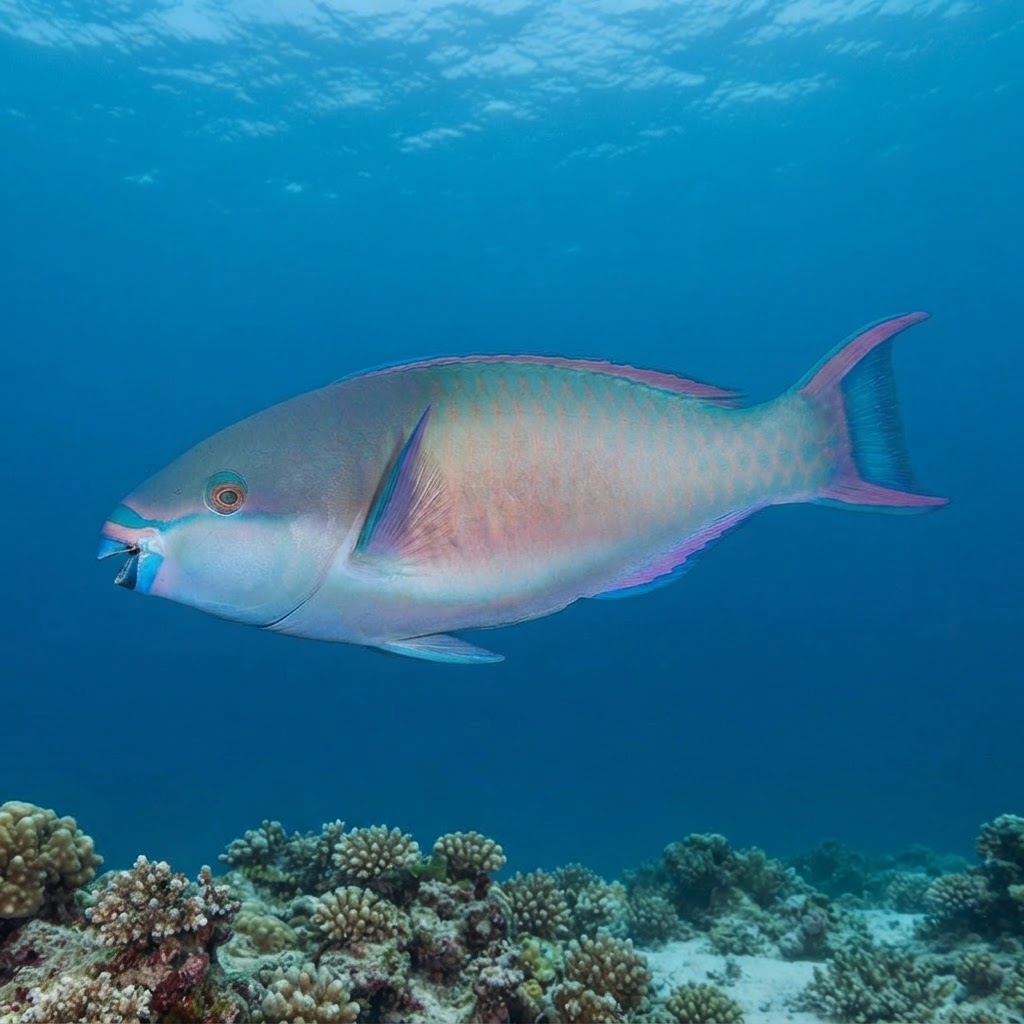
A chunky reef fish reaching around 38 cm, with a thick-set body and the fused, beak-like teeth typical of parrotfish. Adults show a mix of blue-green tones with pink or orange highlights along the scale edges and fins, and a blunt snout used for scraping algae off rock and dead coral. Look for it working a patch of reef with slow, deliberate bites rather than darting movements.
Divers typically find it browsing solo or in small groups over reef flats and slopes, scraping algae from dead coral and rock with steady, unhurried passes. It tends to keep a comfortable distance from divers rather than fleeing outright, and sightings run from shallow reef crests down to around 30 metres, with most reports calling it uncommon rather than a guaranteed encounter.
Like other parrotfish, its grazing helps keep algae in check on the reef, and the sand-like waste it produces after crunching through coral rock is a real contributor to reef sediment over time.
No clear seasonal pattern shows up in the data, and with a comfortable range of 25 to 29.3C it's a year-round resident on the tropical and subtropical reefs where it's found. Plan around good reef conditions generally rather than a specific month.
Most consistently logged in Japan, especially around Okinawa and the wider Ryukyu Islands, and in Taiwan, particularly Green Island and Orchid Island. Also a steady find across the Philippines, in Luzon, Palawan, and the Visayas, with smaller but confirmed populations in Indonesia's Nusa Tenggara, French Polynesia's Society Islands, Guam, Fiji, and the Marshall Islands.
Mapping where Forsten's Parrotfish is logged…
Best chances are in Japan's Okinawa and Ryukyu Islands and around Green Island and Orchid Island in Taiwan. It also turns up reliably across the Philippines in Luzon, Palawan, and the Visayas.
There's no strong season in the sighting data, so it's a year-round possibility on the warm reefs it favours, roughly 25 to 29C. Any time you'd normally dive these regions works.
Look for a solidly built parrotfish around 38 cm with a blue-green body, pink-edged scales, and the fused beak-like teeth used to scrape algae off the reef. It moves slowly and deliberately while feeding rather than darting around.
They typically reach about 38 cm in length, a medium-sized parrotfish easy to spot working a patch of reef.
No, they pose no danger to divers. They're herbivores focused on grazing algae and will simply move off if you get too close.
Its constant grazing on dead coral and rock breaks material down into fine sediment, making it one of the reef's natural sand producers over time.
Site and sighting data is aggregated from diver logs, iNaturalist and GBIF. For taxonomy and conservation status:
Bird Wrasse
3,632 sites