Pugettia foliata
A leaf-shaped kelp crab found in the cool water of the Pacific Northwest and British Columbia, at 8.5 to 14.5C, uncommon but there if you look.
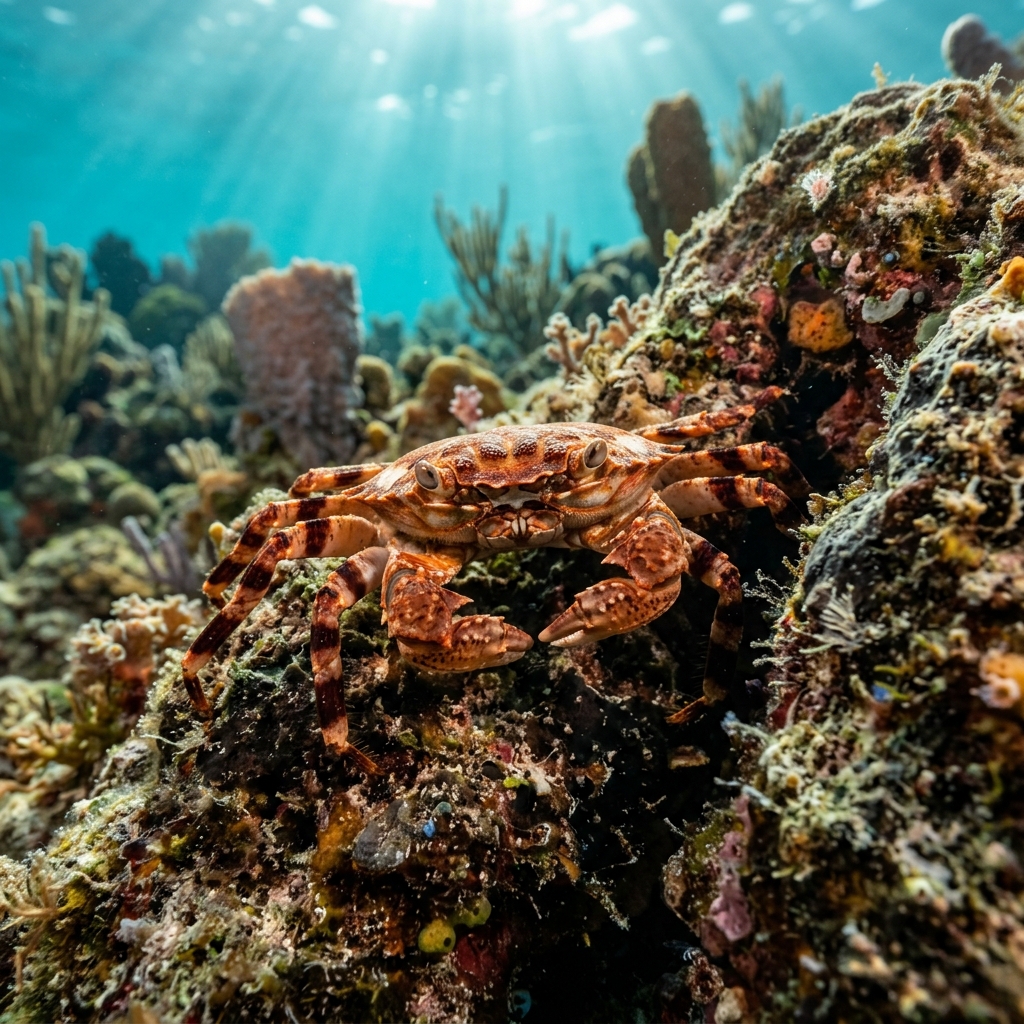
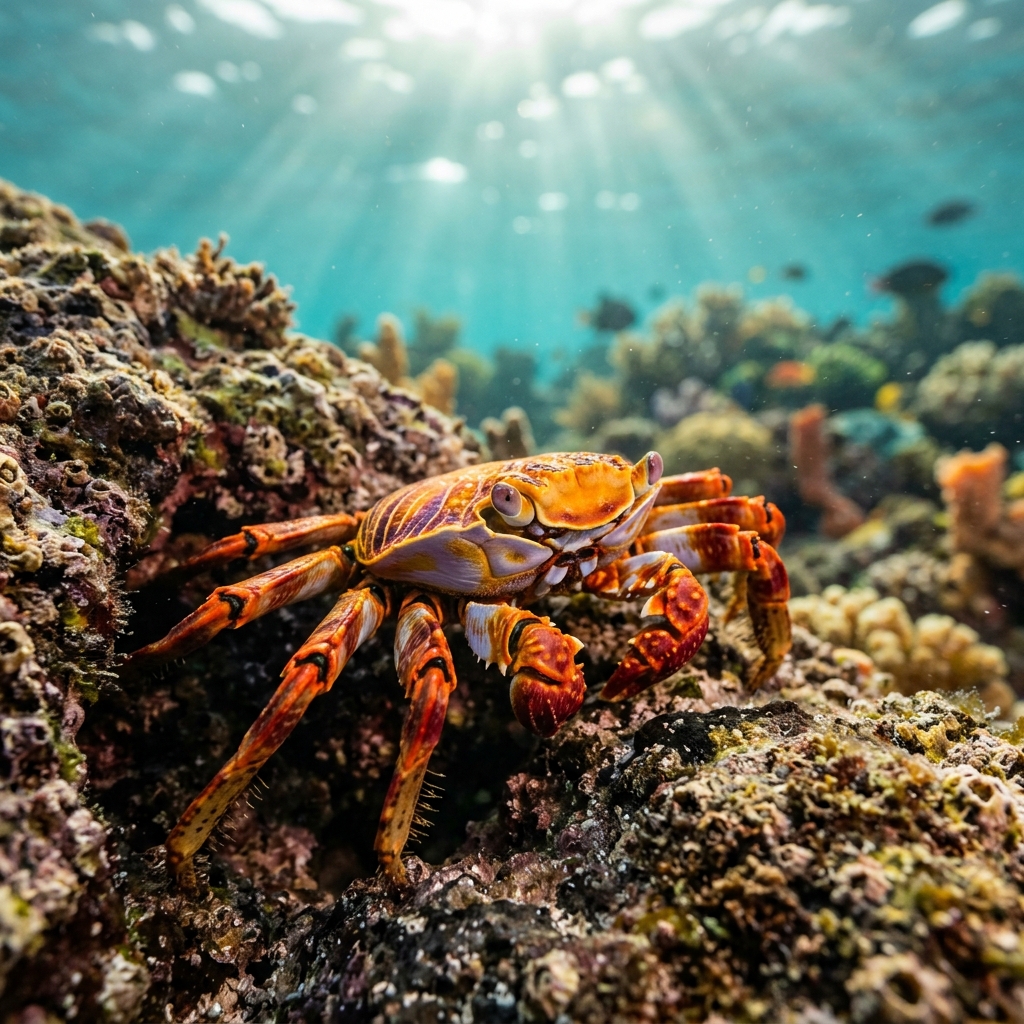
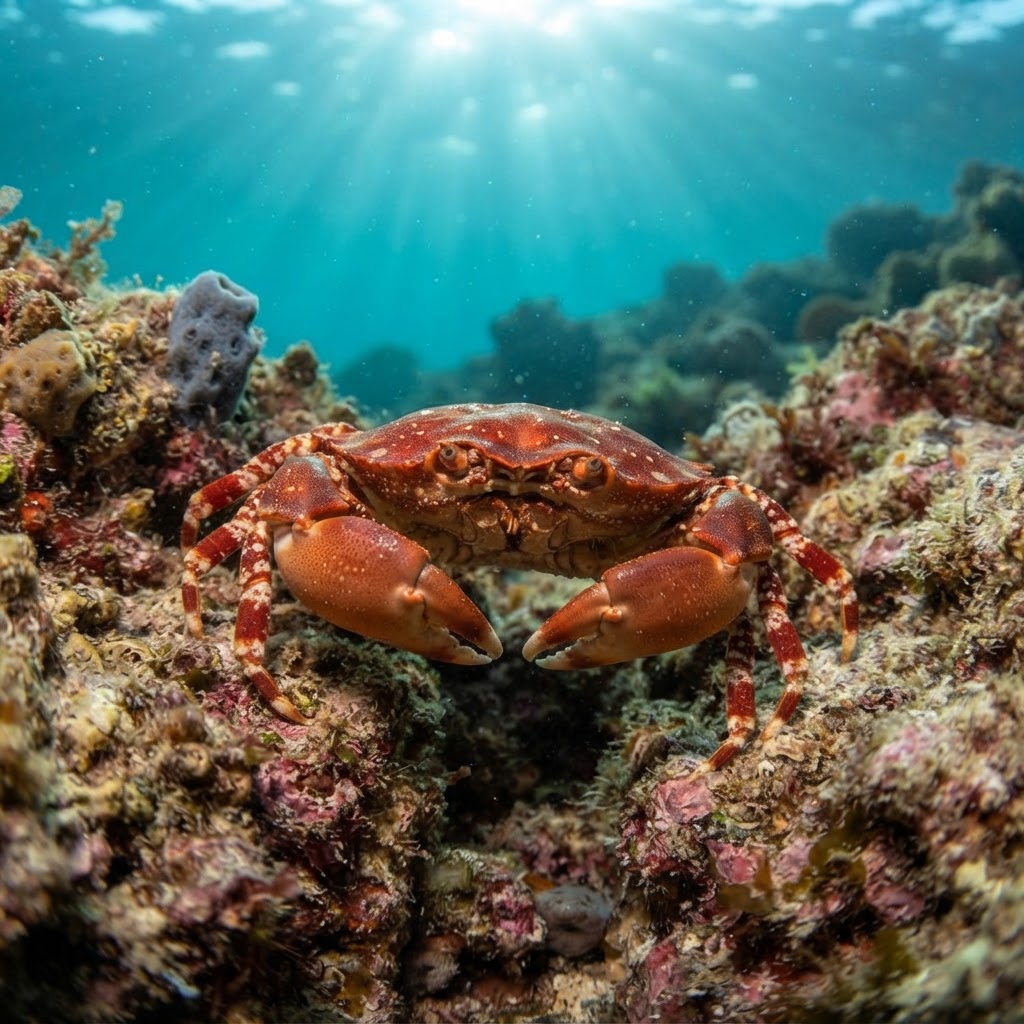
Small, flat-bodied crab with a triangular, leaf-shaped shell (its name comes from the Latin for leaf) usually mottled brown, olive or reddish to match the kelp and algae it sits on. Legs are slender and often held close to the body, and the whole animal is easy to miss against a kelp blade until it moves. Size stays modest, more of a hand-sized find than an obvious reef feature, so slow, close-focus looking pays off.
Divers typically find it sitting still on kelp blades or holdfasts, often relying on its dull, mottled colouring to blend in rather than fleeing. It moves slowly and tends to stay put when approached, making it a patient subject once spotted rather than one you chase down. Expect it low in the kelp canopy or on adjacent rocky structure rather than out in open water.
Like other kelp crabs it often decorates or camouflages itself using bits of the algae and kelp it lives on, which is exactly why it can be so easy to swim past.
No clear seasonal pattern shows up in the sightings, and with a temperature niche of 8.5 to 14.5C it fits the cool water this coastline holds most of the year, so it is reasonable to look for it on any dive there rather than planning around a season.
Most reliably logged in the Pacific Northwest of the United States and in British Columbia, Canada, with sites clustered on both sides of that shared coastline. These are cool, kelp-forest dives rather than tropical reef dives, so go where the kelp is thick.
Mapping where Foliate Kelp Crab is logged…
It is most consistently reported from the Pacific Northwest in the United States and from British Columbia, Canada, both cool-water kelp forest destinations.
There is no strong season in the sightings, and it sits comfortably in 8.5 to 14.5C water, so it can turn up on Pacific Northwest and British Columbia dives year-round.
Look for a small, flat, triangular shell in mottled brown or olive tones, sitting still on a kelp blade or holdfast rather than swimming about. Its leaf-shaped outline and slow, camouflaged posture are the main giveaways.
Exact size figures are not well documented for this species, but it is a small crab, closer to a leaf or a coin in scale than to a large reef crab, which is part of why it is easy to overlook.
No, it poses no danger to divers and will typically just sit tight on its kelp blade rather than react defensively.
It often uses bits of the kelp and algae around it as camouflage, blending its flattened, leaf-shaped shell into the forest so well that it is more often found by careful searching than by chance.
Site and sighting data is aggregated from diver logs, iNaturalist and GBIF. For taxonomy and conservation status:
European Green Crab
2,469 sites