Oligocottus snyderi
A pocket-sized tidepool fish rarely logged by divers in the Pacific Northwest, comfortable in cold water down to 8.9C.
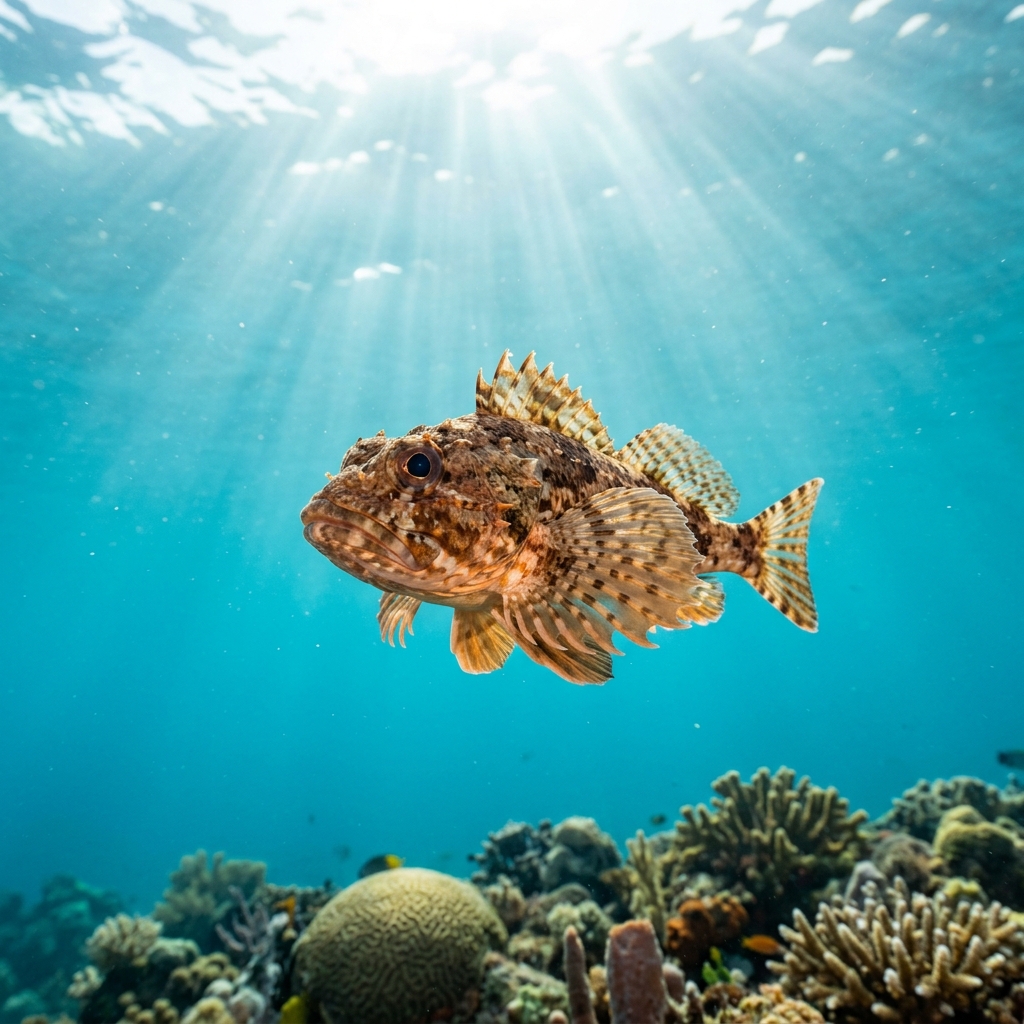
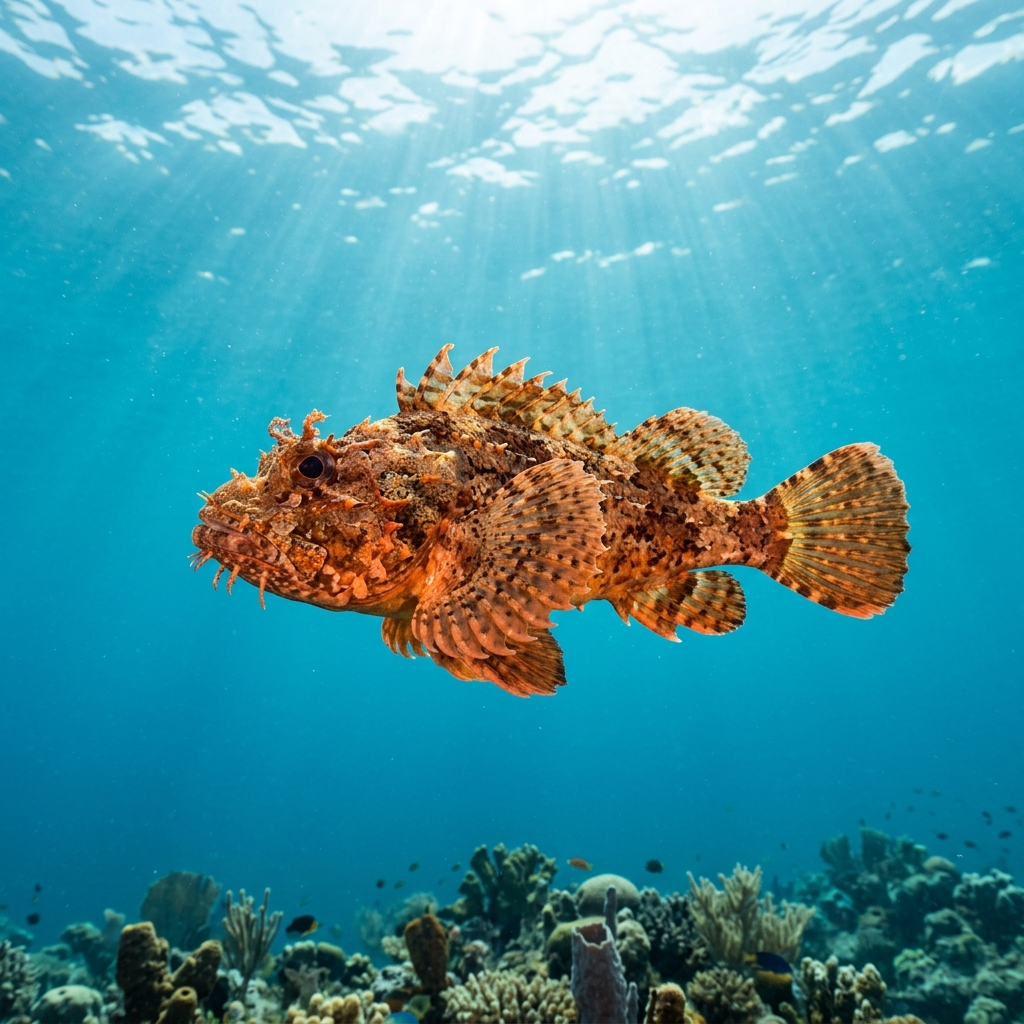
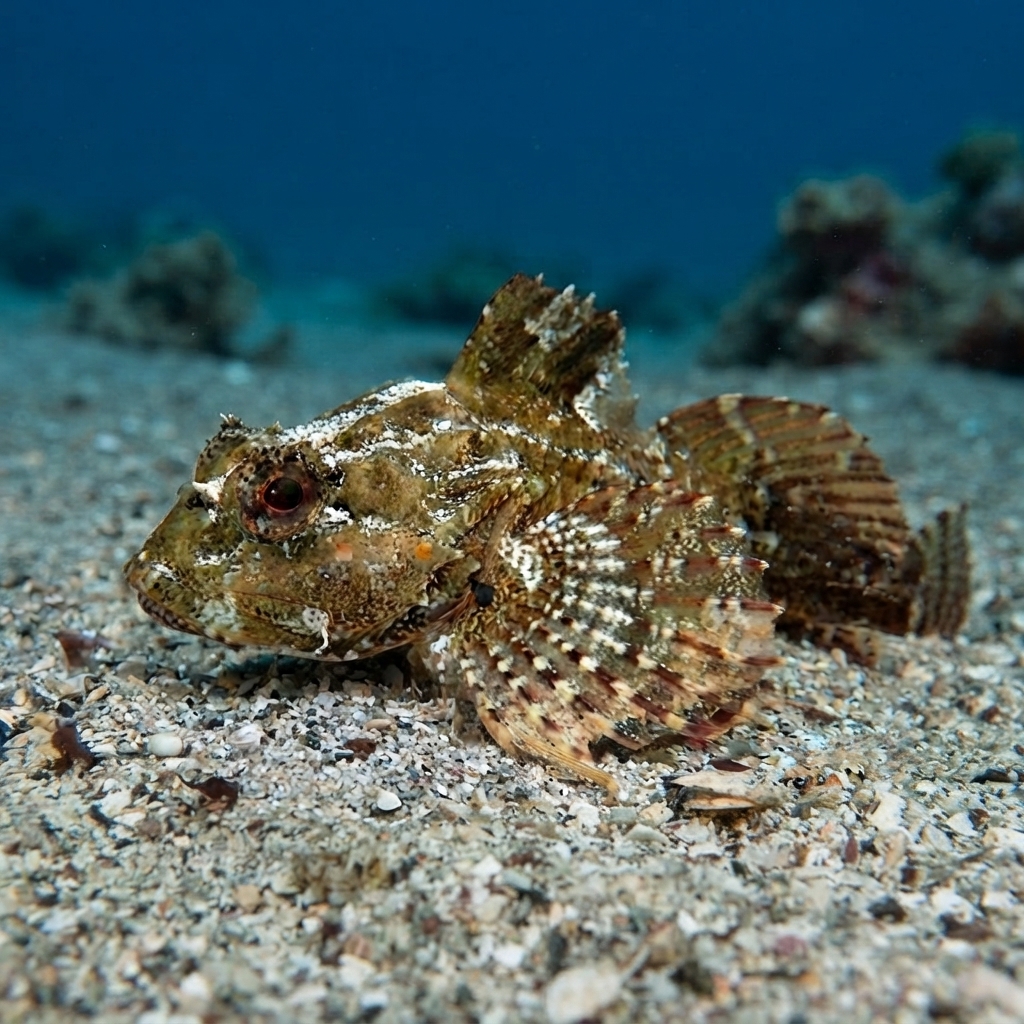
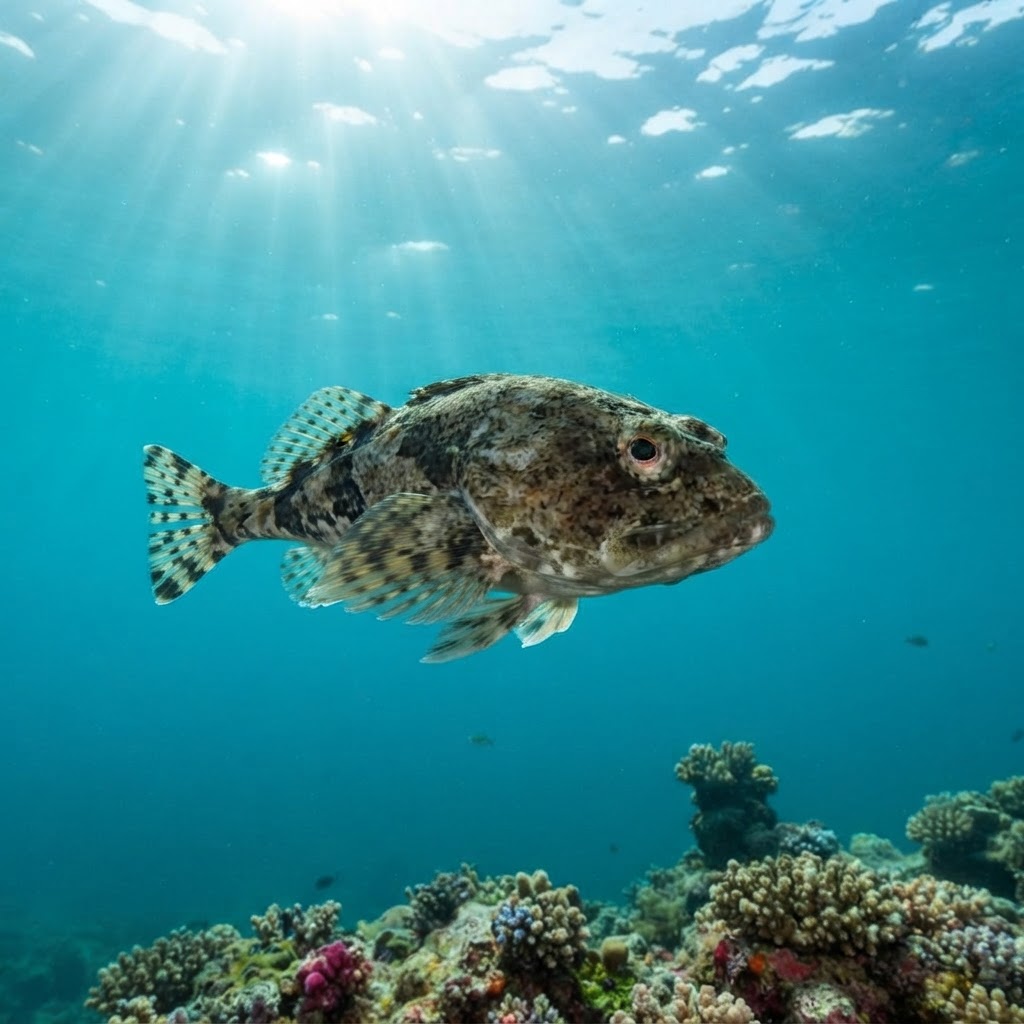
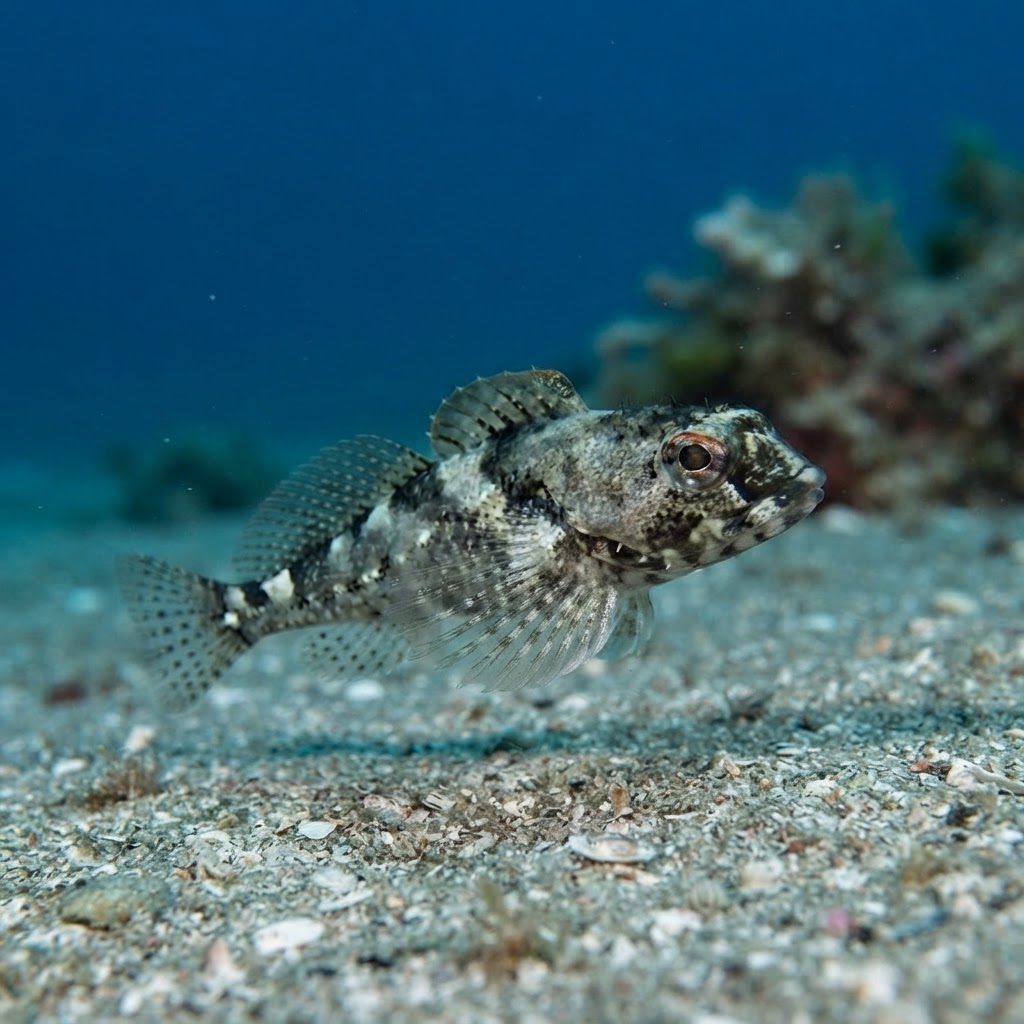
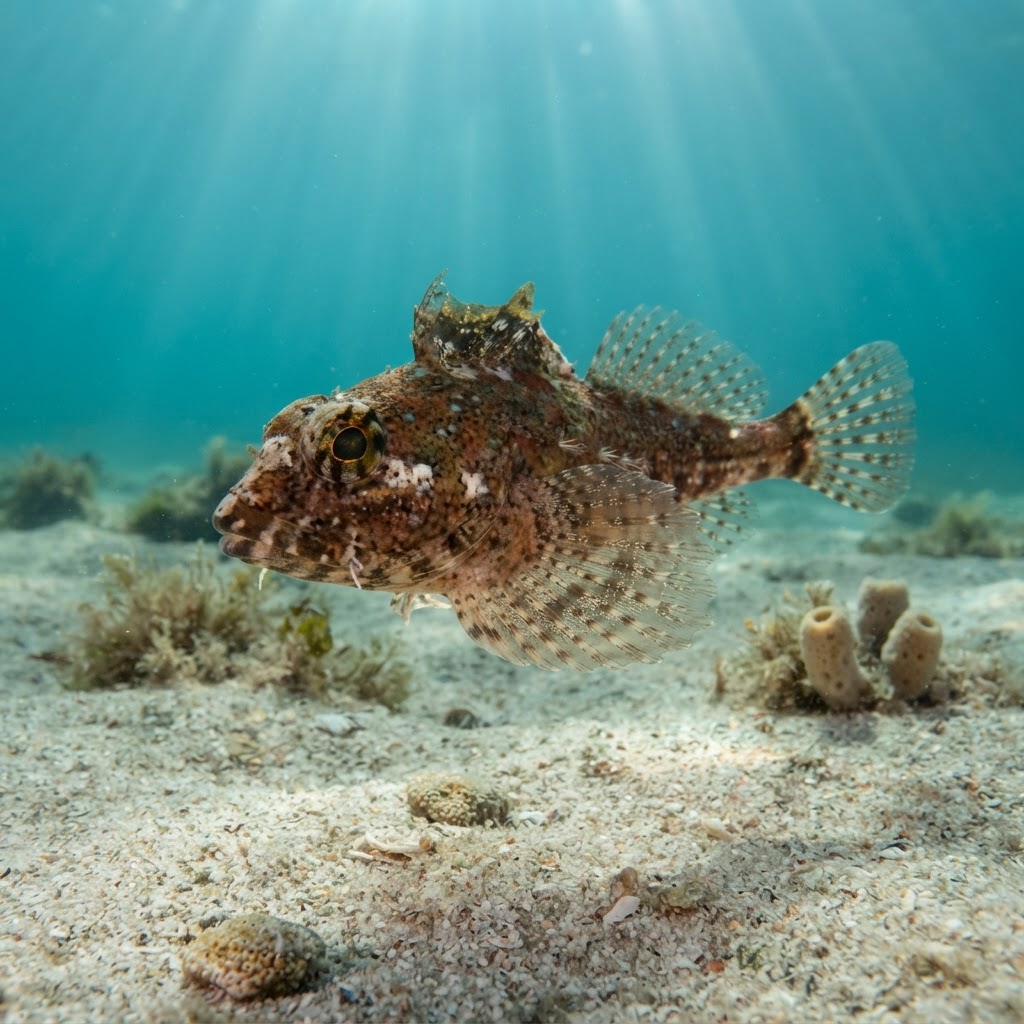
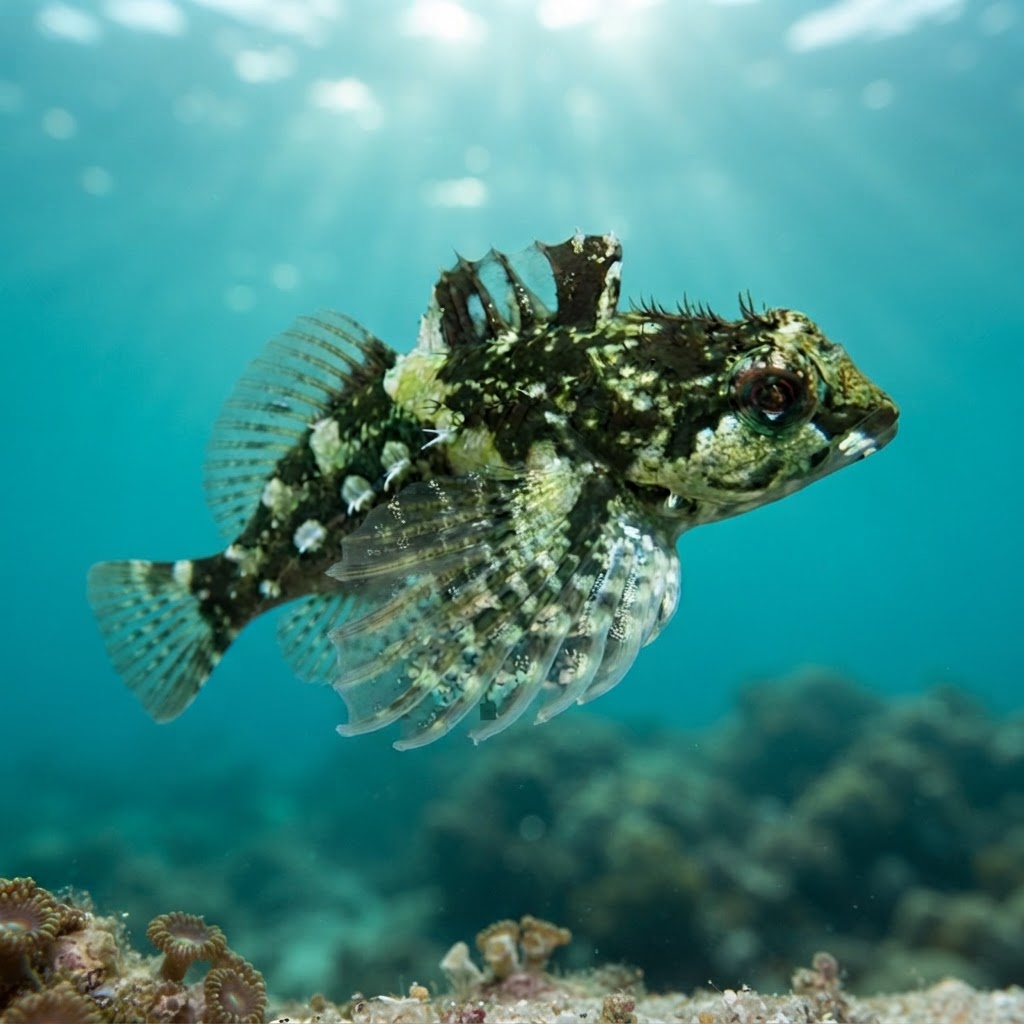
A tiny fish, only around 6 cm long, with a stubby body and a blunt, almost frog-like face. Colour is variable and mottled, often greenish, reddish or brown to match the algae and rock it sits on, with fleshy cirri (small skin projections) above the eyes giving it a slightly shaggy, whiskered look. It perches motionless on rock or in kelp holdfasts rather than swimming in open water, which is often the first clue you have found one.
Expect to find it sitting still on rock, in low algae cover or tucked into kelp holdfasts rather than out swimming over open reef. It relies on camouflage and staying put rather than fleeing, so slow, close looking along the substrate is what actually turns one up. Divers report it as a rare find even at sites where it does occur, so patience and a careful eye on the bottom pay off more than covering distance.
Sculpins in this family lack a swim bladder, which is part of why they sit and cling to the bottom instead of hovering in the water column like many reef fish.
Sightings do not show a clear seasonal pattern, and its temperature niche of roughly 8.9 to 17.4C spans the range found in the Pacific Northwest for much of the year, so it can turn up on any dive there regardless of month.
Logged almost exclusively in the United States, with every recorded sighting coming from the Pacific Northwest. It is a cold-water species tied to rocky reef and kelp habitat rather than tropical dive destinations, so this region is currently the only reliable place divers report finding it.
Mapping where Fluffy Sculpin is logged…
Recorded sightings come almost entirely from the Pacific Northwest region of the United States, on rocky reef and kelp habitat rather than tropical dive sites.
There is no strong season in the sighting data, and its comfortable temperature range of roughly 9 to 17C covers much of the year in the Pacific Northwest, so it is essentially a year-round possibility.
Look for a small, mottled fish around 6 cm long with a blunt head and small fleshy tufts above the eyes, sitting still on rock or algae rather than swimming freely.
They stay small, typically around 6 cm long, making them easy to overlook against rock and algae.
No, they pose no threat to divers and simply rely on camouflage and staying still to avoid attention.
They lack a swim bladder, so instead of hovering over the reef they cling to rock and kelp holdfasts, relying on mottled camouflage to blend into the substrate rather than moving away from divers.
Site and sighting data is aggregated from diver logs, iNaturalist and GBIF. For taxonomy and conservation status:
Shorthorn Sculpin
228 sites