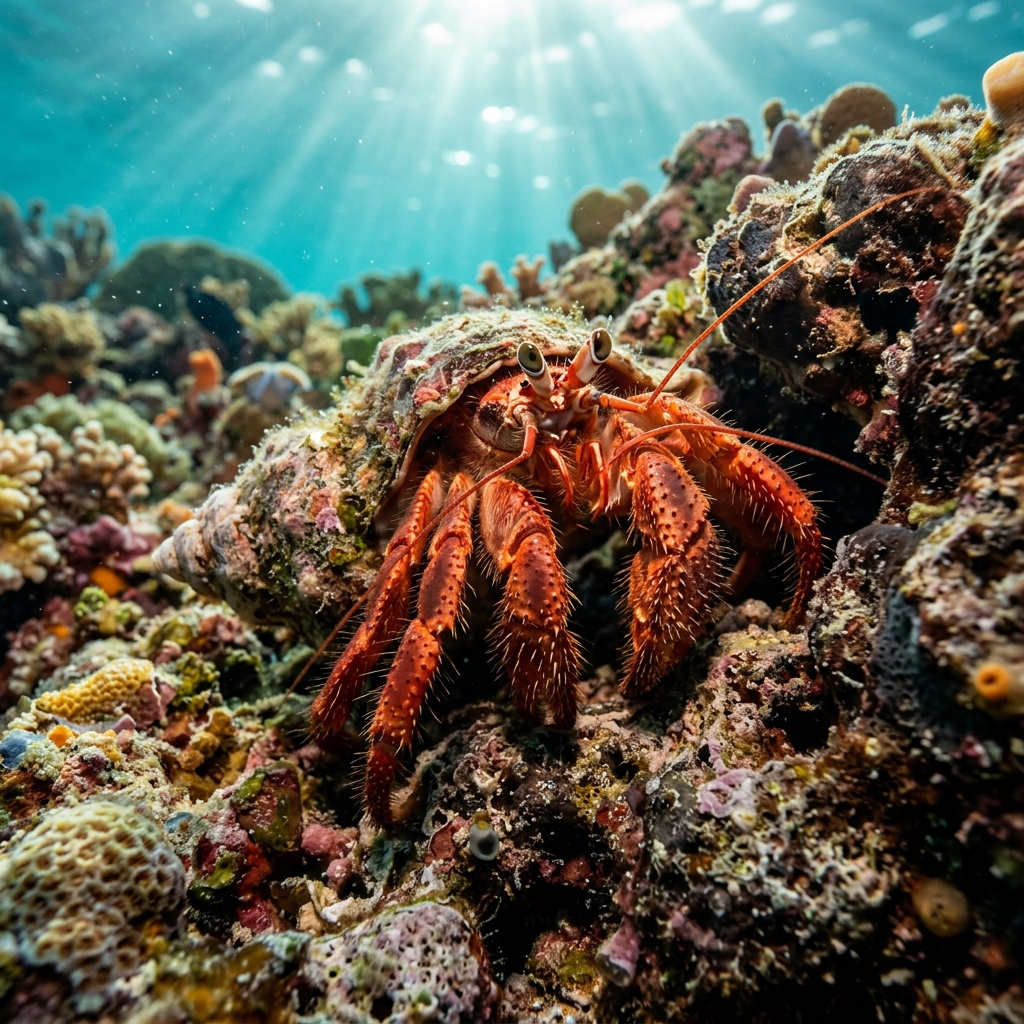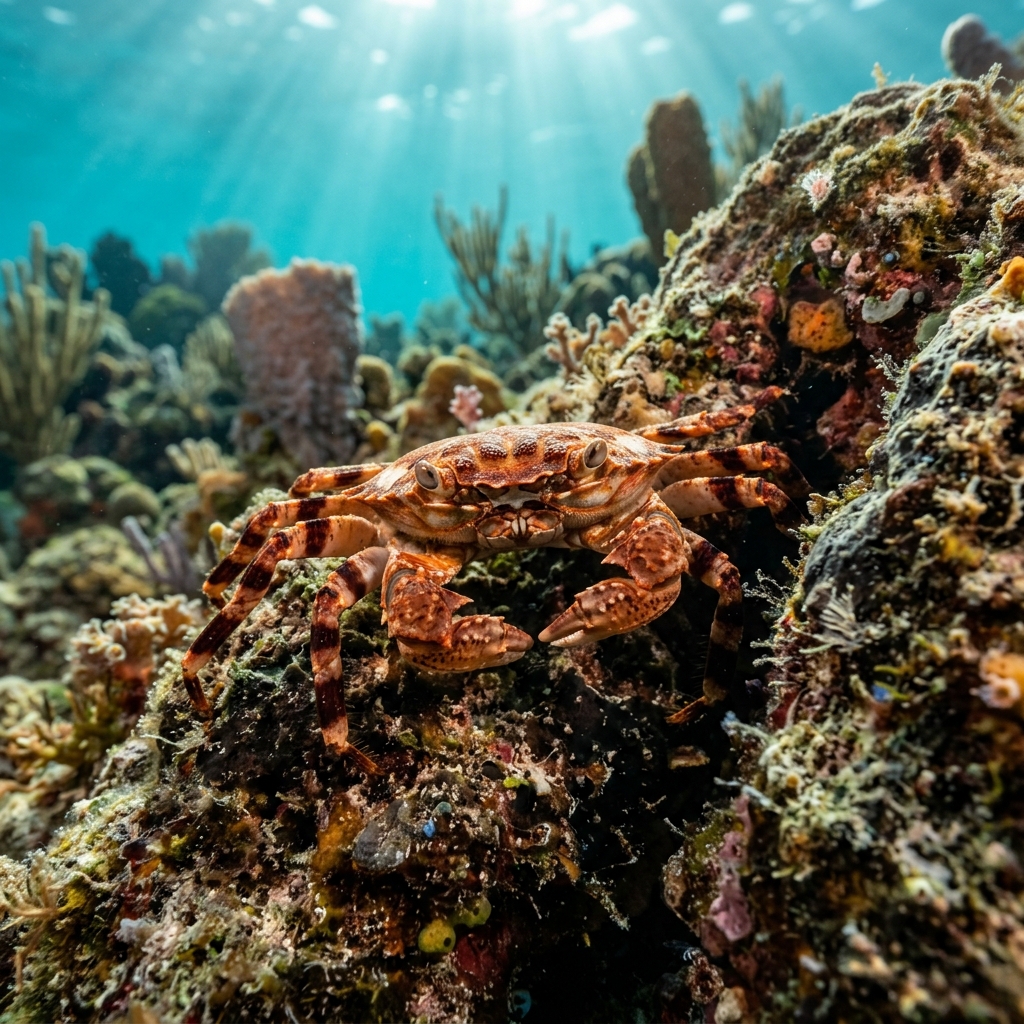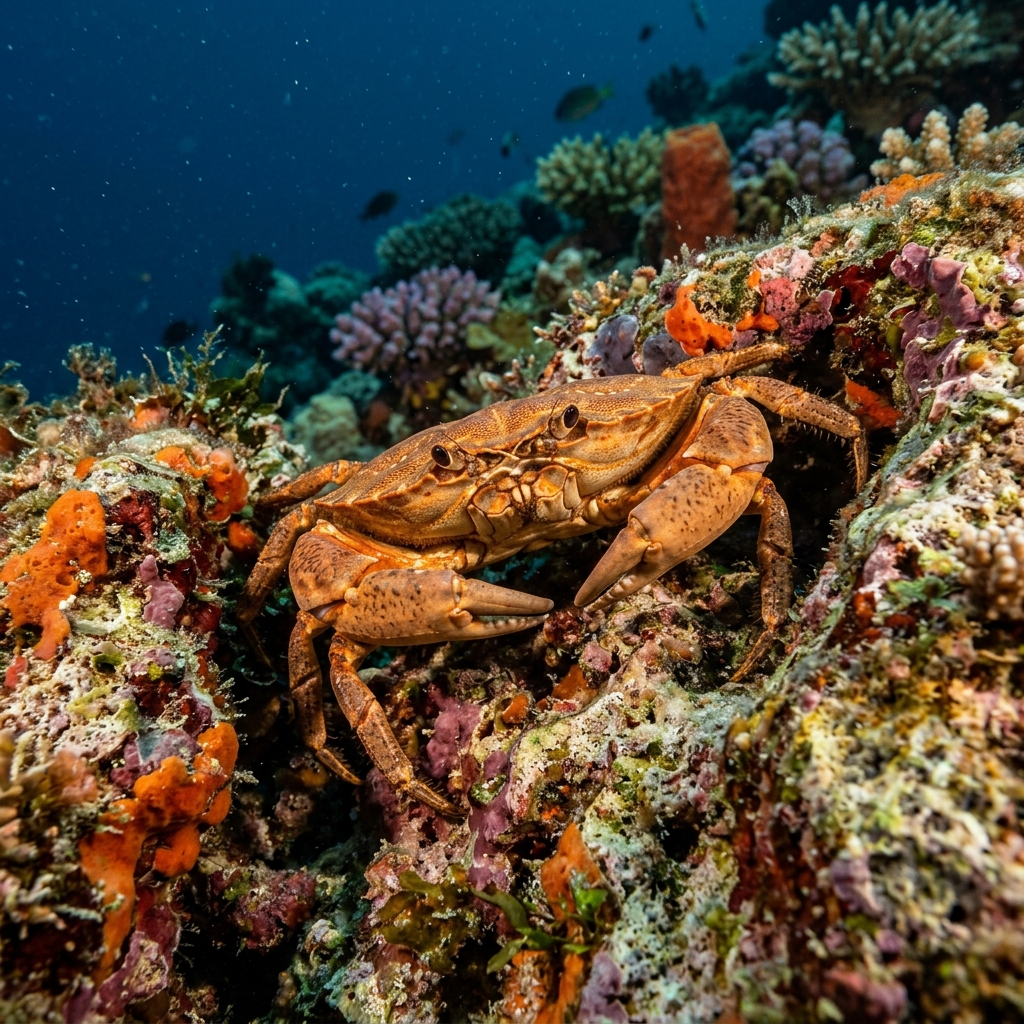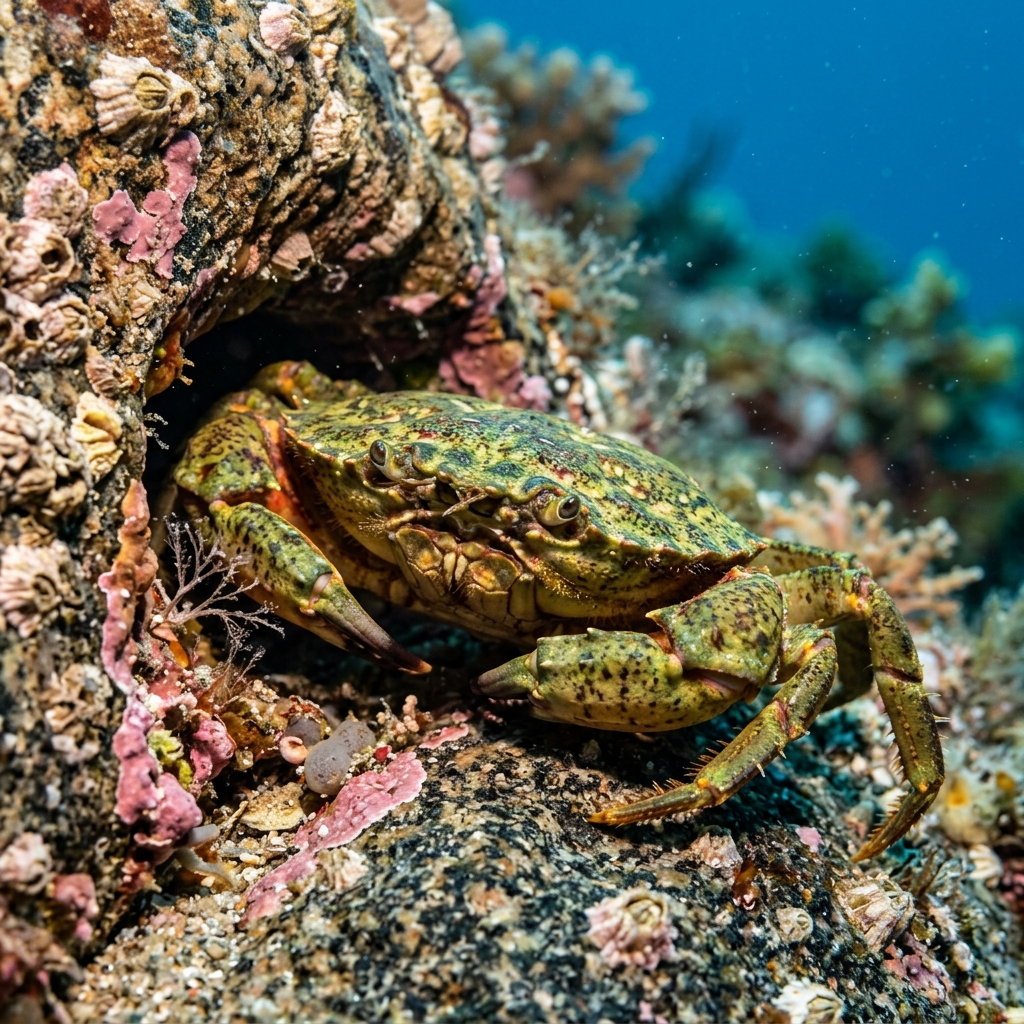
Atergatis floridus
A toxic reef crab logged in Queensland and Singapore's Southern Islands, comfortable year-round in warm 23 to 30C water.
Safety warning
Handling is the real risk here, not an attack: the toxins in its tissue can cause severe poisoning if ingested, and even skin contact with an open cut is worth avoiding. Treat it as a look-don't-touch subject and keep hands away from crevices where it might be tucked.
Handle with care
Toxic if eatenGeneral first-aid guidance, not a substitute for professional medical care. In an emergency, call your local emergency number.
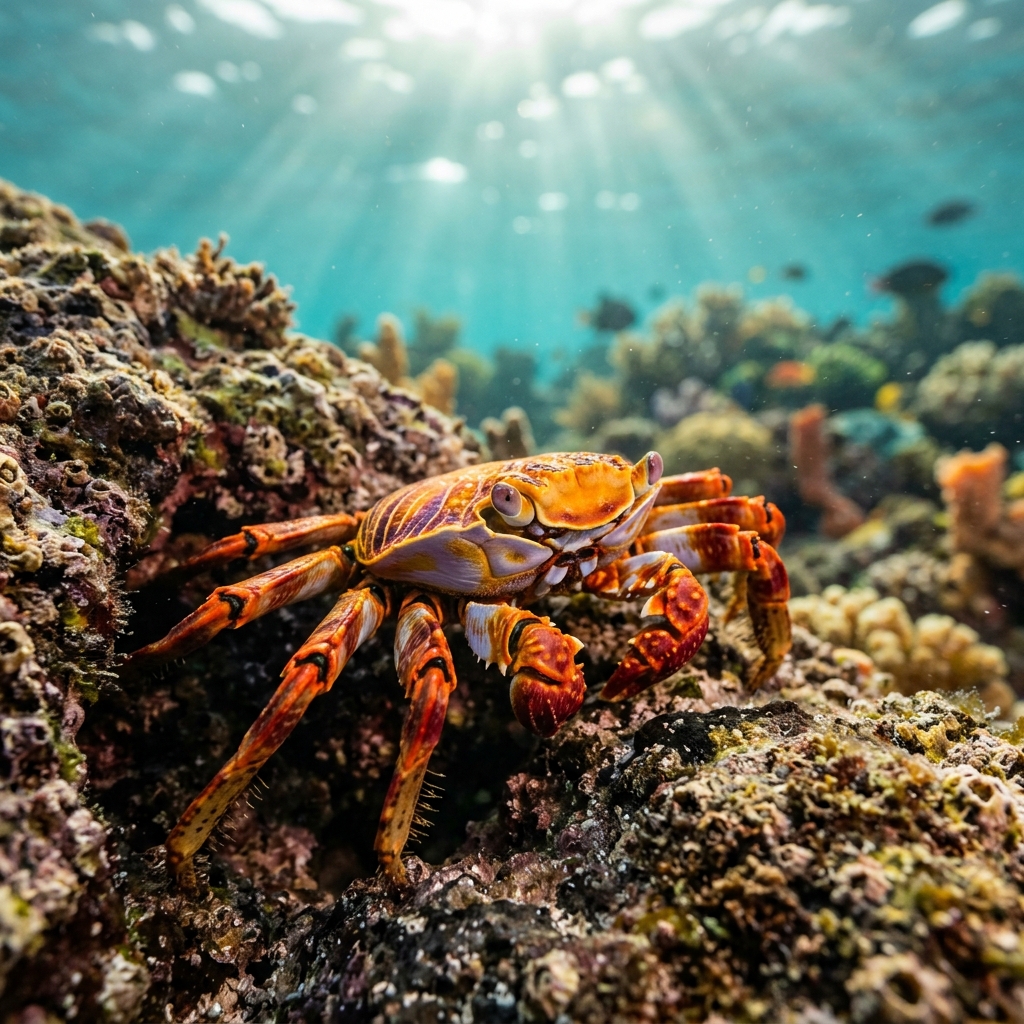
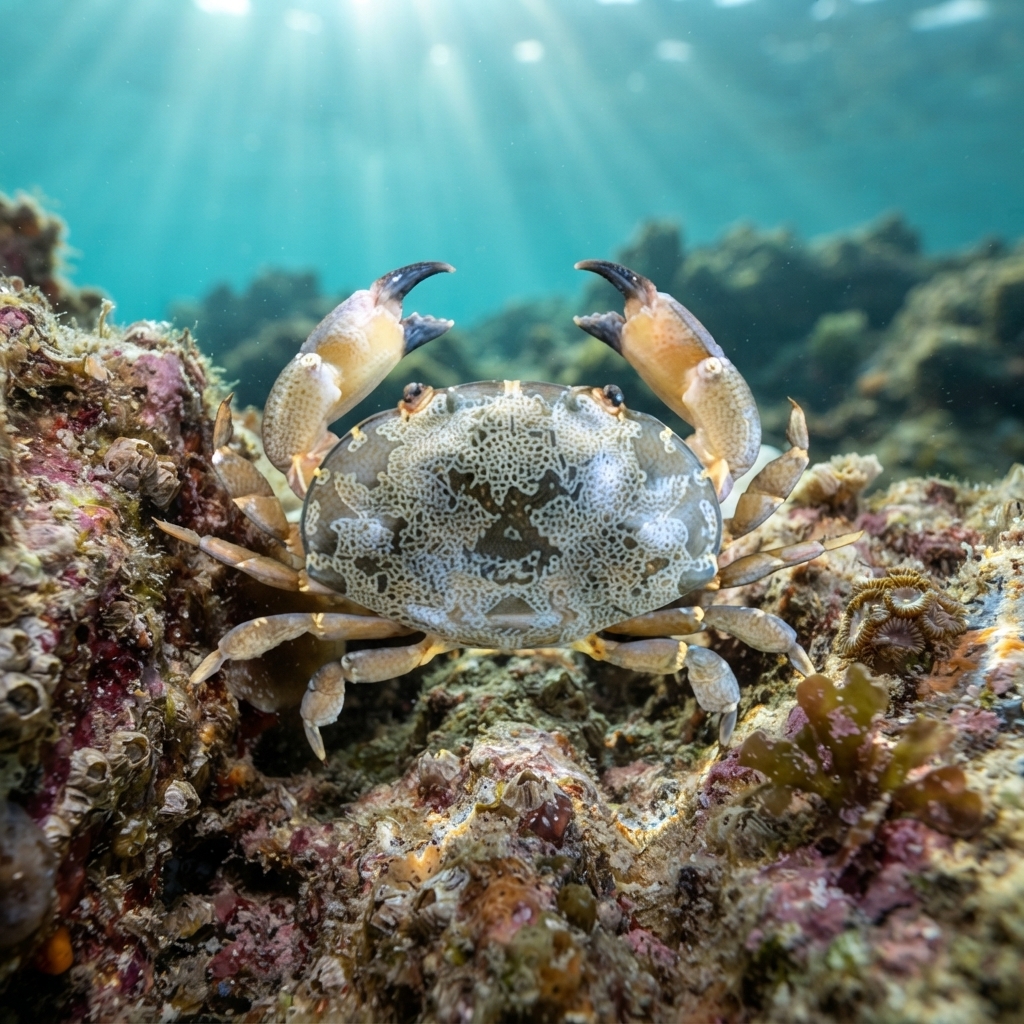
Look for a smooth, rounded carapace mottled in olive-green, cream and reddish-brown blotches, giving it a floral or camouflaged look against rubble and dead coral. It sits low and tucked into crevices rather than out in the open, with thick, robust claws held close to the body. There is no strong sexual dimorphism reported that would help with underwater ID, so size and the blotchy shell pattern are your main cues.
Divers usually find this crab wedged into crevices, under coral rubble or against the reef base during the day, staying still rather than scuttling off when approached. It is not an active swimmer and relies on staying hidden, so most sightings come from divers deliberately checking ledges and rubble patches rather than spotting it mid-water.
This species carries potent toxins (including tetrodotoxin-like and palytoxin-like compounds) in its flesh, making it one of the more chemically defended reef crabs rather than one relying on speed or claws to avoid predators.
There is no clear seasonal pattern in the sightings, and the observed water temperature range of 23.4 to 30.1C spans typical tropical and subtropical reef conditions year-round, so any month is fair game.
Most reliably logged in Queensland, Australia and the Southern Islands of Singapore, with further sightings from Apra Harbor in Guam, Nouméa in New Caledonia and Western Australia. Across these sites it turns up as an uncommon find tucked into reef crevices rather than something you stumble on every dive.
Mapping where Floral Egg Crab is logged…
Queensland, Australia and Singapore's Southern Islands have the most consistent sightings, with additional records from Guam's Apra Harbor, Nouméa in New Caledonia and Western Australia.
There's no detected season in the sighting data, and it tolerates a wide 23.4 to 30.1C range, so it can turn up on any dive throughout the year.
They aren't aggressive, but their flesh contains potent toxins that make them dangerous if handled and ingested. Look without touching and you're perfectly safe.
Check crevices and rubble for a rounded, smooth-shelled crab with mottled olive-green and cream blotches. It stays low and still rather than swimming or fleeing quickly.
It carries potent natural toxins in its body, similar to those found in pufferfish and some octopuses, which protect it from predators without needing speed or strong defensive behaviour.
Site and sighting data is aggregated from diver logs, iNaturalist and GBIF. For taxonomy and conservation status:
European Green Crab
2,469 sites