Centropyge aurantonotus
A tiny orange-and-blue dwarf angelfish tucked into rubble reefs from Florida to Pernambuco, comfortable year-round in warm Caribbean water.
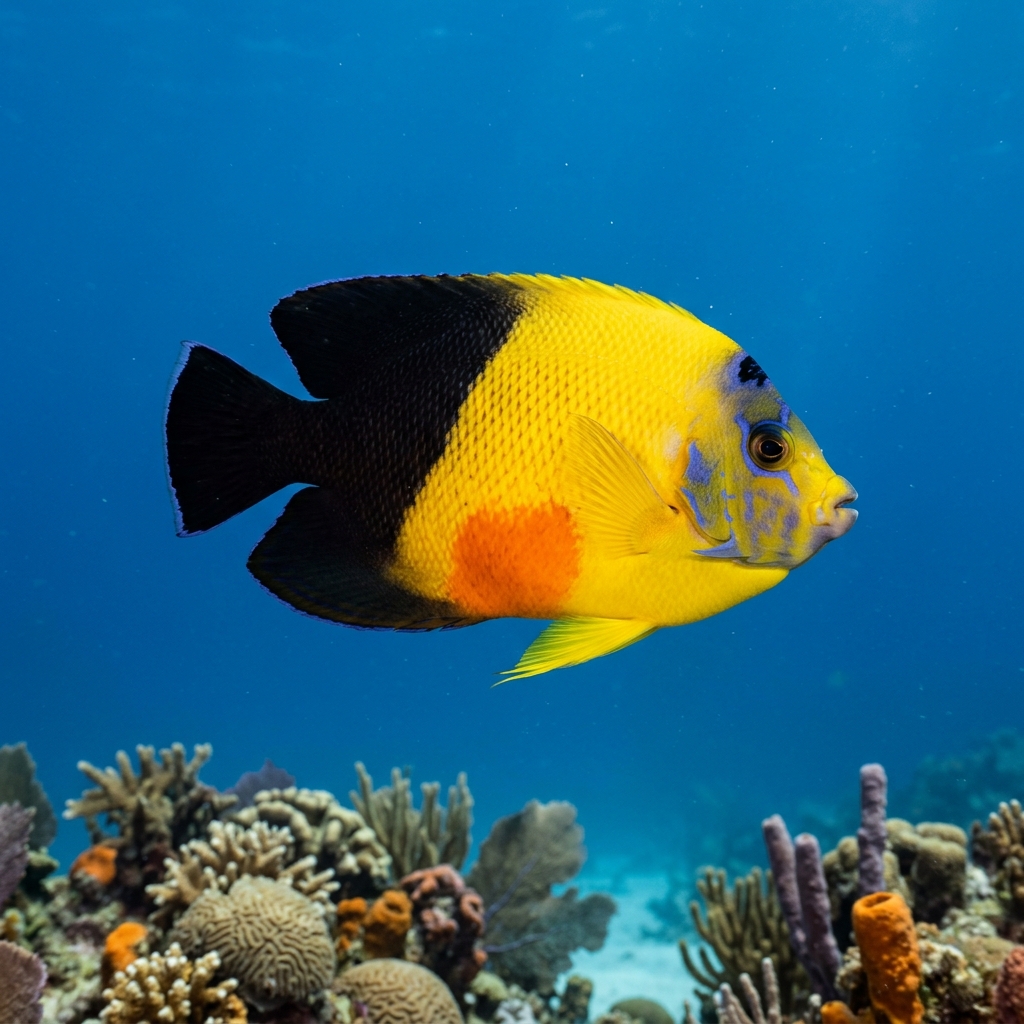
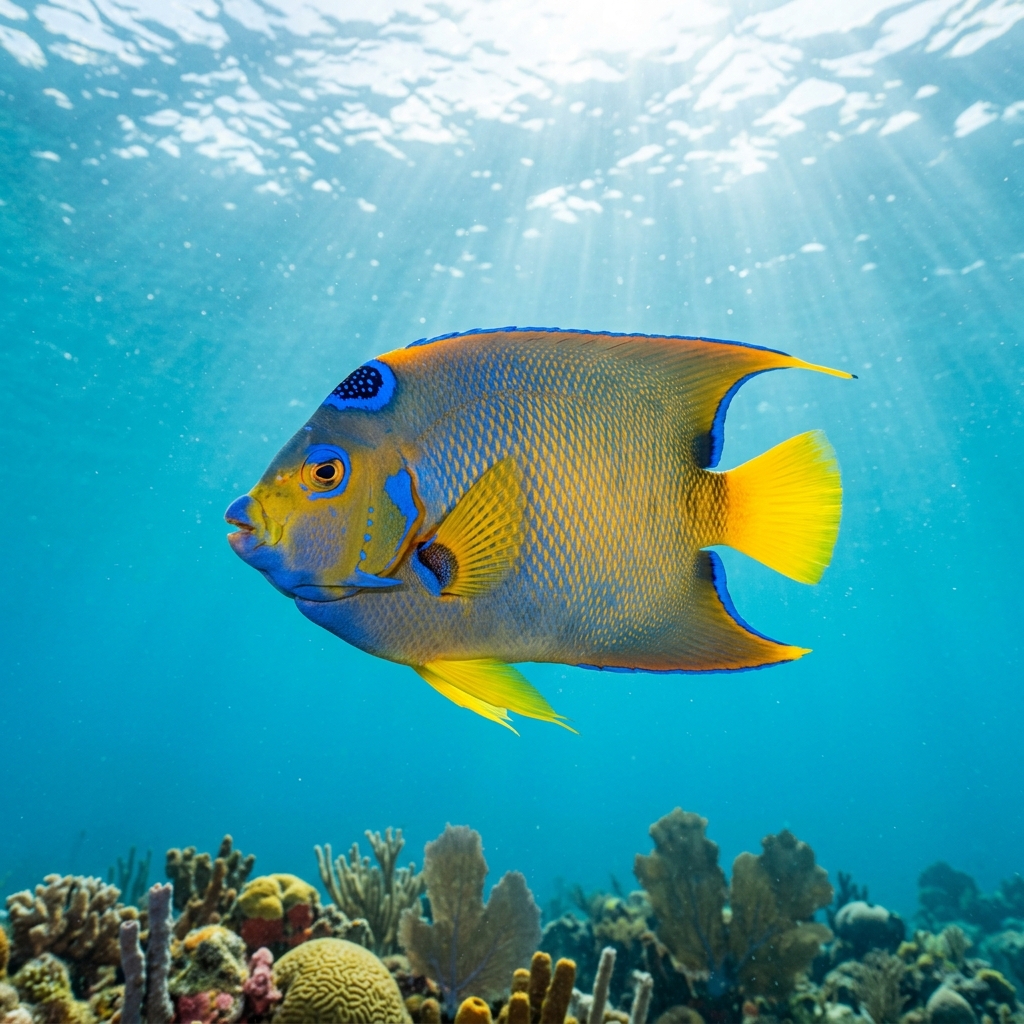
A pocket-sized dwarf angelfish, rarely more than 4 cm, split almost in half by colour: the front two-thirds glow orange-yellow and the rear third and tail turn deep electric blue to violet. There's no dramatic pattern to memorise, just that sharp colour break running vertically down the flank, plus a faint dark blotch near the gill area on some individuals. It moves in short darting hops between rubble and reef nooks rather than swimming in the open.
Expect to find it hovering close to rubble patches, crevices, and the undersides of ledges, darting for cover the instant a shadow passes overhead. It picks at algae and detritus in short bursts rather than grazing in the open, staying tight to structure at almost any hour divers are down. Its small size and skittish habit mean it's often spotted only when you slow down and scan low relief close to the substrate.
Like other dwarf angelfish in the genus Centropyge, it lives in small harems where one dominant male keeps a handful of females, and it can switch sex from female to male if the resident male disappears.
No clear seasonal pattern shows up in the data, and with a comfortable range of roughly 21.6 to 27.7 C, this is a year-round resident of warm reef habitat rather than a seasonal visitor. Plan around good visibility and calm rubble-zone conditions rather than a particular month.
Most reliably logged around Florida in the United States, with strong populations also reported across Cuba, particularly Jardines del Rey and Western Cuba, and in Brazil's Pernambuco region. It's also a realistic find in Venezuela around Isla Margarita, the Bahamas, Mexico's Yucatán Peninsula, and Belize's Turneffe Atoll.
Mapping where Flameback Angelfish is logged…
Florida in the United States turns up the most sightings, alongside strong Caribbean populations in Cuba's Jardines del Rey and Western Cuba, Brazil's Pernambuco coast, Venezuela's Isla Margarita, and Belize's Turneffe Atoll.
There's no strong seasonal pattern in the sightings, and its comfortable temperature range of about 21.6 to 27.7 C keeps it present on reefs throughout the year, so any time you're diving its range is fair game.
Look for a tiny fish, about 4 cm, split down the middle by colour: bright orange up front and deep blue across the rear body and tail. It darts between rubble and ledges rather than swimming in open water.
They stay small, typically around 4 cm as adults, making them one of the more overlooked reef fish unless you're specifically scanning rubble and crevices.
Yes. Like other dwarf angelfish, they live in small harems led by one male, and a dominant female can change sex to become the new male if the group loses him.
Site and sighting data is aggregated from diver logs, iNaturalist and GBIF. For taxonomy and conservation status:
Rock Beauty
1,573 sites